
Headline
Hiroshima Marks 80 Years As US-Russia Nuclear Tensions Rise
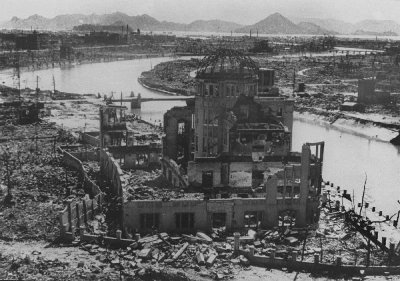
Japan marked 80 years since the atomic bombing of Hiroshima on Wednesday with a ceremony reminding the world of the horrors unleashed, as sabre-rattling between the United States and Russia keeps the nuclear “Doomsday Clock” close to midnight.
A silent prayer was held at 8:15 am (2315 GMT), the moment when US aircraft Enola Gay dropped “Little Boy” over the western Japanese city on August 6, 1945.
On a sweltering morning, hundreds of black-clad officials, students and survivors laid flowers at the memorial cenotaph, with the ruins of a domed building in the background, a stark reminder of the horrors that unfolded.
In a speech, Hiroshima mayor Kazumi Matsui warned of “an accelerating trend toward military buildup around the world”, against the backdrop of Russia’s invasion of Ukraine and the chaos in the Middle East.
READ ALSO:Ukrainian Drone Strikes Kill Three In Russia
“These developments flagrantly disregard the lessons the international community should have learned from the tragedies of history,” he said.
Prime Minister Shigeru Ishiba said it was Japan’s mission “to take the lead… toward a world without nuclear weapons”.
The final death toll of the Hiroshima attack would hit around 140,000 people, killed not just by the colossal blast and the ball of fire, but also later by the radiation.
Three days after “Little Boy”, on August 9, another atomic bomb killed 74,000 people in Nagasaki. Imperial Japan surrendered on August 15, bringing an end to World War II.
Today, Hiroshima is a thriving metropolis of 1.2 million but the attacks live on in the memories of many.
On the eve of the ceremony, people began lining up to pay their respects to the victims in front of the cenotaph.
READ ALSO:Russia Strikes Ukraine After Kyiv Offers Fresh Talks
Before dawn on Wednesday, families who lost loved ones in the attack also came to pray.
Yoshie Yokoyama, 96, who arrived in a wheelchair with her grandson, told reporters that her parents and grandparents were bomb victims.
“My grandfather died soon after the bombing, while my father and mother both died after developing cancer. My parents-in-law also died, so my husband couldn’t see them again when he came back from battlefields after the war.
“People are still suffering,” she added.
Wednesday’s ceremony was set to include a record of around 120 countries and regions including, for the first time, Taiwanese and Palestinian representatives.
The United States — which has never formally apologised for the bombings — was represented by its ambassador to Japan. Russia and China were absent.
READ ALSO:Anxiety As Trump Deploys US Nuclear Submarines Near Russia After ex-President’s Comment
Nihon Hidankyo, the grassroots organisation that last year won the Nobel Peace Prize, is representing the dwindling number of survivors, known as hibakusha.
As of March, there were 99,130 hibakusha, according to the Japanese health ministry, with the average age of 86.
“I want foreign envoys to visit the peace memorial museum and understand what happened,” the group’s co-chair Toshiyuki Mimaki told local media ahead of the commemorations.
Pope Leo XIV said in a statement that “in our time of mounting global tensions and conflicts”, Hiroshima and Nagasaki remained “living reminders of the profound horrors wrought by nuclear weapons”.
United Nations Secretary-General Antonio Guterres warned that “the very weapons that brought such devastation to Hiroshima and Nagasaki are once again being treated as tools of coercion”.
READ ALSO:Russia Strikes Ukraine After Kyiv Offers Fresh Talks
– Younger generation –
The attacks remain the only time atomic bombs have been used in wartime.
Kunihiko Sakuma, 80, who survived the blasts as a baby, told AFP he was hopeful that there could eventually be a nuclear-free world.
“The younger generation is working hard for that end,” he said ahead of the ceremony.
But in January, the Bulletin of the Atomic Scientists’ “Doomsday Clock” shifted to 89 seconds to midnight, the closest in its 78-year history.
The clock symbolising humanity’s distance from destruction was last moved to 90 seconds to midnight over Russia’s invasion of Ukraine in 2022.
READ ALSO:Russian Strikes Kill 16 In Kyiv
Russia and the United States account for around 90 percent of the world’s over 12,000 warheads, according to the Stockholm International Peace Research Institute (SIPRI).
SIPRI warned in June that “a dangerous new nuclear arms race is emerging at a time when arms control regimes are severely weakened,” with nearly all of the nine nuclear-armed states modernising their arsenals.
Earlier this month, US President Donald Trump said that he had ordered the deployment of two nuclear submarines following an online spat with former Russian president Dmitry Medvedev.



Headline
Indian Court Denies Bail To Nigerian Man Over Drug Charges
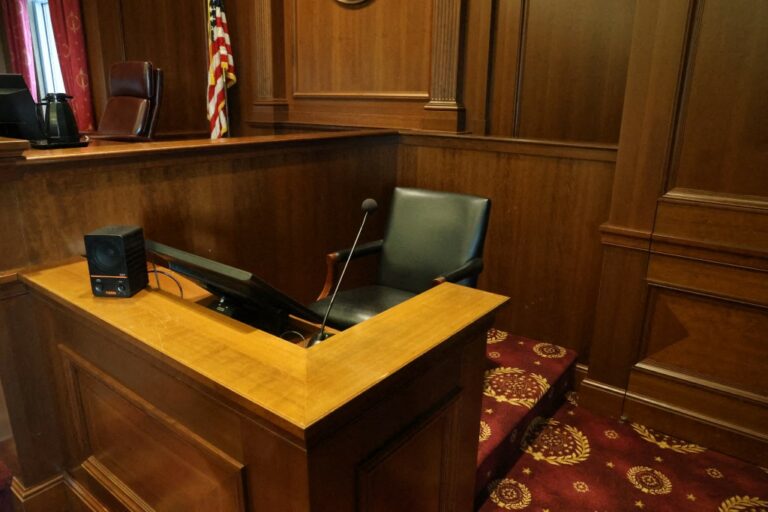
A court in India has denied bail to a 44-year-old Nigerian national, Cristian Soporuchukwu, who is currently facing drug trafficking charges in the country.
Cristian Soporuchukwu initially entered India on a business visa but was later arrested over allegations of involvement in the sale of hard drugs.
Reports indicated that after arriving in India, Soporuchukwu travelled through Goa, Delhi, and Mumbai, where he allegedly established links with suspected drug traffickers.
READ ALSO:Indian National Arraigned In Lagos Over Alleged N22m Supermarket Fraud
He was accused of purchasing MDMA crystals and distributing them to college students and information technology workers.
According to reports, operatives of the Beguru Police arrested Cristian Soporuchukwu in April 2025 for allegedly selling MDMA crystals around Begur Lake and the AECS Layout Road area.
The New Indian Express reported that the High Court of Karnataka subsequently dismissed the Nigerian’s bail application.
READ ALSO:NDLEA Intercepts Indian Lady With 72 Parcels Of Heroin ON n Chocolate Wraps
“The anti-narcotics wing seized about 1 kg of MDMA crystals, a pocket weighing machine, 10 zip-lock covers, a mobile phone and a scooter from him,” the report stated.
Justice V. Srishananda, while ruling on the bail application, reportedly held that errors relating to the grounds of arrest could not automatically justify bail in serious narcotics-related offences under the Narcotic Drugs and Psychotropic Substances, NDPS, Act.
The court further noted that Cristian Soporuchukwu had allegedly overstayed his visa in India, according to the report.
Headline
Strait Of Hormuz: US Announces Sanctions Against Iran
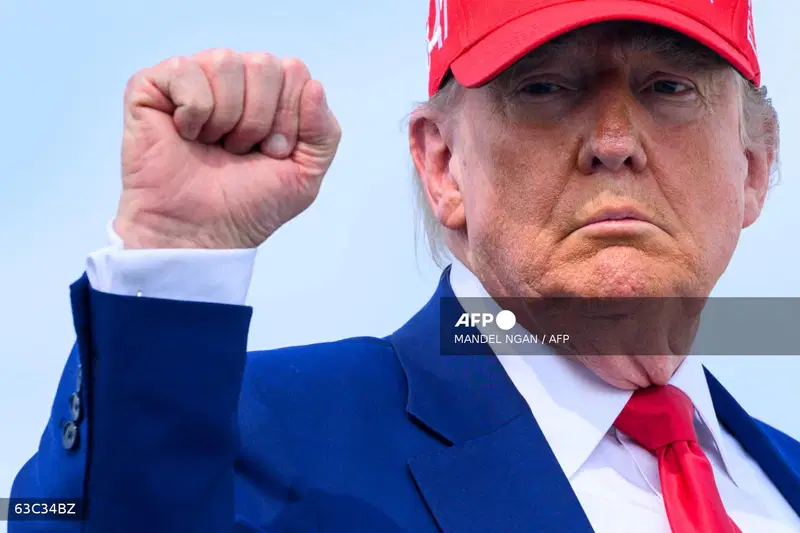
The United States Treasury has announced sanctions against Iran’s Persian Gulf Strait Authority.
Treasury Secretary, Scott Bessent, said this in a statement on Wednesday.
The statement extended the threat of sanctions to anyone paying the fees, saying they may be providing support to and receiving services from Iran’s Revolutionary Guards, and therefore may be exposed to sanctions risk.
READ ALSO:Strait Of Hormuz: Pakistan Thanks Trump For Pausing ‘Project Freedom’
“The Iranian military’s latest attempt to extort global maritime trade is proof that Economic Fury has left the regime desperate for cash.
“Treasury has deprived the Iranian regime of revenue for their weapons programs, terrorist proxies, and nuclear ambitions,” Bessent said.
Bessent added that the US has succeeded in disrupting tens of billions of dollars’ worth of revenue from being accessible to Tehran.
Headline
US Launches New Airstrikes On Iran
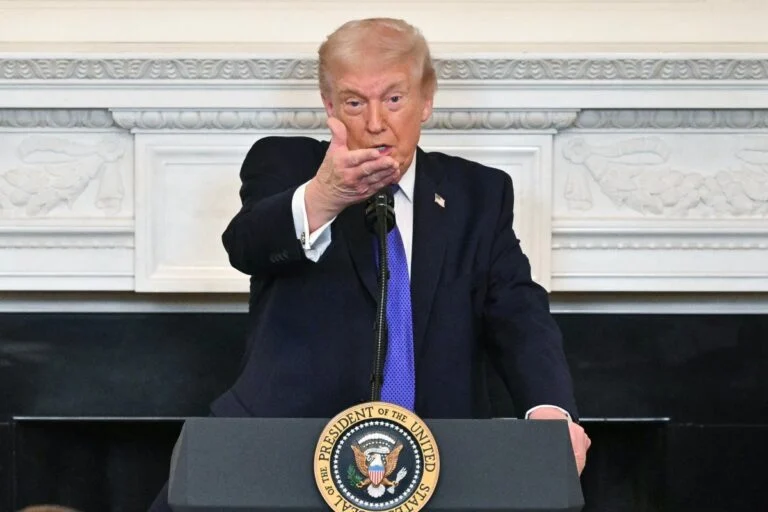
The United States has launched new airstrikes in southern Iran.
The strike shot down four one-way attack drones that posed a threat around the Strait of Hormuz and then a ground control site.
A US official revealed that American forces struck an Iranian ground control station in Bandar Abbas that was about to launch a fifth drone.
READ ALSO:US Restricts Entry Routes For Travellers From DRC, Uganda, South Sudan Over Ebola Outbreak
The official described the strikes as purely defensive, saying the US intended to maintain the ceasefire.
Report says this is the second time in three days that the US has carried out self-defense strikes against Iranian military targets in southern Iran.
Recall that on Monday the US carried out airstrikes against Iranian missile locations and boats that US Central Command said were preparing to launch mines in the Strait of Hormuz.

 Headline4 days ago
Woman Passes Out After Receiving 100 Strokes Of Cane
- Headline4 days ago
JUST IN: White House Locked Down Briefly As Gunman Opens Fire At Security Checkpoint
- News3 days ago
More Pain For Nigerians As Cooking Gas Price Increases Nationwide
- Politics3 days ago
Two Masked Men Gun Down Politician In His Rivers State Hotel
- Metro4 days ago
Police Reject N500m Bribe, Recover N7.8bn Illicit Drugs In Lagos
- News3 days ago
FG Declares Two Days Public Holiday For Eid-el Kabir Celebration
- Politics3 days ago
‘Tinubu’s Borrowing In 24 Months Surpasses 55 Years’ Debt Record’
- Politics2 days ago
Court Clears Goodluck Jonathan To Contest 2027 Presidential Election
- News3 days ago
OPINION: Boko Haram Comes South
 News2 days ago
OPINION: Like Oyedokun, We Are All Decapitated


