
Headline
How Combination Of Paracetamol, Carbide For Ripening Fruits Compromises Health
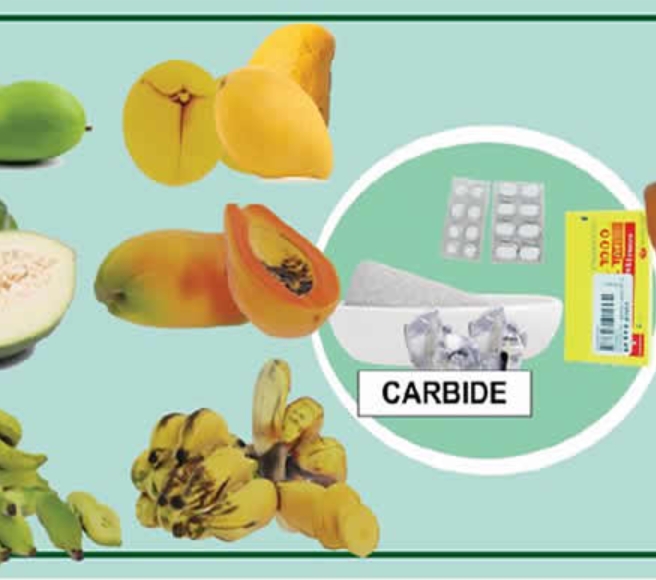
Artificial ripening is commonly employed to make fruits market-ready quickly, especially in regions with poor cold-chain infrastructure.
Chemicals such as calcium carbide and, more recently, paracetamol, have been found to be used in this process.
Research shows that these chemicals release heat when activated, creating conditions that mimic natural ripening. However, this process often introduces toxic substances into fruits, posing health risks to consumers.
A study by Mouli Chandar and Anton Smith from the Department of Pharmacy, Faculty of Engineering and Technology at Annamalai University, in Chidambaram, India, reviewed the artificial ripening of bananas, examining its physicochemical changes, benefits, and harmful effects.
Their research examined the effects of various ripening methods, including natural ripening, fumigation, exposure to heat, and the use of substances like calcium carbide, ethylene, and methyl jasmonate.
The study found that natural ripening yields beneficial effects without toxicity, while stress-induced or chemically induced ripening alters active components, potentially leading to physiological dysfunction in humans.
Negative risks
Using paracetamol to artificially ripen fruits such as bananas and plantains has become a significant health concern in Nigeria.
Health and nutrition experts warn that this practice is hazardous due to chemical alterations and the risks it poses to the food chain.
Paracetamol, also known as acetaminophen, contains active compounds such as para-aminophenol derivatives, which exhibit mild oxidative properties.
When exposed to heat or specific environmental conditions, these compounds break down into by-products that can accelerate the ripening process by stimulating the release of ethylene gas, a natural plant hormone responsible for ripening.
However, the misuse of paracetamol in ripening alters its chemical composition, leaving harmful residues on fruits. Fruits ripened with paracetamol may retain toxic by-products, which, over time, can lead to liver and kidney damage as the body struggles to process these excessive and unnatural chemicals.
According to a health researcher based in Europe, Temitope Fadeyi, the breakdown of paracetamol under heat can produce harmful compounds such as aniline, which is potentially carcinogenic and increases the risk of cancer with prolonged exposure.
READ ALSO: NAFDAC Issues Warning To Bakeries Over Saccharin, Bromate Usage
This process also compromises the nutritional quality of fruits, reducing their vitamin content and altering their sensory characteristics.
Additionally, frequent consumption of such fruits can cause acute symptoms such as nausea, vomiting, and abdominal pain, as well as chronic conditions like organ damage.
A nutritionist and dietician, Mrs Ngozika Nnam, noted that this process can also lead to hormonal disruptions.
She noted that certain chemical by-products may act as endocrine disruptors, potentially affecting hormonal balance, fertility, and development in consumers, including children and pregnant women.
Nnam also said that the unnatural ripening process often results in fruits losing essential vitamins and micronutrients, particularly vitamin C, which deteriorates due to chemical exposure.
The nutritionist added that consuming large quantities of fruits ripened with paracetamol can as well bring about symptoms of acute poisoning, such as nausea, vomiting, abdominal pain, and even liver failure in severe cases.
She noted, “The improper disposal of used paracetamol tablets and the chemical residues left on fruits can also contaminate soil and water sources, creating environmental hazards.”
Safer alternatives to artificial ripening
Experts have noted that there are several safer alternatives to ripening these fruits than using harmful substances. and according to Nnam, one of them is natural artificial ripening.
She said, “The ripening process is carried out using natural ripening agents and methods (without the aid of chemical substances).
“Example is ripening by fumes, increasing the ripening rate by placing in a closed container, and placing fruits like apple, avocado, etc., along with unripe bananas promotes ripening to a greater extent.”
She affirmed that the natural method was the best.
“This simple method practised in the household is meant to trigger ripening and to keep the unripe fruit inside an airtight drum containing rice or wheat.
“The fruits stored in such a way ripen quickly because of the accumulation of ethylene gas and the self-heating nature of grains. Rice and wheat grains differ in their seed dormancy, which affects the seed respiration rate.
READ ALSO: NAFDAC Demands Full Compliance With Sachet, PET Bottle Alcohol Ban
“Respiration of rice or wheat grains produces carbon dioxide, which induces ethylene biosynthesis in several fruits. Since respiration is higher in rice than in wheat, unripe fruits placed in rice ripen faster than those in wheat.
“Another alternative is spreading unripe fruits in layers over paddy husk or wheat straw for a week to ripen,” she explained.
A public health researcher, Grandeur Malite, shed light on an experiment where various packaging materials—plastic bags, poly sheets, wooden boxes, and open-air (as a control)—were combined with natural ethylene sources such as avocado, mango, and tomato were used for fruit ripening. He noted that they were tested as two factors, explaining, “One packaging material contained one plant ethylene source at a time, with equal weights of the three ethylene sources used separately for each. This created 12 treatments with three replications, resulting in 36 experimental units. Samples of unripe bananas were placed in each unit.
“The results showed that bananas placed with avocado ripened first in six days, followed by tomato in 6.5 days and mango in 7.1 days.
“In terms of containers, bananas placed in a wooden box ripened fastest, while those in a poly sheet took the longest time. Based on this experiment, using avocado in combination with a wooden box provides the shortest ripening period without compromising the quality of the fruit,” he concluded.
Regulatory concerns and public awareness
The National Agency for Food and Drug Administration and Control in Nigeria had severally raised concerns over the use of unsafe artificial ripening agents, including paracetamol, calcium carbide, and other dangerous chemicals.
NAFDAC warned about the inherent health risks and called for increased public education on the dangers of these practices while urging stricter regulatory actions against offenders.
The Director-General of NAFDAC, Prof Moji Adeyeye, who was represented by the Director, Chemical Evaluation and Research, Dr Patrick Omopariola, while speaking during a sensitisation workshop tagged, “Dangers of drug hawking and ripening of fruits with carbide” organised in 2023, urged Nigerians to stop eating fruits ripened with chemicals.
She said that the ignorance of safe methods had made many people to adopt unhealthy practices, which had caused health issues and claimed several lives.
“There have been clarion calls by well-meaning Nigerians on the need to take stringent regulatory actions to stem the dangerous tide of drug hawking and ripening of fruits with calcium carbide.
“In addition, several national dailies and non-governmental organisations have raised concerns on the looming danger and health implications of these two nefarious activities by certain unpatriotic and unscrupulous citizens in our country,” she said.
The NAFDAC boss charged participants to assume the role of champions in the vanguard of the campaign against drug hawking and the use of calcium carbide to ripen fruits, as well as other unsafe practices of food preservation.
She also said that the menace of drug hawking posed a serious challenge to the healthcare delivery system in the country and underscored NAFDAC’s resolute determination to totally eradicate the unwholesome practice.
READ ALSO: NAFDAC Warns Nigerians Of Fake Anti-malaria Drugs In Circulation
“Drugs are sensitive life-saving commodities, which should not be sold on the streets, in motor parks, or open markets, just like any other article of trade.
“I wish to warn that any drug hawker arrested by NAFDAC will be prosecuted and our enforcement officers are currently carrying out a synchronised nationwide operation.
“No offender will be spared from facing the full wrath of the law,” Adeyeye said.
According to Adeyeye, drug hawkers are also the major distributors and suppliers of narcotics to criminal networks, such as bandits, insurgents, kidnappers, and armed robbers.
“Drug hawkers constitute a serious threat to our national security,” she further said.
In a personal remark, Omopariola said that the dangers of using artificial methods to ripen fruits include loss of vitamins and micronutrients, adding that consumption of dangerous chemicals, such as arsenic, is carcinogenic, and that phosphorus, can lead to health issues and death.
He identified Calcium Carbide, Acetylene, Ethephon, Ethylene, and Ethylene glycol as the five most commonly used artificial ripeners in the country.
According to him, there are safe alternatives and Nigerians should embrace them.
In a presentation, the Director of Food Safety and Applied Nutrition in the agency, Mrs Eva Edwards, highlighted the dangers of food fraud and its impacts on public health.
He said that at least 200,000 Nigerians, including pregnant women and children under five, die annually from consuming contaminated food, hence the need for awareness creation on food safety.
Also, in July 2020, the Deputy Vice-Chancellor (Research, Innovation, and Strategic Partnerships), University of Ibadan, Professor Adenike Adeyemo, warned that many of the toxic chemicals added as preservatives are not safe for human consumption.
The professor of Aquatic Epidemiology and Toxicology, declared that the perpetrators are ignorant of the health implications of the act and tend to get away with the atrocity because the quantity of the poison added is small and usually takes a long time before its side effects are noticed.
Although Nigeria lacks statistics on the health effects of these toxic preservatives in foods, the academic said, “There is an increase in diseases such as cancer, birth defects, kidney failure, and diabetes in children. These diseases don’t just happen.
READ ALSO: NAFDAC Shuts 10 Bakeries, Eight Water Factories In Rivers
“It is a function of what an individual breathes in or eats.”
According to her, toxic preservatives have cumulative effects on the body, even though they do not kill immediately when consumed.
“It is something that we need to take more seriously. It is something that is very scary. As humans, our body mass is large and the quantity that we eat is not massive, so we would not die immediately or know that these things are causing harm.
“By the time the effect, kidney or liver problems, or cancer, starts to show—maybe 10 or 15 years after—nobody will link it to what was eaten in the past.”
Also, the Director of Drug Metabolism and Toxicology Research Laboratories, University of Ibadan, Professor Olatunde Farombi, stated that although the practice of adding toxic preservatives to food items, including fish, vegetables, and fruits, is common, it is not official.
According to him, while many traders use carbide to ripen fruits such as oranges, mangoes, and bananas to preserve them, some spray chemical compounds like Sniper, a brand of pesticide, on beans to prevent weevils from infesting them.
Farombi said, “These practices are illegal. All these chemicals can affect a wide range of body systems and cause liver failure, cancer, kidney failure, and brain damage. Can you imagine people using an old tyre to roast a cow? The tyre contains a lot of toxic substances that can contaminate the meat.
“Some people use formalin, a chemical used to preserve corpses in the morgue, to preserve fish in cold rooms before eventually selling them to people for consumption.”
Preventive measures
Experts have noted that education, tighter regulation, and safer practices would help to solve this problem.
A food safety expert, Samuel Essien, noted, “Public awareness campaigns can educate farmers and sellers about the dangers of using chemicals for ripening.
“Stronger food safety regulations, including testing of fruits for chemical residues, are crucial. Encouraging traditional ripening methods and providing safer, regulated ripening agents can mitigate these risks.”
He added, “It is evident and already proved by many researchers that the use of chemical agents such as calcium carbide, ethephon, ethylene glycol, calcium chloride, and inducing ripening by fumes from kerosene is highly hazardous and may be fatal if consumed.
“It is always best to use naturally induced methods of artificial ripening by placing bananas with avocado, apples, etc., or by using fumes from dried leaves or straws.”
PUNCH



Headline
Woman Passes Out After Receiving 100 Strokes Of Cane

A woman has passed out after she and her partner were each flogged 100 times in public for engaging in sex outside marriage under strict Sharia laws in Indonesia’s Aceh province.
The woman, whose identity was not disclosed, was later carried away after the punishment was carried out in Banda Aceh, located at the northern tip of Sumatra island on Thursday.
A masked official dressed in brown robes administered the caning before members of the public who gathered to witness the punishment.
Her partner was also seen wincing in pain while receiving the lashes.
READ ALSO:Ex-INEC REC Reveals 2026 Electoral Act Provisions That Could Undermine 2027 Election
The pair were among several individuals punished for violating Sharia regulations in the province.
Authorities from the Banda Aceh Sharia Court and the Prosecutor’s Office handed down punishments ranging from 25 to 100 lashes for offences including extramarital sex allegedly arranged through online applications.
Aceh remains the only province in Muslim-majority Indonesia operating under Sharia law, where unmarried couples are prohibited from having sexual relations.
Caning is commonly used in the province as punishment for offences such as gambling, alcohol consumption, same-sex relations and sex outside marriage.
READ ALSO:UN Facing ‘Imminent Financial Collapse’ — Secretary General Lamenets
Under Aceh’s Sharia regulations, child rape offenders face some of the harshest penalties, including up to 200 strokes of the cane, a prison sentence of as long as 200 months or fines equivalent to two kilograms of gold.
The punishments are usually carried out publicly as a way of shaming offenders in addition to inflicting physical pain.
Such canings are often conducted outside mosques or in open public spaces, with residents watching and taking photographs during the exercise.
Human rights organisations have continued to condemn the practice, arguing that it causes emotional trauma and violates international human rights standards.
READ ALSO:18-year-old OAU Medical Student Dies While Sleeping
Amnesty International and Human Rights Watch have repeatedly criticised the punishments, saying they conflict with Indonesia’s constitution and global legal obligations.
Amnesty said in a statement: “Caning contravenes Indonesia’s constitution and is in clear violation of international human rights law and standards.
‘It constitutes a cruel, inhuman and degrading punishment and can amount to torture in violation of the UN Convention against Torture and other international covenants, to which Indonesia is a State Party.’”
Despite the criticism, local authorities have defended the punishments as part of Aceh’s religious and cultural identity, insisting they serve as a deterrent against immoral behaviour.
Earlier in January, another couple in the province reportedly received 140 lashes each after being found guilty of drinking alcohol and engaging in sex outside marriage.
(Daily Mail)
Headline
Senegal’s President Sacks Prime Minister After Months-long Feud

Senegal’s President Bassirou Diomaye Faye has sacked Prime Minister Ousmane Sonko and dissolved the government following months of rising political tension between the two former allies.
The decision was announced in a surprise decree read on national television by a presidential aide, stating that Faye had “ended the duties” of Sonko and “consequently those of the ministers and secretaries of state who are members of the government”.
Sonko, who remains a highly influential figure among Senegal’s youth, responded on social media, saying he would “sleep with a light heart”.
READ ALSO:Senegal Lawmakers To Debate Same-sex Relations Bill
The political fallout comes at a time of growing economic strain in the country, with the International Monetary Fund (IMF) putting Senegal’s public debt at 132% of its GDP.
His removal followed a tense parliamentary session on Tuesday, where Sonko openly criticised President Faye’s handling of the debt situation.
The development is striking given that Faye’s rise to power was largely tied to Sonko’s popularity and political backing.
READ ALSO:French Army To Leave Senegal Amid Africa Downsizing
Sonko would almost certainly have contested the presidency himself in 2024, but was barred from the race due to a defamation conviction. Instead, he threw his support behind Faye, rallying voters with the slogan “Diomaye is Sonko, Sonko is Diomaye”.
The alliance helped unseat former President Macky Sall in a dramatic electoral victory, despite both men having been released from prison only days before the vote.
Tensions between the two leaders had been building for months, with Faye reportedly accusing Sonko of excessive dominance within the ruling Pastef party, while Sonko accused the president of weak leadership and failing to defend him against critics.
(BBC News)
Headline
Six Nigerians Arrested In Thailand Over AI-Powered Romance Scam

Six Nigerian nationals have been arrested by the Thailand Police Force for allegedly operating an AI-powered deepfake romance scam syndicate from a luxury condominium along the Chao Phraya River in Nonthaburi Province, following a cocaine trafficking investigation that exposed their activities.
Thai authorities said the operation began after police arrested a Nigerian suspect identified as Patrick and three associates in April over alleged drug trafficking offences. During the raid, officers reportedly seized assets valued at about 2.5 million baht.
Investigators said financial transactions linked to the suspects led them to several foreign nationals living in a high-end riverside condominium near Phra Nangklao Bridge in Nonthaburi. Police discovered that many of the occupants were staying in groups of five or six per apartment under student visas despite not being enrolled in any educational institution or engaged in lawful employment.
According to Thai police, officers executed search warrants on three condominium units on May 22. The suspects allegedly refused to open their doors, forcing authorities to break into the apartments.
READ ALSO:Libya Journey: Cobbler Arrested For Stealing Motorcycle In Edo
Videos circulating on X captured the moment police officers forcefully gained entry into one of the apartments before arresting the suspects.
During the operation, one suspect reportedly attempted to escape by climbing over a balcony, while another was found hiding on the bathroom floor while allegedly sending warning messages to occupants in neighbouring units.
Police recovered 18 mobile phones, three laptop computers and three bank passbooks from the apartments. Authorities said some of the phones were still logged into active conversations with victims at the time of the raid.
Investigators alleged that the syndicate specialised in romance scams targeting older Thai women by using AI-generated faces and manipulated video calls to create fake online identities.
READ ALSO:Police Inspector Arrested For Armed Robbery Dies From Bullet Wounds
The suspects allegedly posed as pilots, United States military officers, doctors and engineers to gain the trust of victims before requesting money under false pretences.
Police said the fraudsters typically claimed that valuable packages or gifts sent to victims had been withheld by customs officials and required payment of clearance fees before release.
Authorities also said they recovered scripts for sexually explicit conversations allegedly used to emotionally manipulate victims into transferring funds. Investigators claimed the group relied heavily on artificial intelligence technology to generate realistic Western faces for fake video interactions.
Thai police said all six suspects are currently facing preliminary charges bordering on illegal association and immigration overstay, while additional fraud and romance scam charges are expected to follow as investigations continue.

 Metro5 days ago
My Husband Abandoned Me On Our Wedding Night To Attend Political Meeting, I Want Our Marriage Dissolved
- Headline4 days ago
Woman Passes Out After Receiving 100 Strokes Of Cane
- Headline4 days ago
JUST IN: White House Locked Down Briefly As Gunman Opens Fire At Security Checkpoint
- Politics5 days ago
Warri Ijaw Hail INEC Delineation Report, Call For Additional Electoral Wards, Others
- Politics3 days ago
Two Masked Men Gun Down Politician In His Rivers State Hotel
- News5 days ago
Alleged Terrorism: Court Rejects Defendant’s Bid To Travel Abroad
- News3 days ago
More Pain For Nigerians As Cooking Gas Price Increases Nationwide
- Metro5 days ago
My Wife Stop Cooking My Food, Beats Me Black And Blue All the Time, Man Tells Court
- Politics5 days ago
What I’ll Do As President Of Nigeria — Amaechi
- Politics3 days ago
‘Tinubu’s Borrowing In 24 Months Surpasses 55 Years’ Debt Record’


