

Headline
How Combination Of Paracetamol, Carbide For Ripening Fruits Compromises Health

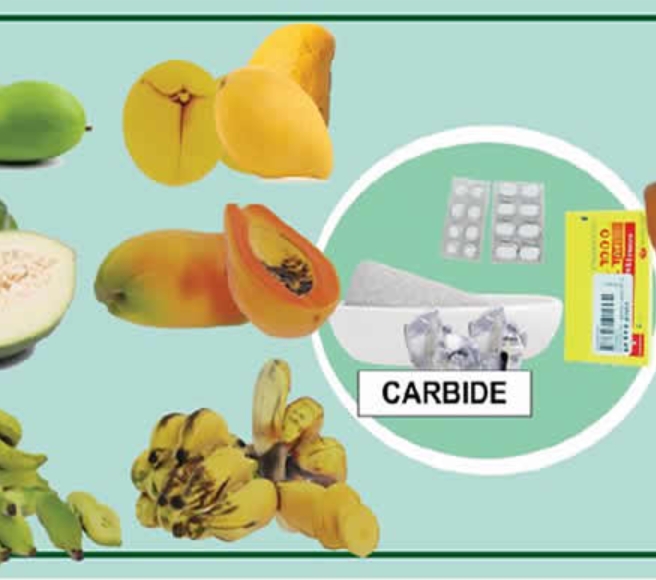


Artificial ripening is commonly employed to make fruits market-ready quickly, especially in regions with poor cold-chain infrastructure.
Chemicals such as calcium carbide and, more recently, paracetamol, have been found to be used in this process.
Research shows that these chemicals release heat when activated, creating conditions that mimic natural ripening. However, this process often introduces toxic substances into fruits, posing health risks to consumers.
A study by Mouli Chandar and Anton Smith from the Department of Pharmacy, Faculty of Engineering and Technology at Annamalai University, in Chidambaram, India, reviewed the artificial ripening of bananas, examining its physicochemical changes, benefits, and harmful effects.
Their research examined the effects of various ripening methods, including natural ripening, fumigation, exposure to heat, and the use of substances like calcium carbide, ethylene, and methyl jasmonate.
The study found that natural ripening yields beneficial effects without toxicity, while stress-induced or chemically induced ripening alters active components, potentially leading to physiological dysfunction in humans.
Negative risks
Using paracetamol to artificially ripen fruits such as bananas and plantains has become a significant health concern in Nigeria.
Health and nutrition experts warn that this practice is hazardous due to chemical alterations and the risks it poses to the food chain.
Paracetamol, also known as acetaminophen, contains active compounds such as para-aminophenol derivatives, which exhibit mild oxidative properties.
When exposed to heat or specific environmental conditions, these compounds break down into by-products that can accelerate the ripening process by stimulating the release of ethylene gas, a natural plant hormone responsible for ripening.
However, the misuse of paracetamol in ripening alters its chemical composition, leaving harmful residues on fruits. Fruits ripened with paracetamol may retain toxic by-products, which, over time, can lead to liver and kidney damage as the body struggles to process these excessive and unnatural chemicals.
According to a health researcher based in Europe, Temitope Fadeyi, the breakdown of paracetamol under heat can produce harmful compounds such as aniline, which is potentially carcinogenic and increases the risk of cancer with prolonged exposure.
READ ALSO: NAFDAC Issues Warning To Bakeries Over Saccharin, Bromate Usage
This process also compromises the nutritional quality of fruits, reducing their vitamin content and altering their sensory characteristics.
Additionally, frequent consumption of such fruits can cause acute symptoms such as nausea, vomiting, and abdominal pain, as well as chronic conditions like organ damage.
A nutritionist and dietician, Mrs Ngozika Nnam, noted that this process can also lead to hormonal disruptions.
She noted that certain chemical by-products may act as endocrine disruptors, potentially affecting hormonal balance, fertility, and development in consumers, including children and pregnant women.
Nnam also said that the unnatural ripening process often results in fruits losing essential vitamins and micronutrients, particularly vitamin C, which deteriorates due to chemical exposure.
The nutritionist added that consuming large quantities of fruits ripened with paracetamol can as well bring about symptoms of acute poisoning, such as nausea, vomiting, abdominal pain, and even liver failure in severe cases.
She noted, “The improper disposal of used paracetamol tablets and the chemical residues left on fruits can also contaminate soil and water sources, creating environmental hazards.”
Safer alternatives to artificial ripening
Experts have noted that there are several safer alternatives to ripening these fruits than using harmful substances. and according to Nnam, one of them is natural artificial ripening.
She said, “The ripening process is carried out using natural ripening agents and methods (without the aid of chemical substances).
“Example is ripening by fumes, increasing the ripening rate by placing in a closed container, and placing fruits like apple, avocado, etc., along with unripe bananas promotes ripening to a greater extent.”
She affirmed that the natural method was the best.
“This simple method practised in the household is meant to trigger ripening and to keep the unripe fruit inside an airtight drum containing rice or wheat.
“The fruits stored in such a way ripen quickly because of the accumulation of ethylene gas and the self-heating nature of grains. Rice and wheat grains differ in their seed dormancy, which affects the seed respiration rate.
READ ALSO: NAFDAC Demands Full Compliance With Sachet, PET Bottle Alcohol Ban
“Respiration of rice or wheat grains produces carbon dioxide, which induces ethylene biosynthesis in several fruits. Since respiration is higher in rice than in wheat, unripe fruits placed in rice ripen faster than those in wheat.
“Another alternative is spreading unripe fruits in layers over paddy husk or wheat straw for a week to ripen,” she explained.
A public health researcher, Grandeur Malite, shed light on an experiment where various packaging materials—plastic bags, poly sheets, wooden boxes, and open-air (as a control)—were combined with natural ethylene sources such as avocado, mango, and tomato were used for fruit ripening. He noted that they were tested as two factors, explaining, “One packaging material contained one plant ethylene source at a time, with equal weights of the three ethylene sources used separately for each. This created 12 treatments with three replications, resulting in 36 experimental units. Samples of unripe bananas were placed in each unit.
“The results showed that bananas placed with avocado ripened first in six days, followed by tomato in 6.5 days and mango in 7.1 days.
“In terms of containers, bananas placed in a wooden box ripened fastest, while those in a poly sheet took the longest time. Based on this experiment, using avocado in combination with a wooden box provides the shortest ripening period without compromising the quality of the fruit,” he concluded.
Regulatory concerns and public awareness
The National Agency for Food and Drug Administration and Control in Nigeria had severally raised concerns over the use of unsafe artificial ripening agents, including paracetamol, calcium carbide, and other dangerous chemicals.
NAFDAC warned about the inherent health risks and called for increased public education on the dangers of these practices while urging stricter regulatory actions against offenders.
The Director-General of NAFDAC, Prof Moji Adeyeye, who was represented by the Director, Chemical Evaluation and Research, Dr Patrick Omopariola, while speaking during a sensitisation workshop tagged, “Dangers of drug hawking and ripening of fruits with carbide” organised in 2023, urged Nigerians to stop eating fruits ripened with chemicals.
She said that the ignorance of safe methods had made many people to adopt unhealthy practices, which had caused health issues and claimed several lives.
“There have been clarion calls by well-meaning Nigerians on the need to take stringent regulatory actions to stem the dangerous tide of drug hawking and ripening of fruits with calcium carbide.
“In addition, several national dailies and non-governmental organisations have raised concerns on the looming danger and health implications of these two nefarious activities by certain unpatriotic and unscrupulous citizens in our country,” she said.
The NAFDAC boss charged participants to assume the role of champions in the vanguard of the campaign against drug hawking and the use of calcium carbide to ripen fruits, as well as other unsafe practices of food preservation.
She also said that the menace of drug hawking posed a serious challenge to the healthcare delivery system in the country and underscored NAFDAC’s resolute determination to totally eradicate the unwholesome practice.
READ ALSO: NAFDAC Warns Nigerians Of Fake Anti-malaria Drugs In Circulation
“Drugs are sensitive life-saving commodities, which should not be sold on the streets, in motor parks, or open markets, just like any other article of trade.
“I wish to warn that any drug hawker arrested by NAFDAC will be prosecuted and our enforcement officers are currently carrying out a synchronised nationwide operation.
“No offender will be spared from facing the full wrath of the law,” Adeyeye said.
According to Adeyeye, drug hawkers are also the major distributors and suppliers of narcotics to criminal networks, such as bandits, insurgents, kidnappers, and armed robbers.
“Drug hawkers constitute a serious threat to our national security,” she further said.
In a personal remark, Omopariola said that the dangers of using artificial methods to ripen fruits include loss of vitamins and micronutrients, adding that consumption of dangerous chemicals, such as arsenic, is carcinogenic, and that phosphorus, can lead to health issues and death.
He identified Calcium Carbide, Acetylene, Ethephon, Ethylene, and Ethylene glycol as the five most commonly used artificial ripeners in the country.
According to him, there are safe alternatives and Nigerians should embrace them.
In a presentation, the Director of Food Safety and Applied Nutrition in the agency, Mrs Eva Edwards, highlighted the dangers of food fraud and its impacts on public health.
He said that at least 200,000 Nigerians, including pregnant women and children under five, die annually from consuming contaminated food, hence the need for awareness creation on food safety.
Also, in July 2020, the Deputy Vice-Chancellor (Research, Innovation, and Strategic Partnerships), University of Ibadan, Professor Adenike Adeyemo, warned that many of the toxic chemicals added as preservatives are not safe for human consumption.
The professor of Aquatic Epidemiology and Toxicology, declared that the perpetrators are ignorant of the health implications of the act and tend to get away with the atrocity because the quantity of the poison added is small and usually takes a long time before its side effects are noticed.
Although Nigeria lacks statistics on the health effects of these toxic preservatives in foods, the academic said, “There is an increase in diseases such as cancer, birth defects, kidney failure, and diabetes in children. These diseases don’t just happen.
READ ALSO: NAFDAC Shuts 10 Bakeries, Eight Water Factories In Rivers
“It is a function of what an individual breathes in or eats.”
According to her, toxic preservatives have cumulative effects on the body, even though they do not kill immediately when consumed.
“It is something that we need to take more seriously. It is something that is very scary. As humans, our body mass is large and the quantity that we eat is not massive, so we would not die immediately or know that these things are causing harm.
“By the time the effect, kidney or liver problems, or cancer, starts to show—maybe 10 or 15 years after—nobody will link it to what was eaten in the past.”
Also, the Director of Drug Metabolism and Toxicology Research Laboratories, University of Ibadan, Professor Olatunde Farombi, stated that although the practice of adding toxic preservatives to food items, including fish, vegetables, and fruits, is common, it is not official.
According to him, while many traders use carbide to ripen fruits such as oranges, mangoes, and bananas to preserve them, some spray chemical compounds like Sniper, a brand of pesticide, on beans to prevent weevils from infesting them.
Farombi said, “These practices are illegal. All these chemicals can affect a wide range of body systems and cause liver failure, cancer, kidney failure, and brain damage. Can you imagine people using an old tyre to roast a cow? The tyre contains a lot of toxic substances that can contaminate the meat.
“Some people use formalin, a chemical used to preserve corpses in the morgue, to preserve fish in cold rooms before eventually selling them to people for consumption.”
Preventive measures
Experts have noted that education, tighter regulation, and safer practices would help to solve this problem.
A food safety expert, Samuel Essien, noted, “Public awareness campaigns can educate farmers and sellers about the dangers of using chemicals for ripening.
“Stronger food safety regulations, including testing of fruits for chemical residues, are crucial. Encouraging traditional ripening methods and providing safer, regulated ripening agents can mitigate these risks.”
He added, “It is evident and already proved by many researchers that the use of chemical agents such as calcium carbide, ethephon, ethylene glycol, calcium chloride, and inducing ripening by fumes from kerosene is highly hazardous and may be fatal if consumed.
“It is always best to use naturally induced methods of artificial ripening by placing bananas with avocado, apples, etc., or by using fumes from dried leaves or straws.”
PUNCH




Headline
FG Summons S. African Envoy Over Rising Xenophobic Attacks On Nigerians


The Federal Government has summoned the Acting High Commissioner of South Africa in Abuja over renewed concerns about xenophobic attacks and protests targeting foreign nationals, including Nigerians, living in that country.
The Ministry of Foreign Affairs said the envoy is expected at its headquarters on Monday, May 4, 2026, for a high-level engagement aimed at addressing the growing tension and safeguarding bilateral relations between both countries.
In a statement issued on Sunday, the spokesperson for the Ministry, Kimiebi Ebienfa, said Nigeria would formally express its “profound concern” over recent developments in South Africa, particularly reports of harassment, violence, and destruction of property belonging to foreign nationals.
According to the ministry, the meeting will focus on ongoing demonstrations by various groups in South Africa and documented cases of attacks on Nigerians and their businesses in parts of the country.
READ ALSO:Group Condemns Tunisian Xenophobic, Racial Attacks On African Migrants
“The objective of this engagement is to formally convey the Nigerian Government’s profound concern regarding recent events that have the potential to impact the established cordial relations between Nigeria and South Africa,” the statement read.
It added that discussions would also address ongoing demonstrations by various groups within South Africa and documented instances of mistreatment of Nigerian citizens and attacks on their businesses.
The ministry acknowledged growing anger among Nigerians over reports of xenophobic violence but urged restraint, stressing that diplomatic engagement remained the preferred channel for resolution.
It assured Nigerians that the Federal Government was actively engaging South African authorities to ensure the protection of its citizens abroad.
READ ALSO:US Visa Adjudication Sparks Concerns Over Diplomatic Relations
“The Ministry is aware of the growing discontent among Nigerians concerning the treatment of their nationals in South Africa. Nevertheless, it implores the Nigerian public to remain calm and reiterates the Federal Government’s commitment to protecting the rights and well-being of Nigerian citizens residing in South Africa,” the statement added.
The latest diplomatic move comes amid renewed reports of xenophobic tensions in parts of South Africa, where foreign-owned businesses have occasionally been targeted during protests linked to unemployment and economic hardship.
South Africa has a history of xenophobic violence dating back to 2008, with subsequent flare-ups in 2015 and 2019, when mobs attacked migrants, looted shops, and displaced thousands of foreign nationals across several provinces.
In past incidents, Nigerians and other African nationals were among those affected, prompting strong diplomatic reactions from Abuja and calls for stronger protection of foreign communities.
While South African authorities have repeatedly condemned such attacks and deployed security forces to restore order during outbreaks of violence, concerns have persisted over recurring hostility in some communities.
Headline
Mississippi Man ‘Kills Mother, Flushes Her Remains Down Toilet’


A 29-year-old Mississippi man, Zachary Lavel Jackson Jr., has been charged with multiple offences, including first-degree murder, over the death of his mother, Lana Brown Bradley, after deputies responded to her Natchez home on April 4 following a missing person report from relatives.
The Adams County Sheriff’s Office said deputies were called to Bradley’s residence after her oldest son was unable to reach her the previous day.
Jackson was initially identified as a family member before investigators confirmed he was her son.
Sheriff Travis Patten described the case as deeply disturbing.“This is by far the most heinous crime that I’ve ever witnessed in my entire life. We weren’t out there that day; this was one of those things when we walked up.
READ ALSO:Bandits Kill Nine, Injure Eight In Fresh Attack On Zamfara Village
“This was one of those cases that you will never, ever forget in your life. This is the type of case that follows you home,” Patten told WJTV.
According to the sheriff, deputies noticed signs of a recent cleanup when they arrived at the home.
“As soon as they walked in the house, they could just see where somebody had been cleaning up, and they could smell chemicals all throughout the house.
“Floor was extremely slippery. And the older son said that this is just unusual for the youngest son to be cleaning up the house like that,” Patten explained.
READ ALSO:US Comedian Reggie Carroll Shot Dead In Mississippi
Jackson, the youngest son, was found in a bathroom, where deputies allegedly made a discovery that became central to the investigation.
“I can say what was in the toilet, and it was her flesh. He chopped her up in pieces and dismembered her in a way that whoever came looking for her would have to do their due diligence to find her, and that’s just what we did,” the sheriff said.
Authorities said Jackson allegedly placed parts of his mother’s body in a suitcase and attempted to dispose of other remains.
Jackson faces charges of first-degree murder, second-degree murder, mayhem and tampering with evidence.
READ ALSO:Popular Influencer Lola Shot
Investigators said Bradley, a retired teacher, had recently sought to evict her son from the home. Patten, citing family interviews, said Jackson was believed to be mentally unstable but also noted that his actions appeared deliberate.
“He had threatened her the day before because she was looking to have him evicted from the home.
“She was in the process of doing so and had just gone to court the day before to have him removed from the home,” Patten explained.
Headline
Iran Says War With US May Resume As Trump Rejects Proposal


Iran’s military has warned that the war with the United States and Israel could resume, declaring that it is fully prepared for any renewed confrontation as tensions between the sides continue to deepen.
In a statement reported by Iranian state-affiliated media, senior military officials said a return to hostilities is “likely”, citing what they described as Washington’s lack of commitment to previous agreements and negotiations.
The warning comes after US President Donald Trump expressed dissatisfaction with Iran’s latest peace proposal, saying the terms presented by Tehran included demands he “can’t agree to”.
READ ALSO:US Underestimated Iran Before War – France’s Bardella
According to officials in Tehran, Iran believes it showed flexibility during earlier negotiations, including talks held in Islamabad and during the ceasefire period. However, authorities argue that the United States has instead taken a tougher stance, widening the gap between both sides.
Iranian officials insist that key issues such as sanctions relief and the status of the Strait of Hormuz must be resolved before any broader agreement, including discussions around its nuclear programme, can progress. They also reject what they describe as US demands amounting to “surrender”.
The growing diplomatic deadlock has raised fears that another round of fighting may be imminent, with Iranian authorities indicating that preparations are already underway.
READ ALSO:Iran Allows 20 More Pakistani Ships To Pass Through Strait Of Hormuz
Meanwhile, the prolonged conflict continues to have far-reaching consequences within Iran. Internet monitoring group NetBlocks reports that the country has entered its 64th day of near-total internet disruption, effectively isolating it from global online networks.
The shutdown, which began after renewed anti-government protests earlier in the year and intensified following the outbreak of the war, has significantly disrupted businesses and livelihoods across the country.
Beyond Iran, the conflict is also reshaping global dynamics. Rising oil prices linked to the war have placed pressure on international markets, while geopolitical tensions have strained alliances, including between the United States and European partners.
As both sides remain far apart on key issues, analysts warn that without a breakthrough in negotiations, the fragile pause in fighting could collapse, paving the way for renewed military escalation in the region.
-

 Politics4 days ago
2027: Tinubu’s Re-election May Put An End To Nigeria — Baba Ahmed Warns
-

 Metro5 days ago
I’m A Street Girl’ – Bimbo Ademoye Clashes With Area Boys [VIDEO]
-

 Politics5 days ago
BREAKING: 2027: Former Adamawa APC Guber Candidate, Aishatu Binani Defects To NDC
-

 Politics5 days ago
Senatorial Seat: Ogbakha-Edo Warns Against Imposition Of Candidates In Edo South
-

 Business3 days ago
JUST IN: Nigerian Filling Stations Reduce Fuel Price After Hike
-

 Entertainment4 days ago
Actress Eniola Badmus Gets New Federal Appointment
-

 News5 days ago
10 African Countries With Highest Petrol Prices In Prices In April 2026
-

 News2 days ago
BREAKING: Wike Picks Alabo George For Rivers Governorship
-

 News3 days ago
OPINION: Why South Africans Murder Nigerians In Cold Blood
-

 News4 days ago
2027: Pastor Adeboye Speaks On Nigeria’s Next President
