

Headline
How Nigeria Spent N207 Billion On 68 million Nigerians Who Didn’t Vote


N207 billion may have been expended on 68 million Nigerians who registered to vote in the 2023 elections but for one reason or another ended up not being able to perform that civic responsibility.
The inability to vote has been blamed on alleged shoddiness on the part of the Independent National Electoral Commission (INEC) whose officials arrived late for polls commencement and could not attend to most of the potential voters who had stormed polling units across the nation before the election closed, relocation from Nigeria and death among others.
Meanwhile, a source at INEC has absolved the Commission’s Chairman, Professor Mahmood Yakubu, of blame on some of the issues that attended the polls, saying the electoral management body’s (EMB) boss did all he could to deliver Nigeria’s freest and fairest election but some “human factors” stopped him.
He listed the factors to include unanticipated glitches associated with the technology deployed and the activities of what he called partisan Resident Electoral Commissioners (RECs).
The INEC Chairman has come under harsh criticism for the way the polls were handled and declaration of Senator Ahmed Bola Tinubu of the All Progressives Congress (APC) as winner of the presidential election with the celebrated writer, Chimamanda Adichie, being the latest high profile Nigerian to say the EMB disappointed the people.
Indeed, the two main opposition presidential candidates (Alhaji Atiku Abubakar of the People Democratic Party (PDP) and Mr Peter Obi of the Labour Party, LP), among others, are at the tribunal to challenge the outcome of the poll.
READ ALSO: inecAkwa Ibom: INEC Cancels Ikono/Ini Federal Constituency Return, Gives Reason
Polling ought to have opened with accreditation at 8. 30 a.m. and voting immediately while the exercise should close at 2. 30p.m. but in many polling units across Nigeria, accreditation didn’t start until noon and in some cases the evening of February 25, the first day of election when Nigerians voted for their next President, senators and members of the House of Representatives.
Many people left polling units in frustration while those who were prepared to wait ultimately couldn’t vote because officials closed without attending to them.
Of the 93 registered voters across Nigeria for the 2023 polls, only 25 million voted in the February 25 elections, leaving 68 million unable to participate in the exercise.
And for the March 18 governorship and House of Assembly polls, the turnout was worse. Estimated 21 million people voted.
Voter turnout for the elections is the worst since the 2011 polls.
Whereas the number of registered voters in Nigeria’s elections declined from 73 million in the 2011 polls to 67 million in 2015, it moved up to 82 million in 2019 and 93 million in 2023.
READ ALSO: Supplementary Polls: NNPP Wins More State Assembly Seats In Kano
Poor turnout figure
Meanwhile, turnout was 39 million in 2011, reduced to 29 million in 2015, remained at 29 million in 2019, before moving to 25 million (presidential and National Assembly polls) and 21 million (governorship and House of Assembly polls) in 2023.
Analysts said the poor turnout figure recorded in the 2023 polls could not be blamed on apathy given that Nigerians across the country, especially youths, expressed willingness to vote, a situation that apparently led to the upsurge in voters’ registration in the INEC continuous voters’ registration exercise which inevitably added 11 million voters to the register used for the 2019 elections.
Vanguard findings showed that INEC may have put the cost per voter for the 2023 elections at an estimate of $5.39, with a target of 100 million registered voters for the polls, using the N565 to $1 parallel market exchange rate as of April 2022 (10 months ago) when it released its Election Project Plan (EPP) document.
Projected budget as of that time was N305 billion.
But the election management body (EMB) ended up registering 93 million voters, seven million down from its estimated 100 million.
In essence, instead of spending N305 billion on 100 million voters, the budget ought to have come down to N298 billion for 93 billion registered voters (at N3, 207 per voter).
READ ALSO: Armed Youths Invade INEC Office As APC, PDP Clash In Port Harcourt
Further calculation shows that of the 93 million registered voters, only 25 million voted in the February 25 polls, meaning that N207 billion was earmarked for the remaining 68 million voters who could not exercise their civic responsibility while estimated 21 million voted on March 18.
Meanwhile funds were used to procure ballot papers among other items for the polls.
For instance, 93 million papers would have been printed for each of the three segments of the February 25 elections, that is, one each for the presidential, Senate and House of Representatives polls.
At the end of the day, only 25 million each voted. 68 million couldn’t.
For the March 18 polls, 21 million voted, but whereas a little lower than 93 million ballot papers would have been printed for the governorship segment of the exercise because it was holding in only 28 states, the entire 93 million would have been printed for the House of Assembly segment because the election was holding in the entire 36 states.
The actual cost of printing of the ballots could not be ascertained at press time.
Provision would have also been made for the printing of result sheets.
READ ALSO: Ex-PDP Senator Clinches Imo Labour Party Governorship Ticket
There were other expenses including personnel emoluments for the elections which would not have changed the amount spent by the country had more voters exercised their franchise in the 2023 polls.
But there were also expenses incurred on equipment like the newly introduced Bimodal Voter Accreditation System (BVAS) machines and vehicles which use are not limited to the 2023 polls as they can still be used in subsequent polls and, therefore, according to analysts, the cost cannot be calculated per voter in this year’s elections.
EPP document
Recall that INEC had proposed in April 2022 the sum of N305 billion for the conduct of the 2023 general elections.
This was contained in the commission’s EPP document unfolded during the EMB meeting with the media ahead of the 2023 general elections.
According to the document, INEC would need N305 billion to conduct the polls.
The document gave a breakdown of what each department of the commission would require as its budget for the general elections.
According to the EPP document, INEC has 23 departments and directorates.
READ ALSO: Lagos Police Recover Firearms From Fleeing Suspects
INEC said, “For established and stable democracies, the average cost per voter is pegged at $1 to $3. In transitional democracies, it ranges from $4 to $8, while the cost is fixed at $9 and above in post-conflict and some transitional democracies.”
Because of this, the commission said that elections tend to be more costly in nascent democratic countries.
Accordingly, INEC put the cost per voter for the 2023 election at an estimate of $5.39, with a target of 100 million registered voters for the election, using the N565 to $1 parallel market exchange rate, the commission quoted in its EPP document.
As a result, the actual figure is N304.54 billion, representing a 61.37 per cent increase over what was spent to conduct the 2019 general elections.
The EPP report said that INEC spent N189.2 billion to conduct the 2019 general elections, explaining that the cost per voter was fixed at $6.24 at an exchange rate of N305 with a total of 84 million registered voters.
In real terms, the cost per voter for the 2023 election reduced compared to 2019 ($5.39 against $6.24 in 2019), but the exchange rate has skyrocketed since the 2019 general elections.
READ ALSO: BudgIT Demands Breakdown Of N896bn NPC Budget
In addition, the increase in the number of registered voters — one of the determinants for planning election budgets — and the creation of 56,873 new polling units, among others, may also account for the increase in the proposed budget for the 2023 elections.
An analysis of the 2023 proposed election budget showed that nine items accounted for 76.68 per cent of the total budget. Procurement of accreditation devices was earmarked to take the bulk — 34.51 per cent of the entire budget – while provision for run-off elections was 8.89 per cent of the budget. Honoraria for ad hoc staff, logistics, and printing of ballot papers covered 7.79 per cent, 7.54 per cent, and 6.78 per cent, respectively.
On funding the 2023 elections’ budget, INEC explained that the Federal Government would provide the required funds for the commission to cover the fixed and direct costs.
INEC further explained that although it was not reflected either in the fixed budget of the commission or in the core costs for the conduct of elections, it will also receive support from development partners for some of its electoral activities such as training, capacity building, civic and voter education, production of information, education and communication materials, and engagement with stakeholders. It said all these were geared towards strengthening the integrity of the electoral process, promoting citizens’ participation, and enhancing advocacy for inclusivity concerning women, youths, persons with disability and other marginalised groups.
“For the 2023 elections, INEC has projected 100 million registered voters, proposing N305 billion to conduct the election. With the country’s declining voter turnout rate, the possibility of a huge waste of funds is quite concerning. To prevent another situation of huge resources going to waste as a result of lower voter turnout, the electoral commission may need to adopt workable measures to ensure more participation at the 2023 polls”, the EPP had said
Voting materials
The document said that INEC will spend not less than N239.2bn on procuring voting materials and vehicles that will be used in the 2023 general elections.
READ ALSO: JUST IN: EU Mission Knocks INEC, Says Violence, Vote-buying Marred Gov Polls
It also said that N239.2bn, which constituted 78.44 per cent of its N305billion budget, would be spent on 10 critical items which included ballot papers, operational vehicles, ballot boxes, allowances of ad hoc workers, the printing of result sheets, logistics and procurement of accreditation devices.
Part of the proposal in the N239.2billion budget was the N27.1billion set aside by the commission for possible run-off elections, including the one for the presidential poll.
A breakdown of the document, 2023 EPP indicated that the highest single component will be the procurement of accreditation devices which will gulp N105.2billion. This also constituted 34.51 per cent of the total election budget of N305bn.
The allowance for ad hoc workers, who will be more than one million people, was pegged at N23.7billion while N23billion was set aside for election logistics expenses which included the movement, deployment and retrieval of men and materials for the elections.
INEC was also expected to spend N20.6billion on the printing of ballot papers and N12.7billion on the procurement of non-sensitive materials.
According to the VANGUARD, the commission set aside N9.5billion for the printing of result sheets, N7.8billion for the procurement of ballot boxes and a separate N5.39billion for the same purpose. The electoral body was also expected to spend N3.9billion on the procurement of operational vehicles.
READ ALSO: Armed Youths Invade INEC Office As APC, PDP Clash In Port Harcourt
The Yakubu story
Defending Yakubu on the flaws in the polls, the INEC source, who spoke on the condition of anonymity because he was not authorized to speak on the issue owing to the sensitive nature of the matter, cited the Chairman’s quest to use technology to drive credible polls which, according to him, motivated the use of BVAs and IREV.
“It was for the reason of ensuring credible polls that the INEC boss resorted to the use of technology which was a clear departure from the past when polls were blatantly rigged by politicians altering election results at will”, he said.
“And we saw all the attempts some politicians, even parties made to abort the use of technology for the polls. Some people even went to court about four times and there were also efforts to remove Yakubu on this premise but he stood his ground.”
The INEC source said the Chairman was vindicated as post-election investigation showed that BVAS performance at the polls was over 98% successful.
On the alleged shutdown of the presidential portal of IREV to sabotage the system and influence the outcome, the source said nothing could have been further from the truth.
According to him, it was in an effort to prevent hacking into the system that necessitated the shutdown for a while.
READ ALSO: Enugu Govt Seals Hotel Where INEC Issued Certificates Of Return
He noted that whereas the portals for other elections, including the governorship, senatorial, House of Representatives and House of Assembly, had been tested to near perfection in off cycle polls (Ondo, Ekiti, Osun, Anambra, Edo), INEC never had the opportunity before the 2023 polls with a view to testing its effectiveness.
“The server operator was based in the UK”, he said.
Narrating what happened that inevitably gave the impression that the presidential portal was deliberately shut down by saboteurs determined to manipulate the outcome of the result, the source said: “The server operator was baffled by the volume of data and other things entering the portal on February 25 and thinking that hackers could have been at work and in their panicking situation, they shut down the portal.
“The shutdown was the reason the portal couldn’t take the presidential election results uploaded into the IREV from polling units whereas the senatorial and House of Representatives portals were uploading.
“But there were a local back up in Abuja which was activated immediately but it also generated some issues which led to a situation whereby one state result went to another state as shown on the IREV.
“Meanwhile, the issues were corrected when the server operators in the UK restarted the presidential election portal”.
On whether the portal shutdown could have affected the integrity of the presidential election, the source said no.
READ ALSO: 2023: INEC Gives Update On Supplementary Polls
“The portal has the capacity to store uploaded documents and alter send to IREV without any form of tampering”, he added.
According to him, those vilifying Yakubu should understand that were it not for the technology he introduced into the polls, it would have been difficult for those who now have access to BVAS which stored all the information they can now use to challenge the declaration of winners in the elections at the tribunal to do so.
Speaking on how the activities of some RECs impacted negatively on the outcome of the polls, the source said some of them were clearly partisan, saying it was unfair to now blame such activities of RECs on the EMB Chairman as they were outside of his control.
“For instance, about 19 RECs were appointed close to the polls and as it turned out many of them were clearly partisan and to make matters worse some were deployed to states where they had sympathy for the ruling parties”, he pointed out.
“Should we also blame INEC or the Chairman for this?”
The source noted that it is only INEC out of the agencies of government that participated in the election that has carried out disciplinary measures against erring staff to the extent of recommending to President Muhammadu Buhari the sacking of two RECs who had been found wanting in their conduct in the polls.
VANGUARD




Headline
FG Summons S. African Envoy Over Rising Xenophobic Attacks On Nigerians

The Federal Government has summoned the Acting High Commissioner of South Africa in Abuja over renewed concerns about xenophobic attacks and protests targeting foreign nationals, including Nigerians, living in that country.
The Ministry of Foreign Affairs said the envoy is expected at its headquarters on Monday, May 4, 2026, for a high-level engagement aimed at addressing the growing tension and safeguarding bilateral relations between both countries.
In a statement issued on Sunday, the spokesperson for the Ministry, Kimiebi Ebienfa, said Nigeria would formally express its “profound concern” over recent developments in South Africa, particularly reports of harassment, violence, and destruction of property belonging to foreign nationals.
According to the ministry, the meeting will focus on ongoing demonstrations by various groups in South Africa and documented cases of attacks on Nigerians and their businesses in parts of the country.
READ ALSO:Group Condemns Tunisian Xenophobic, Racial Attacks On African Migrants
“The objective of this engagement is to formally convey the Nigerian Government’s profound concern regarding recent events that have the potential to impact the established cordial relations between Nigeria and South Africa,” the statement read.
It added that discussions would also address ongoing demonstrations by various groups within South Africa and documented instances of mistreatment of Nigerian citizens and attacks on their businesses.
The ministry acknowledged growing anger among Nigerians over reports of xenophobic violence but urged restraint, stressing that diplomatic engagement remained the preferred channel for resolution.
It assured Nigerians that the Federal Government was actively engaging South African authorities to ensure the protection of its citizens abroad.
READ ALSO:US Visa Adjudication Sparks Concerns Over Diplomatic Relations
“The Ministry is aware of the growing discontent among Nigerians concerning the treatment of their nationals in South Africa. Nevertheless, it implores the Nigerian public to remain calm and reiterates the Federal Government’s commitment to protecting the rights and well-being of Nigerian citizens residing in South Africa,” the statement added.
The latest diplomatic move comes amid renewed reports of xenophobic tensions in parts of South Africa, where foreign-owned businesses have occasionally been targeted during protests linked to unemployment and economic hardship.
South Africa has a history of xenophobic violence dating back to 2008, with subsequent flare-ups in 2015 and 2019, when mobs attacked migrants, looted shops, and displaced thousands of foreign nationals across several provinces.
In past incidents, Nigerians and other African nationals were among those affected, prompting strong diplomatic reactions from Abuja and calls for stronger protection of foreign communities.
While South African authorities have repeatedly condemned such attacks and deployed security forces to restore order during outbreaks of violence, concerns have persisted over recurring hostility in some communities.
Headline
Mississippi Man ‘Kills Mother, Flushes Her Remains Down Toilet’

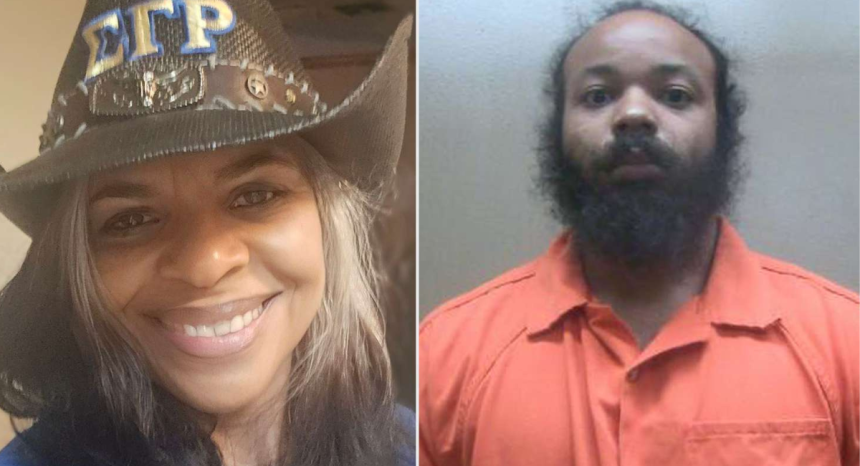
A 29-year-old Mississippi man, Zachary Lavel Jackson Jr., has been charged with multiple offences, including first-degree murder, over the death of his mother, Lana Brown Bradley, after deputies responded to her Natchez home on April 4 following a missing person report from relatives.
The Adams County Sheriff’s Office said deputies were called to Bradley’s residence after her oldest son was unable to reach her the previous day.
Jackson was initially identified as a family member before investigators confirmed he was her son.
Sheriff Travis Patten described the case as deeply disturbing.“This is by far the most heinous crime that I’ve ever witnessed in my entire life. We weren’t out there that day; this was one of those things when we walked up.
READ ALSO:Bandits Kill Nine, Injure Eight In Fresh Attack On Zamfara Village
“This was one of those cases that you will never, ever forget in your life. This is the type of case that follows you home,” Patten told WJTV.
According to the sheriff, deputies noticed signs of a recent cleanup when they arrived at the home.
“As soon as they walked in the house, they could just see where somebody had been cleaning up, and they could smell chemicals all throughout the house.
“Floor was extremely slippery. And the older son said that this is just unusual for the youngest son to be cleaning up the house like that,” Patten explained.
READ ALSO:US Comedian Reggie Carroll Shot Dead In Mississippi
Jackson, the youngest son, was found in a bathroom, where deputies allegedly made a discovery that became central to the investigation.
“I can say what was in the toilet, and it was her flesh. He chopped her up in pieces and dismembered her in a way that whoever came looking for her would have to do their due diligence to find her, and that’s just what we did,” the sheriff said.
Authorities said Jackson allegedly placed parts of his mother’s body in a suitcase and attempted to dispose of other remains.
Jackson faces charges of first-degree murder, second-degree murder, mayhem and tampering with evidence.
READ ALSO:Popular Influencer Lola Shot
Investigators said Bradley, a retired teacher, had recently sought to evict her son from the home. Patten, citing family interviews, said Jackson was believed to be mentally unstable but also noted that his actions appeared deliberate.
“He had threatened her the day before because she was looking to have him evicted from the home.
“She was in the process of doing so and had just gone to court the day before to have him removed from the home,” Patten explained.
Headline
Iran Says War With US May Resume As Trump Rejects Proposal

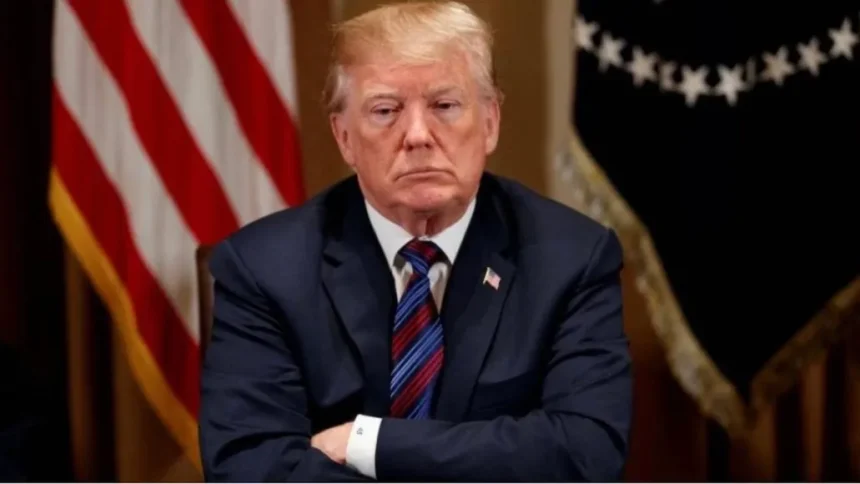
Iran’s military has warned that the war with the United States and Israel could resume, declaring that it is fully prepared for any renewed confrontation as tensions between the sides continue to deepen.
In a statement reported by Iranian state-affiliated media, senior military officials said a return to hostilities is “likely”, citing what they described as Washington’s lack of commitment to previous agreements and negotiations.
The warning comes after US President Donald Trump expressed dissatisfaction with Iran’s latest peace proposal, saying the terms presented by Tehran included demands he “can’t agree to”.
READ ALSO:US Underestimated Iran Before War – France’s Bardella
According to officials in Tehran, Iran believes it showed flexibility during earlier negotiations, including talks held in Islamabad and during the ceasefire period. However, authorities argue that the United States has instead taken a tougher stance, widening the gap between both sides.
Iranian officials insist that key issues such as sanctions relief and the status of the Strait of Hormuz must be resolved before any broader agreement, including discussions around its nuclear programme, can progress. They also reject what they describe as US demands amounting to “surrender”.
The growing diplomatic deadlock has raised fears that another round of fighting may be imminent, with Iranian authorities indicating that preparations are already underway.
READ ALSO:Iran Allows 20 More Pakistani Ships To Pass Through Strait Of Hormuz
Meanwhile, the prolonged conflict continues to have far-reaching consequences within Iran. Internet monitoring group NetBlocks reports that the country has entered its 64th day of near-total internet disruption, effectively isolating it from global online networks.
The shutdown, which began after renewed anti-government protests earlier in the year and intensified following the outbreak of the war, has significantly disrupted businesses and livelihoods across the country.
Beyond Iran, the conflict is also reshaping global dynamics. Rising oil prices linked to the war have placed pressure on international markets, while geopolitical tensions have strained alliances, including between the United States and European partners.
As both sides remain far apart on key issues, analysts warn that without a breakthrough in negotiations, the fragile pause in fighting could collapse, paving the way for renewed military escalation in the region.
-

 Politics4 days ago
2027: Tinubu’s Re-election May Put An End To Nigeria — Baba Ahmed Warns
-

 Metro5 days ago
I’m A Street Girl’ – Bimbo Ademoye Clashes With Area Boys [VIDEO]
-

 Politics5 days ago
Senatorial Seat: Ogbakha-Edo Warns Against Imposition Of Candidates In Edo South
-

 Politics4 days ago
BREAKING: 2027: Former Adamawa APC Guber Candidate, Aishatu Binani Defects To NDC
-

 Business3 days ago
JUST IN: Nigerian Filling Stations Reduce Fuel Price After Hike
-

 Entertainment4 days ago
Actress Eniola Badmus Gets New Federal Appointment
-

 News5 days ago
10 African Countries With Highest Petrol Prices In Prices In April 2026
-

 News1 day ago
BREAKING: Wike Picks Alabo George For Rivers Governorship
-

 News3 days ago
OPINION: Why South Africans Murder Nigerians In Cold Blood
-

 News4 days ago
2027: Pastor Adeboye Speaks On Nigeria’s Next President
