

Headline
How NJC Plans To Fill S’Court Vacancies Before Buhari Exit

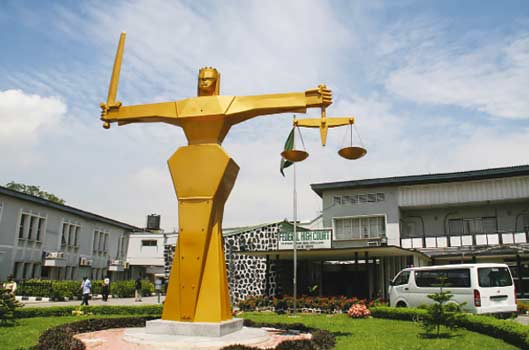


Barring any last minute change of decision, a list of eight candidates to be recommended by the National Judicial Council, NJC, to fill available vacancies on the Supreme Court bench, will hit the table of President Muhammadu Buhari in the next two or three weeks.
A top judicial officer and strong member of the NJC who preferred anonymity told Vanguard’s Law and Human Rights on Tuesday that the Council is wrapping up the processto enable President Buhari seek the assent of the senate required for his appointment of the top judicial officers before he quits office on May 29, this year.
Vanguard reliably learnt that the NJC got the hint that President Buhari is willing to hand over a Supreme Court with full complement to his successor.
This, according to the source, is aside the fact that the court is not only evidently overstressed following its increasing workload and the depletion of its workforce but also because the exercise was long overdue having commenced almost two years ago.
The court presently has 13 serving justices.
The source said it is more compelling to fill the slots because two of the 13 serving justices—Justice Musa Datijo Muhammad and Justice Amina Adamu Augie, would be retiring from the apex bench before the end of the year, a situation that would leave only 10 justices in the court.
READ ALSO: Timi Frank Urges NJC, EFCC To Probe Osun Tribunal Judges
The serving 13 justices of the apex bench are Justices Olukayode Ariwoola, Musa Datijo Muhammad, Kudirat Kekere-Ekun, Chima Centus Nweze, Amina Augie, Uwani Musa Abba Aji, John Inyang Okoro, Lawal Garba, Helen M. Ogunwumiju, I.N. M. Saulawa, Adamu Jauro, Tijjani Abubakar and Emmanuel A. Agim.
The Justice Ariwoola-led Supreme Court
Of the 13 serving justices, three are from the North West, three are from the North-East, one from the North Central, one from the South East, three from the South West and two are from the South-South.
The demography of the top judicial officers showed that while two of them are due to retire during the year, one in 2024, two in 2026, one in 2027, three in 2028, two in 2029, another two will retire in 2030.
The details of justices of the court are captured below:
1.Justice Olukayode Ariwoola, South West, August 22, 1954 -August 22, 2024
2. Justice Amina Augie, North West, September 3, 1953-September 3, 2023
3.Justice Musa Muhammad, North Central, October 27, 1953-October 27, 2023
4. Justice Uwani Aji, North East, November 7, 1956-November 7, 2026
5. Justice Kudirat Kekere-Ekun, South West, May 7, 1958-May 7,2028
6. Justice Chima Nweze (PhD), South East, September 25, 1958-September 25, 2028
7.Justice John Okoro, South South, July 11, 1959- July 11, 2029
8. Justice Lawal Garba, North West, November 11, 1958-November 11,2028
9. Justice Helen Ogunwumiju, South West, March 23, 1957-March 23, 2027
10.Justice I.N. Salauwa, North West, September 29, 1956-September 29, 2026
11.Justice Adamu Jauro, North East,June 26, 1959-June 26, 2029
12. Justice Tijani Abubakar, North East, April 15, 1960-April 15, 2030
13. Justice Emmanuel Agim,South South,April 26, 1960 -April 26, 2030
Vanguard reports that the composition of the Supreme Court at any time is governed by constitutional and other statutory provisions.
According to Dr Mojeed Alabi, the Supreme Court was to consist of the Chief Justice, two Federal Judges or such greater number as might be prescribed by the Federal legislature and such number of acting Federal Judges as might be appointed under section 139 (3) of the 1954 Constitutionat the inception in 1954.
“Under the 1960 Constitution, the composition of the Supreme Court was slightly modified as the constitution provided for a Chief Justice of the Federation and not less than three justices.
“The 1963 Constitution also modified the composition to include a Chief Justice of the Federation and not less than five justices even though the Supreme Court Act of 1960 provided that number of Supreme Court justices shall be nine.
“Two Acts of the Federal Parliament passed in 1964 increased the minimum to eight. It was however raised to ten in 1977 and twelve in 1979.
“Under the 1979 Constitution, the maximum number of justices was increased to 15 excluding the CJN,” he added.
READ ALSO: NJC Okays Appointment Of 84 New Judges, 9 Heads Of Courts [SEE LIST]
But with the promulgation of Decree 24, which heralded the 1999 Constitution, the membership of the Supreme Court was increased to a maximum of 21 justices excluding the CJN while section 231(3) of the 1999 Constitution provides that “ a person shall not be qualified to hold the office of Chief Justice of Nigeria or of a Justice of the Supreme Court, unless he is qualified to practice as a legal practitioner in Nigeria and has been so qualified for a period of not less than fifteen years.”
Notwithstanding the constitutional provision, the highest number of justices appointed to the Supreme Court was 17 all through the tenure of Justice Muhammad Lawal Uwais (1995-2006) and the first quarter of 2020 during the tenure of the immediate past Chief Justice Tanko Muhammad (2019-2022).
However, most times, the number of justices on the Supreme Court oscillated between 11 and 14 while all through the 1995 and 2022 legal years, no lawyer in private practice or academia was appointed to the Supreme Court as it used to be in the past.
But for the first time in the history of the court, the number of justices appointed to the Supreme Court bench hit a record high 21 in the first quarter of 2020 legal year under Justice Ibrahim Tanko Muhammad, but death, retirement and resignation depleted the figure to 13 justices as at today.
Specifically, Vanguard reports that between the first quarter of 2020 and June 27, 2022, four of the Supreme Court justices had retired for clocking the mandatory retirement age of 70 years, two died in office owing to protracted illness while the Chief Justice of the court himself, Justice Tanko resigned on account of ill-health even though he was said to have been ousted from the bench by the powers-that-be.
READ ALSO: NJC Recommends Appointment Of 6 Chief Judges, 30 Others As Judicial Officers (Full List)
Presently, a credible source at the NJC told Vanguard that the Council is reviewing the list of candidates sent to it by the Federal Judicial Service Commission,FJSC, last year.
“I can confirm to you that we are at shortlisting stage now. The shortlisted candidate would be interviewed at NJC before final recommendation to Mr President. The process would be concluded in about two to three weeks,” the source said.
Another source at the NJC told Vanguard that before now, NJC rarely tinkers with the list that came from the Federal Judicial Service Commission.
“But things have since changed. For appointment of judges and chief judges of high courts, NJC now does a fresh interview from the pool where FJSC picks its shortlisted candidate to ensure that the most competent hands are recommended for appointment.
“This is because it was discovered that the FJSC mostly uploads the names of candidates on the preferred list even when better candidates are on the reserve list. The discovery was done during interviews of some of the candidates on the preferred list. The NJC had at one time or the other rejected candidates on the preferred list on grounds of merit while those on reserved list were recommended for appointment.
“What the NJC does now is to give equal opportunities to all the candidates before recommending names of successful candidates to the chief executive for appointment into the bench,” the source added.
READ ALSO: 60 SANs Storm Court For Legal Battle Against FG, NASS On Judges’ Salary
It is, however, not immediately clear if the NJC would restrict itself to the names contained in the one-year-old FJSC short list produced by the administration of Justice Ibrahim Tanko Muhammad for more reasons than one.
The Vanguard source who though did not confirm if NJC would go outside the FJSC list however explained that the new Chief Justice, Ariwoola is aware that there has been a persistent and mounting clamour by stakeholders that the composition of the Supreme Court should be allowed to enjoy sound legal minds from private practice and academia to improve the quality of the court’s judgments which some pundits felt has gone down.
Besides, the source reminded Vanguardthatexisting FJSC short list did not accommodate the North East where the immediate past Chief Justice of Nigeria, Justice Tanko Muhammad who resigned his appointment, hailed from.
It will be recalled that for the resignation of Justice Tanko, he was billed to remain on the Supreme Court bench till December 31, 2023 when he would have clocked the mandatory retirement age of 70.
But his premature resignation has left another vacancy for competent candidates from the North East region of the country.
READ ALSO: Court Orders FG To Immediately Review Salaries Of Judicial Officers
On-going efforts to fill available vacancies at the Supreme Court
Vanguard reports that before the Chief Justice Tanko Muhammad resigned his position on June 27, 2022, the process of appointing justices into the Supreme Court had commenced and was already in top gear.
Recall that Chief Justice Muhammad (as he then was) had on January 19, 2022 requested stakeholders including the NBA to nominate suitable candidates for the said positions.
He had promised the NBA that only six suitably qualified lawyers would be selected from a pool of applicants from five of the country’s geopolitical zones.
Following this, the NBA had nominated 23 lawyers, including seven Senior Advocates of Nigeria,SANs, and two women, for the job.
The CJN’s proposal responded to years of pressure by stakeholders, particularly the Body of Senior Advocates of Nigeria,BOSAN, for its members and distinguished academics to be appointed to the topmost echelon of the nation’s judiciary.
The proposal was not implemented by successive CJNs since the tenure of Justice Muhammadu Uwais who served between 1995 and 2006.
READ ALSO: Chief Of Air Staff Hints On When Insurgency, Banditry Would End
Justice Tanko had released a provisional list of candidates for consideration for the top job of Associate Justice of the Supreme Court.
The list which was sent to the Nigerian Bar Association for scrutiny contained 29 Justices of the Court of Appeal from five geopolitical zones.
None of the senior lawyers including seven SANs, that applied for the vacancies at the apex court was on the list.
Vanguard recalls that previous efforts to bring in some SANs to the apex bench in 2017 also failed during the tenure of Chief Justice Walter Onnoghen.
The former NBA President A. Mahmoud, had in a letter sent to the e-mails of all registered lawyers invited applications from suitably qualified legal practitioners to be appointed to the Supreme Court as provided for in Section 231(3) of the Constitution of the Federal Republic of Nigeria (as amended).
The process was on-going when Justice Onnoghen was thrown out of the bench with an exparte order from the Code of Conduct Tribunal.
READ ALSO: B-Z-A-R-R-E! Acting CJN, Ariwoola, Reportedly Started School Aged One
Judges shortlisted by FJSC for appointment into the Supreme Court bench
The one-year-old FJSC document before the NJC presently for the recommendation of competent candidates to fill the existing vacancies on the Supreme Court’s maximum 21-man bench includes five jurists each from the North-Central, North-West, South-South and South-West, while the South-East has a nine-man jurist team.
The candidates, all justices of the Court of Appeal, who made the list from the North Central zone are Justices Jummai Sankey, Stephen Adah, Sa’idu Hussain, Ridwan Abdullahi and Mohammed Idris, while the Justices of the Court of Appeal, who made the list from the North West Zone are Justices Ali Gumel, Tani Hassan, Mohammed Shuaibu, Jamilu Tukur and Balkisu Aliyu.
Also, the candidates, all justices of the Court of Appeal, who made the list from the South East are Justices Uzoamaka Ndukwe-Anyanwu, Chidiebere Uwa, Chioma Nwosu-Iheme, Theresa Orji-Abadua, Obande Ogbuinya, Uchechukwu Onyemenam, Onyekachi Otisi, Ugochukwu Ogakwu, and Kenneth Amadi, while the justices of the Court of Appeal, who made the list from the South South are Justices Moore Adumein, Biobele Georgewill, Frederick Oho, Dr Abimbola Obaseki-Adejumo, and Ebiowei Tobi.
The justices of the Court of Appeal from the South West that made the FJSC list are Justices Oyebisi Omoleye, Tunde Omotoye, Habeeb Abiru, Peter Ige and Joseph Oyewole.
The calculation at the time was that apart from the Southeast which was billed to get two out of available six slots then, other zones were billed to get one slot each on the apex court bench.
The mantle of leadership had since changed but what is left to seen is how the new leadership of the court and Chairman of both the FJSC and the NJC, Justice Ariwoola would fill the available vacancies at the Supreme Court.
The constitution allows appointment of qualified persons into the bench and not mere promotion of Justices of the Court of Appeal to the Supreme Court bench.
READ ALSO: NJC Issues Directives to Heads Of Court Nationwide On Election-related Cases
Recall that top lawyers had protested the FJSC short list on the account that it did not have any name of sound lawyers and academics who showed interest in the bench.
For instance, a Professor of Public Law, Prof Akinseye George, SAN, had said shortly after the FJSC list came out: “From all indications, it appears that for now, the Supreme Court does not want to open its doors for non-justices of the Court of Appeal. If you are not at the Court of Appeal, they don’t want you there. That is the impression that I get, he said, adding that the list however cognized federal character.
A respected member of the inner bar, Chief Benbella Anachebe, SAN, said the Supreme Court should align with the constitutional provision for federal character. In doing so, it should be reminded to pick quality best brains from each of the zones even if they will not pick the most senior justices of the lower court.
Another prominent member of the inner bar, Chief Mike Ahamba, SAN, said he was also in support of merit as yardstick to appoint justices into the Supreme Court but that he would not give any opinion contrary to the constitutional provisions.
The pioneer Attorney-General and Commissioner for Justice of Osun State, Asiwaju Gboyega Awomolo, SAN, in his own view said “we have been agitating, urging that the appointment into the Supreme Court should not be restricted to justices of the Court of Appeal and that other qualified Nigerians in the academia and private legal practice be considered.
“Unfortunately, in the current exercise going on, Justice Tanko administration restricted the recommendation again to justices at the Court of Appeal. Appointment into the Supreme Court now depends on the CJN who is the chairman of the NJC and the general thinking of the members of the NJC.
“However, I really do not want to bother myself with the number of justices from each region. I want the appointment of the Supreme Court to be simply on merit.
“Emphasising character will amount to compromising standard and that has been the major complaint of the NBA: when you start looking for federal character compliance, you are more or less compromising the principle of meritocracy,” he said.
But another top lawyer who does not want his name in print said that the present situation at the apex bench requires emergency situation.
He said pending the time the Supreme Court would sort itself out regarding the proper persons to appoint into the apex bench, he said the following measures must be taken urgently:
a) Amicus Curia role and officers should be introduced and standardized in the Supreme Court. An Advocate General Office should be set up to manage, consider, and participate in all public and constitutional law litigation.
b) Standards of legal assistants employment should be re-assessed. There should be evidence of a strong research capacity with a minimum number of publications spread across reputable journals in constitutional law, public law, business law and international law. “I agree that in our federal system, the Supreme Court must reflect federal character so that all Nigerians will have a sense of representation in the court. However, federal character must be applied along with the principle of meritocracy.
VANGUARD




Headline
FG Summons S. African Envoy Over Rising Xenophobic Attacks On Nigerians

The Federal Government has summoned the Acting High Commissioner of South Africa in Abuja over renewed concerns about xenophobic attacks and protests targeting foreign nationals, including Nigerians, living in that country.
The Ministry of Foreign Affairs said the envoy is expected at its headquarters on Monday, May 4, 2026, for a high-level engagement aimed at addressing the growing tension and safeguarding bilateral relations between both countries.
In a statement issued on Sunday, the spokesperson for the Ministry, Kimiebi Ebienfa, said Nigeria would formally express its “profound concern” over recent developments in South Africa, particularly reports of harassment, violence, and destruction of property belonging to foreign nationals.
According to the ministry, the meeting will focus on ongoing demonstrations by various groups in South Africa and documented cases of attacks on Nigerians and their businesses in parts of the country.
READ ALSO:Group Condemns Tunisian Xenophobic, Racial Attacks On African Migrants
“The objective of this engagement is to formally convey the Nigerian Government’s profound concern regarding recent events that have the potential to impact the established cordial relations between Nigeria and South Africa,” the statement read.
It added that discussions would also address ongoing demonstrations by various groups within South Africa and documented instances of mistreatment of Nigerian citizens and attacks on their businesses.
The ministry acknowledged growing anger among Nigerians over reports of xenophobic violence but urged restraint, stressing that diplomatic engagement remained the preferred channel for resolution.
It assured Nigerians that the Federal Government was actively engaging South African authorities to ensure the protection of its citizens abroad.
READ ALSO:US Visa Adjudication Sparks Concerns Over Diplomatic Relations
“The Ministry is aware of the growing discontent among Nigerians concerning the treatment of their nationals in South Africa. Nevertheless, it implores the Nigerian public to remain calm and reiterates the Federal Government’s commitment to protecting the rights and well-being of Nigerian citizens residing in South Africa,” the statement added.
The latest diplomatic move comes amid renewed reports of xenophobic tensions in parts of South Africa, where foreign-owned businesses have occasionally been targeted during protests linked to unemployment and economic hardship.
South Africa has a history of xenophobic violence dating back to 2008, with subsequent flare-ups in 2015 and 2019, when mobs attacked migrants, looted shops, and displaced thousands of foreign nationals across several provinces.
In past incidents, Nigerians and other African nationals were among those affected, prompting strong diplomatic reactions from Abuja and calls for stronger protection of foreign communities.
While South African authorities have repeatedly condemned such attacks and deployed security forces to restore order during outbreaks of violence, concerns have persisted over recurring hostility in some communities.
Headline
Mississippi Man ‘Kills Mother, Flushes Her Remains Down Toilet’


A 29-year-old Mississippi man, Zachary Lavel Jackson Jr., has been charged with multiple offences, including first-degree murder, over the death of his mother, Lana Brown Bradley, after deputies responded to her Natchez home on April 4 following a missing person report from relatives.
The Adams County Sheriff’s Office said deputies were called to Bradley’s residence after her oldest son was unable to reach her the previous day.
Jackson was initially identified as a family member before investigators confirmed he was her son.
Sheriff Travis Patten described the case as deeply disturbing.“This is by far the most heinous crime that I’ve ever witnessed in my entire life. We weren’t out there that day; this was one of those things when we walked up.
READ ALSO:Bandits Kill Nine, Injure Eight In Fresh Attack On Zamfara Village
“This was one of those cases that you will never, ever forget in your life. This is the type of case that follows you home,” Patten told WJTV.
According to the sheriff, deputies noticed signs of a recent cleanup when they arrived at the home.
“As soon as they walked in the house, they could just see where somebody had been cleaning up, and they could smell chemicals all throughout the house.
“Floor was extremely slippery. And the older son said that this is just unusual for the youngest son to be cleaning up the house like that,” Patten explained.
READ ALSO:US Comedian Reggie Carroll Shot Dead In Mississippi
Jackson, the youngest son, was found in a bathroom, where deputies allegedly made a discovery that became central to the investigation.
“I can say what was in the toilet, and it was her flesh. He chopped her up in pieces and dismembered her in a way that whoever came looking for her would have to do their due diligence to find her, and that’s just what we did,” the sheriff said.
Authorities said Jackson allegedly placed parts of his mother’s body in a suitcase and attempted to dispose of other remains.
Jackson faces charges of first-degree murder, second-degree murder, mayhem and tampering with evidence.
READ ALSO:Popular Influencer Lola Shot
Investigators said Bradley, a retired teacher, had recently sought to evict her son from the home. Patten, citing family interviews, said Jackson was believed to be mentally unstable but also noted that his actions appeared deliberate.
“He had threatened her the day before because she was looking to have him evicted from the home.
“She was in the process of doing so and had just gone to court the day before to have him removed from the home,” Patten explained.
Headline
Iran Says War With US May Resume As Trump Rejects Proposal

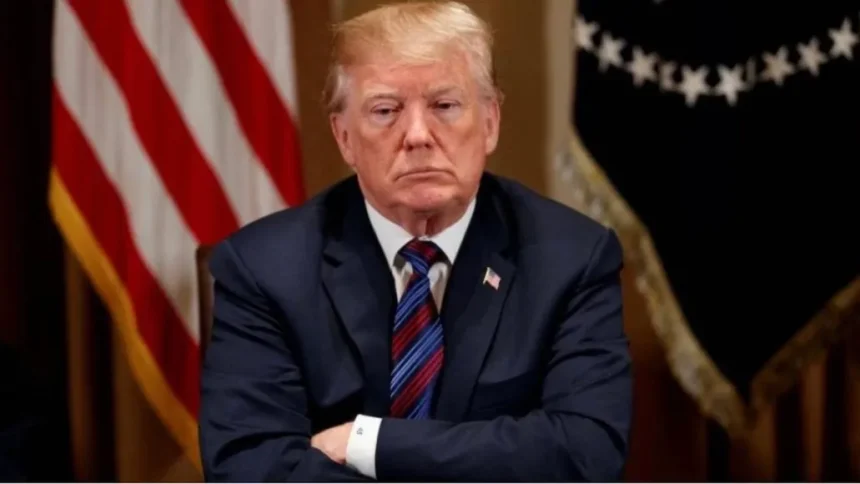
Iran’s military has warned that the war with the United States and Israel could resume, declaring that it is fully prepared for any renewed confrontation as tensions between the sides continue to deepen.
In a statement reported by Iranian state-affiliated media, senior military officials said a return to hostilities is “likely”, citing what they described as Washington’s lack of commitment to previous agreements and negotiations.
The warning comes after US President Donald Trump expressed dissatisfaction with Iran’s latest peace proposal, saying the terms presented by Tehran included demands he “can’t agree to”.
READ ALSO:US Underestimated Iran Before War – France’s Bardella
According to officials in Tehran, Iran believes it showed flexibility during earlier negotiations, including talks held in Islamabad and during the ceasefire period. However, authorities argue that the United States has instead taken a tougher stance, widening the gap between both sides.
Iranian officials insist that key issues such as sanctions relief and the status of the Strait of Hormuz must be resolved before any broader agreement, including discussions around its nuclear programme, can progress. They also reject what they describe as US demands amounting to “surrender”.
The growing diplomatic deadlock has raised fears that another round of fighting may be imminent, with Iranian authorities indicating that preparations are already underway.
READ ALSO:Iran Allows 20 More Pakistani Ships To Pass Through Strait Of Hormuz
Meanwhile, the prolonged conflict continues to have far-reaching consequences within Iran. Internet monitoring group NetBlocks reports that the country has entered its 64th day of near-total internet disruption, effectively isolating it from global online networks.
The shutdown, which began after renewed anti-government protests earlier in the year and intensified following the outbreak of the war, has significantly disrupted businesses and livelihoods across the country.
Beyond Iran, the conflict is also reshaping global dynamics. Rising oil prices linked to the war have placed pressure on international markets, while geopolitical tensions have strained alliances, including between the United States and European partners.
As both sides remain far apart on key issues, analysts warn that without a breakthrough in negotiations, the fragile pause in fighting could collapse, paving the way for renewed military escalation in the region.
-

 Politics3 days ago
2027: Tinubu’s Re-election May Put An End To Nigeria — Baba Ahmed Warns
-

 Metro4 days ago
I’m A Street Girl’ – Bimbo Ademoye Clashes With Area Boys [VIDEO]
-

 News5 days ago
VIDEO: Moment S’Court Recognises David Mark-led ADC Leadership
-

 Politics4 days ago
BREAKING: 2027: Former Adamawa APC Guber Candidate, Aishatu Binani Defects To NDC
-

 Politics4 days ago
Senatorial Seat: Ogbakha-Edo Warns Against Imposition Of Candidates In Edo South
-

 Business3 days ago
JUST IN: Nigerian Filling Stations Reduce Fuel Price After Hike
-

 Entertainment4 days ago
Actress Eniola Badmus Gets New Federal Appointment
-

 Metro5 days ago
Robbers Raid Imo Catholic Church, Steal Holy Communion Materials
-

 News4 days ago
10 African Countries With Highest Petrol Prices In Prices In April 2026
-

 Metro5 days ago
VIDEO: Policemen Filmed Assaulting Individual In Viral Clip
