
Headline
How TB Joshua Made Childless Couples To Exchange Spouses – Ex-worker Reveals
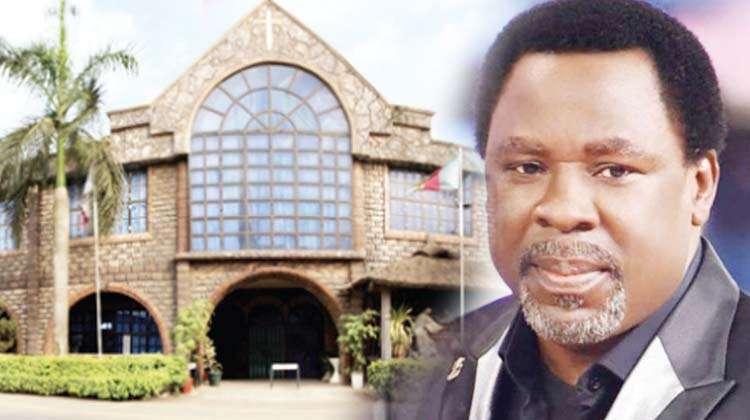
Following a controversial documentary by the BBC on the founder of the Synagogue Church of All Nations, Pastor Temitope Joshua, a pastor in the Redeemed Christian Church of God, Debo Akinyemi, in a write-up published by ChurchTimes Nigeria, shares his experiences when he worked for the late pastor.
Having related closely, though for a short time, with TB Joshua as a journalist, I feel a compelling need to weigh in on the controversy trailing the recent expose released on him by BBC.
The argument in favour and against the BBC documentary shows that opinion is divided as to whether he was a genuine man of God or not.
Let me submit that from my personal view he was neither here nor there. It was difficult to place him because of his almost perfect outward posturing and inner suspicious conduct. Those who judged TB by his looks and humility fail to draw from the biblical saying that outward appearance could be deceptive.
I first set my eyes on him in the late 90s when he was still an itinerant white garment prophet. He used to visit Today’s Choice, the soft-sell magazine where I worked as the Sports Editor.
His points men then were our editor Osa Irabor and News Editor, Jide Oshokoya. The purpose of his frequent visits then was to curry publicity for the small things he was doing then as an upcoming church owner.
READ ALSO: BBC Investigation Reveals TB Joshua Raped, Tortured Members
But later our paths crossed again. And this time he had become a big brand, even if controversial. One of my friends had informed me of a vacancy in The Exclusive, a quaint weekly Newspaper he was publishing. Initially, I didn’t know TB Joshua had anything to do with the paper because his name never appeared in the list of management and board members.
But when I discovered that he not only owned the paper but also had almost a choke hold on the management of the paper, I became scared and wanted to turn down the appointment given to me as the deputy editor of the paper.
I had to go and seek counsel from my provincial pastor who encouraged me to take up the appointment and do my job with as much professional detachment as possible. It did not take long after joining the paper when I began to notice very disturbing developments.
He was nocturnal
First and foremost, I noticed TB Joshua was a man of the night. He would summon us the senior editorial staff to his church for meetings fixed for 5 or 6 pm but would never show up until 12 or 1 am the following morning. And when he eventually showed up the matter for which he called us could be very mundane. And the meeting itself hardly lasted longer than 10 minutes.
But while keeping us waiting he would feed the team to bursting with sumptuous meals, many times, jollof or fried rice heaped to the skies with huge chunks of chicken.
Being a spiritually sensitive person I never tasted the food, though it was always highly attractive. I was always remembering Daniel and the King’s portion in the bible. My colleagues who could have much more than normal usually would eat my portion.
READ ALSO: My Daughter Buried In Rubble, S’African Mother Laments 10 Years After TB Joshua Church Collapse
The next thing would be a directive from the prophet for us to go and pass the night in places prepared for us on the premises of the church. Again I avoided joining others to sleep there. I found it funny that our publisher would deliberately invite us for a meeting and ensure we were not able to go back to our houses.
So I would insist on going home. In fairness to him, he never stopped me or any other member of the team from leaving. He once directed the driver of his security backup vehicle to drop me in front of my house in Ota, Ogun State by 3 am. So those who stayed back chose to do so out of their own volition or probably in excessive deference to the man.
Generous with funds
But one thing I could not avoid was the bulky envelope filled with money that he always handed out to us at each meeting.
You could open your envelope and find as much as 25,000. Just as you could be summoned to another meeting the following day or each day the rest of the week after which the envelope would go round. It never mattered if you had not touched the handout of the previous meetings where nothing of importance was discussed.
Sometimes he would just say the meeting was to commend some of us for the stories we wrote. This seemed to make him the toast of the team except me. This generosity seemed more subversive than anything else. What publisher would call meetings to disrupt editorial schedules just to share envelopes?
Disciples lived regulated lives
The frequent visit to the place on his invitation made it possible for me to observe some of the inner workings of TB’s church. He kept a large flock of special workers labeled disciples, many of whom were gorgeous, ravishing young ladies.
READ ALSO: What TB Joshua Did To My Family – Nigerian Singer
He forbade the disciples from any form of secular job, though many of them had second or even third degrees. They were not permitted to own any savings or carry money on them anytime. But their needs were adequately met.
They only needed to make requisitions for whatever material needed like clothes, shoes, and bags, and seek TB’s approval. The materials would be supplied promptly. Of course, they fed free of charge and lived in the hostels built by the church.
But they lived a highly regulated life that made them appear like soulless robots. They lived more in fear of the prophet than God. They also seemed to have taken an oath of secrecy.
So they spoke, saw, and heard no evil about the church system. They were not permitted to step out of the gate of the church without a pass signed by the prophet. Yet the disciples looked happy, except that they were separated from their beloved ones.
They dared not step outside the stricture set by Joshua. The consequence was always grave. They could disappear without a trace or get ejected into a difficult life of dreariness outside. Those so rejected would find it difficult to survive and soon begin to beg to be taken back.
I once met one of such evictees who was once a top-flight disciple with ostentatious dress sense. After a few months of his eviction, he was just a shade away from madness. He was looking gaunt, wearing dirty tatters, and unable to speak coherently.
Issues with married people
Another strange thing about the church was the way he made married couples swap partners among themselves. He made this happen as a ritual to enable childless couples to have children. Strangely, many couples who could not have children would start having children with new partners with whom they had just been matched. In other words, formerly married husbands and wives saw their former partners coming to the church in the arms of new spouses.
TB was even bold enough to propose the swap to my colleague, Joe then a senior editorial staff of Guardian Newspaper. Joe and his wife were then seeking the face of God. And when they went to see the prophet he told them the only way out was to break up and find new separate partners from among the congregation.
Though TB looked meek he was known for his demonic anger which the insiders witnessed almost daily. I was then told by one of the so-called disciples helping him to manage the newspaper, how he threw up a large glass-topped table in his office in a fit of strange anger.
I did not stay for more than 3 months before TB folded the paper. So I did not stay long to see more of the disturbing things happening in the church. But the little I saw furnished rooms for reasonable suspicion. While I won’t vilify him in death, I won’t be so gullible as to join the team of his praise singers.
The Bible says we should not believe all spirits. But we must put them to the test to see if they are of the Lord. I put TB’s spirit to the test and there appeared to be too much fog around him, making me suspect him, though his persona was likable somewhat.
Source: ChurchTimes



Headline
U.S. Lawmaker Reacts To Nigeria, U.S. Airstrikes
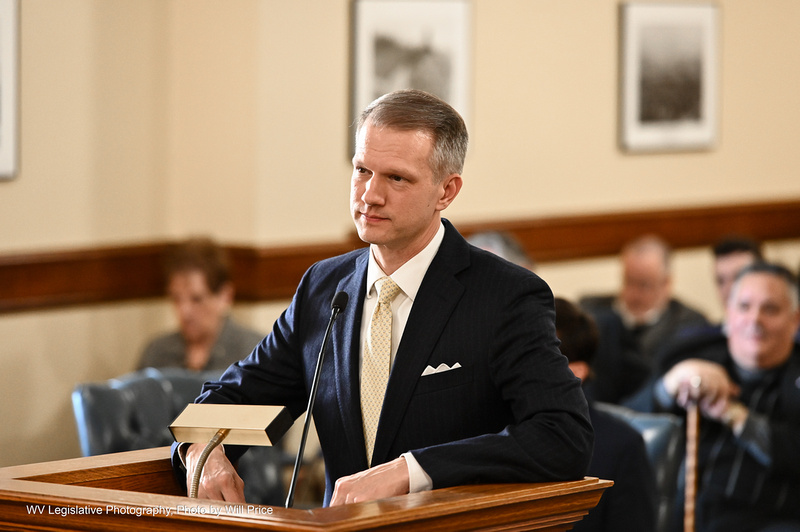
United States Congressman, Riley Moore, has stated that President Donald Trump is determined to put an end to the killing of Christians in Nigeria, warning that further action may follow if the violence persists.
Moore made the statement on Friday via his official X handle.
According to the lawmaker, the strike represents the first step in addressing what he described as the ongoing slaughter of Christians and the broader security crisis affecting Nigerians across religious and ethnic lines.
READ ALSO:US Dept Of War Shares Video Of Air Strikes In Nigeria
“President Trump has been clear that the killing of Christians in Nigeria must end,” he said.
He that the administration’s resolve on the matter should not be underestimated.
“As I stated at the outset: Do not test President Trump‘s resolved in this matter.
READ ALSO:JUST IN: US Forces Bomb Terrorists Camps In Nigeria
“Tonight’s strike in coordination with the Nigerian government is just the first step to ending the slaughter of Christians and the security crisis affecting all Nigerians,” he said.
He stressed that the operation signals a stronger stance by the United States in support of Nigeria’s efforts to tackle terrorism and violent extremism, noting that further measures could be taken if the situation does not improve.
Headline
US Dept Of War Shares Video Of Air Strikes In Nigeria

A video footage of the US military air strikes in Nigeria has emerged.
The video was released by the US Department of War following its air strikes against terrorists in Sokoto.
Earlier, the US secretary of War, Pete Hegseth had confirmed that military air strikes hit terrorists in Nigerians, saying it was deadly.
Later on, the US. African Command, confirmed that it conducted the attacks described as very deadly by President Donald Trump.
Trump said he was only keeping the promise he made earlier last month to strike the terrorists he believes are killing innocent Christians.
READ ALSO:JUST IN: US Forces Bomb Terrorists Camps In Nigeria
Although described as powerful and deadly, the casualty caused by the attack is yet to be released.
Explaining further, security expert, Brant Philip, said the strikes may have been launched “from the USS Paul Ignatius, using a Tomahawk missile.”
The Nigerian government through its ministry of foreign affairs has also confirmed that the strikes were successful.
Watch video here
Headline
JUST IN: US Forces Bomb Terrorists Camps In Nigeria

United States President Donald Trump said US forces conducted deadly strikes against Islamic State terrorists in northwestern Nigeria, and vowed more attacks if the militants keep killing Christians.
“I have previously warned these Terrorists that if they did not stop the slaughtering of Christians, there would be hell to pay, and tonight, there was,” Trump posted on his Truth Social platform, adding that “the Department of War executed numerous perfect strikes.”
READ ALSO:JUST IN: Kano Lawmaker, Sarki Aliyu Daneji, Dies Hours After Colleague’s Passing
Trump stated that the Department of War “executed numerous perfect strikes, as only the United States is capable of doing. Under my leadership, our Country will not allow Radical Islamic Terrorism to prosper.”
The US president wished everyone Merry Christmas, “including the dead Terrorists, of which there will be many more if their slaughter of Christians continues.”
Details later.

 News4 days ago
PHOTOS: New Era In Furupagha-Ebijaw As Okpururu 1 Receives Staff Of Office
- News3 days ago
UBTH CMD Marks 120 Days In Office, Expresses Commitment To Providing Conducive Working Environment
- News3 days ago
FIRS Confirms NIN As Tax ID
- News3 days ago
OPINION: Gumi And His Terrorists
- News4 days ago
FG Declares Public Holidays For Christmas, New Year Celebrations
- Metro3 days ago
Fintiri Pardons Man Sentenced To Death For ‘Killing Herdsman In Self-defence’, Others
- News3 days ago
OPINION: Christmas And A Motherless Child
 News3 days ago
OPINION: My Man Of The Season
- News2 days ago
JUST IN: Kano Lawmaker, Sarki Aliyu Daneji, Dies Hours After Colleague’s Passing
- News3 days ago
KWAM 1 Withdraws From Awujale Race, Ends Court Challenge


