
News
I Apologise For Mutilating You, Let’s Reconcile, Former FGM Tells Estranged Daughter
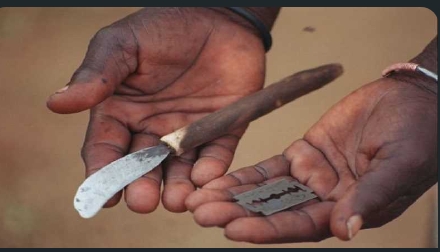
Mrs Bridget Omobude, 56, a former Female Genital Mutilation (FGM) practitioner who cut girls for more than three decades, admitted to mutilating even her daughter, a decision that fractured their relationship.
For Omogbode, reneging on female genital mutilation, a trade she learnt and had been involved with from age 11, was because of her daughter, who had relocated abroad.
Her daughter called to confirm whether she was genitally mutilated as a baby. Her mother’s affirmation led to her daughter stopping talking or receiving her calls.
Although Mrs Omobude tried all she could, to date, her daughter had stopped talking to or receiving her calls.
Mrs Omobude, now an advocate for FGM, believes that maybe when her daughter reads about her apology, she might be forgiven.
Omobude said, “When I joined this programme, I was happy to be with the children. My family has always cared for children; it’s a tradition passed down from my great-grandmother to my mother and now to us. When they brought the children for the service, we held them so we could learn how to care for them properly.
“I have surrendered my knife as a cutter, though I used to carry out the procedure on only family members. But with the experience I am having with my daughter now, I recommend other cutters stop this hazardous act.”
Mrs Sakirat Makinde (not her real name) is a survivor of FGM and a mother of five girls and a boy. Three of her female children had already been cut (circumcised).
READ ALSO:Soldier Sentenced To Death For Murder, Armed Robbery In Akwa Ibom
“I am a mother of six: a boy and five girls. Among those five girls, three are circumcised. The reason why the remaining two were not circumcised is that when I gave birth to my number five girl, there was no money to circumcise her,” recounted Mrs Makinde.
She added, “So when I gave birth to the last one, I was now planning to circumcise the two of them together. So when I heard that the money they told me was big, I went back home hoping that maybe later I would go back to circumcise them, but I didn’t go back.
“Till the beginning of this year, 2025, I was still planning to go for those two because they said when they’re not circumcised, they would not stay with one husband due to promiscuity myths and beliefs.
“This was about 12 years and nine years ago, as the children are now between 12 and nine years old. At that time, I was asked to pay N12,000 each for the two of them. It was while I was still planning how to circumcise them that a female chemist introduced the FGM programme to me, which I attended,” she said.
Another FGM survivor, Hannah (not her real name), said the painful experience has left her struggling to enjoy sexual intimacy with her partner.
The 38-year-old lady from the indigenous Igbo tribe in Enugu State said that she was cut without her consent on the orders of family members.
Hannah described FGM as barbaric and unnecessary, urging those involved in the practice to stop, saying the trauma still lingers, making her feel less feminine.
Meanwhile, Hannah, who was a victim of this act, joined the practice at age 25 and operated on girls, too. She told how girls were subjected to the surgery with no anaesthetic and bled severely.
READ ALSO:UK Nursery Worker Jailed For Abusing 21 Babies
She noted that the cutting comes with physical complications, severe pain, excessive bleeding, infections, urinary issues, menstrual problems, emotional trauma, and psychological effects, including anxiety, depression, and sexual dysfunction.
Another survivor of FGM and secondary school teacher, Doris Akare, in Edo State, was mutilated at 8 days old. This made her spend an extra three months at Lagos State University Teaching Hospital, LUTH.
“FGM is a no-no for me. Every mythical belief about the promiscuity of women is not good.”
She blames some elders for sticking to this traditional practice and harassing individuals who refuse to comply with their beliefs and values.
At a two-day media dialogue in Benin, organised by the Oyo State Ministry of Information and Orientation in collaboration with UNICEF, these survivors and campaigners shared their pains and the devastating impact of FGM.
They are transforming their personal trauma into powerful advocacy, determined to end a practice that continues to scar millions of Nigerian women and girls.
The Chief of UNICEF, Lagos Field Office, Celine Lafoucriere, said at the media parley that nearly 20 million women and girls in Nigeria had undergone FGM, ranking third highest globally.
“This is a huge number that we cannot be blind or deaf to,” she said.
Lafoucriere said that despite being outlawed in Nigeria, FGM persists in numerous Nigerian communities, adding that the practice is fuelled by myths and traditions and should be acknowledged as detrimental.
READ ALSO:FBI Places $10,000 Bounty On Nigerian Wanted For Bank Fraud
She emphasised that no cultural or traditional practice should compromise girls’ health, rights, or prospects.
In her remarks, Blessing Ejiofor, UNICEF Communication Officer at the Lagos Field Office, noted that while campaigns have led to a decline in FGM, the advocacy efforts aim for its complete elimination.
Ejiofor, who declared that no woman should undergo the harmful process of FGM, revealed that it was now a criminal offence in Nigeria to engage in it.
Moreover, the Child Protection Specialist, UNICEF Lagos Office, Dennis Onoise, said that the testimonies from the survivors and former practitioners are enough evidence that FGM is not only harmful but also dangerous to the lives and livelihoods of women.
“We need to reach out to community members and say we want to abandon this practice. We can no longer continue with this practice; we are not helping the people we cut in terms of reproductive health. It doesn’t help the woman to enjoy her body. It does not curb promiscuity, so its purpose is defeated,” Onoise declared.
(TRIBUNE)

News
Children’s Day: Chaos At Ogbe Stadium As Dozens Faint

Chaos erupted on Wednesday during the Children’s Day celebration as dozens of students reportedly collapsed following a stampede triggered by the use of pepper spray.
The event,
organised by the Edo State Ministry of Education at the Samuel Ogbemudia Stadium was disrupted after some male students of Ihogbe College allegedly made uncompromising advances towards female students at the venue.
A parent who identified himself as Oboh Emmanuel said, “the behaviour of those uncultured students attracted the attention of bouncers stationed at the stadium as they rebuked the male students.”
Oboh said the affected students later regrouped and attacked the bouncers, leading to a confrontation within the crowded arena.
READ ALSO:Children’s Day: Edo Commits To Child Protection
It was gathered that in the ensuing confusion, the bouncers were reported to have deployed pepper spray in an area occupied by a large number of students.
Several students, particularly female students, reportedly fainted after inhaling the substance, while others sustained injuries after being stepped on during the ensuing melee.
The panic was said to have spread across the stadium as students, teachers and parents scampered for safety.
Many of the affected students were reportedly rushed to the Edo Specialist Hospital for medical attention.
READ ALSO: Egor LG Chair, Ogbemudia, Vice, Osawe Impeached
Reacting to the incident, Chief Press Secretary to Governor Monday Okpebholo, Dr Patrick Ebojele, said the security personnel that fired the tear gas had been detained.
He said all the students, except two, that were rushed to the hospital have been discharged.
Ebojele stated that doctors wanted to observe the students till tomorrow before allowing them to go home.
“The two students are not seriously injured. Doctors want to observe them overnight. Permanent Secretary, Ministry of Education is still at the hospital. The man who used pepper spray has been detained.
“The incident did not happen the way it is being exaggerated. All modalities were put in place to ensure the children enjoyed their day.”
News
Okpebholo Salutes Edo Muslims, Seeks Continued Support, Prayers

Governor Monday Okpebholo of Edo State has urged Muslims and all Nigerians to continue to pray for peace, unity and progress in the country even as they celebrate the annual Eid-al-Adha
The governor, who was represented by his deputy, Dennis Idahosa, stated this during the annual Eid-al-Adha celebration with Muslim faithfuls held at Government House in Benin City.
He reiterated his administration’s commitment to fairness, inclusivity and equal opportunities for all citizens irrespective of religion and tribe.
READ ALSO:ADC Penetrates Okpebholo’s District As Defections Strengthen Party in Edo Central
According to him, the present administration remains determined to building a government that reflects the diversity of Edo State, noting that competent and qualified Muslims have continued to play vital roles in his government because of their capacity, integrity and commitment to service.
“As a government, we remain committed to fairness, inclusivity and equal opportunity for every Edo citizen, irrespective of religion, ethnicity or political affiliation. This is why quality and competent Muslims are serving in key positions in our administration.”
Okpebholo appreciated the Muslim community in Edo State for their unwavering support and continuous prayers for his administration, noting that such prayers and support have contributed immensely to the peace and steady development being witnessed across the state.
READ ALSO:Okpebholo Felicitates Muslims On Eid-el-Fitr Celebration
He then called on all Nigerians to use the occasion of Eid-al-Adha to pray for the administration of President Bola Ahmed Tinubu, stressing that the country needs collective prayers, unity and cooperation to overcome its present economic and security challenges.
“I urge all Muslims and indeed all Nigerians to use this occasion to pray for our dear nation and for the administration of President Bola Ahmed Tinubu. Nigeria needs our collective prayers, unity and support as we strive to overcome our challenges and build a more prosperous future for all.”
In his remarks, the Chief Imam of Edo State, Abdulfatai Enabulele, applauded the governor for what he described as remarkable developmental strides recorded in less than two years in office.
The cleric commended the administration for ongoing infrastructural development and efforts geared towards improving governance in the state, but appealed to the government to revisit and complete some abandoned projects inherited from the previous administration for the benefit of the people.
News
Children’s Day: Edo Commits To Child Protection
The Edo State Government has reaffirmed its commitment to protecting the rights of children, promoting quality education, and strengthening sports development across the state.
This assurance was given by the governor of Edo State, Monday Okpebholo, during the 2026 Children’s Day Celebration and Governor’s Cup Finale held on Wednesday at the Samuel Ogbemudia Stadium, Benin City.
Addressing pupils, students and teachers,
the governor described children as the pride of Edo State and the future of the nation.
The governor, represented by his deputy, Dennis Idahosa,
noted that the annual celebration provides an opportunity to honour their dreams, talents, and limitless potential.
READ ALSO:Eid-el-Kabir: Edo Deputy Gov Solicits prayers For Okpebholo
Speaking on this year’s Children’s Day theme, “Choose Kindness, Reject Bullying,” the governor said the message was timely and significant, as it emphasizes the need to create safe, supportive, and inclusive environments for children both in schools and communities.
He stated that bullying in all forms — physical, verbal, emotional, or online — has no place in society, adding that the Edo State Government remains fully committed to protecting the rights and dignity of every child.
According to him, the administration will continue to strengthen policies and programmes that promote child protection, discipline, mutual respect, and positive learning environments across schools in the State.
The governor urged children to embrace kindness, compassion, teamwork, and respect for one another, stressing that true strength lies not in intimidation but in empathy, good character, and mutual understanding.

 Metro5 days ago
My Husband Abandoned Me On Our Wedding Night To Attend Political Meeting, I Want Our Marriage Dissolved
- Headline4 days ago
Woman Passes Out After Receiving 100 Strokes Of Cane
- Headline4 days ago
JUST IN: White House Locked Down Briefly As Gunman Opens Fire At Security Checkpoint
- Politics3 days ago
Two Masked Men Gun Down Politician In His Rivers State Hotel
- Politics5 days ago
Warri Ijaw Hail INEC Delineation Report, Call For Additional Electoral Wards, Others
- News3 days ago
More Pain For Nigerians As Cooking Gas Price Increases Nationwide
- News5 days ago
Alleged Terrorism: Court Rejects Defendant’s Bid To Travel Abroad
- Metro5 days ago
My Wife Stop Cooking My Food, Beats Me Black And Blue All the Time, Man Tells Court
- Politics3 days ago
‘Tinubu’s Borrowing In 24 Months Surpasses 55 Years’ Debt Record’
- News3 days ago
FG Declares Two Days Public Holiday For Eid-el Kabir Celebration


