
Business
Inflation Rose 67 Times Under Emefiele, Says Report
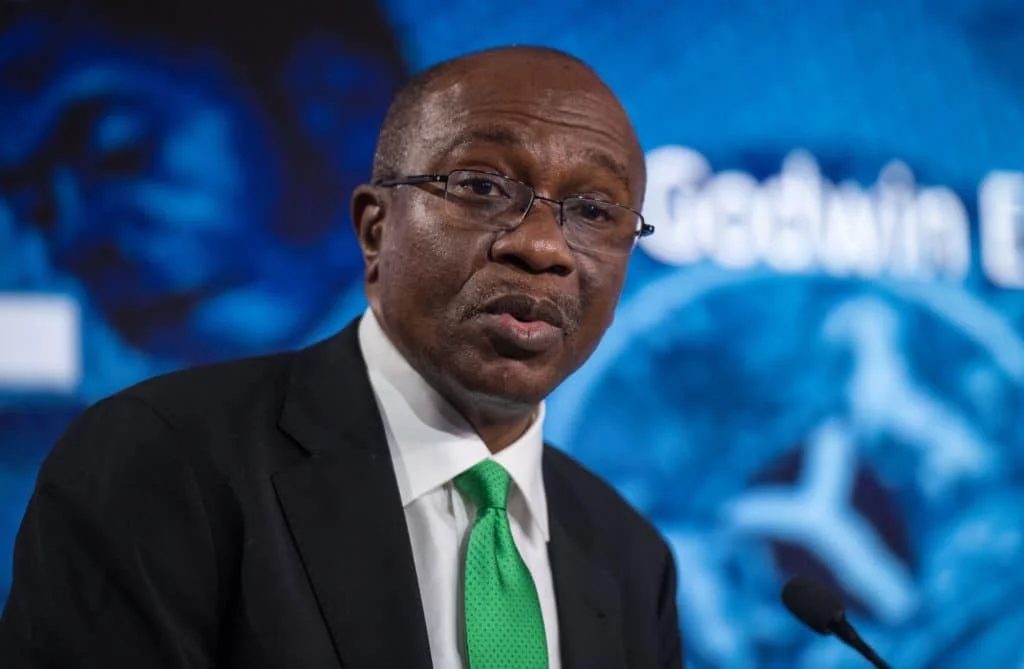
Nigeria’s inflation rate rose not less than 67 times since June 2014, according to findings by The PUNCH.
Analysis of the Inflation Rate data provided by the Central Bank of Nigeria also showed that the consumer price index was 8.2 per cent in June 2014 when the suspended CBN Governor, Godwin Emefiele, took office.
However, the country currently struggles with an inflation rate of 22.22 per cent as of April 2023. The inflation rate rose by 0.03 per cent to 22.41 per cent in May, the highest rate in 17 years.
This means that inflation rose by 14.02 percentage points while Emefiele ran the affairs of the apex bank.
A breakdown of the number of times inflation rose showed that it rose thrice between June and December 2014.
By 2015, inflation rose 10 times, except in July and October of that year.
Inflation rate became worsened in 2016 as Nigeria hit a double-digit figure of 11.38 per cent in February of that year, and inflation was on the rise throughout the year, rising 12 times.
The economy entered a recession in 2016, the first one under the suspended CBN boss.
The situation improved in 2017 as inflation only rose in July. However, it recorded different rates of decline in the same year.
The improvement was almost maintained in 2018 but inflation rose four times during the year, specifically in August, September, November and December.
By 2019, inflation rose six times, indicating Nigerians were paying more for their purchases.
READ ALSO: Inflation Hits 18yr High at 22.4%, To Surpass 23% This Month
Nigeria suffered another recession in 2020 as the COVID-19 pandemic adversely affected economical activities.
In the same year, inflation was on the rise from 12.13 per cent in January to 15.57 per cent in December.
The situation improved slightly in 2021 as inflation rose four times that year, precisely in January, February, March and December.
However, the improvement faded in 2022 as inflation rose 10 times except in January and December.
By the end of 2022, inflation had risen 63 times under the detained CBN apex bank boss.
The PUNCH further observed that inflation has been on the rise throughout 2023, from 21.82 per cent in January to 22.22 per cent in April.
This overall increase occurs despite the tightening monetary policies of the Central Bank of Nigeria to curb inflation.
Last year, the apex bank decided to continuously hike interest rates as well as introduce the naira redesign policy to control the amount of cash in circulation.
The apex bank had increased the MPR from 11.5 per cent earlier last year to 18.5 per cent in May this year across seven consecutive rate hikes.
Within a period of one year, from May 2022 to May 2023, Nigeria’s interest rate rose by about 800 basis points.
The CBN Governor, Godwin Emefiele, had said the decision to keep hiking the MPR was taken to address inflation.
The governor said loosening the MPR would negate the objective of damping pent-up aggregate demand, which fuelled inflation.
READ ALSO: Nigeria’s Inflation Increases To 22.22 Per Cent
Despite the adverse effect of the hike on the organised private sector, the CBN maintained that it would continue the hike until inflation falls below 15 per cent.
“For as long as that gap between inflation rate and the MPR is wide, giving a negative interest rate, it discourages investments, savings mobilization (particularly within the domestic economy) and also fast track capital outflows. The reasons for increasing the Monetary Policy Rate before have not gone, so we will keep at it while being mindful of the rebound effect of some of those measures.”
Checks by The PUNCH revealed that the last time the monthly inflation rate was below 15 per cent was in November 2020 at 14.89 per cent, about 27 months ago.
The PUNCH also observed that inflation was pegged at 17.16 per cent for 2023, according to the parameters and fiscal assumptions underpinning the 2023 Nigerian budget.
The suspended CBN boss added that the rate was having an expected impact on credit, adding that although the MPC was not excited that credit was dropping, it was necessary to reduce inflation.
“Around May 2022, credit was about N1.4tn, but as we speak today, credit is about N600bn. When you raise rate, you are trying to constrain credit.
“We are seeing it happen. And I must confess here that we are not happy that the hike in rate is constraining credit, but we have to do our work because inflation is at the heart of what we are saying we want to deal with.
“Because if you don’t raise rate to constrain credit, what that would mean is that it would create more inflationary pressure and create more problems for us,” Emefiele explained.
At the last Monetary Policy Committee meeting in May, the suspended CBN Governor, admitted that the MPC saw the continued rise in inflation as still “the biggest challenge confronting macroeconomic stability in Nigeria”.
Justifying the rising inflation rate, the MPC blamed the high energy cost and challenges around the supply chain, among others, which are beyond the reach of the CBN.
However, the detained CBN governor insisted the policy rate hikes had prevented inflation from rising by about 8 percentage points over the past year.
The World Bank recently warned that at least 64 million Nigerians are at risk of emergency food and nutritional assistance due to the attendant effects of rising inflation, climate change, among others.
READ ALSO: Lagos, Ondo, Bayelsa Lead States In Rising Inflation
According to the lending bank, inflation is currently pushing many Nigerians into poverty and food insecurity.
The bank also noted that although the CBN was making efforts to curb the rising inflation by increasing interest rates, its funding of fiscal deficit through the ways and means advances had made things difficult.
The Lagos Chamber of Commerce and Industry recently called on the CBN to explore viable options to tackle the country’s surging inflation as the frequent interest rate hikes were not producing the desired result.
In a statement, the LCCI said, “While the CBN has the overarching mandate of ensuring price stability, we suggest it should not be done in a manner that compromises growth, more especially in the face of high unemployment.
“Inflation chips away at purchasing power leads to inventory stockpiles, undermines growth, and creates a lot of economic uncertainties. Taming it, however, should not be done at the expense of growth and the most vulnerable sectors.”
The National Vice Chairman of the Nigerian Association of Small-Scale Industrialists, Segun Kuti-George, recently said that the naira redesign policy which fuelled scarcity of the local currency was responsible for the spike in the country’s inflation rate.
He also faulted the NBS figures, noting that it was inconsistent with what is obtainable in the marketplace.
Speaking with The PUNCH, former President, Association of National Accountants of Nigeria, Dr Sam Nzekwe, noted that there are external and internal factors affecting inflation rate.
He also said the CBN policies were rates contributing significantly to inflation.
Nzekwe said, “There are external volatilities and internal volatilities causing rising inflation. For external volatilities, the economy is not producing, and the country is importing. The country is importing most of the things produced. That is why we are having this problem. With the Russia-Ukraine war, the country we are importing goods from are also suffering from inflation. So, we are importing inflation too.
READ ALSO:Inflation Hits 15.92%, Highest In Five Months
“The CBN policies are also contributing to inflation. We have multiple exchange rates. This has encouraged inflation in the country. You cannot run monetary policy like that. It has to be on exchange rate, and I am happy that the new government will abolish the multiple exchange rate.”
The Chief Executive Officer of the Centre for the Promotion of Private Enterprise, Dr Muda Yusuf, also admitted that the CBN has contributed to the rising inflation through currency devaluation and deficit financing.
He said, “We need to look at the key drivers and how they have been impacting inflation. Number is our currency. If you look at the change, you will find a correlation between the depreciation of the currency and inflation because of the high import content in what we do.
“The second is the money supply side, especially this CBN financing of deficit. The rate at which the CBN provided money to the government rose and because worst.”
He also noted that there are other issues like insecurity and climate change, which are beyond the reach of monetary policies.
“Then we have the problem of insecurity, which affects food inflation. There was also the issue of climate change. Also, the energy cost has been rising over time. These are the key drivers, and it is not something monetary policy only can fix,” Yusuf added.
He advised the new government to examine the key drivers to understand how to manage inflation rate.
Yusuf also urged the government to slow down on borrowing from the CBN through the ways and means advances, adding that the government needs to boost foreign exchange into the country.
PUNCH



Business
Naira Extends Appreciation Against US Dollar
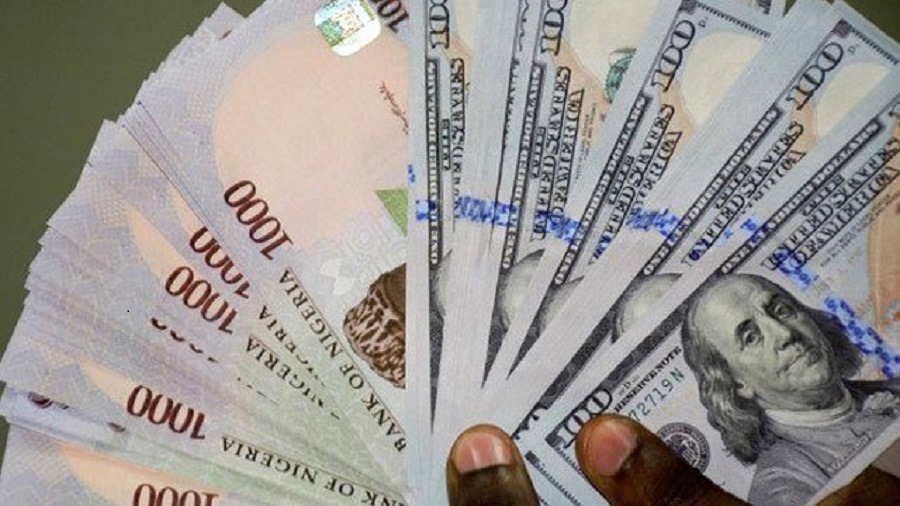
The naira extended appreciation against the dollar at the official foreign exchange market on Wednesday.
The Central Bank of Nigeria’s data showed that the Naira further firmed up on Wednesday to N1,418.26 per dollar, up from N1,419.07 exchanged on Tuesday.
Wednesday’s uptrend represents a slight N0.80 gain against the dollar on a day-to-day basis.
READ ALSO:Naira Records Significant Appreciation Against US Dollar
Meanwhile, at the black market, the Naira remained unchanged against the dollar at N1,480 per dollar on Wednesday, the same rate recorded the previous day.
The development comes as Nigeria’s foreign reserves further rose to $45.62 billion as of January 6th, 2026.
Recall that on Tuesday, the Naira posted a N10.24 gain against the dollar.
Business
Naira Continues Gain Against US Dollar As Nigeria’s Foreign Reserves Climb To $45.57bn
The Naira appreciated further against the United States Dollar at the official foreign exchange market, beginning the week on a good note.
Central Bank of Nigeria data showed that the Naira strengthened on Monday to N1,429.31 per dollar, up from N1,430.85 exchanged on Friday, 2 January 2026.
This means that the Naira gained N1.56 against the dollar on Monday when compared to N1,430.85 last week Friday.
READ ALSO:Naira Records Significant Appreciation Against US Dollar
At the black market, the Naira dropped by N5 to N1480 per dollar on Monday, down from N1475 traded Friday.
The development comes as the country’s external reserves rose to $45.57 billion as of Friday last week.
Business
NNPCL Reduces Fuel Price Again
The Nigerian National Petroleum Company Limited, NNPCL, has again reduced its premium motor spirit price.
In Abuja, on Monday morning, it was gathered that NNPCL retail outlets have reduced their fuel price to N815 per liter, down from N835.
This means that the NNPCL filling stations cut their price by N20.
The fresh price has been implemented at NNPCL filling stations in Wuse Zone 6 and 4 Abuja, Keffi-Abuja Road, and Kubwa Expressway.
READ ALSO:Fuel Price Cut: NNPCL GCEO Ojulari Reveals Biggest Beneficiaries
An NNPCL filling station attendant, who preferred anonymity, told DAILY POST that the new price was implemented on Sunday evening.
However, the N815 per liter is N79 higher than the N739 per liter sold at Dangote Refinery’s backed MRS filling stations nationwide.
DAILY POST recalls that NNPCL on December 19, 2025, cut its price of petrol by N80 to N835 amid a price war among players in the country’s oil downstream sector triggered by Dangote Refinery’s gantry price reduction to N699 per liter.

 News4 days ago
What I Saw After A Lady Undressed Herself — Pastor Adeboye
- Headline4 days ago
PROPHECY: Primate Ayodele Reveals Trump’s Plot Against Tinubu
- Metro4 days ago
Armed Robbers Shot PoS Operator To Death In Edo
- Business3 days ago
NNPCL Reduces Fuel Price Again
- Metro3 days ago
AAU Disowns Students Over Protest
- Metro5 days ago
Joint Task Force Kills 23 Bandits Fleeing Kano After Attacks
- Politics5 days ago
2027: Rivers APC Pledges To Follow Wike’s Instructions
- Metro3 days ago
Edo: Suspected Kidnappers Kill Victim, Hold On To Elder Brother
- Metro3 days ago
Nine Soldiers Feared Dead In Borno IED Explosion
- Metro2 days ago
JUST IN: Court Grants Malami, Wife, Son N500m Bail Each


