
Headline
Insecurity: Nigeria Bleeding, Create Anti-terrorism, Banditry Units, Activist Tells Buhari

Deji Adeyanju of the Concerned Nigerians advocacy group, has raised an alarm over the state of insecurity in Nigeria.
Adeyanju lamented that Nigeria is currently bleeding due to the activities of bandits and kidnappers.
He called for the establishment of a special anti-terrorism and anti-banditry unit.
Lamenting that the insecurity situation has overwhelmed the security agencies, the Abuja-based activist, noted that Nigerians can no longer travel safely by air, road, and rail.
The Abuja-based lawyer spoke in an open letter to President Muhammadu Buhari on the state of insecurity in Nigeria.
Citing the bandits’ attack on a train along the Abuja-Kaduna route, the activist said criminals have devised means of attacking Nigerians travelling across the country.
According to Adeyanju: “It is no longer news that Nigeria is presently being ravaged by insecurity, and Kaduna State is gradually becoming the capital of insecurity in Nigeria. As the President of the Federal Republic of Nigeria and a one time resident in Kaduna, a city where you spent the bulk of your youthful days, it is imperative that we draw your attention to the carnage currently ravaging our country, as it appears that your aides do not bring these issues to your attention.
“Mr. President, Nigeria is bleeding. For some time now, bandits have taken over the entire North-West, North-East and North-Central Nigeria, while kidnappers are having a field day in the Southern part of the country. Sadly, the situation appears to have overwhelmed the nation’s security architecture. In an attempt to avoid being caught in the crossfire, citizens have often resorted to rail and air transportation. However, it appears that as the citizens’ device other means of staying safe, the criminal elements equally device other means of causing mayhem to innocent citizens.
“The resultant effect of these criminal acts is the recent attacks on the Kaduna airport and the Abuja-Kaduna rail line. As of today, the average Nigerian cannot travel by air, road or rail to Kaduna. The state has been literarily cut off from the country. Sadly, the security situation in Kaduna is just a reflection of what is happening in the entire country.”
The activist urged Buhari to take decisive action against bandits and criminals in the country.
He stressed that the security architecture and intelligence unit of the country have failed.
Adeyanju called on the President to reorganize Nigeria’s security architecture.
READ ALSO: How I Was Saved From Abuja-Kaduna Train Attack – Popular Actress
“It is, therefore, time for you to take decisive actions, Mr. President. Our intelligence units have failed. Our armed forces are overstretched. The average Nigerian is left at the mercy of bandits and kidnappers. Sequel to the foregoing, we, therefore, call for the total reorganisation of our security units in order to effectively tackle the present insecurity.
“We suggest that a special anti-terrorism or anti-banditry unit be created. In addition to the foregoing, we suggest that an executive bill be immediately sent to the National Assembly with a view to amending the Constitution toward the creation of state police. Lastly, the government must address the root cause of the insecurity by providing employment and basic amenities for the average Nigerian.
“Mr. President, please remember that the protection of life and property is the government’s primary responsibility!



Headline
How Our Airstrikes Stopped Christmas Attacks In Nigeria — US Lawmaker
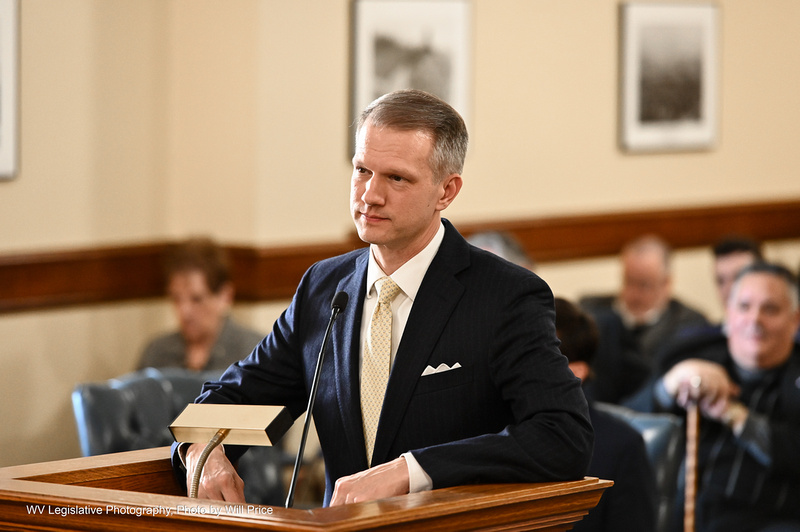
Riley Moore, a member of the United States House of Representatives from West Virginia’s 2nd District, has linked the absence of Christmas attacks in Nigeria this year to US military airstrikes carried out against Islamist militants on Christmas Day.
In a post on his official X account on Saturday, Moore contrasted the situation with the past two Christmas seasons, during which he claimed Christians were killed in attacks across parts of Nigeria.
The lawmaker noted that this year’s response targeted extremist groups instead of marking another period of violence.
READ ALSO:Rep Moore Confirms 12 Tomahawk Missiles Launched In Sokoto
He added that US forces acted decisively against militants in coordination with the Nigerian government.
“For the past two Christmases, Christians have been murdered in Nigeria. This year, thanks to @POTUS, Radical Islamic Terrorists were on the receiving end of 12 Tomahawk missiles as a present.
“The successful strikes on ISIS, in coordination with the Nigerian government, are just the first step to secure the country and end the slaughter of our brothers and sisters in Christ,” Moore wrote.
US President Donald Trump said on Thursday that American forces had conducted deadly strikes against Islamic State terrorists in north-western Nigeria.
Trump, who spoke via his Truth Social platform, warned that more attacks would follow if the militants continued killing Christians, adding that the Department of War executed numerous “perfect strikes.”
Headline
U.S. Lawmaker Reacts To Nigeria, U.S. Airstrikes
United States Congressman, Riley Moore, has stated that President Donald Trump is determined to put an end to the killing of Christians in Nigeria, warning that further action may follow if the violence persists.
Moore made the statement on Friday via his official X handle.
According to the lawmaker, the strike represents the first step in addressing what he described as the ongoing slaughter of Christians and the broader security crisis affecting Nigerians across religious and ethnic lines.
READ ALSO:US Dept Of War Shares Video Of Air Strikes In Nigeria
“President Trump has been clear that the killing of Christians in Nigeria must end,” he said.
He that the administration’s resolve on the matter should not be underestimated.
“As I stated at the outset: Do not test President Trump‘s resolved in this matter.
READ ALSO:JUST IN: US Forces Bomb Terrorists Camps In Nigeria
“Tonight’s strike in coordination with the Nigerian government is just the first step to ending the slaughter of Christians and the security crisis affecting all Nigerians,” he said.
He stressed that the operation signals a stronger stance by the United States in support of Nigeria’s efforts to tackle terrorism and violent extremism, noting that further measures could be taken if the situation does not improve.
Headline
US Dept Of War Shares Video Of Air Strikes In Nigeria

A video footage of the US military air strikes in Nigeria has emerged.
The video was released by the US Department of War following its air strikes against terrorists in Sokoto.
Earlier, the US secretary of War, Pete Hegseth had confirmed that military air strikes hit terrorists in Nigerians, saying it was deadly.
Later on, the US. African Command, confirmed that it conducted the attacks described as very deadly by President Donald Trump.
Trump said he was only keeping the promise he made earlier last month to strike the terrorists he believes are killing innocent Christians.
READ ALSO:JUST IN: US Forces Bomb Terrorists Camps In Nigeria
Although described as powerful and deadly, the casualty caused by the attack is yet to be released.
Explaining further, security expert, Brant Philip, said the strikes may have been launched “from the USS Paul Ignatius, using a Tomahawk missile.”
The Nigerian government through its ministry of foreign affairs has also confirmed that the strikes were successful.
Watch video here

 News5 days ago
PHOTOS: New Era In Furupagha-Ebijaw As Okpururu 1 Receives Staff Of Office
- News4 days ago
UBTH CMD Marks 120 Days In Office, Expresses Commitment To Providing Conducive Working Environment
- News5 days ago
OPINION: Gumi And His Terrorists
- News4 days ago
FIRS Confirms NIN As Tax ID
- News5 days ago
FG Declares Public Holidays For Christmas, New Year Celebrations
- Metro4 days ago
Fintiri Pardons Man Sentenced To Death For ‘Killing Herdsman In Self-defence’, Others
- News5 days ago
OPINION: Christmas And A Motherless Child
- News3 days ago
JUST IN: Kano Lawmaker, Sarki Aliyu Daneji, Dies Hours After Colleague’s Passing
 News4 days ago
OPINION: My Man Of The Season
- News4 days ago
KWAM 1 Withdraws From Awujale Race, Ends Court Challenge


