
Headline
Iran Allows 20 More Pakistani Ships To Pass Through Strait Of Hormuz
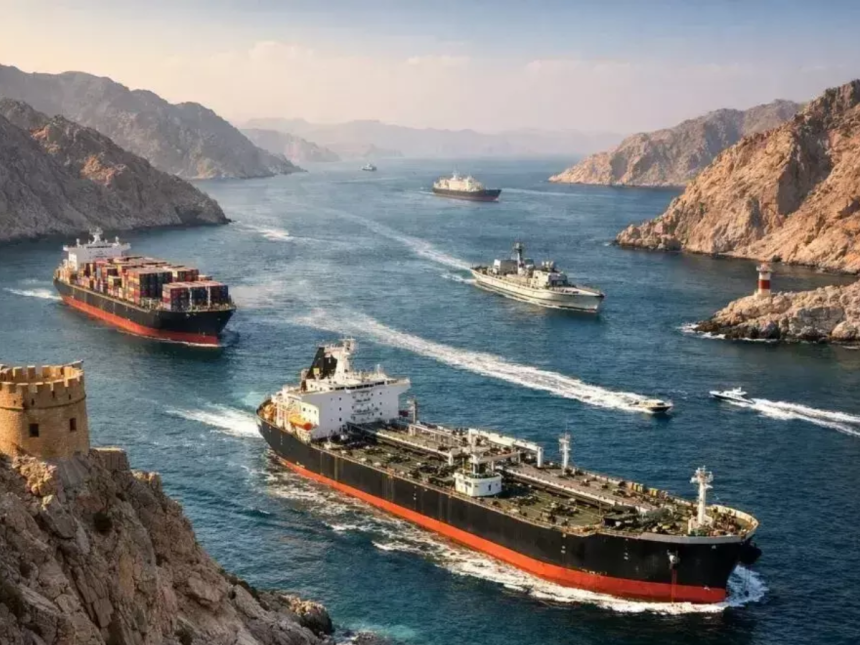
Iran has agreed to permit 20 Pakistani-flagged vessels to transit the Strait of Hormuz, in a move described by Islamabad as a significant step toward easing a deepening global energy crisis triggered by ongoing conflict in the region.
Pakistan’s Foreign Minister, Ishaq Dar, announced the development on Saturday, stating that two vessels would be allowed to pass daily under the arrangement.
He described Iran’s decision as “a harbinger of peace” and a “welcome and constructive gesture” that could help stabilise an increasingly volatile region.
Dar directed his remarks to key international figures, including US Vice President JD Vance, Secretary of State Marco Rubio, US envoy Steve Witkoff, and Iran’s Foreign Minister Abbas Araghchi, underscoring Islamabad’s broader diplomatic push to de-escalate the conflict.
READ ALSO:US Ambassador Explains Why Trump Lifted Iran Oil Sanctions
The Strait of Hormuz, a critical global shipping route, has been largely shut since coordinated strikes by the United States and Israel on February 28, which killed Iran’s Supreme Leader, Ali Khamenei, and ignited a war that has reportedly left about 2,000 people dead in Iran and more than 1,100 in Lebanon. The disruption has sent shockwaves through global energy markets.
In a recent column, former Qatari minister Mohammed Al-Hashemi underscored the strategic importance of the waterway, writing: “The Strait of Hormuz is not an oil chokepoint. It is the aortic valve of globalised production – and like any valve, when it fails, the entire circulatory system collapses.”
With an estimated 2,000 vessels stranded, oil prices have surged beyond $100 per barrel, marking a roughly 40 per cent increase.
Maritime traffic through the strait has plunged by about 90 per cent, with only around 150 vessels managing to pass since the conflict began — equivalent to a single day’s normal traffic.
READ ALSO:War: New Iranian Supreme Leader Speaks For First Time
Iran’s Islamic Revolutionary Guard Corps (IRGC) has effectively transformed the strait into a controlled checkpoint, requiring ships to submit cargo details, crew lists and destinations for approval before receiving clearance codes and escorted passage through Iranian waters.
Reports indicate that at least two vessels have paid up to $2 million per crossing, reportedly settled in Chinese yuan, as Tehran considers formalising the arrangement through legislation.
Malaysia’s Prime Minister, Anwar Ibrahim, confirmed that Malaysian vessels had also been allowed safe passage, thanking Iran’s President, Masoud Pezeshkian, for the concession.
Meanwhile, Ngozi Okonjo-Iweala, Director-General of the World Trade Organization, warned that global commerce is facing its “worst disruptions in the past 80 years.”
READ ALSO:VIDEO: Iran Has More Missiles Than Anyone Thought — Trump
The latest development follows a week of intense diplomatic activity by Pakistan, including talks between Army Chief Asim Munir and US President Donald Trump, as well as engagements with Iranian and Turkish officials. Islamabad has also offered to host peace talks.
“If the parties desire, Islamabad is always willing to host talks,” said Foreign Ministry spokesperson Tahir Andrabi.
Iran has continued to press for formal international recognition of its authority over the strait as part of conditions to end the war, while its parliament moves to institutionalise toll collection.
The United States has temporarily eased strikes on Iranian power plants for five days, a window set to close on Saturday, while Israel has indicated that its military operations will continue.



Headline
‘Pioneer Of Cable TV News’: Key Facts About CNN Founder, Ted Turner
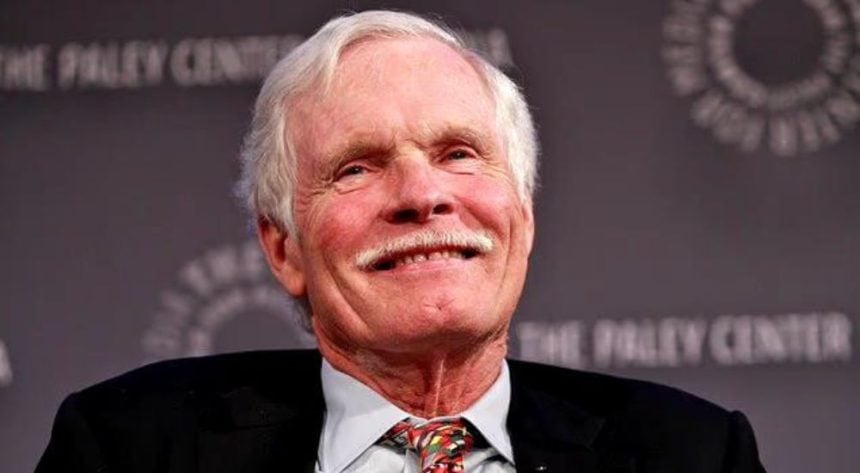
Ted Turner, the media businessman who founded CNN died at the age of 87. He died peacefully on Wednesday, surrounded by family, according to Turner Enterprises.
Contents
Launched 24-hour news television
Built a media network
Expanded through sports
Recognition and influence
Philanthropy and global causes
Environmental efforts
Health and later years
Early career path
Leadership and legacy
Personal life
Exit from business
Family
Below are key facts about his life and impact:
Launched 24-hour news television
Turner founded CNN on June 1, 1980, introducing the first 24-hour news channel and changing how audiences follow global events.
READ ALSO:CNN To Layoff 200 Staff Amid Attempts To Modernise Business
Built a media network
He moved from billboards into broadcasting, turning an Atlanta TV station into a national superstation in 1976. His business later grew to include CNN International, TNT, Turner Classic Movies and Cartoon Network.
Expanded through sports
Turner invested in sports broadcasting and owned teams including the Atlanta Braves and the Atlanta Hawks, using television to reach wider audiences.
Recognition and influence
In 1991, he was named Time magazine’s Man of the Year for his role in shaping modern news coverage.
Philanthropy and global causes
He founded the United Nations Foundation and supported campaigns against nuclear weapons. In 1997, he pledged $1 billion to the United Nations.
READ ALSO:CNN President, Jeff Zucker Resigns After Failing To Disclose Secret Affair With Colleague
Turner supported conservation work, including reintroducing bison in the United States, and backed environmental education through the “Captain Planet” cartoon.
Health and later years
In 2018, Turner revealed he had Lewy body dementia. He also recovered from a mild case of pneumonia in early 2025.
Early career path
He took over his father’s billboard company at 24 after his father’s death and later expanded into radio and television, despite limited experience in journalism.
“I worked until 7 o’clock, and when I got home the news was over,” he once said. “So I missed television news completely. And I figured there were lots of people like me.”
Leadership and legacy
READ ALSO:CNN Reporter Protests Nigeria’s $215 Single Entry Visa Fee
“Ted was an intensely involved and committed leader, intrepid, fearless and always willing to back a hunch and trust his own judgement,” Mark Thompson, Chairman and CEO of CNN Worldwide, said in a statement. “He was and always will be the presiding spirit of CNN. Ted is the giant on whose shoulders we stand, and we will all take a moment today to recognize him and his impact on our lives and the world.”
Personal life
Turner married actress Jane Fonda in 1991, and they later divorced after 10 years, though they remained close.
“I would never love anyone like I love him,” she said. “But I just couldn’t keep moving in his world, along the surface for the rest of my life. I knew that I would get to the end of my life and regret not doing the things that I also needed to do for me.”
Exit from business
He sold his company to Time Warner in 1996 and later stepped away following its merger with AOL.
Reflecting on his life, Turner once said: “I lost Jane. I lost my job here. I lost my fortune, most of it. Got a billion or two left. You can get by on that if you economize.”
Family
He is survived by his five children, 14 grandchildren and two great-grandchildren.
Headline
Iran’s Nationwide Internet Shutdown Hits 70 Days

NetBlocks, a monitoring group, has disclosed that an internet shutdown enforced by the Iranian regime has entered its 70th day, severing key access from swathes of the population under the shadow of war.
NetBlocks reported on Friday that the blackout has now surpassed 1,656 hours, marking more than two months since US-Israeli strikes pounded Tehran and escalated across the Middle East.
“Digital connectivity is vital in times of crisis,” NetBlocks said in a post on X. “Limiting service harms those most in need – people with disabilities, students, small businesses and the general public.”
READ ALSO:US Underestimated Iran Before War – France’s Bardella
According to CNN, Iran imposed a separate internet shutdown on the country’s 92 million people earlier this year, when it launched the most lethal crackdown on anti-government protesters since the Islamic Republic’s founding 47 years ago.
CNN further reports that the latest blackout has cut off another potential lifeline for Iranian residents faced with high unemployment and economic pressure exacerbated by the US-Israeli campaign.
(CNN)
Headline
Gas Prices In US Edge Down After Two Weeks Of Increases

The cost of a gallon of regular gas in the United States (US) has edged down a little more than a penny to $4.55.
According to AAA’s readings, this marks the first decline in the average gas price after 15 straight days of increases.
The decline is minuscule compared to the large increases in gas prices over the last two weeks.
According to CNN, gasoline costs rose an average of nearly 4 cents a day during that period and had several daily increases of between 7 and 9 cents.
READ ALSO:Gas Station Explosion Rocks Calabar, Scores Injured, Property Destroyed
Also Read: Trump insists US-Iran ceasefire intact despite recent exchange of fire
CNN also reports that based on past gas spikes, it will likely take weeks for gas prices to get down below $4 a gallon.
The report, however, states that a previous two-week stretch of gas price declines only shaved 14 cents off the average price, taking the average price to $4.02, before the recent 15-day run of increases.
READ ALSO:Tinubu Signs Executive Order To Protect Nigeria’s Oil & Gas Revenue
According to CNN, it could take months for the average price to fall below $3 per gallon, as it did before the war in Iran.
CNN further reports that only one state – Oklahoma – now has an average price of less than $4 a gallon, and its average stands at $3.98. California has the highest average price at $6.16.
(CNN)

 Politics4 days ago
BREAKING: NDC Zones Presidency
- Politics2 days ago
APC Clears Wike Loyalists, Disqualifies All Fubara-aligned Aspirants For State Assembly
- News4 days ago
Presidency Reveals Details Of Ribadu’s Meeting With US VP, Secretary Of State
- News4 days ago
Edo Bags NECO Excellence Award
- Headline4 days ago
Gas Prices In US Edge Down After Two Weeks Of Increases
- Metro4 days ago
My Wife Goes To Mountains To Pray, Denies Me Sex For 9yrs
- News4 days ago
EFCC Declares Ex-humanitarian Minister Sadiya Farouq Wanted
- News4 days ago
VIDEO: I Can’t Promise You 24-hour Electricity, Tegbe Tells Nigerians
- Metro4 days ago
‘My Wife Deserted Me 4 Months After We Got Married, Took To Prostitution Abroad’
- Headline4 days ago
‘Pioneer Of Cable TV News’: Key Facts About CNN Founder, Ted Turner


