

Headline
JUST IN: Russians Seize Ukraine Nuclear Plant As War Intensifies


Russian troops Friday seized the biggest nuclear power plant in Europe after a middle-of-the-night attack that set it on fire and briefly raised worldwide fears of a catastrophe in the most chilling turn yet in Moscow’s invasion of Ukraine.
Firefighters put out the blaze, and no radiation was released, U.N. and Ukrainian officials said, as Russian forces pressed on with their week-old offensive on multiple fronts and the number of refugees fleeing the country eclipsed 1.2 million.
With world condemnation mounting, the Kremlin cracked down on the flow of information at home, blocking Facebook, Twitter, the BBC and the U.S. government-funded Voice of America.
And President Vladimir Putin signed a law making it a crime punishable by up to 15 years in prison to spread so-called fake news, including anything that goes against the official government line on the war.
While the vast Russian armored column threatening Kyiv remained stalled outside the capital, Putin’s military has launched hundreds of missiles and artillery attacks on cities and other sites around the country, and made significant gains on the ground in the south in an apparent bid to cut off Ukraine’s access to the sea.
In the atttack on the Zaporizhzhia nuclear plant in the southeastern city of Enerhodar, the chief of the U.N.’s International Atomic Energy Agency, Rafael Mariano Grossi, said a Russian “projectile” hit a training center, not any of the six reactors.
The attack triggered global alarm and fear of a catastrophe that could dwarf the world’s worst nuclear disaster, at Ukraine’s Chernobyl in 1986.
In an emotional nighttime speech, Ukrainian President Volodymyr Zelenskyy said he feared an explosion that would be “the end for everyone. The end for Europe. The evacuation of Europe.”
But nuclear officials from Sweden to China said no radiation spikes had been reported, as did Grossi.
Authorities said that Russian troops had taken control of the overall site but that the plant staff continued to run it. Only one reactor was operating, running at 60% of capacity, Grossi said in the aftermath of the attack.
READ ALSO: BREAKING: Russia Restricts Access To Twitter Amid War With Ukraine
Two people were injured in the fire, Grossi said. Ukraine’s state nuclear plant operator Enerhoatom said three Ukrainian soldiers were killed and two wounded.
In the U.S., Pentagon spokesman John Kirby said the episode “underscores the recklessness with which the Russians have been perpetrating this unprovoked invasion.”
At an emergency meeting of the U.N. Security Council, Ukraine’s U.N. ambassador, Sergiy Kyslytsya, said the fire broke out as a result of Russian shelling of the plant and accused Moscow of committing “an act of nuclear terrorism.”
Without producing evidence, Russian Defense Ministry spokesman Igor Konashenkov claimed that a Ukrainian “sabotage group” had set the fire at Zaporozhizhia.
The crisis unfolded after Grossi earlier in the week expressed grave concern that the fighting could cause accidental damage to Ukraine’s 15 nuclear reactors at four plants around the country.
Atomic safety experts said a war fought amid nuclear reactors represents an unprecedented and highly dangerous situation.
“These plants are now in a situation that few people ever seriously contemplated when they were originally built,” said Edwin Lyman of the Union of Concerned Scientists in Washington. “No nuclear plant has been designed to withstand a potential threat of a full-scale military attack.”
Dr. Alex Rosen of International Physicians for the Prevention of Nuclear War said the incident was probably the result of military units overestimating the precision of their weapons, given that the prevailing winds would have carried any radioactive fallout straight toward Russia.
“Russia cannot have any interest in contaminating its own territory,” he said. He said the danger comes not just from the reactors but from the risk of enemy fire hitting storage facilities that hold spent fuel rods.
In the wake of the attack, Zelenskyy appealed again to the West to enforce a no-fly zone over his country. But NATO Secretary-General Jens Stoltenberg ruled out that possibility, citing the risk of a much wider war in Europe. He said that to enforce a no-fly zone, NATO planes would have to shoot down Russian aircraft.
“We understand the desperation, but we also believe that if we did that, we would end up with something that could end in a full-fledged war in Europe,” Stoltenberg said.
The plant fire was the second time since the invasion began that concerns about a potential nuclear accident arose, following a battle at the heavily contaminated site of the now-decommissioned Chernobyl plant.
Russian forces, meanwhile, pressed their offensive in the southern part of the country. Severing Ukraine’s access to the Black Sea and the Sea of Azov would deal a severe blow to its economy and could worsen an already dire humanitarian situation.
A round of talks between Russia and Ukraine yielded a tentative agreement Thursday to set up safe corridors to evacuate citizens and deliver food and medicine. But the necessary details still had to be worked out.
The U.N. human rights office said 331 civilians had been confirmed killed in the invasion but that the true number is probably much higher.
In Romania, one newly arrived refugee, Anton Kostyuchyk, struggled to hold back tears as he recounted leaving everything behind in Kyiv and sleeping in churches with his wife and three children during their journey out.
“I’m leaving my home, my country. I was born there, and I lived there,” he said. “And what now?”
Appearing on video in a message to antiwar protesters in several European cities, Zelenskyy continued to appeal for help.
“If we fall, you will fall,” he said. “And if we win, and I’m sure we’ll win, this will be the victory of the whole democratic world. This will be the victory of our freedom. This will be the victory of light over darkness, of freedom over slavery.”
Inside Ukraine, frequent shelling could be heard in the center of Kyiv, though more distant than in recent days, with loud thudding every 10 minutes resonating over the rooftops.
READ ALSO: Suspected Russian Spy Arrested Near Ukrainian Border
Ukrainian presidential adviser Oleksiy Arestovich said battles involving airstrikes and artillery continued northwest of Kyiv, and the northeastern cities of Kharkiv and Okhtyrka came under heavy fire.
He said Ukrainian forces were still holding the northern city of Chernihiv and had prevented Russian efforts to take the important southern city of Mykolaiv. Ukrainian artillery also defended Odesa from repeated attempts by Russian ships to fire on the Black Sea port, Arestovic said. Odesa is Ukraine’s biggest port city and home to a large naval base.
The Ukrainian Navy scuttled its flagship at the shipyard where it was undergoing repairs to keep the frigate from being seized by the Russians, authorities said.
Another strategic port, Mariupol, on the Sea of Azov, was “partially under siege,” and Ukrainian forces were pushing back efforts to surround the city, Arestovich said. The fighting has knocked out the city’s electricity, heat and water systems, as well as most phone service, officials said.
“The humanitarian situation is tense,” he said.
Amid the warfare, there were occasional signs of hope.
As explosions sounded on the fringes of Kyiv, Dmytro Shybalov and Anna Panasyk smiled and blushed at the civil registry office where they married Friday. They fell in love in 2015 in Donetsk amid the fighting between pro-Russian separatists and Ukrainian forces that was a precursor to the countrywide war.
“It’s 2022 and the situation hasn’t changed,” Shybalov said. “It’s scary to think what will happen when our children will be born.”
AP


Headline
FG Summons S. African Envoy Over Rising Xenophobic Attacks On Nigerians


The Federal Government has summoned the Acting High Commissioner of South Africa in Abuja over renewed concerns about xenophobic attacks and protests targeting foreign nationals, including Nigerians, living in that country.
The Ministry of Foreign Affairs said the envoy is expected at its headquarters on Monday, May 4, 2026, for a high-level engagement aimed at addressing the growing tension and safeguarding bilateral relations between both countries.
In a statement issued on Sunday, the spokesperson for the Ministry, Kimiebi Ebienfa, said Nigeria would formally express its “profound concern” over recent developments in South Africa, particularly reports of harassment, violence, and destruction of property belonging to foreign nationals.
According to the ministry, the meeting will focus on ongoing demonstrations by various groups in South Africa and documented cases of attacks on Nigerians and their businesses in parts of the country.
READ ALSO:Group Condemns Tunisian Xenophobic, Racial Attacks On African Migrants
“The objective of this engagement is to formally convey the Nigerian Government’s profound concern regarding recent events that have the potential to impact the established cordial relations between Nigeria and South Africa,” the statement read.
It added that discussions would also address ongoing demonstrations by various groups within South Africa and documented instances of mistreatment of Nigerian citizens and attacks on their businesses.
The ministry acknowledged growing anger among Nigerians over reports of xenophobic violence but urged restraint, stressing that diplomatic engagement remained the preferred channel for resolution.
It assured Nigerians that the Federal Government was actively engaging South African authorities to ensure the protection of its citizens abroad.
READ ALSO:US Visa Adjudication Sparks Concerns Over Diplomatic Relations
“The Ministry is aware of the growing discontent among Nigerians concerning the treatment of their nationals in South Africa. Nevertheless, it implores the Nigerian public to remain calm and reiterates the Federal Government’s commitment to protecting the rights and well-being of Nigerian citizens residing in South Africa,” the statement added.
The latest diplomatic move comes amid renewed reports of xenophobic tensions in parts of South Africa, where foreign-owned businesses have occasionally been targeted during protests linked to unemployment and economic hardship.
South Africa has a history of xenophobic violence dating back to 2008, with subsequent flare-ups in 2015 and 2019, when mobs attacked migrants, looted shops, and displaced thousands of foreign nationals across several provinces.
In past incidents, Nigerians and other African nationals were among those affected, prompting strong diplomatic reactions from Abuja and calls for stronger protection of foreign communities.
While South African authorities have repeatedly condemned such attacks and deployed security forces to restore order during outbreaks of violence, concerns have persisted over recurring hostility in some communities.
Headline
Mississippi Man ‘Kills Mother, Flushes Her Remains Down Toilet’


A 29-year-old Mississippi man, Zachary Lavel Jackson Jr., has been charged with multiple offences, including first-degree murder, over the death of his mother, Lana Brown Bradley, after deputies responded to her Natchez home on April 4 following a missing person report from relatives.
The Adams County Sheriff’s Office said deputies were called to Bradley’s residence after her oldest son was unable to reach her the previous day.
Jackson was initially identified as a family member before investigators confirmed he was her son.
Sheriff Travis Patten described the case as deeply disturbing.“This is by far the most heinous crime that I’ve ever witnessed in my entire life. We weren’t out there that day; this was one of those things when we walked up.
READ ALSO:Bandits Kill Nine, Injure Eight In Fresh Attack On Zamfara Village
“This was one of those cases that you will never, ever forget in your life. This is the type of case that follows you home,” Patten told WJTV.
According to the sheriff, deputies noticed signs of a recent cleanup when they arrived at the home.
“As soon as they walked in the house, they could just see where somebody had been cleaning up, and they could smell chemicals all throughout the house.
“Floor was extremely slippery. And the older son said that this is just unusual for the youngest son to be cleaning up the house like that,” Patten explained.
READ ALSO:US Comedian Reggie Carroll Shot Dead In Mississippi
Jackson, the youngest son, was found in a bathroom, where deputies allegedly made a discovery that became central to the investigation.
“I can say what was in the toilet, and it was her flesh. He chopped her up in pieces and dismembered her in a way that whoever came looking for her would have to do their due diligence to find her, and that’s just what we did,” the sheriff said.
Authorities said Jackson allegedly placed parts of his mother’s body in a suitcase and attempted to dispose of other remains.
Jackson faces charges of first-degree murder, second-degree murder, mayhem and tampering with evidence.
READ ALSO:Popular Influencer Lola Shot
Investigators said Bradley, a retired teacher, had recently sought to evict her son from the home. Patten, citing family interviews, said Jackson was believed to be mentally unstable but also noted that his actions appeared deliberate.
“He had threatened her the day before because she was looking to have him evicted from the home.
“She was in the process of doing so and had just gone to court the day before to have him removed from the home,” Patten explained.
Headline
Iran Says War With US May Resume As Trump Rejects Proposal

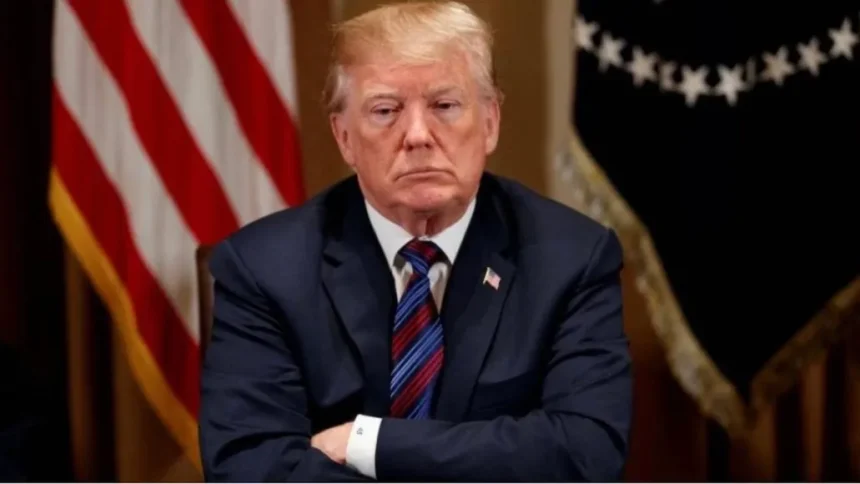
Iran’s military has warned that the war with the United States and Israel could resume, declaring that it is fully prepared for any renewed confrontation as tensions between the sides continue to deepen.
In a statement reported by Iranian state-affiliated media, senior military officials said a return to hostilities is “likely”, citing what they described as Washington’s lack of commitment to previous agreements and negotiations.
The warning comes after US President Donald Trump expressed dissatisfaction with Iran’s latest peace proposal, saying the terms presented by Tehran included demands he “can’t agree to”.
READ ALSO:US Underestimated Iran Before War – France’s Bardella
According to officials in Tehran, Iran believes it showed flexibility during earlier negotiations, including talks held in Islamabad and during the ceasefire period. However, authorities argue that the United States has instead taken a tougher stance, widening the gap between both sides.
Iranian officials insist that key issues such as sanctions relief and the status of the Strait of Hormuz must be resolved before any broader agreement, including discussions around its nuclear programme, can progress. They also reject what they describe as US demands amounting to “surrender”.
The growing diplomatic deadlock has raised fears that another round of fighting may be imminent, with Iranian authorities indicating that preparations are already underway.
READ ALSO:Iran Allows 20 More Pakistani Ships To Pass Through Strait Of Hormuz
Meanwhile, the prolonged conflict continues to have far-reaching consequences within Iran. Internet monitoring group NetBlocks reports that the country has entered its 64th day of near-total internet disruption, effectively isolating it from global online networks.
The shutdown, which began after renewed anti-government protests earlier in the year and intensified following the outbreak of the war, has significantly disrupted businesses and livelihoods across the country.
Beyond Iran, the conflict is also reshaping global dynamics. Rising oil prices linked to the war have placed pressure on international markets, while geopolitical tensions have strained alliances, including between the United States and European partners.
As both sides remain far apart on key issues, analysts warn that without a breakthrough in negotiations, the fragile pause in fighting could collapse, paving the way for renewed military escalation in the region.
-

 Politics4 days ago
2027: Tinubu’s Re-election May Put An End To Nigeria — Baba Ahmed Warns
-

 Metro5 days ago
I’m A Street Girl’ – Bimbo Ademoye Clashes With Area Boys [VIDEO]
-

 Politics5 days ago
Senatorial Seat: Ogbakha-Edo Warns Against Imposition Of Candidates In Edo South
-

 Politics4 days ago
BREAKING: 2027: Former Adamawa APC Guber Candidate, Aishatu Binani Defects To NDC
-

 Business3 days ago
JUST IN: Nigerian Filling Stations Reduce Fuel Price After Hike
-

 Entertainment4 days ago
Actress Eniola Badmus Gets New Federal Appointment
-

 News5 days ago
10 African Countries With Highest Petrol Prices In Prices In April 2026
-

 News1 day ago
BREAKING: Wike Picks Alabo George For Rivers Governorship
-

 News3 days ago
OPINION: Why South Africans Murder Nigerians In Cold Blood
-

 News4 days ago
2027: Pastor Adeboye Speaks On Nigeria’s Next President


