
Headline
JUST IN: US Visa Restrictions On ECOWAS Countries Threaten Regional Prosperity — FG
The Minister of Foreign Affairs and Chair of the Economic Community of West African States Mediation and Security Council, Ambassador Yusuf Tuggar, has raised concerns over the apparent inclusion of all ECOWAS member states in a new wave of United States visa restrictions, describing the policy as a significant barrier to trade, diplomacy, and regional prosperity.
Speaking at the opening of the 54th Ordinary Session of the Mediation and Security Council at the Ministerial Level in Abuja on Wednesday, Tuggar warned that such restrictions could stifle efforts to deepen US-West Africa relations, particularly at a time when the region is ripe for economic cooperation and security collaboration.
The minister expressed concern, “It would be most unfortunate if it comes to pass, because we are a region of opportunities ready to do deals.
“We would like to do deals with the US, but visa restrictions are non-tariff barriers to deals.”
READ ALSO: 11 Countries Arrive Abuja For 13th ECOWAS Wrestling Tourney
Tuggar framed the policy not only as a diplomatic misstep but also as an economic missed opportunity, especially given ECOWAS’s vast resource base.
“We possess critical minerals and even rare earths such as Samarium from the Monazite found in my home State of Bauchi.
“We in this part of the world are students of the Art of the Deal and have been part of the international trading system even before the modern state system,” he added.
He further called on Washington to re-evaluate its approach, stressing that West Africa is not lacking in potential partners.
READ ALSO: ECOWAS Court Dismisses Suit Against FG Over Shrine Destruction
“ECOWAS countries and the US have a rare opportunity to create a partnership based on principles of need. We are also a strategic alternative to more distant and politically divergent energy producers.
“We will do deals for our prosperity; the only question is with whom? Who takes up the opportunities in our region by allowing government officials and technocrats, business executives and entrepreneurs to travel freely back and forth to close the deals?” he questioned.
United States President Donald Trump is considering imposing a travel ban on Nigeria and a host of other countries, mostly from Africa.
The affected countries are expected to meet new requirements laid down by the State Department within 60 days.
“The new list includes Angola, Benin, Burkina Faso, Cabo Verde, Cameroon, Côte d’Ivoire, Democratic Republic of the Congo, Djibouti, Ethiopia, Egypt, Gabon, Gambia, Ghana, Liberia, Malawi, Mauritania, Niger, Nigeria, São Tomé and Príncipe, Senegal, South Sudan, Tanzania, Uganda, Zambia, and Zimbabwe.
“The memo identified varied benchmarks that, in the administration’s estimation, these countries were failing to meet. Some countries had “no competent or cooperative central government authority to produce reliable identity documents or other civil documents,” or they suffered from widespread government fraud.”



Headline
U.S. Lawmaker Reacts To Nigeria, U.S. Airstrikes
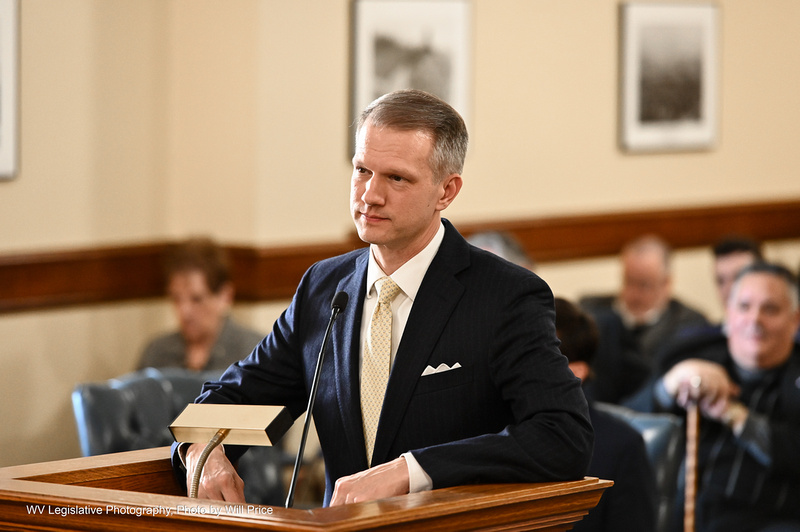
United States Congressman, Riley Moore, has stated that President Donald Trump is determined to put an end to the killing of Christians in Nigeria, warning that further action may follow if the violence persists.
Moore made the statement on Friday via his official X handle.
According to the lawmaker, the strike represents the first step in addressing what he described as the ongoing slaughter of Christians and the broader security crisis affecting Nigerians across religious and ethnic lines.
READ ALSO:US Dept Of War Shares Video Of Air Strikes In Nigeria
“President Trump has been clear that the killing of Christians in Nigeria must end,” he said.
He that the administration’s resolve on the matter should not be underestimated.
“As I stated at the outset: Do not test President Trump‘s resolved in this matter.
READ ALSO:JUST IN: US Forces Bomb Terrorists Camps In Nigeria
“Tonight’s strike in coordination with the Nigerian government is just the first step to ending the slaughter of Christians and the security crisis affecting all Nigerians,” he said.
He stressed that the operation signals a stronger stance by the United States in support of Nigeria’s efforts to tackle terrorism and violent extremism, noting that further measures could be taken if the situation does not improve.
Headline
US Dept Of War Shares Video Of Air Strikes In Nigeria
A video footage of the US military air strikes in Nigeria has emerged.
The video was released by the US Department of War following its air strikes against terrorists in Sokoto.
Earlier, the US secretary of War, Pete Hegseth had confirmed that military air strikes hit terrorists in Nigerians, saying it was deadly.
Later on, the US. African Command, confirmed that it conducted the attacks described as very deadly by President Donald Trump.
Trump said he was only keeping the promise he made earlier last month to strike the terrorists he believes are killing innocent Christians.
READ ALSO:JUST IN: US Forces Bomb Terrorists Camps In Nigeria
Although described as powerful and deadly, the casualty caused by the attack is yet to be released.
Explaining further, security expert, Brant Philip, said the strikes may have been launched “from the USS Paul Ignatius, using a Tomahawk missile.”
The Nigerian government through its ministry of foreign affairs has also confirmed that the strikes were successful.
Watch video here
Headline
JUST IN: US Forces Bomb Terrorists Camps In Nigeria
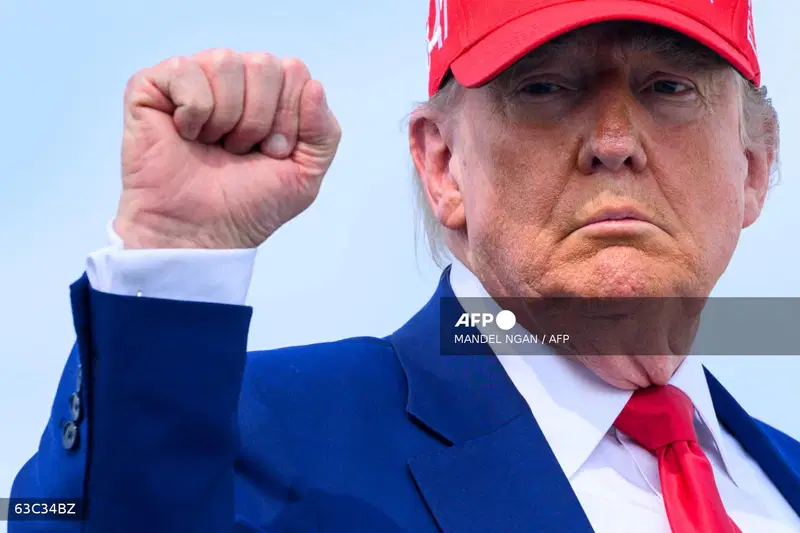
United States President Donald Trump said US forces conducted deadly strikes against Islamic State terrorists in northwestern Nigeria, and vowed more attacks if the militants keep killing Christians.
“I have previously warned these Terrorists that if they did not stop the slaughtering of Christians, there would be hell to pay, and tonight, there was,” Trump posted on his Truth Social platform, adding that “the Department of War executed numerous perfect strikes.”
READ ALSO:JUST IN: Kano Lawmaker, Sarki Aliyu Daneji, Dies Hours After Colleague’s Passing
Trump stated that the Department of War “executed numerous perfect strikes, as only the United States is capable of doing. Under my leadership, our Country will not allow Radical Islamic Terrorism to prosper.”
The US president wished everyone Merry Christmas, “including the dead Terrorists, of which there will be many more if their slaughter of Christians continues.”
Details later.

 News4 days ago
PHOTOS: New Era In Furupagha-Ebijaw As Okpururu 1 Receives Staff Of Office
- News3 days ago
UBTH CMD Marks 120 Days In Office, Expresses Commitment To Providing Conducive Working Environment
- News4 days ago
OPINION: Gumi And His Terrorists
- News3 days ago
FIRS Confirms NIN As Tax ID
- News4 days ago
FG Declares Public Holidays For Christmas, New Year Celebrations
- Metro3 days ago
Fintiri Pardons Man Sentenced To Death For ‘Killing Herdsman In Self-defence’, Others
- News4 days ago
OPINION: Christmas And A Motherless Child
 News3 days ago
OPINION: My Man Of The Season
- News2 days ago
JUST IN: Kano Lawmaker, Sarki Aliyu Daneji, Dies Hours After Colleague’s Passing
- News3 days ago
KWAM 1 Withdraws From Awujale Race, Ends Court Challenge


