
News
JUST IN: Why Terrorists’ Negotiator Was Arrested – DSS

The Department of State Services has explained why the lead negotiator between the terrorists and passengers kidnapped from the attacked Abuja-Kaduna train, Alhaji Tukur Mamu, was arrested.
Recall that Mamu was arrested in Cairo, the Egyptian capital, on Tuesday.
The terrorists’ negotiator was arrested in Egypt alongside his family members. Mamu was on his way to Saudi Arabia for the lesser Hajj when he was detained at the Cairo International Airport.
Mamu’s arrest was coming a few days after the All Progressives Congress vice-presidential candidate, Kashim Shettima, visited the publisher and Sheikh Gumi in Kaduna State.
The ex-negotiator personally shared pictures of the visit with our correspondent on Monday. Confirming Mamu’s arrest, the Management of the Desert Herald Newspaper, said the arrest was an attempt to intimidate its publisher (Mamu).
In a statement on Wednesday by its Head, Special Projects, Ibrahim Mada, the management accused the Federal Government of contriving the arrest, deportation of Mamu from Egypt to Nigeria.
“His patriotic mission to ensure the safety of the hapless passengers made him a target of blackmail by unscrupulous elements in the government who are hell-bent in punishing him for this noble but dangerous sacrifice for the fatherland. Such threats and intimidations have forced him to reveal on a number of times that his life was under serious threat.
“Due to numerous threats to his life and conspiracy from the side of security agents to frame him, he withdrew from the said negotiations but from his latest sojourn, it appears that those who are desperately praying for his head are still hell-bent in carrying out their odious dastardly plans.
“But it is our fervent hope that the evil machination of these desperate elements will be nixed by the fact that Allah is always by the side of the oppressed. This evil machination like the ones before it, shall also come to pass,” the statement read in part.
But giving details on why Mamu was arrested, the DSS in a statement by its spokesperson, Peter Afunanya, said Mamu was arrested because he was a “person of interest”.
He noted that upon his return to the country on Wednesday, the DSS took Mamu into custody.
According to him, Mamu has some critical questions to answer on the ongoing investigations relating to some security matters in Nigeria.
The statement read, “The Department of State Services has been inundated with enquires in respect of the arrest or otherwise of Tukur Mamu, the self-acclaimed Kaduna Train hostage negotiator.
“This is to confirm that Mamu, as a person of interest, was intercepted by Nigeria’s foreign partners at Cairo, Egypt on 6th September, 2022 while on his way to Saudi Arabia.
READ ALSO: BREAKING: Bandits’ Negotiator Allegedly Arrested In Egypt
“He has since been returned to the country, today, 7th September 2022 and taken into the Service’s custody.
“The act followed a request by Nigeria’s Military, Law Enforcement and Intelligence Community to their foreign partners to bring back Mamu to the country to answer critical questions on ongoing investigations relating to some security matters in parts of the country.
“The public may wish to note that the law will appropriately take its course.”
PUNCH

News
Eating Takeout Food Often May Increase Heart Disease Risk — Study
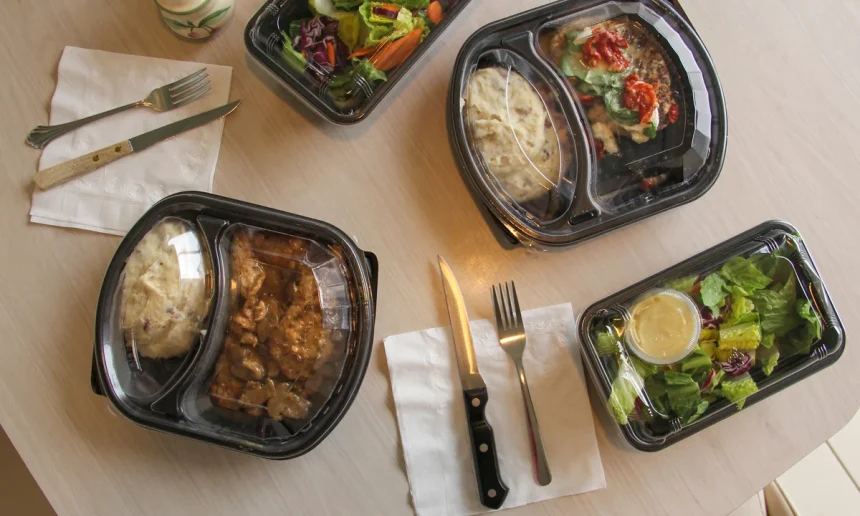
Research suggests that higher takeout food consumption may increase a person’s risk of cardiovascular disease, like heart disease.
In a new study, published in Food Science & Nutrition, researchers said eating takeout food too often can influence systemic inflammation that underlies much cardiovascular disease.
The study of over eight thousand people in the 2009 to 2018 U.S. National Health and Nutrition Examination Survey (NHANES) found that those who eat greater amounts of takeout food are likely to have various elevated risk factors for heart disease.
They were interviewed in their homes and also visited a mobile examination centre, where they recalled their food intake, received cardiometabolic health assessments, and had blood collected.
READ ALSO:23 Ships With Fuel, Food Items To Arrive Lagos Ports – NPA
Mammograms may predict heart disease risk in women — Study
The researchers found a correlation between the amount of takeout food a person consumes and their likelihood of developing chronic low-level inflammation, a key driver of cardiovascular pathology.
Deaths from cardiovascular disease and the consumption of takeout foods are both on the rise, and while that does not prove a causal relationship, the study explores whether there is a connection between the two.
The study tracked degrees of systemic inflammation according to the Dietary Inflammatory Index (DII), a scale that quantifies the risk of inflammation related to the intake of specific dietary substances.
READ ALSO:Food Security: 14,000 Smallholder Farmers To Benefit From N4bn Smart Agriculture Training In Bauchi
The three major takeaways from the analysis included that a higher level of takeout food consumption corresponded to an unfavourable cardiometabolic profile consisting of lower HDL, as well as higher triglycerides, fasting glucose, serum insulin, and insulin resistance.
Jayne Morgan, MD, cardiologist and Vice President of Medical Affairs in a reaction, who was not involved in the study, explained that “Takeout food raises the cardiovascular risk not because of one ingredient, but because of a predictable combination of nutrients, additives, and preparation methods that adversely affect blood pressure, lipids, insulin sensitivity, inflammation, and endothelial function.”
“This includes excess sodium that increases blood volume and blood vessel stiffness, and unhealthy fats, usually saturated fats or trans fats, that increase cholesterol level and atherosclerosis, a condition that can lead to heart attack and stroke.”
Michelle Routhenstein, Preventive Cardiology Dietitian at Entirely Nourished, also not involved in this study, declared, “It is also important to recognise that frequent takeout use often reflects broader lifestyle pressures such as demanding schedules, limited access to cooking resources, irregular meals, and disrupted sleep, all of which can quietly compound cardiovascular risk.”
News
How To Identify Fake Kiss Condoms In Circulation
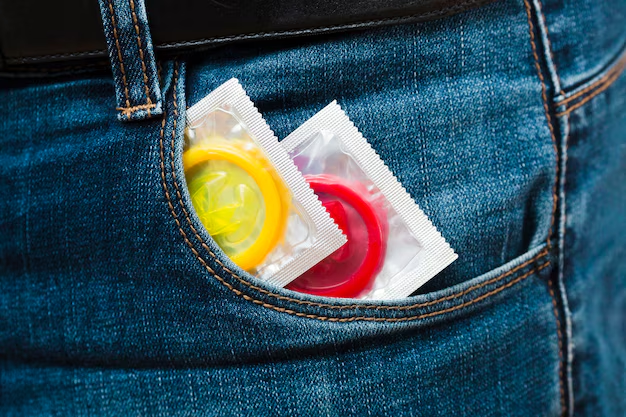
The National Agency for Food and Drug Administration and Control (NAFDAC) has recently warned Nigerians about the circulation of counterfeit Kiss brand condoms in major markets across the country.
Contents
Original DKT Kiss condoms
Fake Kiss condoms
In a public alert published on its website recently and referenced as Public Alert No. 042/2025, the agency said the warning followed information received from DKT International Nigeria, a non-governmental organisation involved in contraceptive social marketing and HIV/AIDS prevention.
NAFDAC stated, “The National Agency for Food and Drug Administration and Control is notifying the public about the sale and distribution of fake Kiss condoms in various Nigerian markets.
“The information was received from the MAH-DKT International Nigeria, a leading non-governmental organisation focused on contraceptive social marketing. Its mission is to provide Nigerians with affordable and safe options for family planning and HIV/AIDS prevention.
“The fake Kiss condoms have been reported to be found in Onitsha Market, Idumota Market, Trade Fair Market, and various markets in Kano, Abuja, Uyo, Gombe, Enugu, and others.”
READ ALSO:Married Man Denies Wife At Brazil Concert To Kiss Tems On Stage [VIDEO]
Kiss condom is a brand of male latex condoms designed to offer sexual protection, including the prevention of unwanted pregnancy and sexually transmitted infections such as HIV, gonorrhoea and syphilis.
To help consumers avoid counterfeit products, NAFDAC outlined key differences between original and fake Kiss condoms.
Original DKT Kiss condoms
The original product comes in a light red box pack with clear instructions printed on the lower part of the pack, including single-use warnings and storage and caution information. The box contains detailed medical device information, including MDSS GmbH, Germany, and a complete Nigerian address at Isolo Industrial Layout, Oshodi-Apapa Expressway.
The condom pack is light red, with the word “Kiss” closely written on six lines. The wallet outer pack is lighter red, carries the Oshodi-Apapa address, manufacturer details, and a clear product description beside the condom image. The hidden flap includes revision dates, medical device details, and caution information, while the wallet inner contains detailed instructions and eight bullet points under important notes.
READ ALSO:Lagos Names Mandy Kiss Anti-drug Abuse Ambassador
The original condom is large, oval-shaped, well-lubricated, and has a large teat end for semen collection.
Fake Kiss condoms
In contrast, fake Kiss condoms come in darker-coloured box packs with little or no additional information. Some boxes are plain white inside and lack condom images. The address is wrongly listed as 42, Montgomery Road, Yaba, Lagos, while the manufacturer’s address is incomplete or missing. Storage and caution information is absent.
The condom pack is darker, with “Kiss” loosely written on five lines and wide spacing. The condom strip is longer than the original. The wallet outer pack is also darker red, carries incorrect or missing addresses, lacks colour wave designs, and shows inconsistencies in barcode lines. Medical device and caution information are missing, and the hidden flap contains no details.
Inside the wallet, information is summarised with only six bullet points. The fake condom is thinner, round-shaped, less lubricated, and has a smaller teat end.
(TRIBUNE)
News
Lagos: Police Arrest 14 Suspected Traffic Robbers On Lekki-Epe Expressway

Fourteen persons suspected to be involved in traffic-related robbery have been arrested at various points along the Lekki-Epe Expressway in Lagos over the past two weeks.
The arrests were confirmed on Tuesday by the Lagos State Police Command spokesperson, SP Abimbola Adebisi, via a post on her official X handle, @AbimbolaShotayo.
According to her, operatives of the Command’s Tactical Squad based in Elemoro carried out the operations that led to the suspects’ apprehension.
READ ALSO:VIDEO: Chaos As Last-minute Shoppers Overwhelm Lagos Balogun Market
She explained that the arrests followed sustained patrols and intelligence-driven operations aimed at curbing criminal activities associated with traffic congestion and improving the safety of motorists and other road users along the busy corridor.
Adebisi noted that the development reflects the Command’s determination to strengthen security and uphold law and order on the Lekki-Epe axis, adding that the Tactical Squad has continued to proactively identify crime-prone areas and respond swiftly to threats posed by criminal elements.
She called on residents and commuters to support police efforts by providing timely and credible information that could assist in preventing and detecting crime.
READ ALSO:VIDEO: Chaos As Last-minute Shoppers Overwhelm Lagos Balogun Market
“Security is a shared responsibility. Members of the public are encouraged to stay alert and promptly report any suspicious movements or activities to the nearest police station,” she said.
The police spokesperson further reassured residents and road users of the Command’s commitment to maintaining aggressive patrols and security operations to protect lives and property in the area.
She reiterated the Command’s community policing message, “See Something, Say Something,” stressing the importance of cooperation between the police and the public in sustaining peace and security.

 Headline5 days ago
US Dept Of War Shares Video Of Air Strikes In Nigeria
- News4 days ago
PHOTOS: SGF George Akume Weds Ooni’s Ex-Queen
- News3 days ago
Ex-Edo Gov Obaseki Reacts As His Cousin Is Beaten, Stripped
- News2 days ago
BREAKING: Anthony Joshua Involved In Road Accident
- News5 days ago
Shehu Sani Reacts To Trump’s Military Strikes In Nigeria
- News5 days ago
Trump’s Airstrikes: Halt Military Cooperation With US Immediately – Sheikh Gumi Tells Tinubu Govt
- Politics2 days ago
Wike Speaks On Defecting To APC
- Politics2 days ago
JUST IN: INEC Excludes PDP From Ekiti Governorship Election
- Headline5 days ago
U.S. Lawmaker Reacts To Nigeria, U.S. Airstrikes
- Metro3 days ago
Obaseki Beaten, Stripped In Edo


