
Headline
King Charles III Takes Coronation Oath
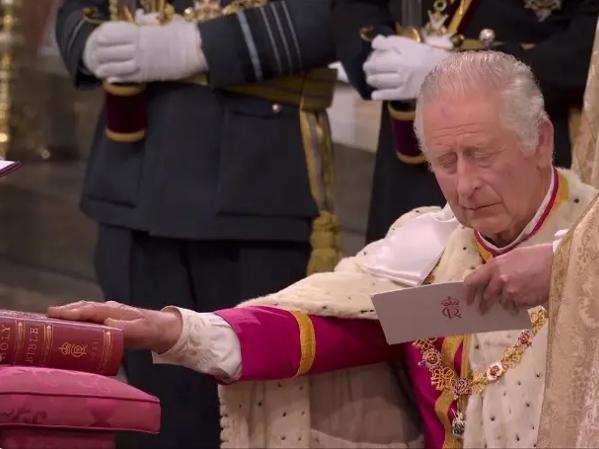
After the Recognition, the king was presented the Coronation Bible by Iain Greenshields, moderator of the general assembly for the Church of Scotland, who sets the words of God – the Bible – as the “royal law” to govern with.
The Archbishop of Canterbury acknowledged the multiple faiths observed in the UK by saying the Church of England “will seek to foster an environment in which people of all faiths may live freely”.
Welby then administered the Coronation Oath – a legal requirement.
The Archbishop asked King Charles to confirm that he will uphold the law and the Church of England during his reign.
READ ALSO: Joe Biden Missing As Wife, World Leaders Attend King Charles III’s Coronation
The King placed his hand on the Holy Gospel and pledges to “perform and keep” those promises.
He also takes a second oath – the Accession Declaration Oath – stating that he is a “faithful Protestant”.
King Charles and Queen Camilla had the Abbey to the choral music for today’s ceremony was performed by the Choir of Westminster Abbey.
The coronation anthem was written by Hubert Parry for the coronation of King Edward VII in 1902 and sung at all coronations since then.
The music performance was augmented by the Choir of His Majesty’s Chapel Royal, St. James’ Palace; choristers from Methodist College, Belfast; the Choir of Truro Cathedral and an octet from the Monteverdi Choir.
Parry incorporated a set of “vivats” – traditional Latin acclamations for the new monarch – into his piece, which must be rewritten for each coronation.
READ ALSO: Anti-monarchy Protest Rocks King Charles III Coronation [VIDEO]
Today we hear the King’s Scholars of the prestigious Westminster School in London, singing Vivat Regina Camilla! Vivat Rex Carolus! (Long live Queen Camilla! Long live King Charles!).
The King and Queen had arrived at Westminster Abbey to mark the start of his historic coronation ceremony in just moments away.
As King Charles nears Westminster Abbey, several senior members of the royal family have entered the venue.
His siblings — Princess Anne, Prince Edward and Prince Andrew — have all taken their seats.
Earlier Queen Camilla’s family arrived at the Abbey, including her former husband Andrew Parker-Bowles and her daughter Laura Lopes and son Tom Parker-Bowles.
READ ALSO: Tiwa Savage To Perform At King Charles III Coronation
In a slight deviation from tradition, the couple is processing to the ceremony in the Diamond Jubilee State Coach drawn by six Windsor Grey horses. They are being accompanied on the 1.3-mile route by four divisions of the sovereign’s most trusted bodyguards, the Household Cavalry.
Each division consists of 24 horses with two divisions of the Blues and Royals at the front, and two divisions of the Life Guards following.
The procession is being led by the Household Cavalry Mounted Band – that’s 48 horses and musicians, who will play eight marches as they travel the route.



Headline
How Our Airstrikes Stopped Christmas Attacks In Nigeria — US Lawmaker
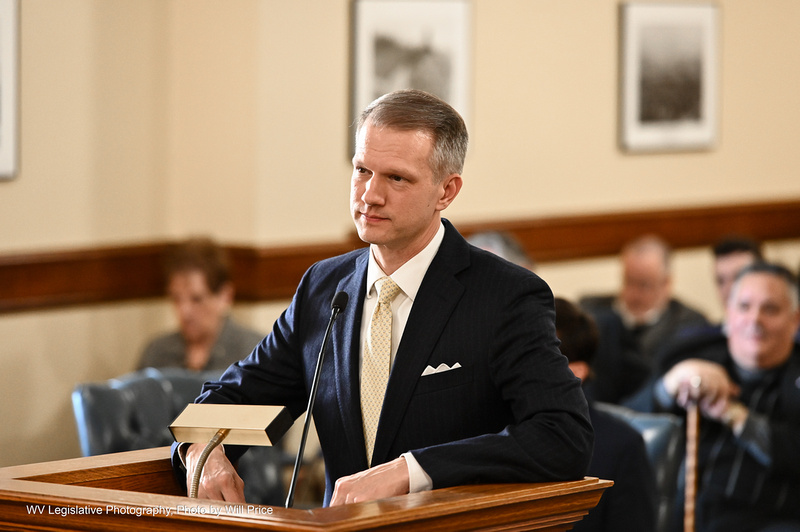
Riley Moore, a member of the United States House of Representatives from West Virginia’s 2nd District, has linked the absence of Christmas attacks in Nigeria this year to US military airstrikes carried out against Islamist militants on Christmas Day.
In a post on his official X account on Saturday, Moore contrasted the situation with the past two Christmas seasons, during which he claimed Christians were killed in attacks across parts of Nigeria.
The lawmaker noted that this year’s response targeted extremist groups instead of marking another period of violence.
READ ALSO:Rep Moore Confirms 12 Tomahawk Missiles Launched In Sokoto
He added that US forces acted decisively against militants in coordination with the Nigerian government.
“For the past two Christmases, Christians have been murdered in Nigeria. This year, thanks to @POTUS, Radical Islamic Terrorists were on the receiving end of 12 Tomahawk missiles as a present.
“The successful strikes on ISIS, in coordination with the Nigerian government, are just the first step to secure the country and end the slaughter of our brothers and sisters in Christ,” Moore wrote.
US President Donald Trump said on Thursday that American forces had conducted deadly strikes against Islamic State terrorists in north-western Nigeria.
Trump, who spoke via his Truth Social platform, warned that more attacks would follow if the militants continued killing Christians, adding that the Department of War executed numerous “perfect strikes.”
Headline
U.S. Lawmaker Reacts To Nigeria, U.S. Airstrikes
United States Congressman, Riley Moore, has stated that President Donald Trump is determined to put an end to the killing of Christians in Nigeria, warning that further action may follow if the violence persists.
Moore made the statement on Friday via his official X handle.
According to the lawmaker, the strike represents the first step in addressing what he described as the ongoing slaughter of Christians and the broader security crisis affecting Nigerians across religious and ethnic lines.
READ ALSO:US Dept Of War Shares Video Of Air Strikes In Nigeria
“President Trump has been clear that the killing of Christians in Nigeria must end,” he said.
He that the administration’s resolve on the matter should not be underestimated.
“As I stated at the outset: Do not test President Trump‘s resolved in this matter.
READ ALSO:JUST IN: US Forces Bomb Terrorists Camps In Nigeria
“Tonight’s strike in coordination with the Nigerian government is just the first step to ending the slaughter of Christians and the security crisis affecting all Nigerians,” he said.
He stressed that the operation signals a stronger stance by the United States in support of Nigeria’s efforts to tackle terrorism and violent extremism, noting that further measures could be taken if the situation does not improve.
Headline
US Dept Of War Shares Video Of Air Strikes In Nigeria
A video footage of the US military air strikes in Nigeria has emerged.
The video was released by the US Department of War following its air strikes against terrorists in Sokoto.
Earlier, the US secretary of War, Pete Hegseth had confirmed that military air strikes hit terrorists in Nigerians, saying it was deadly.
Later on, the US. African Command, confirmed that it conducted the attacks described as very deadly by President Donald Trump.
Trump said he was only keeping the promise he made earlier last month to strike the terrorists he believes are killing innocent Christians.
READ ALSO:JUST IN: US Forces Bomb Terrorists Camps In Nigeria
Although described as powerful and deadly, the casualty caused by the attack is yet to be released.
Explaining further, security expert, Brant Philip, said the strikes may have been launched “from the USS Paul Ignatius, using a Tomahawk missile.”
The Nigerian government through its ministry of foreign affairs has also confirmed that the strikes were successful.
Watch video here

 News4 days ago
JUST IN: Kano Lawmaker, Sarki Aliyu Daneji, Dies Hours After Colleague’s Passing
- News4 days ago
FULL LIST: Churches That Don’t Celebrate Christmas
- Headline3 days ago
JUST IN: US Forces Bomb Terrorists Camps In Nigeria
- News3 days ago
Okpebholo Slams ₦25bn Libel Suit On Edo PDP Chairman
- Headline3 days ago
US Dept Of War Shares Video Of Air Strikes In Nigeria
- Entertainment4 days ago
AFCON 2025: Davido Wins $96,000 After Super Eagles Beat Tanzania
- News5 days ago
OPINION: The Day Friendship Died
- News4 days ago
Sheikh Gummi Sues Two Over Alleged False Facebook Publication
- News4 days ago
7 Health Risks Of Owning A Cat
- Headline4 days ago
Coup: Guinea-Bissau Junta Releases Six Held Opposition Politicians


