

News
Land Grabbing, Extractivism, And Climate Change [The Impacts On Communities]

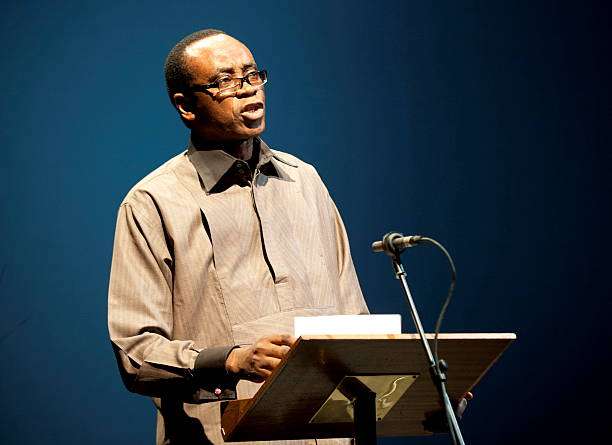


By Nnimmo Bassey
The challenges confronting our communities and people generally are interconnected. They are often analyzed and presented as though they operate in silos. The reality is that they operate in intricately connected webs and must be understood as such. Our lands are grabbed for extractive or exploitative purposes. Extractivism in turn drives climate change. Climate change in turn triggers more extraction, soil
degradation as well as land resource issues. The cycle goes on until we take action to break it. The purpose of this conversation is for us to unpack the components of the crises, locate the critical nodes and points of vulnerability, and act to propel transformation using cultural tools.
We will together look at three key things: Land grabbing, extractivism,
and climate change. As already noted, they are interconnected and are not necessarily hierarchical or sequential.
Land grabbing
Ownership of land in Nigeria was historically in the hands of
individuals or communities. Today, through a military decree promulgated on 29th March 1978, communities have been dispossessed of their lands
while ownership has been claimed by the state, euphemistically on behalf of the dispossessed. By virtue of the overbearing control of the military over the county’s governance structure, that Decree was inserted in the 1999 Constitution and barricaded in as inviolable. In other words, there should be no debate over its operations. The forced supremacy of the Land Use Act can be seen in its section 47 (1) which states that the Act is literally an outlaw and shall have effect notwithstanding anything to the contrary in any law including the constitution.
The Land Use Decree or Act was designed in a colonial template of
resource appropriation that deprives the colonized of the fundamental resource and ensures that it is owned and used to meet the utilitarian needs or other means of enjoyment of the colonizers. Those whose lands are grabbed may only be compensated for the loss of economic crops and improvements on the land. In practice, the compensations have been grossly inadequate, if not outrightly insulting. Consider for example a payment of N100 for a mango tree when one mango fruit could go as much and such a tree would bear hundreds of fruit for several years.
READ ALSO:: COP28 And The Quest For Climate Justice
Lands may be grabbed by different means, and for diverse purposes. By the Land Use Act, the government can grab any land by declaring that it is required for the public good. The use of such land would invariably change, with dire consequences. A forest could be cleared and replaced with a plantation or cash crops for export. A poor community could be demolished, the people get displaced and then their territory could be replaced with expensive resorts, hotels, or gated estates. Wetlands can be sand-filled and taken up for infrastructural purposes. The list goes on.
The Nigerian government claims ownership of minerals and petroleum resources in the subsoil. So our lands can be grabbed for mining or oil and gas extraction, ostensibly for the common good. Because this often happens without free prior informed consent, when the people are called stakeholders what it means is that while the company and government share the profits, the communities own the pollution. This is also why such pollution is hardly ever cleaned up.
Land can also be directly grabbed through pollution. Two quick examples can show how this happens. A polluted stream by an oil spill becomes the waste dump of the polluter and usage for fishing or potable water is lost. Secondly, dumping of wastes on a parcel of land takes that land out of the control of communities. Often pollution is not an accidental exercise. It is used to dispose communities of their land and creeks and for the exploiter to assume ownership without accountability, responsibility, or a sense of respect for the owners.
Our quest for development without questions also permits lands to be
grabbed for infrastructural development. Often such lands are taken without prior informed consent.
READ ALSO: Environmental Activist Advocates Stricter Regulations On Pesticides Usage
Our culture and language are tied to our land and our liberation is
connected to both. Our culture nourishes and empowers us to stand against the commodification of Nature and of life. It helps us to defend what belongs to us. It draws boundaries that no one must cross. Our culture is our power!
Extractivism
Extractivism as a concept covers a complex of self-reinforcing
practices, mentalities, and power differentials that promote and excuse socio-ecologically destructive modes of organizing life through colonialism, militarization, depletion, and dispossession. It is a mode of capitalist exploitation…
Although extractivism is used mostly in terms of mining and oil
extraction, it is also present in farming, forestry, fishing, and in the
provision of care. According to an entry in Wikipedia, “Extractivism is
the removal of natural resources particularly for export with minimal
processing. This economic model is common throughout the Global South and the Arctic region, but also happens in some sacrifice zones in the Global North in European extractivism.”
Extractivism destroys lands, pollutes the ocean, and destroys water bodies and wetlands. It results and feeds on land grabs, and sea grabs and is aiming at sky grabs with a rise in space enterprises.
Climate change
The fact that climate change is driven by dependence on fossil fuels — oil, gas, and coal — is well known. The main challenge is that the world keeps a blind eye to what communities suffer in the oil fields and focuses mostly on chasing carbon molecules in the atmosphere. This lack of focus on both ends of the pipeline has left communities destitute by damaging their lands and water bodies and thereby destroying their food systems, economies, and cultures.
READ ALSO: HOMEF Trains Women On Climate Change Adaptation
The gradual agreement to terminate the petroleum civilization, and Yasunize the world, implies that the time to remediate and restore lands damaged by oil and gas extraction has come. This remediation and restoration must be accompanied by reparation.
Our communities have suffered multiple impacts from climate change, extractivism, and land grabbing. Persistent pollution has been the lot of our communities. Studies such as the UNEP assessment of the Ogoni Environment and the recently published Bayelsa Environment and Oil Commission’s report titled Environmental Genocide all show the dire situation. Some communities have their soils contaminated with hydrocarbons to depths exceeding 10 meters. Waters are polluted with
benzene and other carcinogens. The air is grossly polluted with a
cocktail of noxious gases through gas flaring. These pollution do not
readily disappear on their own. They must be consciously tackled and cleaned up. And the time for that is now.
Other impacts of climate change include sea level rise, coastal erosion and salinization of the ocean. These affect local livelihoods and equally, provoke conflicts or displacement of communities.
Cultural resistance
Our lands are healed when extraction and land grabbing are challenged and overcome. A major tool for successful resistance is our happiness. That is the source of our power. A happy community cannot easily be defeated.
Another key tool is our love. Our love for one another and our love for our land and culture. Love reinforces solidarity. Beyond love, we must build stubborn hope as an antidote to despondency. Hope empowers action. It emboldens.
Boldness empowers the telling of truth, including the reportage of
destructive extraction and land grabbing. The oppressed must remain emboldened by the knowledge that while the rich worry about the end of the world, workers and exploited communities worry about the end of the day and have deep stakes in what happens tomorrow.
To resolutely stand against land grabbing and extractivism and also build resilience against climate change our communities need Care and Repair Teams (CARTs) as key agents for overcoming trauma, stressors, and illnesses. These teams can also be agents to press for remediation, restoration, repairing, and reparation. These demands and their attainment require the use of every tool of cultural resistance.
Nnimmo Bassey is a renowned environmental activist and Executive Director, Health of Mother Earth Foundation (HOMEF)




News
N5m, N10m Zero-interest Loans: SheVentures Opens Applications For Women Entrepreneurs


First City Monument Bank (FCMB) has opened a new round of applications for its SheVentures proposition, offering zero-interest loans of up to ₦10 million to women entrepreneurs to ease access to working capital and support business growth.
The facility provides loans ranging from ₦500,000 to ₦5 million under a general category, and ₦5 million to ₦10 million for sector-specific businesses, with funding capped at up to 50% of an applicant’s average monthly turnover.
At the centre of the offering is a 0% interest rate, with all charges embedded in a transparent structure.
Repayment is structured over four or six months, allowing businesses to match obligations with their cash flow cycles.
READ ALSO:I’ve Been Blacklisted In Music Industry For 13 Years – Seun Kuti
Yemisi Edun, Managing Director and Chief Executive of First City Monument Bank (FCMB), said the initiative reflects a deliberate approach to inclusive growth.
“Inclusive growth requires access to capital and the right conditions for businesses to deploy that capital effectively.
“Women-led enterprises are critical to economic activity, yet they face structural barriers.
This intervention aims to help close that gap by providing financing that supports job creation, business expansion, and long-term sustainability for women entrepreneurs.”
“Access to affordable finance remains a major constraint for women entrepreneurs,” said Nnenna Jacob-Ogogo, Group Head, SheVentures and Impact Segments at First City Monument Bank (FCMB).
READ ALSO:My Beef With Wizkid Is For Life – Seun Kuti
“By removing the cost barrier and offering quick, flexible funding, this zero-interest loan is designed to safeguard existing jobs, enable businesses to invest in growth initiatives, and foster resilience in challenging economic conditions.”
Women-owned businesses account for a significant share of Nigeria’s small and medium-sized enterprises but continue to face high borrowing costs and limited access to credit.
Through these efforts, SheVentures tackles persistent financing gaps facing women-led businesses, combining targeted funding with broader support to empower women entrepreneurs, encourage business innovation, and enhance their ability to compete on a national scale.
Applications for the zero-interest loan are now open.Apply now.
News
Xenophobic Attacks: Oshiomhole Tells FG To Retaliate Against South African Companies In Nigeria

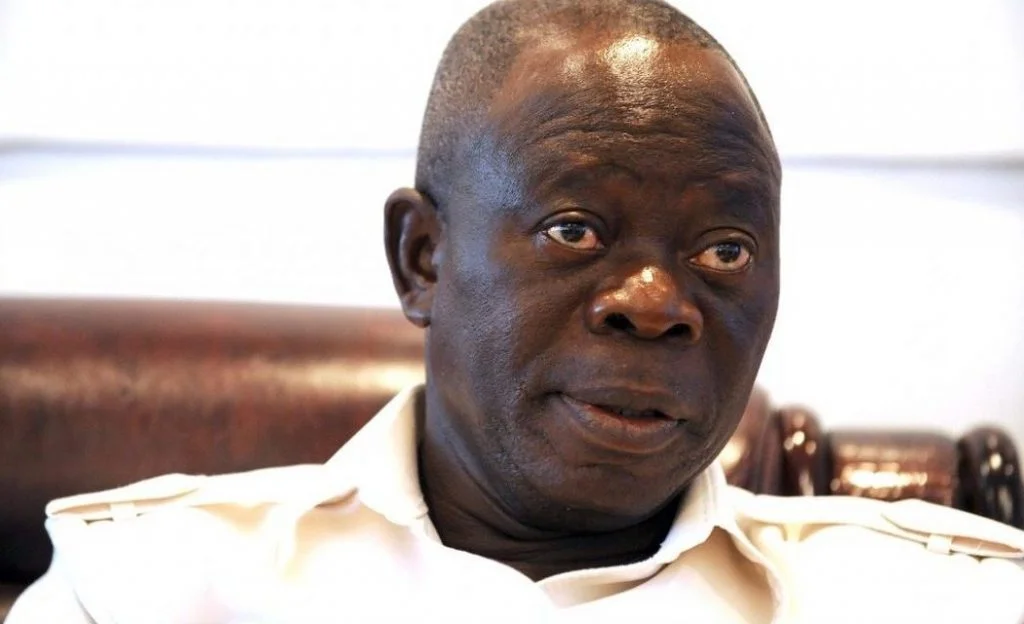
Senator Adams Oshiomhole has called on the Federal Government to retaliate against South African businesses operating in Nigeria following the recent attacks on Nigerians in South Africa.
Speaking during plenary on Tuesday, Oshiomhole said the Federal Government should consider revoking the working license of South African owned companies such as MTN and DSTV.
He argued that Nigeria must respond firmly to what he described as persistent hostility against its citizens.
READ ALSO:South Africa To Investigate ‘Mystery’ Of Planeload Of Palestinians
“I am not going to shed tears. If you hit me, I hit you. I think it is appropriate in diplomacy. It is an economic struggle,” Oshiomhole said.
He argued that while some South Africans accuse Nigerians of taking their jobs, Nigerians should return home and take over employment opportunities created by major South African companies operating in the country, including MTN and DSTV.
“When we hit back, the President of South Africa will not only talk but will also go on his knees to recognise that Nigeria cannot be intimidated.
READ ALSO:South African Ambassador Found Dead Outside Paris Hotel
“We will not condone any life being lost. If a crime has been committed under the South African law they have the right to bring any such person to justice, but to kill our people as if we are helpless, we will not allow that,” Oshiomhole added.
DAILY POST reports that several Nigerians in South Africa have reportedly been attacked, and their businesses destroyed, in ongoing xenophobic attacks in the country.
News
IGP Orders Officers Display Name Tag On Uniform, Gives Update On State Police

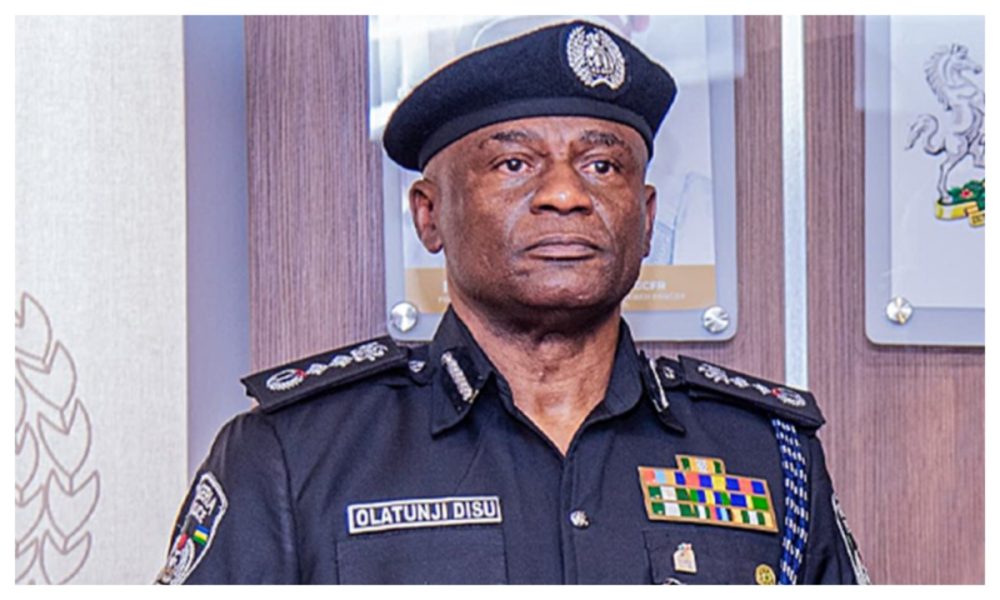
The Inspector General of Police, IGP, Tunji Disu, has ordered all police personnel to always have their name tags on their uniforms for easy identification.
Disu disclosed that only police personnel who are undercover are exempted from displaying their name tags.
Speaking on Tuesday, Disu said: “All police officers should have their name tags. All of us on the high table have our names apart from the undercover among us so if you look at all the Commissioners of Police we have our name tags, so it’s not our standard.
READ ALSO:
“All the Commissioners of Police are here and that is why we called this meeting, we have list of things like this that we will want to discuss with the Commissioners of Police, we have told them earlier and we will still let them know that every that happens within their area of jurisdiction falls under their control.”
On the issue of state police, the IGP said: “Since we got the signal that the Federal Government of Nigeria intend to establish State Police and since we are the federal police, we decided to take the bull by the horn and put down our own side of what we believe on how the state police should be run.
“A lot of things were taken into consideration, a lot of comparative analysis was done and it has been transmitted to the National Assembly.”
-

 Politics4 days ago
2027: Tinubu’s Re-election May Put An End To Nigeria — Baba Ahmed Warns
-

 Politics5 days ago
BREAKING: 2027: Former Adamawa APC Guber Candidate, Aishatu Binani Defects To NDC
-

 Business4 days ago
JUST IN: Nigerian Filling Stations Reduce Fuel Price After Hike
-

 Politics5 days ago
Senatorial Seat: Ogbakha-Edo Warns Against Imposition Of Candidates In Edo South
-

 Entertainment5 days ago
Actress Eniola Badmus Gets New Federal Appointment
-

 News2 days ago
BREAKING: Wike Picks Alabo George For Rivers Governorship
-

 News3 days ago
OPINION: Why South Africans Murder Nigerians In Cold Blood
-

 Politics4 days ago
NDC Speaks On Peter Obi, Kwankwaso Joining Party
-

 News4 days ago
2027: Pastor Adeboye Speaks On Nigeria’s Next President
-

 Politics5 days ago
2027: Pondi, Otuaro, Other Delta South Stakeholders, Endorse Senator Joel-Onowakpo For Second Term
