
Headline
LIST: 25 Countries Where TikTok Is Banned
United States President Joe Biden recently signed a bill that could potentially result in the ban of TikTok in the US if its Chinese-owned parent company, ByteDance, fails to sell it within a year.
US lawmakers are concerned about the potential national security risks associated with the app, particularly if the Chinese government were to gain access to the data it collects.
Many countries have taken action to limit or ban TikTok, citing worries about privacy, security, or ethical issues.
Different approaches have been taken by various countries, with some implementing comprehensive restrictions and others focusing on particular features of the app or a partial ban on government devices.
Here is a list of countries that have implemented various forms of restrictions:
Countries with a complete ban
China
TikTok’s international version is not accessible within China. Instead, users are required to download Douyin, the Chinese counterpart of TikTok, which is subject to strict content control by the Chinese Communist Party.
Senegal
Senegal implemented a complete ban on the application following allegations that an opposition candidate had utilised the platform to disseminate “hateful and subversive messages.” The Senegalese government has declined to restore the app until a system is created that enables them to delete individual accounts.
Somalia
The Somali government officially outlawed TikTok, Telegram, and 1XBet, an online betting platform, in August 2023.
READ ALSO: UK Varsity Offers Nigerians N44m Scholarships
North Korea
Access to the internet is heavily restricted for the majority of North Korean citizens. While a select few websites and apps are allowed for the privileged elite, TikTok is not included in this list.
Afghanistan
In April 2022, the Taliban government decided to ban TikTok, citing concerns about its influence on young people.
India
India banned TikTok in 2020, including on personal devices, following a border clash between China and India in 2020. The ban was prompted by concerns about data theft and the government’s claim that certain apps were stealing. Many creators migrated to YouTube Shorts and Instagram Reels.
Iran
TikTok, along with other globally popular social media platforms like X and Facebook, has been banned by the Islamic Republic.
Uzbekistan
Since July 2021, TikTok has been inaccessible in Uzbekistan due to the authorities’ claim that the app does not adhere to the country’s personal data protection laws.
Countries with a partial ban on TikTok
Indonesia
In October 2023, Indonesia took action against TikTok Shop, a feature of the app that enables creators to sell products to their followers, due to its violation of the country’s e-commerce laws.
READ ALSO: Again, FG Talks Tough, Threatens To Revoke Lokoja-Benin Road Contract
Kyrgyzstan
In August 2023, the small country, which was once part of the Soviet Union, decided to ban TikTok. The government justified this action by stating that the application harmed the growth and well-being of children.
Russia
There are limitations on the content that Russians can access on TikTok, resulting in a primary focus on videos created by Russian users. Recent reports indicate that the Russian government is planning to prohibit the use of TikTok, to promote the adoption of local social media platforms among its citizens.
Countries with bans on government-owned devices
In April 2023, the Australian government decided to ban TikTok on their devices. However, it remains accessible on devices owned by the general public.
Austria
In May 2023, TikTok was banned on all devices used by government employees in Austria.
Canada
On February 28, Canada banned the use of TikTok on all devices provided by the government because of concerns regarding privacy and security.
Denmark
In March 2023, Denmark’s Ministry of Defence decided to ban the use of the app on its employees’ work phones. Additionally, the country’s main public service broadcaster implemented specific protocols, requiring journalists to obtain special approval before using the app for reporting purposes. This action was taken in response to a warning from Denmark’s Centre for Cybersecurity.
Estonia
In March 2023, the use of TikTok on the work phones of state officials in Estonia was banned.
European Union
Employees of the European Parliament, European Commission, and E.U. Council are no longer allowed to have TikTok on their work phones, as the three main institutions of the E.U. implemented a ban.
France
In March of 2023, France banned the use of Twitter, Instagram, and TikTok on government employees’ mobile devices.
READ ALSO: Outrage Over TikTok Videos Of Cash-flaunting Bandits
United Kingdom
In March 2023, the U.K. banned all government employees from using TikTok on government-provided mobile devices.
United States
The US military and US Congress have both taken action to block access to TikTok on all of their personnel’s devices.
Nearly half of the states have outright banned the app on state-owned devices, and in March 2023, the federal government followed suit.
Ireland
In April 2023, the Irish government implemented a ban on TikTok for use on government devices.
Belgium
The Belgian government announced in March 2024 the ban of the app on all government devices. TikTok remains accessible on devices not associated with government entities.
Taiwan
In December 2022, Taiwan implemented a ban on the usage of Chinese-made software, including TikTok, on all government devices. This decision came after a warning from the FBI.
Latvia
The Latvian Foreign Ministry banned the app from official company phones in March 2023.
Malta
In Malta, government-provided cell phones have restricted access to TikTok and other non-government applications.



Headline
Strait Of Hormuz: US Announces Sanctions Against Iran

The United States Treasury has announced sanctions against Iran’s Persian Gulf Strait Authority.
Treasury Secretary, Scott Bessent, said this in a statement on Wednesday.
The statement extended the threat of sanctions to anyone paying the fees, saying they may be providing support to and receiving services from Iran’s Revolutionary Guards, and therefore may be exposed to sanctions risk.
READ ALSO:Strait Of Hormuz: Pakistan Thanks Trump For Pausing ‘Project Freedom’
“The Iranian military’s latest attempt to extort global maritime trade is proof that Economic Fury has left the regime desperate for cash.
“Treasury has deprived the Iranian regime of revenue for their weapons programs, terrorist proxies, and nuclear ambitions,” Bessent said.
Bessent added that the US has succeeded in disrupting tens of billions of dollars’ worth of revenue from being accessible to Tehran.
Headline
US Launches New Airstrikes On Iran
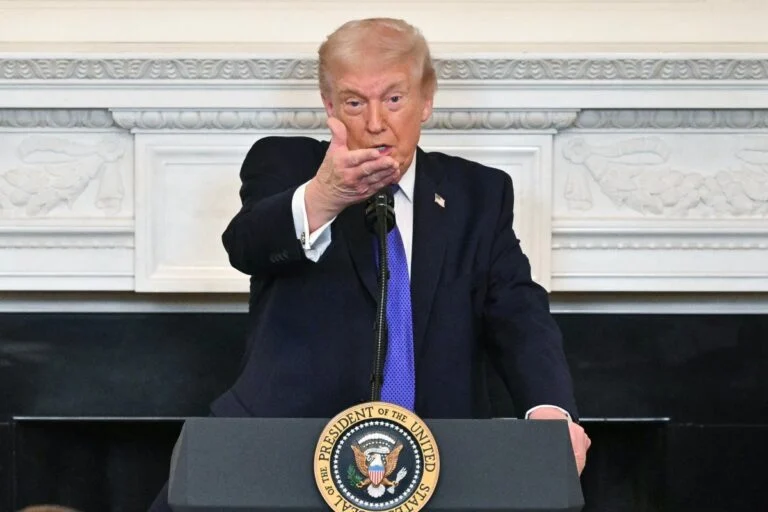
The United States has launched new airstrikes in southern Iran.
The strike shot down four one-way attack drones that posed a threat around the Strait of Hormuz and then a ground control site.
A US official revealed that American forces struck an Iranian ground control station in Bandar Abbas that was about to launch a fifth drone.
READ ALSO:US Restricts Entry Routes For Travellers From DRC, Uganda, South Sudan Over Ebola Outbreak
The official described the strikes as purely defensive, saying the US intended to maintain the ceasefire.
Report says this is the second time in three days that the US has carried out self-defense strikes against Iranian military targets in southern Iran.
Recall that on Monday the US carried out airstrikes against Iranian missile locations and boats that US Central Command said were preparing to launch mines in the Strait of Hormuz.
Headline
Woman Passes Out After Receiving 100 Strokes Of Cane
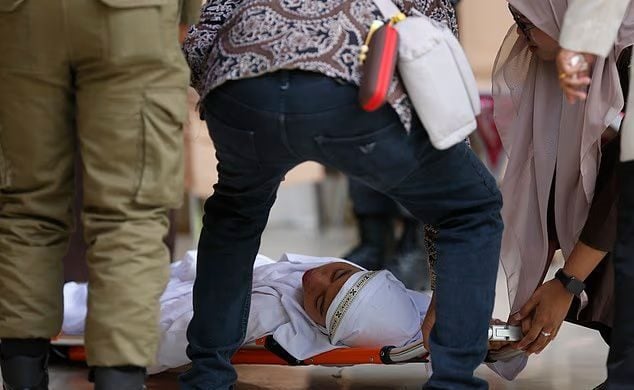
A woman has passed out after she and her partner were each flogged 100 times in public for engaging in sex outside marriage under strict Sharia laws in Indonesia’s Aceh province.
The woman, whose identity was not disclosed, was later carried away after the punishment was carried out in Banda Aceh, located at the northern tip of Sumatra island on Thursday.
A masked official dressed in brown robes administered the caning before members of the public who gathered to witness the punishment.
Her partner was also seen wincing in pain while receiving the lashes.
READ ALSO:Ex-INEC REC Reveals 2026 Electoral Act Provisions That Could Undermine 2027 Election
The pair were among several individuals punished for violating Sharia regulations in the province.
Authorities from the Banda Aceh Sharia Court and the Prosecutor’s Office handed down punishments ranging from 25 to 100 lashes for offences including extramarital sex allegedly arranged through online applications.
Aceh remains the only province in Muslim-majority Indonesia operating under Sharia law, where unmarried couples are prohibited from having sexual relations.
Caning is commonly used in the province as punishment for offences such as gambling, alcohol consumption, same-sex relations and sex outside marriage.
READ ALSO:UN Facing ‘Imminent Financial Collapse’ — Secretary General Lamenets
Under Aceh’s Sharia regulations, child rape offenders face some of the harshest penalties, including up to 200 strokes of the cane, a prison sentence of as long as 200 months or fines equivalent to two kilograms of gold.
The punishments are usually carried out publicly as a way of shaming offenders in addition to inflicting physical pain.
Such canings are often conducted outside mosques or in open public spaces, with residents watching and taking photographs during the exercise.
Human rights organisations have continued to condemn the practice, arguing that it causes emotional trauma and violates international human rights standards.
READ ALSO:18-year-old OAU Medical Student Dies While Sleeping
Amnesty International and Human Rights Watch have repeatedly criticised the punishments, saying they conflict with Indonesia’s constitution and global legal obligations.
Amnesty said in a statement: “Caning contravenes Indonesia’s constitution and is in clear violation of international human rights law and standards.
‘It constitutes a cruel, inhuman and degrading punishment and can amount to torture in violation of the UN Convention against Torture and other international covenants, to which Indonesia is a State Party.’”
Despite the criticism, local authorities have defended the punishments as part of Aceh’s religious and cultural identity, insisting they serve as a deterrent against immoral behaviour.
Earlier in January, another couple in the province reportedly received 140 lashes each after being found guilty of drinking alcohol and engaging in sex outside marriage.
(Daily Mail)

 Metro5 days ago
My Husband Abandoned Me On Our Wedding Night To Attend Political Meeting, I Want Our Marriage Dissolved
- Headline4 days ago
Woman Passes Out After Receiving 100 Strokes Of Cane
- Politics5 days ago
Warri Ijaw Hail INEC Delineation Report, Call For Additional Electoral Wards, Others
- Headline4 days ago
JUST IN: White House Locked Down Briefly As Gunman Opens Fire At Security Checkpoint
- Politics3 days ago
Two Masked Men Gun Down Politician In His Rivers State Hotel
- News3 days ago
More Pain For Nigerians As Cooking Gas Price Increases Nationwide
- Metro5 days ago
My Wife Stop Cooking My Food, Beats Me Black And Blue All the Time, Man Tells Court
- News5 days ago
Alleged Terrorism: Court Rejects Defendant’s Bid To Travel Abroad
- Politics5 days ago
What I’ll Do As President Of Nigeria — Amaechi
- News3 days ago
FG Declares Two Days Public Holiday For Eid-el Kabir Celebration


