
Headline
Malnutrition: Nigeria Ranked First In Africa, Second Worldwide

The United Nations Children’s Fund said Nigeria ranks first in Africa and second worldwide in the number of malnourished children.
The Chief of Nutrition for UNICEF Nigeria, Nemat Hajeebhoy, said this on Monday at the ongoing three-day collaborative meeting between the Federal Ministry of Health and Social Welfare, the National Primary Healthcare Development Agency, and the state nutrition managers.
Hajeebhoy said, “When we look at Nigeria, we see that in Nigeria, we have between 35 and 45 million children under five years of age. Now, when we look at children and we say they are malnourished, if they’re not doing well, we say they are malnourished, and you have different types of malnutrition. You have about 12 million children who we say are stunted, which means they are short in terms of their height for their age.
“We have about nine million children who are wasted, which means they’re too thin for their height, and then we have about 24-25 million children who are anaemic, which means they do not have enough iron, or their blood is not healthy. So, with these numbers, Nigeria is number one in the continent and second in the world, after India. So in Nigeria, we need to all come together to address this issue, because if we address the issue in Nigeria, we address it for West Africa, we address it for the continent.”
READ ALSO: Nigeria Is Well Placed To Be West Africa’s Tech Hub Says HP Executive
She, however, said 43 million Nigerian children have received vitamin A supplements.
“During the maternal, newborn, child health week campaigns that were held in all the states of the country in May, June, July and August to deliver vitamin A supplementation, deworming tablets to children under five, iron, folic acid or multiple micronutrient supplements to pregnant women, I’m delighted to share that 43 million children receive vitamin A supplements this time. This is the first time in Nigeria we have had such a high number.
“We also see that all 36 states unlocked resources to get deworming tablets given to children. And 19 million children were reached with deworming tablets. We also see that over two million pregnant women receive supplements of either iron and folic acid or a multiple micronutrient tablet, and this is very important to enable them to be healthy and for the growth of their children.
“What I am hopeful for is that the next round of MNC week which will happen between mid-November and mid-December, that we can have the support from the states, mothers, fathers, grandparents, so that we can reach the same numbers in the second round. If we achieve this, then we will have achieved results for Nigeria, for West Africa, for the continent and the world,” she added.
READ ALSO: Nigeria Becoming A Failed State- Catholic Bishop
Meanwhile, the Director and Head of the Nutrition Department, FMoHSW, Ladidi Bako-Aiyegbusi, noted that efforts are being made by the Federal Government to check the progress made and prioritise activities that will improve nutrition in the country.
She said, “Nigeria has the highest burden in Africa and the second highest in the world but the government is collaborating with other stakeholders to change that narrative, and we have put in place quite several strategies.
“We have the coordination team through which we interact with stakeholders every quarter to find out what everyone is doing, and the challenges. We are also ensuring that this coordination that is being strengthened at the federal level, it’s also being strengthened at the state level.”
She added that the government was also building the capacity of providers and has trained over 2,000 master trainers on maternal infant and young child feeding practices.
READ ALSO: 70 Nigerians Register For Evacuation From Lebanon
“Right now, the Federal Government is supporting the states to plan for the training of the secondary facility providers on maternal and infant and young child feeding practices.
“What we need to see for nutrition is to leverage that momentum and make sure that every child is well nourished, especially during the first 1000 days of life.
“All stakeholders need to come together and invest in that age, because if we don’t, then we compromise the child for life,” she stated.
The Deputy Director, Nutrition, NPHCDA, Dr Ogechi Akalonu noted that there is a need for strategies for improving the nutritional status in the country.
READ ALSO: Peter Obi Speaks On Fresh Petrol Price Hike
She said, “It is a good meeting to ensure that nutrition is visible and top of the national agenda.
“So we need to come together to strategise on how best to improve the nutritional status of women and children.”
On his part, the Country Director, Nutrition International, Dr Osita Okonkwo
emphasised the need to increase funding to ensure the implementation of the Maternal, Newborn and Child Health campaigns.
Okonkwo, who was represented by the Programme Officer, Child Health and Nutrition, Junaidu Sani reiterated the organisation’s commitment to supporting the government in the implementation of the MNCH.



Headline
U.S. Lawmaker Reacts To Nigeria, U.S. Airstrikes
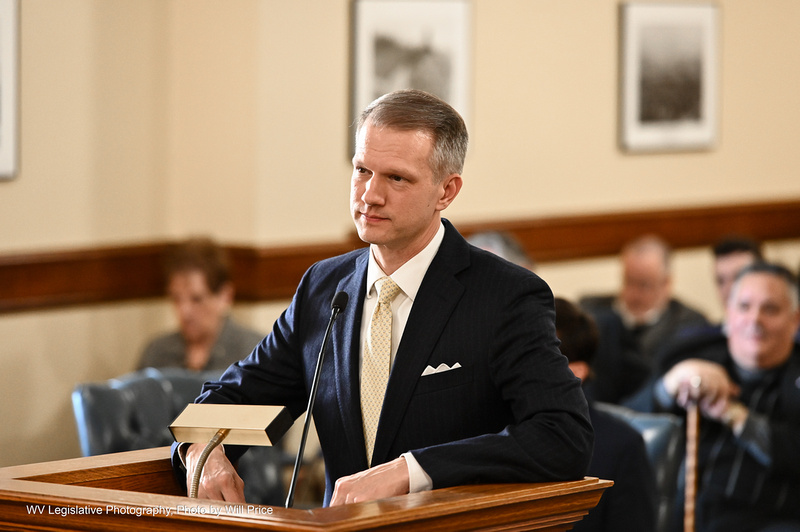
United States Congressman, Riley Moore, has stated that President Donald Trump is determined to put an end to the killing of Christians in Nigeria, warning that further action may follow if the violence persists.
Moore made the statement on Friday via his official X handle.
According to the lawmaker, the strike represents the first step in addressing what he described as the ongoing slaughter of Christians and the broader security crisis affecting Nigerians across religious and ethnic lines.
READ ALSO:US Dept Of War Shares Video Of Air Strikes In Nigeria
“President Trump has been clear that the killing of Christians in Nigeria must end,” he said.
He that the administration’s resolve on the matter should not be underestimated.
“As I stated at the outset: Do not test President Trump‘s resolved in this matter.
READ ALSO:JUST IN: US Forces Bomb Terrorists Camps In Nigeria
“Tonight’s strike in coordination with the Nigerian government is just the first step to ending the slaughter of Christians and the security crisis affecting all Nigerians,” he said.
He stressed that the operation signals a stronger stance by the United States in support of Nigeria’s efforts to tackle terrorism and violent extremism, noting that further measures could be taken if the situation does not improve.
Headline
US Dept Of War Shares Video Of Air Strikes In Nigeria
A video footage of the US military air strikes in Nigeria has emerged.
The video was released by the US Department of War following its air strikes against terrorists in Sokoto.
Earlier, the US secretary of War, Pete Hegseth had confirmed that military air strikes hit terrorists in Nigerians, saying it was deadly.
Later on, the US. African Command, confirmed that it conducted the attacks described as very deadly by President Donald Trump.
Trump said he was only keeping the promise he made earlier last month to strike the terrorists he believes are killing innocent Christians.
READ ALSO:JUST IN: US Forces Bomb Terrorists Camps In Nigeria
Although described as powerful and deadly, the casualty caused by the attack is yet to be released.
Explaining further, security expert, Brant Philip, said the strikes may have been launched “from the USS Paul Ignatius, using a Tomahawk missile.”
The Nigerian government through its ministry of foreign affairs has also confirmed that the strikes were successful.
Watch video here
Headline
JUST IN: US Forces Bomb Terrorists Camps In Nigeria
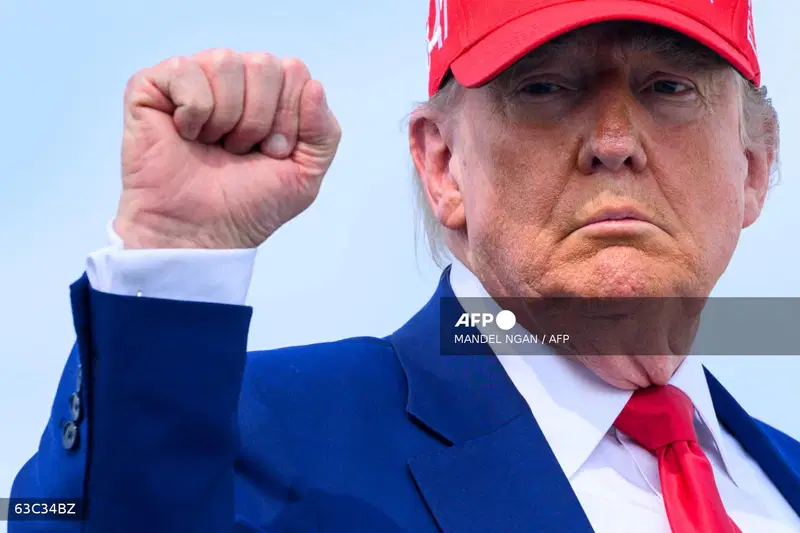
United States President Donald Trump said US forces conducted deadly strikes against Islamic State terrorists in northwestern Nigeria, and vowed more attacks if the militants keep killing Christians.
“I have previously warned these Terrorists that if they did not stop the slaughtering of Christians, there would be hell to pay, and tonight, there was,” Trump posted on his Truth Social platform, adding that “the Department of War executed numerous perfect strikes.”
READ ALSO:JUST IN: Kano Lawmaker, Sarki Aliyu Daneji, Dies Hours After Colleague’s Passing
Trump stated that the Department of War “executed numerous perfect strikes, as only the United States is capable of doing. Under my leadership, our Country will not allow Radical Islamic Terrorism to prosper.”
The US president wished everyone Merry Christmas, “including the dead Terrorists, of which there will be many more if their slaughter of Christians continues.”
Details later.

 News4 days ago
PHOTOS: New Era In Furupagha-Ebijaw As Okpururu 1 Receives Staff Of Office
- News3 days ago
UBTH CMD Marks 120 Days In Office, Expresses Commitment To Providing Conducive Working Environment
- News4 days ago
OPINION: Gumi And His Terrorists
- News4 days ago
FIRS Confirms NIN As Tax ID
- News4 days ago
FG Declares Public Holidays For Christmas, New Year Celebrations
- Metro3 days ago
Fintiri Pardons Man Sentenced To Death For ‘Killing Herdsman In Self-defence’, Others
- News4 days ago
OPINION: Christmas And A Motherless Child
- News2 days ago
JUST IN: Kano Lawmaker, Sarki Aliyu Daneji, Dies Hours After Colleague’s Passing
 News4 days ago
OPINION: My Man Of The Season
- News4 days ago
KWAM 1 Withdraws From Awujale Race, Ends Court Challenge


