

Business
Manufacturers Express Fear Of Closure Over Worsening Naira Value


Operators in the Nigerian economy have expressed fear that there might be further rise in cost of goods and services, and more shutdowns of their operations over the worsening naira value.
They called for urgent intervention in the sector to prevent more hardship on Nigerians.
The National Vice Chairman of the Nigerian Association of Small-Scale Industrialists, Segun Kuti-George, said higher prices would be the unavoidable consequence of the current exchange rate.
He expressed dismay that the floating of the naira which was supposed to curb speculation of currency speculation, had consequently escalated the activities of speculators.
According to Kuti-George, unless the government moves swiftly to stem the tide of the naira depreciation especially at the parallel market where more customers access the FX, more factories would be forced to shut down.
He said, “It is ironic that what works in other places don’t work in Nigeria. The cost of production is rising, because we still import a large part of our input, especially equipment. Most of the raw materials that we use are imported.
“So, when the cost of input goes up, the cost of production also goes up. This will happen to the price of products. The question now is – will people be able to afford our products now? Will imported products not be cheaper than our own to the extent that people will be rejecting our products for imported ones? Unless the tide is stemmed, there will be more factories closure.”
READ ALSO: $10bn Debt: CBN Defaults On Payment To Banks, Dollar Nears N1,000
Inflation
The President of the Manufacturers Association of Nigeria, Francis Meshioye, said the current exchange rate would inevitably lead to a hike in the prices of products given the toll it would take on manufacturers to access foreign exchange.
According to him, the floating of the exchange rate will not mean anything to operators if the naira continues the free.
Meshioye said, “It is an unpleasant development because that is the major currency through which we purchase our goods outside the bounds of our nation. It means that the cost of raw materials will continue to skyrocket.
“It is unpleasant. We hope that the government will do something about it. While we float the exchange rate, it should not be allowed to be somersaulting and skyrocketing to unreasonable levels which will not augur well for the country, knowing full well that we are not just trading amongst ourselves.”
He added that, “We have to trade outside of our bounds. The implication of this is that our prices may be unreasonably higher than prices of other countries. That implies, among other things, that our products may be found to be too expensive. If you want to look at the unavailability of disposable income among the citizenry, the choice of buying Nigerian-made products, which may be expensive and foreign products which are cheaper is low. It is pathetic.”
Scarcity
The President, Association of Bureaux De Change Operators of Nigeria, Dr. Aminu Gwadabe, said the volatility of the local currency had continued to underpin the nation’s slow economic growth.
He said, “The high demand pressure at the 1&E window and the parallel market due to lack of sufficient liquidity have been fuelling the widening gap between the I&E Window and the parallel market rates.
READ ALSO: Currency In Circulation Hit N2.7tn In H2 —Report
“Combination of several factors including the investors’ backlog estimated at $6.8bn and disincentives to bring fresh funds into the economy is one of the major concerns.
“In the same vein the dwindling receipt of Diaspora remittances and resurrection of subsidy on petrol are major deterrents and big concerns to fresh liquidity in the market.”
According to him, the uncertainties and loss of public confidence on the local currency has heightened demand pressure in all segments of the market.
He said, “In addressing the challenges of the I&E window, there is need for the legislation of the willing buyer and willing seller concept. This will lead to enhanced liquidity in the foreign exchange market and enhance public confidence.
“It is also imperative in this regard to recognise the inclusion of the BDCs at the I&E window to continue to play their roles of moderating and correcting the markets.”
He advised the Federal Government on how to bring in more Diaspora remittances.
READ ALSO: Naira Slumps Further As Dollar Scarcity Bites Harder
The CBN had recently announced operational mechanism for the BDCs to trade foreign currencies at similar rates obtainable on the Investor & Exporter forex window.
It gave the directive to all BDCs and the general public in a circular number TED/FEM/PUB/FBC/001/007 dated August 17, 2023, titled, ‘Operational mechanism for Bureau De Change operations in Nigeria’.
The circular stated, “The spread on buying and selling by BDC operators shall be within an allowable limit of -2.5 per cent to +2.5 per cent of the Nigerian exchange market window weighted average rate of the previous day.
“Mandatory rendition by BDC operators of the statutory periodic reports (daily, weekly, monthly, quarterly and yearly), on the financial institution forex rendition system which has been upgraded to meet operators’ requirements.”
Confidence
The Director/Chief Executive Officer, Centre for The Promotion of Private Enterprise, Dr Muda Yusuf, said the new CBN Governor, Dr Olayemi Cardoso, was assuming the leadership of the CBN at a very crucial time in the economic history.
He said, “There is a serious confidence crisis in the foreign exchange market fuelling an unprecedented speculative onslaught on the naira. The economy is grappling with severe adverse effects of depreciating exchange rate, soaring energy costs, ravaging inflationary pressures, huge backlog of foreign exchange obligations that needs to be cleared and debt service obligations that need to be redeemed. Sadly, these outcomes are manifesting at a time when the country’s foreign reserves have been substantially encumbered.
“There is an apparent deceleration in the pace of economic reforms as the outcomes are at variance with expectations. The social costs of the reforms were substantially higher than anticipated, resulting in push-backs from the civil society.”
He said the economic management orthodoxy of market forces was being called to question in the light of the social outcomes of the market-oriented reforms.
He said there was a measured re-emergence of political economy with the reappearance of fuel subsidy and divergence in exchange rates.
This was evidently an economic management quandary that the new economic team would have to manage, and urgently too, he said.
Yusuf said, “Meanwhile, the CBN must ensure strategic and transparent intervention in the forex market to minimise volatility, as far as the reserves can support. In addition to the I and E window, it has become necessary to create an autonomous window in the banking system where the currency can trade freely without any encumbrances. This is necessary to avert the diversion of remittances to other jurisdictions or the black market. We cannot afford to live in denial at this time.
“The clearance of the backlog of forex obligations should be accorded high priority to restore the confidence of domestic and foreign investors.”
PUNCH


Business
Again, Dangote Refinery Hikes Fuel Price


Dangote Refinery has increased the ex-depot price of petrol by N75, bringing the price up to N1,350 per litre from the previous price of N1,275.
This is the first fuel increase by the Refinery in the month of May.
READ ALSO:JUST IN: Dangote Refinery Reduces Petrol Price
This latest development is coming seven days after the refinery raised its ex-depot price from N1,200 to N1,275 per litre.
Recall that the refinery on April 29 increased the ex-depot price of petrol by N75.
Business
Why We Sited Our Multi-Billion Naira Automobile Firm Branch in Benin – Skyewise Group CEO


Dr. Elvis Abuyere, Chief Executive Officer and Managing Director of Skyewise Group, an automobile firm, has explained the reason for establishing a branch of the company in Benin City, the Edo State capital, describing the ancient city as “a growing economy full of enormous potential for vibrant youth.”
He added that the company considers Edo State one of the most interesting states, noting that the decision aligns with its long-term vision.
Abuyere, who spoke in Benin on Monday while taking journalists on a tour of the new automobile facility, said:
“We started very small — from Abuja to Lagos and now Benin. It is a joy and privilege for us to have completed this amazing regional office with Skyewise Group.”
READ ALSO:BREAKING: Wike Picks Alabo George For Rivers Governorship
According to him, beyond the automobile business, Skyewise Group is in Benin to invest in real estate, logistics, youth empowerment, and credit management. “Aand also to lend our support to what the Edo State Government is doing, knowing the fact that there is an agenda,” he added.
The young CEO urged youths in Nigeria, particularly those in Edo State, to embrace entrepreneurship, stressing that “we believe it is the future of Africa,” especially Nigeria.
He said Nigeria stands as the giant of Africa and that its youth must take bold steps in the entrepreneurship landscape.
According to Abuyere, to ensure Edo youths actualise their entrepreneurial potential, the company has prepared soft loans to help them start businesses, adding that Skyewise Group is not limited to automobile operations.
READ ALSO:Senatorial Seat: Ogbakha-Edo Warns Against Imposition Of Candidates In Edo South
He said: “More importantly to us is youth empowerment. We want our youth to be empowered, and this is where the Skyewise Foundation comes in.
“We believe the future of Africa is entrepreneurship, and that future lies in the hands of the young people of Nigeria. We want to empower them to stand the test of time, build something meaningful, and reduce unemployment and insecurity in our land.
“I believe we need to begin taking bold steps by refining the mindset of our young people. We need to give them a sense of belonging and direction.
“We have been addressing the liquidity gap in society by providing microloans to support businesses in our environment and in Benin City.”
When asked why he chose Benin City for the multi-billion naira automobile firm, Abuyere noted: “I think this is the first automobile showroom in Edo State where you can see a car lifted from the ground floor to the first floor and beyond.”
Business
JUST IN: Nigerian Filling Stations Reduce Fuel Price After Hike

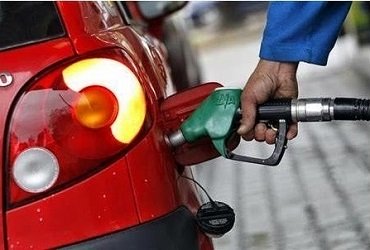
Nigerian filling stations reduced their Premium Motor Spirit price on Saturday, barely 24 hours after the hike.
Checks by DAILY POST showed that Ranoil, Empire Energy, and other filling stations in Abuja adjusted their petrol pumps to N1,365 and N1,375 per litre respectively, down from N1,440 per litre on Friday.
This means that petroleum marketers dropped their fuel price by N65 and N75 per litre. DAILY POST reports that the move was to attract patronage from customers.
Recall that three days ago, Nigerian filling stations had raised their petrol pump price to between N1,365 and N1,440 nationwide after Dangote Refinery and depot owners increased ex-depot prices to around N1,275 and N1,290 per litre.
According to DAILY POST, while the Nigerian National Petroleum Company Limited and MRS Bovas filling stations raised their petrol price to around N1,365 per litre, others adjusted theirs above N1,440 per litre.
READ ALSO:Drivers Protest Fuel Increase, Raise Fares in Benin
However, with the latest fuel price reduction by Ranoil and Empire Energy, the majority of filling station outlets now dispense petrol between N1,365 and N1,375 per litre.
This development comes as the ripple effect of crude oil prices continues to impact Nigeria’s domestic fuel price.
Brent and West Texas Intermediate crude rose to $114 and $105 per barrel before dropping to $108 and $101 after the filing of this report.
-

 Politics4 days ago
2027: Tinubu’s Re-election May Put An End To Nigeria — Baba Ahmed Warns
-

 Politics5 days ago
BREAKING: 2027: Former Adamawa APC Guber Candidate, Aishatu Binani Defects To NDC
-

 Business4 days ago
JUST IN: Nigerian Filling Stations Reduce Fuel Price After Hike
-

 Politics5 days ago
Senatorial Seat: Ogbakha-Edo Warns Against Imposition Of Candidates In Edo South
-

 Entertainment5 days ago
Actress Eniola Badmus Gets New Federal Appointment
-

 News2 days ago
BREAKING: Wike Picks Alabo George For Rivers Governorship
-

 News3 days ago
OPINION: Why South Africans Murder Nigerians In Cold Blood
-

 Politics4 days ago
NDC Speaks On Peter Obi, Kwankwaso Joining Party
-

 News4 days ago
2027: Pastor Adeboye Speaks On Nigeria’s Next President
-

 Politics5 days ago
2027: Pondi, Otuaro, Other Delta South Stakeholders, Endorse Senator Joel-Onowakpo For Second Term


