
Headline
Meet John Dabiri, Nigerian Aeronautics Engineer Who Became A Professor At 25
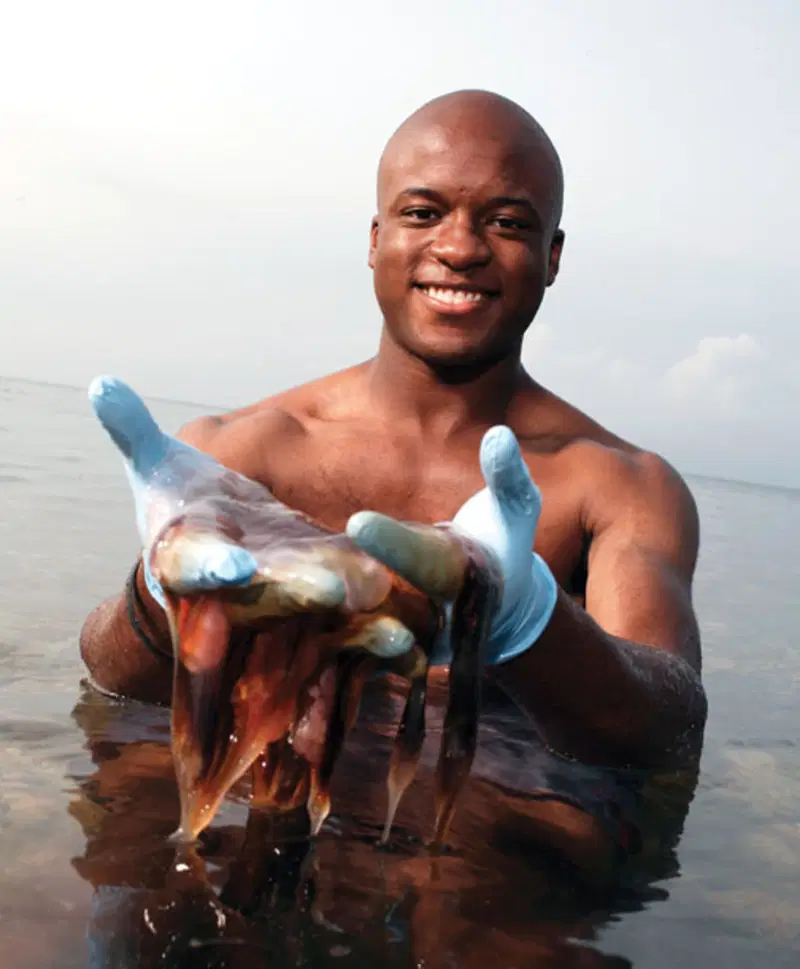
John Oluseun Dabiri is a Nigerian-American engineer and professor at Caltech who became popular for his research on how jellyfish swim and his design of wind farms inspired by fish movements.
He earned his PhD in 2005 at the age of 25. In 2020, Dabiri joined the board of NVIDIA. At that time, NVIDIA was valued at $323 billion. Today, it is worth $2.314 trillion, making it the third largest tech company.
Early Life and Education of John Dabiri
Dabiri was born in 1980, five years after his parents moved to Ohio from Nigeria. His father was a mechanical engineer and math teacher while his mother was a computer scientist who started her own software company. Dabiri attended a small Baptist high school and graduated as the top student in 1997. He went to Princeton University, where he studied mechanical and aerospace engineering. Later, he earned a Master’s and PhD at Caltech in Aeronautics and Bioengineering.
READ ALSO: Biden Announces $160bn Initiative To Aid Developing Nations
John Dabiri’s Career at Caltech, Stanford, and NVIDIA
Dabiri has received 28 research grants throughout his career, focusing on fluid mechanics and energy. At 25, he became a professor at Caltech. He worked there for 10 years, serving in different roles, including Dean of Students. In 2015, he moved to Stanford, where he taught engineering until 2019. In 2020, he joined NVIDIA’s board. During his time there, the company saw massive growth. By March 2024, NVIDIA’s value reached $2.314 trillion.
Research and Wind Solutions
Dabiri leads the Dabiri Lab at Caltech, where he studies energy, fluid mechanics, and biology. In 2011, he created a wind farm called FLOWE, which focuses on improving vertical-axis wind turbines. He also started a company, Scalable Wind Solutions, to place turbines in optimal spots. His ideas have even led to a project with the Navy for an underwater vehicle that uses 30% less energy. Dabiri also directs the Biological Propulsion Lab, which explores how fluids move in biology and energy.
READ ALSO: 10 Things To Know About Madam Efunroye Tinubu, The Powerful Slave Trader And Kingmaker
Awards and Recognition
Dabiri received many honours for his work. In 2010, he won a MacArthur Fellowship, often called the “Genius Grant.” He also received the National Science Foundation’s Alan T. Waterman Award. In 2014, he was elected a Fellow of the American Physical Society. Dabiri is also on several boards and advisory groups, including President Biden’s Council of Advisors on Science and Technology.
Family
Dabiri is one of three children. His brother, Gabriel Yomi Dabiri, is a lawyer in New York and a managing partner at Polsinelli law firm. Gabriel has received several awards for his leadership in law.



Headline
Coup: Guinea-Bissau Junta Releases Six Held Opposition Politicians
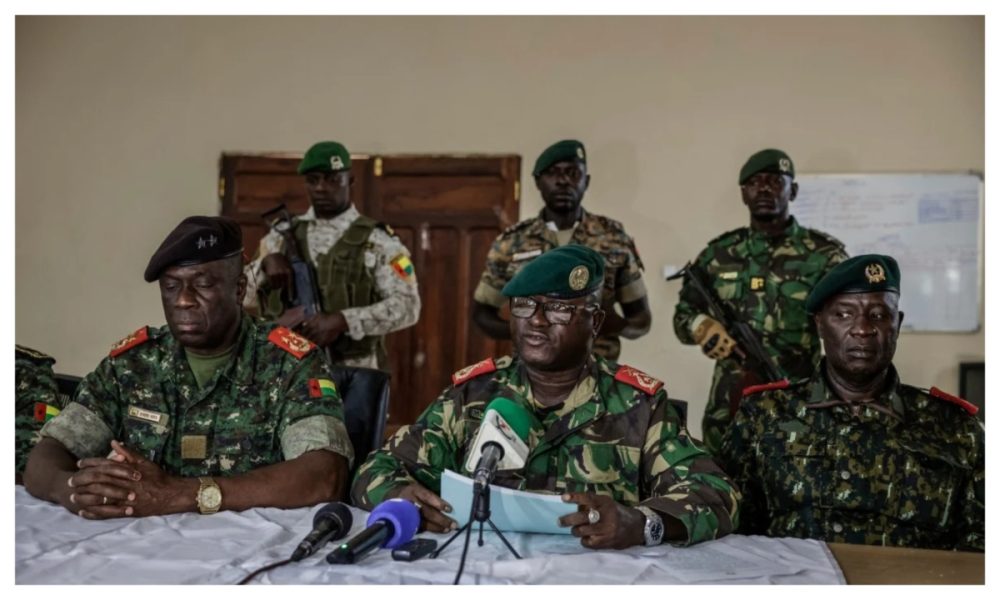
Guinea-Bissau’s ruling junta on Tuesday released six members of the political opposition who had been detained since a coup last month.
The six freed opposition members are said to be close associates of Domingos Simoes Pereira, head of the PAIGC party that led the country to independence in 1974.
Pereira has been in custody since the coup.
In a statement by the High Military Command, the junta’s governing body, the releases are described as a sign of good faith and a step towards the return to constitutional normality and respect for international rights.
READ ALSO:Why West African Troops Overturned Benin’s Coup But Watched Others Pass
The army seized power on 26 November after ousting outgoing President Umaro Sissoco Embalo in the wake of a presidential vote.
After taking over, the military suspended the electoral process and announced it would take control of the West African country for a period of one year.
Recall that another opposition candidate, Fernando Dias, took refuge in Nigeria’s embassy, which granted him asylum, while Embalo fled the country after being briefly detained by the military at the time of the coup.
Meanwhile, Senegal’s Foreign Minister, Cheikh Niang, led a delegation to Guinea-Bissau, where he met with detained opponents and requested their release.
Headline
7 Territories Still Under Colonial Rule

Even though most nations became independent in the last century, some territories are still ruled by other nations.
Contents
1. Western Sahara
2. Guam
3. American Samoa
4. United States Virgin Islands
5. Falkland Islands / Malvinas
6. Gibraltar
7. Bermuda
Many of them remain on the United Nations list of non-self-governing territories, meaning they have not completed the process of decolonization. These places usually depend on bigger countries for laws, passports, defence, or political control.
In this article, Nigerian Tribune highlights 7 territories still under colonial rule:
READ ALSO:Nigeria Ranks World’s 102nd Happiest Nation, US, Germany Not Among 20 Top Counties
1. Western Sahara
Western Sahara remains one of the world’s biggest unresolved colonial issues. Morocco controls most of the territory, but the Polisario Front wants independence for the Sahrawi people. The UN is still trying to help both sides agree on a peaceful solution.
2. Guam
Guam is an important US territory in the Pacific, used heavily for American military operations. The US oversees its defence and foreign relations.
People living there are US citizens, but they cannot vote in presidential elections and do not have full representation in Congress.
READ ALSO:FULL LIST: US To Review Green Cards From 19 ‘Countries Of Concern’ After Washington Shooting
3. American Samoa
American Samoa has more local control than Guam, but the United States still decides immigration, defence, and foreign affairs.
Residents are considered US nationals and must apply if they want full citizenship.
4. United States Virgin Islands
The US Virgin Islands have their own legislature, but the United States makes major constitutional and political decisions. The territory depends heavily on US federal support.
5. Falkland Islands / Malvinas
The Falkland Islands remain controlled by the United Kingdom (UK), but Argentina has long disputed this claim, having been in control of the Islands for a few years before 1833.
The people living there voted strongly to stay British, yet the sovereignty dispute continues to appear in the UN.
READ ALSO:Six Countries With Highest Number Of Billionaires In 2025
6. Gibraltar
Gibraltar sits at the Southern tip of Spain. The United Kingdom controls it, but Spain insists the territory belongs to them.
Gibraltarians have repeatedly voted in favour of remaining British, but the dispute is still discussed within the UN Decolonisation Committee.
7. Bermuda
Bermuda is a British Overseas Territory situated in the North Atlantic Ocean. Although it manages most of its own internal affairs and enjoys a strong economy with modern facilities, the United Kingdom still handles its defence and represents it in global matters.
Headline
Russia-Ukraine War: Pope Leo Calls For Global Christmas Truce
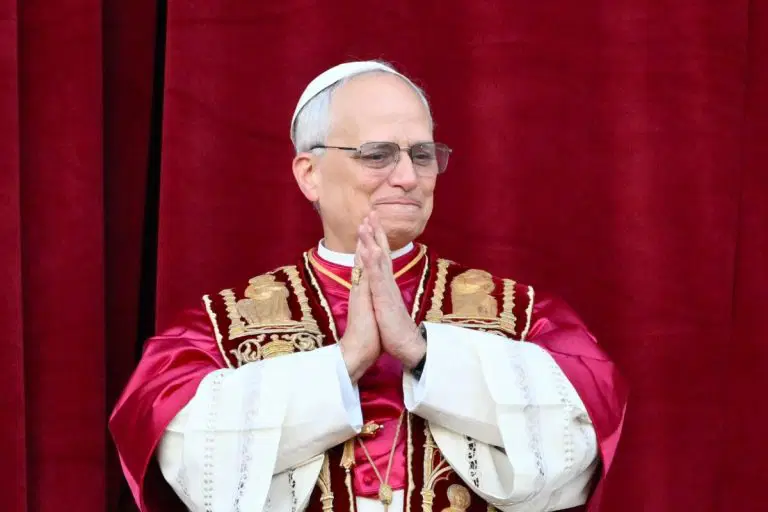
Pope Leo XIV on Tuesday renewed his call for a global truce on Christmas Day, saying he felt “great sadness” after Russia “apparently rejected a request” for a pause in fighting.
Speaking to reporters at his residence in Castel Gandolfo near Rome, the Pope urged all sides involved in conflict to observe at least one day of peace.
“I am renewing my request to all people of goodwill to respect a day of peace — at least on the feast of the birth of our Saviour,” Leo said.
Recall that Russia invaded Ukraine in February 2022 and has repeatedly turned down calls for a ceasefire, arguing that any pause would give Ukraine a military advantage.
READ ALSO:Russian Strikes Kill Five In Ukraine, Cause Power Outages
“Among the things that cause me great sadness is the fact that Russia has apparently rejected a request for a truce,” the pope said.
Referring to conflicts worldwide, Leo added, “I hope they will listen and there will be 24 hours of peace in the whole world.”
The appeal came as fighting continued in eastern Ukraine. On Tuesday, Ukrainian forces withdrew from a town after heavy battles with Russian troops. Russian strikes killed three civilians and left thousands without power during winter temperatures.
READ ALSO:Trump Blasts Ukraine For ‘Zero Gratitude’ Amid Talks To Halt War
There was no indication of progress toward ending the war after separate meetings last weekend in Miami between the United States officials and negotiators from Russia and Ukraine. The conflict is nearing four years with no settlement in sight.
Earlier this month, Pope Leo met Ukrainian President Volodymyr Zelensky. When asked whether he would accept Zelensky’s invitation to visit Ukraine, the pope said, “I hope so,” while noting that it was not possible to say when such a visit could happen.
Leo also warned that efforts to secure peace without European diplomatic involvement were “unrealistic”, expressing optimism that President Donald Trump’s proposed peace plan could bring a “huge change” to the transatlantic alliance.

 News2 days ago
PHOTOS: New Era In Furupagha-Ebijaw As Okpururu 1 Receives Staff Of Office
- Metro5 days ago
JUST IN: Former Edo Information Commissioner Is Dead
- News2 days ago
UBTH CMD Marks 120 Days In Office, Expresses Commitment To Providing Conducive Working Environment
- News2 days ago
FG Declares Public Holidays For Christmas, New Year Celebrations
- News5 days ago
Coordinator, Edo First Lady Office, Majority Leader, Rights Lawyer, Others Bag 2025 Leadership Award
- Metro5 days ago
She Grabs, Pulls My Manhood Anytime We Fight — Husband
- News2 days ago
OPINION: Gumi And His Terrorists
- News2 days ago
FIRS Confirms NIN As Tax ID
- Metro5 days ago
Why I Charged My Husband Money For Sex —Woman
- News5 days ago
My Wife Dented My Image, Took Our Marital Crises To Radio Stations — Husband


