
Headline
Meet Nigerian Who Wants To Be UK’s Prime Minister
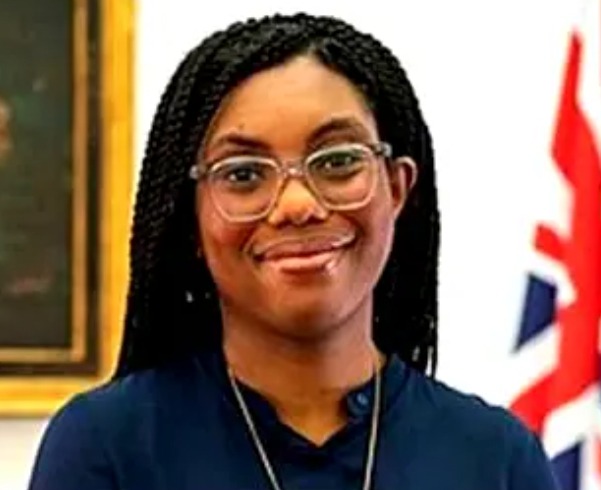
A British woman politician of Nigeria extraction, Kemi Badenoch, has declared her intention to succeed Boris Johnson as the next Conservative leader and British Prime Minister.
Ms Badenoch was the former Equalities Minister, and while confirming her candidacy, according to BBC, said she is in the race to seek a limited government and to “tell the truth”.
On Wednesday, Badenoch resigned from government, citing Johnson’s handling of the Chris Pincher scandal, in a joint statement with fellow Ministers Alex Burghart, Neil O’Brien, Lee Rowley and Julia Lopez.
And two days later on Friday, she made the announcement to replace former PM, making her the latest high profile Conservative Member of Parliament (MP) in the race after former chancellor Rishi Sunak.
Sources, however, disclosed to BBC that there was “real disappointment” with Sunak in Downing Street.
They accused Sunak of having a “short memory”, adding: “It was the prime minister who trusted him and gave him a top job when he was a junior minister.”
“The prime minister backed him to the hilt. It’s a shame it wasn’t reciprocated.”
Profile
Badenoch was born in Wimbledon, London, to Nigerian parents. Her childhood was spent in part of the United States of America, and in Lagos, Nigeria. She returned to the United Kingdom at the age of 16.
After studying Computer Systems Engineering at the University of Sussex, Badenoch worked as a software engineer at Logica. She went on to work at the Royal Bank of Scotland Group as a systems analyst before working as an associate director at Coutts and later as a director at The Spectator magazine.
Badenoch joined the Conservative Party in 2005 at the age of 25. At the 2010 general election, she contested the Dulwich and West Norwood constituency against Labour’s Tessa Jowell and came third.
A member of the Conservative Party, she served as the Minister of State for Local Government, Faith and Communities and Minister of State for Equalities between 2021 and 2022.
“Without change the Conservative Party, Britain and the western world will continue to drift” and rivals will “outpace us economically and outmanoeuvre us internationally”, Badenoch wrote.
READ ALSO: UK’s Truss Confirms Bid To Replace PM Boris Johnson
“I’m putting myself forward in this leadership election because I want to tell the truth. It’s the truth that will set us free.”
She said: “People are exhausted by platitudes and empty rhetoric” and an “intellectual grasp of what is required to run the country” is missing.
During her time as equalities minister, Ms Badenoch was criticised by members of the government’s LGBT+ advisory panel in March over postponements in banning conversion therapy.
She quit as a junior minister alongside four colleagues on Wednesday, saying in a joint-letter that she was stepping down from her two roles with “great regret”.



Headline
U.S. Lawmaker Reacts To Nigeria, U.S. Airstrikes
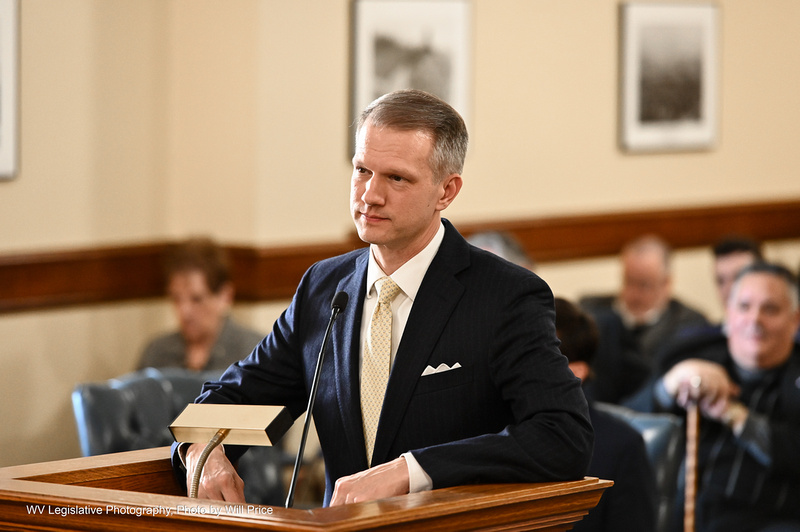
United States Congressman, Riley Moore, has stated that President Donald Trump is determined to put an end to the killing of Christians in Nigeria, warning that further action may follow if the violence persists.
Moore made the statement on Friday via his official X handle.
According to the lawmaker, the strike represents the first step in addressing what he described as the ongoing slaughter of Christians and the broader security crisis affecting Nigerians across religious and ethnic lines.
READ ALSO:US Dept Of War Shares Video Of Air Strikes In Nigeria
“President Trump has been clear that the killing of Christians in Nigeria must end,” he said.
He that the administration’s resolve on the matter should not be underestimated.
“As I stated at the outset: Do not test President Trump‘s resolved in this matter.
READ ALSO:JUST IN: US Forces Bomb Terrorists Camps In Nigeria
“Tonight’s strike in coordination with the Nigerian government is just the first step to ending the slaughter of Christians and the security crisis affecting all Nigerians,” he said.
He stressed that the operation signals a stronger stance by the United States in support of Nigeria’s efforts to tackle terrorism and violent extremism, noting that further measures could be taken if the situation does not improve.
Headline
US Dept Of War Shares Video Of Air Strikes In Nigeria
A video footage of the US military air strikes in Nigeria has emerged.
The video was released by the US Department of War following its air strikes against terrorists in Sokoto.
Earlier, the US secretary of War, Pete Hegseth had confirmed that military air strikes hit terrorists in Nigerians, saying it was deadly.
Later on, the US. African Command, confirmed that it conducted the attacks described as very deadly by President Donald Trump.
Trump said he was only keeping the promise he made earlier last month to strike the terrorists he believes are killing innocent Christians.
READ ALSO:JUST IN: US Forces Bomb Terrorists Camps In Nigeria
Although described as powerful and deadly, the casualty caused by the attack is yet to be released.
Explaining further, security expert, Brant Philip, said the strikes may have been launched “from the USS Paul Ignatius, using a Tomahawk missile.”
The Nigerian government through its ministry of foreign affairs has also confirmed that the strikes were successful.
Watch video here
Headline
JUST IN: US Forces Bomb Terrorists Camps In Nigeria
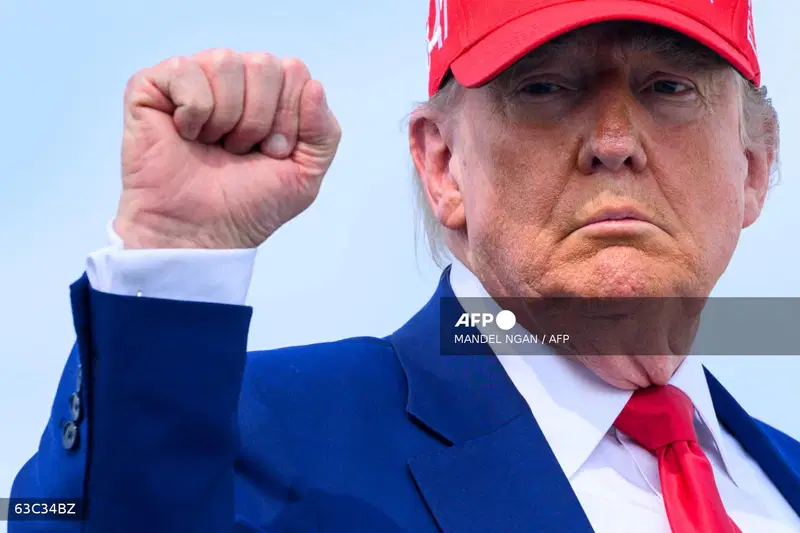
United States President Donald Trump said US forces conducted deadly strikes against Islamic State terrorists in northwestern Nigeria, and vowed more attacks if the militants keep killing Christians.
“I have previously warned these Terrorists that if they did not stop the slaughtering of Christians, there would be hell to pay, and tonight, there was,” Trump posted on his Truth Social platform, adding that “the Department of War executed numerous perfect strikes.”
READ ALSO:JUST IN: Kano Lawmaker, Sarki Aliyu Daneji, Dies Hours After Colleague’s Passing
Trump stated that the Department of War “executed numerous perfect strikes, as only the United States is capable of doing. Under my leadership, our Country will not allow Radical Islamic Terrorism to prosper.”
The US president wished everyone Merry Christmas, “including the dead Terrorists, of which there will be many more if their slaughter of Christians continues.”
Details later.

 News4 days ago
PHOTOS: New Era In Furupagha-Ebijaw As Okpururu 1 Receives Staff Of Office
- News3 days ago
UBTH CMD Marks 120 Days In Office, Expresses Commitment To Providing Conducive Working Environment
- News4 days ago
OPINION: Gumi And His Terrorists
- News3 days ago
FIRS Confirms NIN As Tax ID
- Metro3 days ago
Fintiri Pardons Man Sentenced To Death For ‘Killing Herdsman In Self-defence’, Others
- News4 days ago
FG Declares Public Holidays For Christmas, New Year Celebrations
- News4 days ago
OPINION: Christmas And A Motherless Child
- News2 days ago
JUST IN: Kano Lawmaker, Sarki Aliyu Daneji, Dies Hours After Colleague’s Passing
 News4 days ago
OPINION: My Man Of The Season
- News3 days ago
KWAM 1 Withdraws From Awujale Race, Ends Court Challenge


