
Headline
My Nasty Experience With Vicious Fuel Subsidy Cabal – Okonjo-Iweala
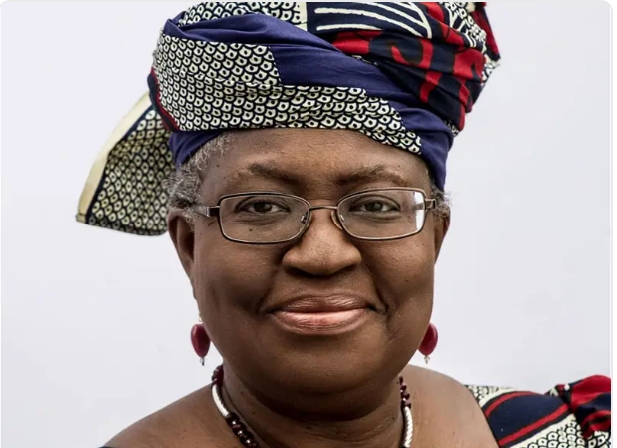
This isn’t the first time the idea of petrol subsidy removal would be mooted. The Jonathan administration under which the incumbent Director General of the World Trade Organization, WTO, Dr Ngozi Okonjo-Iweala, served as Minister of Finance and Coordinating Minister of the Economy also had its fair share of mention in the saga. In fact, former President Jonathan said at that time severally that fuel subsidy was unsustainable and tried unsuccessfully to remove it.
In a video that went viral last week, Okonjo-Iweala is seen narrating how she spearheaded efforts to scrap payment of questionable subsidies and how beneficiaries viciously fought back, culminating in her mother’s kidnapping and demand for her resignation.
“My second example has to do with a very specific one in my country, the clean-up of the fuel scarcity regime in 2012 during my second stay as Finance Minister”, she narrates in the video.
“Nigeria has a physically challenging force of fuel regime, the country exports crude oil and imports fuel because their refineries are in a very bad shape and provides a subsidy for the refined oil as support.
“At the end of 2011, a total of N1.73tr, US $11b equivalent, was submitted as claims for subsidy by 143 marketers, who were importing the product.
READ ALSO: Subsidy Removal: Roll Out Palliative Measures, ActionAid Tells Tinubu
“These numbers seemed horrendously large compared to what I had last when I was in government in 2006, which was close to $2b in subsidy.
“So, we decided to study these claims. We audited about $8.4b worth of claims and we found out $2.5b worth of fraud. That is, many of these marketers were trying to claim $2.5b fraudulently.
“With the full backing of the President and the Economic Team, we decided that we were not going to entertain these claims or to pay.
“The pressure from affected marketers was tremendous…not only to say we would not pay but also to say we would clean up the whole mechanism for the subsidy claims and put in place something more transparent, something clearer.
“This did not go down well with them. “When we insisted on our position of non-payment and implementation of the new verification regime, these, and well-connected interests, were angered, and came to blame me personally for this.
READ ALSO: Fuel Subsidy Removal: Embrace Bicycle – FRSC Urges Nigerians
“There were personal consequences. My 83-year-old mother, a retired professor of sociology, was kidnapped by four young men and held for five days.
“She was totally terrified. She asked them why she had been kidnapped and they told her ‘Because your daughter, the Finance Minister, refused to pay oil marketers their dues’.
“The kidnappers, negotiating with my brother, demanded my resignation, publicly; that I should go on television, publicly and announce my resignation and depart from the country as a condition for my mother’s release.
“Needless to say these were some of the worst days of my life. Imagine when you are in a position, you want your parents, all of whom are here with you today, and your relatives to be proud of you. You want to be a source of good for your family.
“You can imagine how I felt, sitting there and thinking, just because of trying to do something right. To implement a policy that was good for the country, to lead to the taking of my mother’s life. These were some of the worst days of my life.
“With my father’s support and the firm resolve of the President, we all decided I should not give in to the blackmailers and I refused to resign.
READ ALSO: Fuel Subsidy Removal: Yoruba Council Frowns At NLC Planned Strike
“Following a manhunt for my mother by security agencies, she was able to make a dramatic escape after five days in captivity, where she was only given water and half of a sausage roll.
“So, here with the well-justified clean up and reform of a policy, but implemented in a dangerous reform environment where the losers in the reform, where the entrenched vested interests decided to fight back to derail implementation.
“The decision not to resign was a very difficult and risky one but, as it turned out, it worked.
“But on my down days, I ask myself, what if it hadn’t? What if they had gone ahead and murdered my mother, as she overheard them planning to do with one of the handlers on the phone? Could I have justified trading firmness on policy and standing up to blackmailers, implementing a good policy for my mother’s life? What decision would you have made?”
VANGUARD



Headline
Coup: Guinea-Bissau Junta Releases Six Held Opposition Politicians
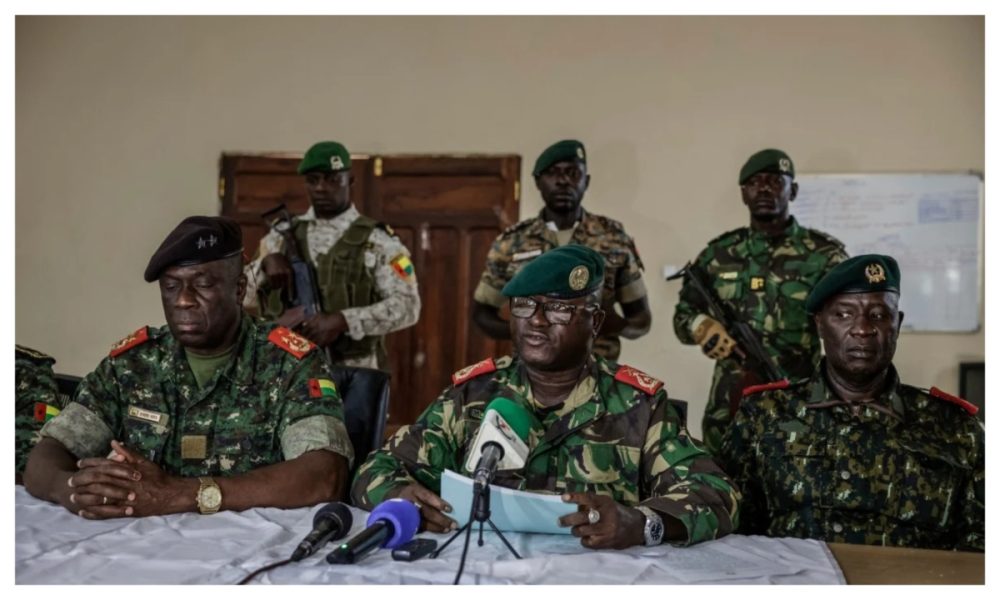
Guinea-Bissau’s ruling junta on Tuesday released six members of the political opposition who had been detained since a coup last month.
The six freed opposition members are said to be close associates of Domingos Simoes Pereira, head of the PAIGC party that led the country to independence in 1974.
Pereira has been in custody since the coup.
In a statement by the High Military Command, the junta’s governing body, the releases are described as a sign of good faith and a step towards the return to constitutional normality and respect for international rights.
READ ALSO:Why West African Troops Overturned Benin’s Coup But Watched Others Pass
The army seized power on 26 November after ousting outgoing President Umaro Sissoco Embalo in the wake of a presidential vote.
After taking over, the military suspended the electoral process and announced it would take control of the West African country for a period of one year.
Recall that another opposition candidate, Fernando Dias, took refuge in Nigeria’s embassy, which granted him asylum, while Embalo fled the country after being briefly detained by the military at the time of the coup.
Meanwhile, Senegal’s Foreign Minister, Cheikh Niang, led a delegation to Guinea-Bissau, where he met with detained opponents and requested their release.
Headline
7 Territories Still Under Colonial Rule

Even though most nations became independent in the last century, some territories are still ruled by other nations.
Contents
1. Western Sahara
2. Guam
3. American Samoa
4. United States Virgin Islands
5. Falkland Islands / Malvinas
6. Gibraltar
7. Bermuda
Many of them remain on the United Nations list of non-self-governing territories, meaning they have not completed the process of decolonization. These places usually depend on bigger countries for laws, passports, defence, or political control.
In this article, Nigerian Tribune highlights 7 territories still under colonial rule:
READ ALSO:Nigeria Ranks World’s 102nd Happiest Nation, US, Germany Not Among 20 Top Counties
1. Western Sahara
Western Sahara remains one of the world’s biggest unresolved colonial issues. Morocco controls most of the territory, but the Polisario Front wants independence for the Sahrawi people. The UN is still trying to help both sides agree on a peaceful solution.
2. Guam
Guam is an important US territory in the Pacific, used heavily for American military operations. The US oversees its defence and foreign relations.
People living there are US citizens, but they cannot vote in presidential elections and do not have full representation in Congress.
READ ALSO:FULL LIST: US To Review Green Cards From 19 ‘Countries Of Concern’ After Washington Shooting
3. American Samoa
American Samoa has more local control than Guam, but the United States still decides immigration, defence, and foreign affairs.
Residents are considered US nationals and must apply if they want full citizenship.
4. United States Virgin Islands
The US Virgin Islands have their own legislature, but the United States makes major constitutional and political decisions. The territory depends heavily on US federal support.
5. Falkland Islands / Malvinas
The Falkland Islands remain controlled by the United Kingdom (UK), but Argentina has long disputed this claim, having been in control of the Islands for a few years before 1833.
The people living there voted strongly to stay British, yet the sovereignty dispute continues to appear in the UN.
READ ALSO:Six Countries With Highest Number Of Billionaires In 2025
6. Gibraltar
Gibraltar sits at the Southern tip of Spain. The United Kingdom controls it, but Spain insists the territory belongs to them.
Gibraltarians have repeatedly voted in favour of remaining British, but the dispute is still discussed within the UN Decolonisation Committee.
7. Bermuda
Bermuda is a British Overseas Territory situated in the North Atlantic Ocean. Although it manages most of its own internal affairs and enjoys a strong economy with modern facilities, the United Kingdom still handles its defence and represents it in global matters.
Headline
Russia-Ukraine War: Pope Leo Calls For Global Christmas Truce
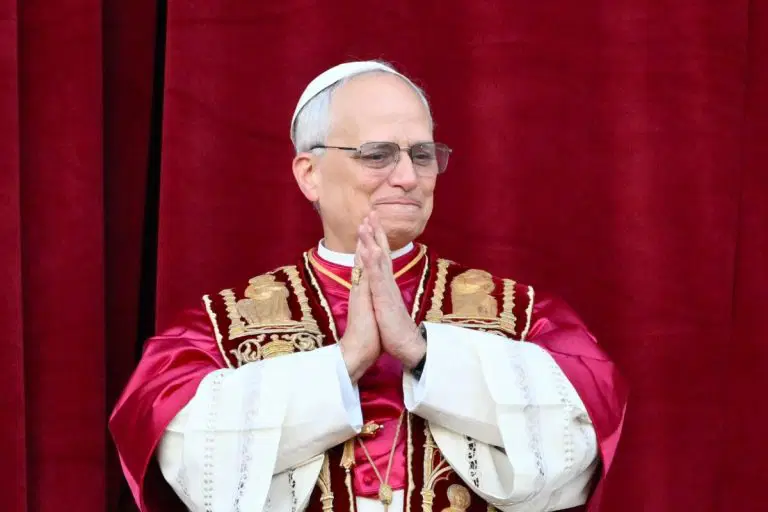
Pope Leo XIV on Tuesday renewed his call for a global truce on Christmas Day, saying he felt “great sadness” after Russia “apparently rejected a request” for a pause in fighting.
Speaking to reporters at his residence in Castel Gandolfo near Rome, the Pope urged all sides involved in conflict to observe at least one day of peace.
“I am renewing my request to all people of goodwill to respect a day of peace — at least on the feast of the birth of our Saviour,” Leo said.
Recall that Russia invaded Ukraine in February 2022 and has repeatedly turned down calls for a ceasefire, arguing that any pause would give Ukraine a military advantage.
READ ALSO:Russian Strikes Kill Five In Ukraine, Cause Power Outages
“Among the things that cause me great sadness is the fact that Russia has apparently rejected a request for a truce,” the pope said.
Referring to conflicts worldwide, Leo added, “I hope they will listen and there will be 24 hours of peace in the whole world.”
The appeal came as fighting continued in eastern Ukraine. On Tuesday, Ukrainian forces withdrew from a town after heavy battles with Russian troops. Russian strikes killed three civilians and left thousands without power during winter temperatures.
READ ALSO:Trump Blasts Ukraine For ‘Zero Gratitude’ Amid Talks To Halt War
There was no indication of progress toward ending the war after separate meetings last weekend in Miami between the United States officials and negotiators from Russia and Ukraine. The conflict is nearing four years with no settlement in sight.
Earlier this month, Pope Leo met Ukrainian President Volodymyr Zelensky. When asked whether he would accept Zelensky’s invitation to visit Ukraine, the pope said, “I hope so,” while noting that it was not possible to say when such a visit could happen.
Leo also warned that efforts to secure peace without European diplomatic involvement were “unrealistic”, expressing optimism that President Donald Trump’s proposed peace plan could bring a “huge change” to the transatlantic alliance.

 News3 days ago
PHOTOS: New Era In Furupagha-Ebijaw As Okpururu 1 Receives Staff Of Office
- News2 days ago
UBTH CMD Marks 120 Days In Office, Expresses Commitment To Providing Conducive Working Environment
- News3 days ago
FG Declares Public Holidays For Christmas, New Year Celebrations
- News3 days ago
OPINION: Gumi And His Terrorists
- News2 days ago
FIRS Confirms NIN As Tax ID
 News3 days ago
OPINION: My Man Of The Season
- News3 days ago
OPINION: Christmas And A Motherless Child
- Metro2 days ago
Fintiri Pardons Man Sentenced To Death For ‘Killing Herdsman In Self-defence’, Others
- News2 days ago
KWAM 1 Withdraws From Awujale Race, Ends Court Challenge
- Metro2 days ago
Petrol Tanker Crashes Into Akpabio’s Convoy, Kills Police Dispatch Rider


