
Business
N17bn Debt: GTBank Drags 60 Bank Chiefs To Court

Guaranty Trust Bank has dragged no fewer than 60 top executives of 13 commercial banks to court as a pending suit between GTBank and Afex Commodity Exchange over N17bn Anchor Borrowers Programme loan lingers.
The 60 executives including the chairmen, chief executive officers, directors, and company secretaries of the 13 banks are facing contempt proceedings for allegedly failing to implement a No-Debit-Order reportedly placed on the accounts of Afex Commodity Exchange with the banks.
In suit no FHC/L/CS/911/2024 involving Guaranty Trust Bank Limited and AFEX Commodities Exchange Limited, the Federal High Court, Lagos division presided by Justice CJ Aneke signed an order for the bank chairmen, MDs, directors, company secretaries and the liquidator of Heritage Bank (Nigeria Deposit Insurance Corporation) to be committed to jail for failing to obey its May 27, 2024 ruling.
A legal notice titled ‘Order to serve notice of disobedience to order of court vide newspaper publication’ published in some national dailies including The PUNCH on Thursday, partly read, “An order granting leave to the Plaintiff Applicant to serve Form 48 (Notice of Consequences of Disobedience to Order of Court) dated 11th June, 2024 and all other forms and processes that may be issued in this contempt proceedings inclusive of Form 49 on the 1st-60st parties cited for contempt
The matter was adjourned to next Thursday.
Parties cited for contempt include Access Bank, Citibank, Jaiz Bank, Union Bank, Fidelity Bank, First Bank of Nigeria Plc, First City Monument Bank, NDIC (liquidator for Heritage Bank), Polaris Bank, Stanbic IBTC Bank, Standard Chartered Bank, Taj Bank, United Bank for Africa and Zenith Bank alongside its principal officers.
READ ALSO: Again, Clark Writes Tinubu, Demands Nnamdi Kanu’s Release
In the court ruling dated May 27, 2024, twenty banks were directed to transfer monies standing to the credit of the respondent into the AFEX’s account with GTB until the N17.81bn is repaid.
The N17.81bn loans comprise N15.77bn; the amount outstanding and unpaid, as of April 17, 2024, and the cost of recovery and incidental expenses in the sum of N2.04bn.
The court also granted an injunction allowing GTB to take over AFEX 16 warehouses located across seven states and sell the commodities stored in them, which it said were procured with the Central Bank of Nigeria Anchor Borrowers’ loan facility.
Earlier in the month, the court had served contempt proceedings against AFEX and some of its principal officers including Ayodele Balogun, Jendayi Fraaser, Justin Topilow, Mobolaji Adeoye and Koonal Ghandi.
READ ALSO: Japa: 7 Cities In US That Pay New Residents Who Move In
According to court papers, AFEX had sourced the Anchor Borrowers Programme Loan facility from GTB to provide finance for smallholder farmers registered under the CBN Anchor Borrower’s programme.
The loan was expected to be repaid from the sale of commodities. However, AFEX failed to uphold its end of the deal even after an extension.
In a statement following the interim court order, AFEX claimed that it had repaid about 90 per cent of the loan facility.
“However, a portion of the loan remains outstanding with the farmers and while we have paid out a portion out of our own purse, we remain in discussions with CBN over the outstanding amounts of the said facility,” the exchange said.
READ ALSO: How Oil Mafia Tried To Stop Our Refinery – Dangote
It also said the full value of the loan was utilised to provide input to farmers in three consecutive seasons, starting in 2020.
The exchange added that it had remained consistent with repaying the loans until economic headwinds impacted the operations of the farmers that they had disbursed the money to.
“Over 800,000 hectares of farmland were financed through the course of the programme’s operationalisation; however, significant macro and policy headwinds, including the cash crunch on the back of the Naira redesign policy, severely impacted the productive capacity and market participation of the smallholder farmers in the 2022/2023 season.
“This resulted in less than 40 cent repayment from farmers on their input loan bundles, down from our 90per cent repayment rates in the previous eight years of providing input financing for farmers. The low repayment rate ultimately impacted on our ability to refund the full value of the loan at the end of Q1 2023 and following a 6-month extension period,” AFEX added.
READ ALSO: Police Arrest Man With Eight Skulls, Human Parts In Ondo
The commodities exchange also stated that the lingering effects of the cash crunch have continued to impact farmers, who sold at below market value to get immediate cash inflows to sustain their families in the period and remain unable to pay back.
Meanwhile, AFEX has called on the Central Bank of Nigeria to activate the collateral guarantee of up to 70 per cent clause included in the Anchor Borrowers programme.
“Evidenced in the attached letters, our engagements with Guaranty Trust Bank Limited, a Participating Financial Institution in the program, as well as the apex bank have seen us highlight these limitations on the part of the defaulting farmers with suggestions being made to the CBN to activate the risk-sharing structure put in place for the program and release funds accordingly to sustain activities and allow for needed recovery efforts in our agriculture sector.
“In light of these engagements, we consider the recent steps by Guaranty Trust Bank Limited to be premature, coming in the midst of open conversations that are being had with all parties to find a path to resolution that does not unduly punish farmers, who have been the biggest hit by macroeconomic conditions that they had no control over,” AFEX concluded.
READ ALSO: Police, DSS, Guards Brigade Bust ‘Mai One Million’ Kidnapper Syndicate In Abuja Raid
CBN at the inception of the programme in 2015 said the broad objective was to create economic linkages between smallholder farmers and processors to increase agricultural output and ensure food price stability.
The Anchor Borrowers’ Programme guidelines stipulate that upon harvest, benefiting farmers are to repay their loans with produce (which must cover the loan principal and interest) to an anchor, who pays the cash equivalent to the farmer’s account.
By 2022, at least 4.8 million people had benefitted from the Anchor Borrowers Programme and the CBN in a 2023 statement said it released N1.079tn under the programme, out of which over N500bn is due for repayment.
The programme has since been discontinued by the CBN as it pivots from development financing interventions to its core duty of price and monetary stability.
PUNCH



Business
Naira Appreciates Against Dollar At Official FX Market
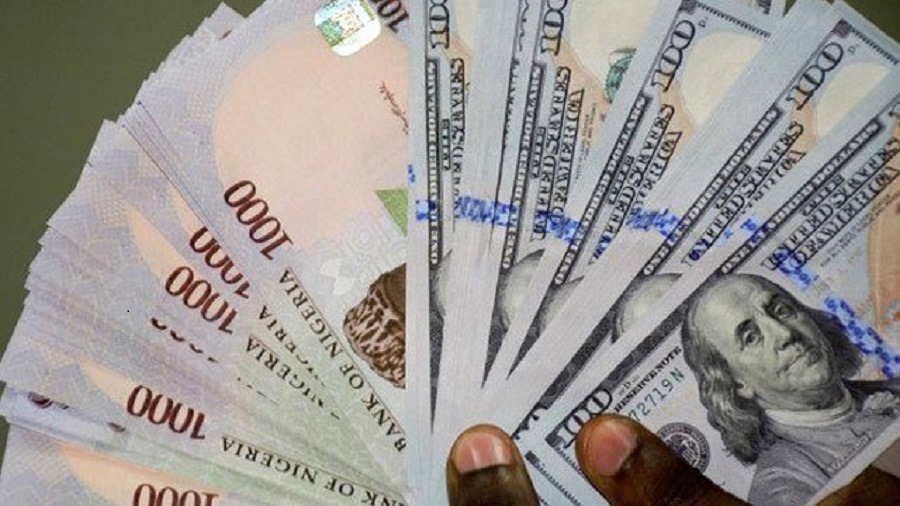
…Black market (Buying and selling rates): N1,385— N1,390
The Nigerian naira appreciated against the United States (US) dollar, trading at N1,331.2027 at the Central Bank of Nigeria (CBN) official foreign exchange (FX) window on Friday, September 18, 2026.
The data shared on the CBN’s official platform shows that the naira traded at the Nigerian Foreign Exchange Market (NFEM) rate of N1,331.2027 per dollar and closed at N1,329.9900 per dollar.
The currency, which traded at an NFEM rate of N1,331.2812 on September 17, 2026, appreciated by at least N0.08 after trading activities on Friday.
READ ALSO: Naira To Dollar Exchange Rate At Official FX Market
At the parallel market, both the buying and selling rate decreased by N5, when compared to the previous trading rate on Thursday, September 17, 2026.
According to Aboki FX , the Naira-to-dollar exchange rate at the black market on Friday, September 18, 2026, was N1,385 and N1,390 per dollar for buying and selling rates, respectively.
Business
Again, Naira Depreciates Against Dollar At Official FX Market
…Black market (Buying and selling rates): N1,380— N1,385
The Nigerian naira depreciated against the United States (US) dollar, trading at N1,329.8568 at the Central Bank of Nigeria (CBN) official foreign exchange (FX) window on Wednesday, September 16, 2026.
The data shared on the CBN’s official platform shows that the naira traded at the Nigerian Foreign Exchange Market (NFEM) rate of N1,329.8568 per dollar and closed at N1,329.5600 per dollar.
The currency, which traded at an NFEM rate of N1,329.1485 on September 15, 2026, depreciated by at least N0.71 after trading activities on Wednesday.
READ ALSO: Naira To Dollar Exchange Rate At Official FX Market
At the parallel market, both the buying and selling rate remained the same, when compared to the previous trading rate on Tuesday, September 15, 2026.
According to Aboki FX , the Naira-to-dollar exchange rate at the black market on Wednesday, September 16, 2026, was N1,380 and N1,385 per dollar for buying and selling rates, respectively.
Business
How To Buy Dangote Refinery Shares As IPO Opens September 14

Investors seeking to own a stake in the Dangote Petroleum Refinery and Petrochemicals FZE will be able to subscribe to its initial public offering (IPO) from September 14, 2026.
The ₦2.15 trillion offer by Dangote, valued at about $1.6 billion, involves 4.1 billion ordinary shares priced at an indicative ₦525 per share.
The offer, which is expected to become Nigeria’s largest-ever public share sale, will remain open until October 13, 2026.
The development gives Nigerians and other eligible investors an opportunity to acquire shares in the refinery as the Dangote Group moves to broaden ownership of the business.
At the signing of the IPO documents in Lagos on September 7, President of Dangote Group, Aliko Dangote, said the offer was designed to enable ordinary Nigerians to become shareholders in the refinery.
“What we are trying to achieve is to make sure our drivers, cooks, servants, and everybody have the opportunity of having stakes in the refinery,” Dangote said.
READ ALSO: BREAKING: Dangote Refinery Reduces Petrol, Diesel Prices
How to subscribe
According to the Managing Director, Investment Banking, Chapel Hill Denham, Mr Lanre Buluro, prospective investors can subscribe digitally using a bank account, Bank Verification Number (BVN) and a mobile phone or laptop.
He said an investor can complete the process within two to three minutes, with the minimum subscription set at 10 shares.
At ₦525 per share, the minimum subscription of 10 shares will cost ₦5,250.
Buluro said investors could access the offer through platforms including Moniepoint, MTN MoMo, Airtel, Payaza, Piggyvest, Paga, Bamboo and Chapel Hill Denham’s Invest Naija platform.
Do I need a CSCS account?
Buluro said prospective investors do not necessarily need an existing Central Securities Clearing System (CSCS) identity number before subscribing.
READ ALSO: Dangote Refinery Reduces Petrol Gantry Price
According to him, a CSCS account can be created for a new investor during the subscription process after the investor’s BVN and bank account details have been verified.
He explained that stockbrokers are behind the participating platforms and would contact subscribers after the transaction to provide their CSCS and Clearing House Number (CHN).
The allotted shares will subsequently be domiciled in the investor’s CSCS account.
What happens after subscription?
Investors can subscribe throughout the offer period, which runs from September 14 to October 13.
At the close of the offer, the advisers and the Securities and Exchange Commission (SEC) will assess the total subscriptions and determine the final allotment.
This means investors may not necessarily receive all the shares they apply for if the offer is oversubscribed.
READ ALSO: Dangote Unveils 10-day Credit Facility For Petrol Station Owners
Buluro disclosed that the offer has a provision to accommodate additional subscriptions in the event of oversubscription.
He said up to about 30 per cent additional shares could be issued under the oversubscription provision, potentially increasing the number of shares available from 4.1 billion to about 5.3 billion.
Before you invest
Buluro advised prospective investors, particularly first-time investors, to read the IPO prospectus carefully and seek guidance from a qualified financial adviser before committing their funds.
Investors should also understand that subscribing to an IPO does not guarantee a profit. The value of shares can rise or fall after allotment, depending on the company’s performance and market conditions.
The Dangote Refinery IPO is expected to significantly deepen public participation in the Nigerian capital market by allowing more individuals to take direct equity positions in one of the country’s largest industrial projects.
(TRIBUNE)

 News4 days ago
BREAKING: Tinubu Extends Working Vacation
- Headline4 days ago
How To Format An Academic CV For US Master’s, PhD Applications
- News4 days ago
Benue Govt Suspends Muslim Pilgrims Welfare Board Chairman, Secretary
- Entertainment4 days ago
Why Funke Akindele Was Not At My Movie Premiere – Kamo State
- Politics4 days ago
Crisis Rocks NDC Over Obi-Kwankwaso Campaign Council
- Sports4 days ago
5 Football Players Who Excelled In Multiple Positions
 News3 days ago
OPINION: The Stranger In APC’s Kitchen
- News5 days ago
[OPINION] Wike-APC: Fights Always End Adultery
- News4 days ago
FULL LIST: Names Of 37 Illegal Miners Who Died In NSCDC Custody
- Sports4 days ago
Premier League Predictions For Matchweek 5 Fixtures


