
Headline
NCMM Frustrating FOI ACT – Group Alleges
The leadership of the Media Rights Agenda (MRA) on Monday accused the National Commission of Museums and Monuments (NCMM) of working round the clock to frustrate the public right of access to information as well as its statutory duties and obligations under the Freedom of Information Act.
In a statement made available to DAILY POST in Taraba State, the MRA’s Programme Director, Ayode Longe, said “the situation with NCMM) is truly a national scandal and represents everything that is wrong in Nigeria. ”
Such conduct by a public institution, “making a mockery of the federal government’s claim to transparent and accountable governance” he said serves only to bring the government into disrepute.
A few weeks ago, the Commission was said to have written to the international centre for investigative reporting (ICIR)in Abuja demanding N200,00 to respond to the ICIR’s FOI request for a list of projects implemented in the Commission.
”A Commission which ought to be actively “trying to attract tourists, historians, archaeologists scientists and students among others by proactively providing them with information is the one operating the most abysmal information and communication practices,” Longe said.
Longe said not only has its institutional website been down and inaccessible for at least several weeks now” but has also ” refused to provide information to those who have made requests for information under the FOI Act .”
He also noted that in 2017, when another non-governmental organization, Public and Private Development Centre (PPDC), made a request to the Commission under the FOI Act on its public finance expenditure records, it took the Commission over 60 days to respond to the application, although the Act requires it to do so within seven days.
READ ALSO: Banditry: ‘If I Open Up, Heads Will Roll – Senator
“Over the last 10 years since the FOI Act came into force, the Commission” according to him “has deliberately breached or disregarded every responsibility legally on imposed on it by the Act as it has consistently refused to submit an annual report to the Attorney-General of the Federation for 10 years.”
He said the Commission failed to designate an FOI Desk Officer, spurned the mandatory requirement for it to proactively publish 16 categories of information; neglected to provide appropriate training for its officials on the public’s right of access to information, among other infractions.”
He said despite the mandatory provisions of Section 13 of the FOI Act, the Commission has not provided appropriate training for its officials on the public’s right to access to information or for the effective implementation of the Act over the last 10 years as required by the Law.
The Commission in question was said to have been established by the Federal Government in 1979 to manage the collection, documentation, conservation and presentation of the national cultural properties to the public for education, enlightenment and entertainment.
(DAILY POST)

Headline
U.S. Lawmaker Reacts To Nigeria, U.S. Airstrikes
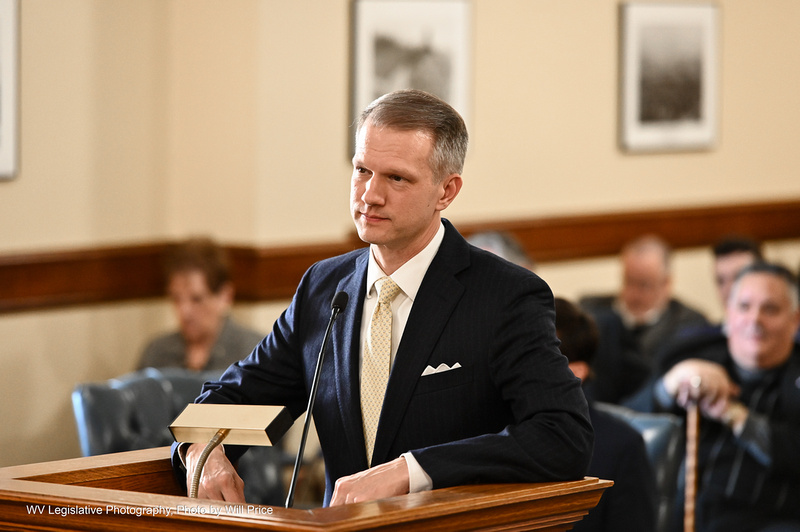
United States Congressman, Riley Moore, has stated that President Donald Trump is determined to put an end to the killing of Christians in Nigeria, warning that further action may follow if the violence persists.
Moore made the statement on Friday via his official X handle.
According to the lawmaker, the strike represents the first step in addressing what he described as the ongoing slaughter of Christians and the broader security crisis affecting Nigerians across religious and ethnic lines.
READ ALSO:US Dept Of War Shares Video Of Air Strikes In Nigeria
“President Trump has been clear that the killing of Christians in Nigeria must end,” he said.
He that the administration’s resolve on the matter should not be underestimated.
“As I stated at the outset: Do not test President Trump‘s resolved in this matter.
READ ALSO:JUST IN: US Forces Bomb Terrorists Camps In Nigeria
“Tonight’s strike in coordination with the Nigerian government is just the first step to ending the slaughter of Christians and the security crisis affecting all Nigerians,” he said.
He stressed that the operation signals a stronger stance by the United States in support of Nigeria’s efforts to tackle terrorism and violent extremism, noting that further measures could be taken if the situation does not improve.
Headline
US Dept Of War Shares Video Of Air Strikes In Nigeria
A video footage of the US military air strikes in Nigeria has emerged.
The video was released by the US Department of War following its air strikes against terrorists in Sokoto.
Earlier, the US secretary of War, Pete Hegseth had confirmed that military air strikes hit terrorists in Nigerians, saying it was deadly.
Later on, the US. African Command, confirmed that it conducted the attacks described as very deadly by President Donald Trump.
Trump said he was only keeping the promise he made earlier last month to strike the terrorists he believes are killing innocent Christians.
READ ALSO:JUST IN: US Forces Bomb Terrorists Camps In Nigeria
Although described as powerful and deadly, the casualty caused by the attack is yet to be released.
Explaining further, security expert, Brant Philip, said the strikes may have been launched “from the USS Paul Ignatius, using a Tomahawk missile.”
The Nigerian government through its ministry of foreign affairs has also confirmed that the strikes were successful.
Watch video here
Headline
JUST IN: US Forces Bomb Terrorists Camps In Nigeria
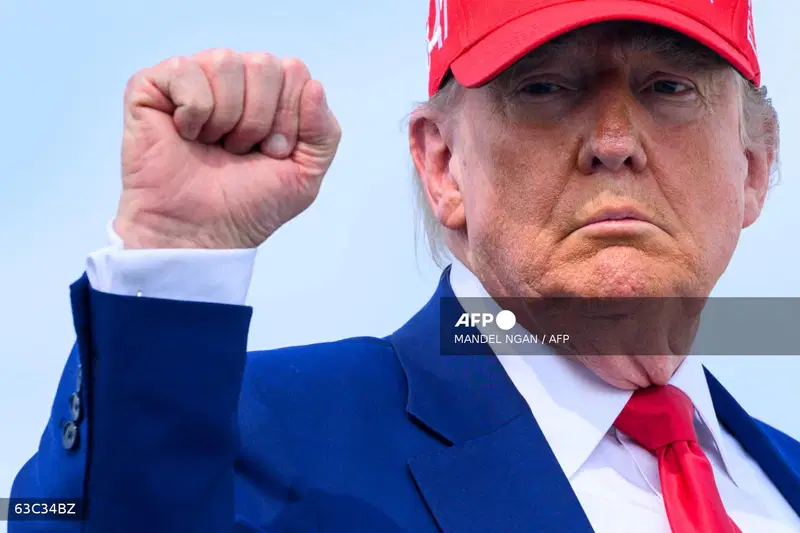
United States President Donald Trump said US forces conducted deadly strikes against Islamic State terrorists in northwestern Nigeria, and vowed more attacks if the militants keep killing Christians.
“I have previously warned these Terrorists that if they did not stop the slaughtering of Christians, there would be hell to pay, and tonight, there was,” Trump posted on his Truth Social platform, adding that “the Department of War executed numerous perfect strikes.”
READ ALSO:JUST IN: Kano Lawmaker, Sarki Aliyu Daneji, Dies Hours After Colleague’s Passing
Trump stated that the Department of War “executed numerous perfect strikes, as only the United States is capable of doing. Under my leadership, our Country will not allow Radical Islamic Terrorism to prosper.”
The US president wished everyone Merry Christmas, “including the dead Terrorists, of which there will be many more if their slaughter of Christians continues.”
Details later.

 News3 days ago
PHOTOS: New Era In Furupagha-Ebijaw As Okpururu 1 Receives Staff Of Office
- News3 days ago
UBTH CMD Marks 120 Days In Office, Expresses Commitment To Providing Conducive Working Environment
- News3 days ago
OPINION: Gumi And His Terrorists
- News3 days ago
FIRS Confirms NIN As Tax ID
- News3 days ago
FG Declares Public Holidays For Christmas, New Year Celebrations
- Metro3 days ago
Fintiri Pardons Man Sentenced To Death For ‘Killing Herdsman In Self-defence’, Others
- News3 days ago
OPINION: Christmas And A Motherless Child
 News3 days ago
OPINION: My Man Of The Season
- News2 days ago
JUST IN: Kano Lawmaker, Sarki Aliyu Daneji, Dies Hours After Colleague’s Passing
- Metro3 days ago
Petrol Tanker Crashes Into Akpabio’s Convoy, Kills Police Dispatch Rider


