

Headline
Nigeria Needs N2trn To Achieve Net Zero Emissions By 2060 – Energy experts



Energy experts at the weekend said Nigeria needs no less than N1.9 trillion to successfully implement an Net Zero Emissions plan under the Nigerian Energy Transition Plan (ETP).
They stated this at the 85th Power Dialogue organised by The Electricity Hub, TEH, in Abuja, with the themes – ‘Analyzing the Nigerian Energy Transition Plan’ – and ‘Nigeria’s Energy Transition Plan: Reforms and Implementation.’
They contended that the ETP would remain just a plan if a feasible pathway is not evolved, especially as the challenge of financing gas initiatives has emerged due to the plan.
The panellists at the session noted that by 2040, there will be a significant shift in the gas utilization portfolio, which implies that Nigeria will focus on the domestic sector as the global market diminishes.
However, the role of gas is envisioned as the transition fuel because of its abundant availability whereas Nigeria presently exports around 14% of LNG gas to the European Union, the dialogue noted.
READ ALSO: Driver Knocks Down, Kills Sexagenarian In Ogun
A statement issued by TEH after the session said, “one prominent hindrance to our gas development lies in natural gas pricing within the domestic economy.
“Particularly, the gas allocated to the power sector is traded at deregulated rates within the industry. This occurs unless an interested buyer or seller is identified. Regrettably, the advantages of this often remain underutilized.”
The panelists include special energy experts from the energy sector, including Zira John Quaghe, serving as Nigeria’s Focal Person at The African Climate Foundation; Jennifer Ifeanyi-Okoro, the Vice President of Public Policy at Sun King; Charles Majomi, a Partner specializing in Gas and Energy Transition at The Nextier Group; and Chibuikem Agbaegbu, the Program Manager at Nigeria Off-Grid Market Accelerator, who was the Moderator.
Jennifer Ifeanyi Okoro, who discussed the strategies and targets involved in the energy transition pathway, stated that one important strategy used to connect to many people is the affordability of the products because the company targets mostly the poor.
She buttressed her point with some achievements recorded by Sun King (an off-grid solar company).
READ ALSO:NiMet Predicts 3-day Cloudiness, Sunshine From Saturday
According to Okoro, “about N1.9 trillion is needed for Nigeria to get to Net Zero in 2060, which is a lot of money”.
She pointed out the most difficult challenge in the Energy Transition Plan is sheer poverty, arguing that unless “we proffer solutions to Nigeria’s basic needs, such as housing, access to clean water and energy, food, education and more, the Net Zero will continue to elude us for a sustainable future”.
Zira John Quaghe highlighted the climate goals and how the energy transition fits in. He highlighted major factors for the energy transition plan and stated points that referred to accountability mechanisms.
He explained that there are five countries gearing towards achieving the Net Zero plan, and Nigeria isn’t part of those countries.
Zira explained the climate finance market strategies from the philanthropy point of view, pointing out how philanthropy can help to align budgetary and physical planning. He also stated how Nigeria could improve its quality of climate change discourse.
READ ALSO: Ondo Monarch Leads Mass Protest Against Forceful Ejection Of Farmers
Charles Majomi stated that one of the gas stories is that Nigerians refuse to accept the fact that adding value to gas enhances socio-economic welfare.
He noted that how Nigeria had lost the opportunity to leverage gas as its primary resource, stressing that the key element of the Energy Transition plan is the transition away from dirty fuels. Therefore, he emphasized that gas will continue to be used productively as an export resource.
Nonetheless, the experts concluded that energy transitioning is an intensive task, that has to be gradual and intentional to ensure continual improvement and sustainability.
Even at that, Nigeria which has abundant resources to transition to Net-Zero, needs the right policies, plans and strategies incorporation with regulations, otherwise, it will keep revolving in the circle of carbon emissions.
VANGUARD




Headline
Oil Prices Drop After Iran Reopens Strait Of Hormuz

Global oil prices dropped sharply on Friday after Iran signalled that the Strait of Hormuz would remain open to commercial shipping during a temporary ceasefire in the Middle East.
Benchmark crude prices fell by more than 10 per cent, with West Texas Intermediate (WTI) slipping below $85 per barrel, while Brent crude declined to about $89 per barrel.
The decline follows comments by Iran’s Foreign Minister, Abbas Araghchi, who said commercial vessels would be allowed to transit the strait for the duration of a 10-day ceasefire involving Israel and Lebanon.
The truce, which began on Thursday, is reported to include the Iran-backed group Hezbollah.
READ ALSO:Crude Oil Prices Jump As Fear Mounts On Fresh Domestic Petrol Hike In Nigeria
Oil prices had surged above $100 per barrel in recent weeks amid heightened tensions in the region, with WTI reaching nearly $113 per barrel earlier this month and Brent climbing above $119 in late March.
Analysts say the reopening of the key shipping route has eased supply concerns in global energy markets.
Brian Therien, a senior investment strategist at Edward Jones, noted that oil futures are now trending lower, with projections suggesting prices could fall to the low $70 range by the end of the year. He added that a sustained drop in prices could help reduce inflationary pressures globally.
The Strait of Hormuz, which links the Persian Gulf to the Arabian Sea, is one of the world’s most critical oil transit routes, accounting for roughly one-fifth of global oil and liquefied natural gas shipments.
READ ALSO:JUST IN: Trump Orders US Naval Blockade Of Strait Of Hormuz
Shipping through the passage had been disrupted during the conflict due to security concerns, including threats of attacks and the presence of naval mines.
An Iranian official told Reuters that vessels moving through the strait during the ceasefire would be required to use designated safe lanes approved by Iranian authorities, while military ships would not be permitted to pass.
Despite the announcement, some shipping firms remain cautious. German carrier Hapag-Lloyd said it is still reviewing the situation before resuming operations in the area.
Meanwhile, Knut Arild Hareide of the Norwegian Shipowners’ Association welcomed the development but warned that uncertainties remain, particularly regarding maritime safety, operational guidelines, and the potential risks posed by unexploded sea mines.
Headline
You Can’t Go To US With Good Feelings Since Trump Returned To Power – Sports Legend


Germany legend, Oliver Kahn, has insisted that one cannot go to the United States with ‘good feelings’ since President Donald Trump returned to the Presidency.
Kahn stated this while speaking to Sky Sport Germany about the upcoming World Cup, which is to be held in the US, Mexico and Canada.
According to the former Bayern Munich goalkeeper, there are so many things happening in the US at the moment that are no longer compatible with ‘values’.
READ ALSO:Trump Tired Of War In Iran – Shehu Sani
“There are simply so many things happening in the USA right now that are no longer compatible with our understanding of values,” Kahn said.
“One example was the war, but I don’t want to list everything Donald Trump has been doing there since he returned to the presidency.
“You can’t go there with a good feeling at the moment.”
Headline
Trump Bows To Pressure, Deletes Post Depicting Self As Jesus

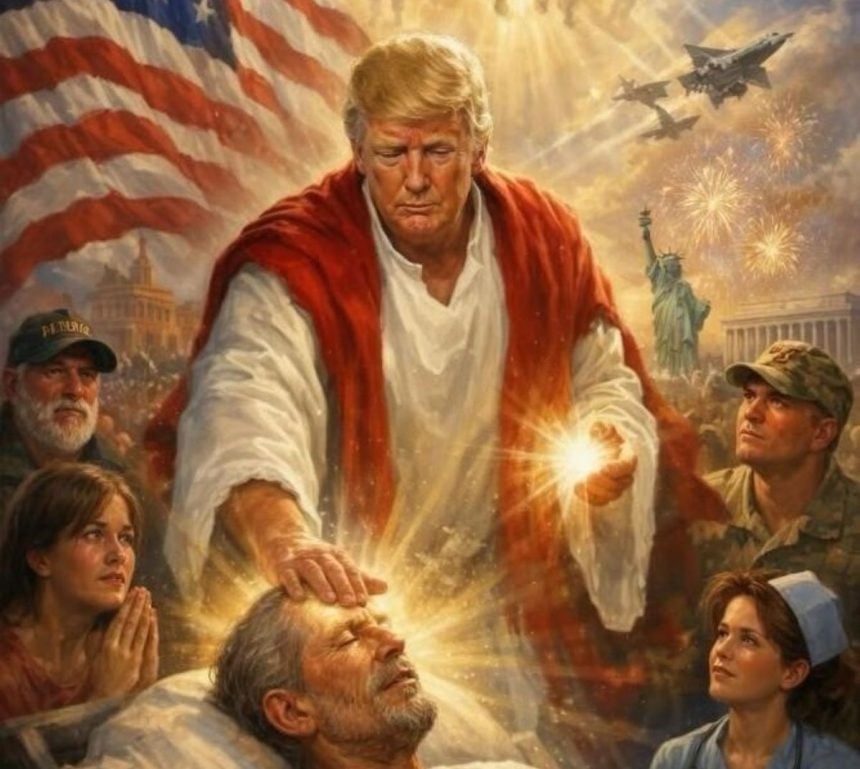
United States President, Donald Trump, has deleted a social media post that appeared to portray him as Jesus, following backlash and rising tensions with Pope Leo XIV over the Iran war.
The image, shared on Truth Social late Sunday, showed Trump as a Christ-like figure healing the sick, surrounded by American flags and eagles.
The post came shortly after the president criticised the pope for opposing the war with Iran.
By Monday morning, the image had been removed from his account. A previous link to the post now leads to a notice stating the “content is no longer available.”
READ ALSO:JUST IN: Trump Orders US Naval Blockade Of Strait Of Hormuz
Speaking later at the White House, Trump denied the interpretation of the image and said he believed it depicted him differently.
“I did post it, and I thought it was me as a doctor, and had to do with the Red Cross,” he told reporters at the White House.
He dismissed claims that the image portrayed him as Jesus, blaming the media for the narrative.
“Only the fake news” could come up with the idea that it depicted him as Jesus.
READ ALSO:I Have To Be Involved In Choosing Iran’s Next Leader – Trump
“I just heard about it, and I said, ‘How did they come up with that?’ It’s supposed to be me as a doctor making people better. And I do make people better,” he said.
The development comes amid an ongoing public disagreement between Trump and Pope Leo XIV over the Iran war.
The pope said Monday he has “no fear of the Trump administration” and would continue to speak out, despite criticism from the president, who described his stance as “terrible for foreign policy.”
Leo, the first American pope, has intensified his criticism of the war in recent days, condemning Trump’s remarks about the Iranian people as “truly unacceptable.”
(CNN)
-

 News5 days ago
BREAKING: JAMB To Release First Batch Of 2026 UTME Results Midnight
-

 News4 days ago
World Bank Flags ‘Hidden Spending System’ Diverting Over N34.53tn Of Nigeria’s Revenue
-

 News5 days ago
Popular Nigerian Broadcast Journalist Is Dead
-

 News5 days ago
FG Bans Unauthorized Use Of Ambassador Title
-

 News4 days ago
VIDEO: I Took Over Leadership From Myself; The Late Buhari Is Me — Tinubu
-

 Metro5 days ago
Police Inspector Arrested For Armed Robbery Dies From Bullet Wounds
-
News3 days ago
FG Slams Import Ban On 17 Items In New Fiscal Policy
-

 Politics5 days ago
2027: Why Tinubu Should Be Scared – ADC
-

 News4 days ago
Guard Your Admission Carefully – Registrar Urges Newly Matriculated Students
-

 Headline5 days ago
Oil Prices Drop After Iran Reopens Strait Of Hormuz
