
Headline
Nigeria’s Poverty Exceeds World Bank Projection, Bayelsa, Four Other States Lead
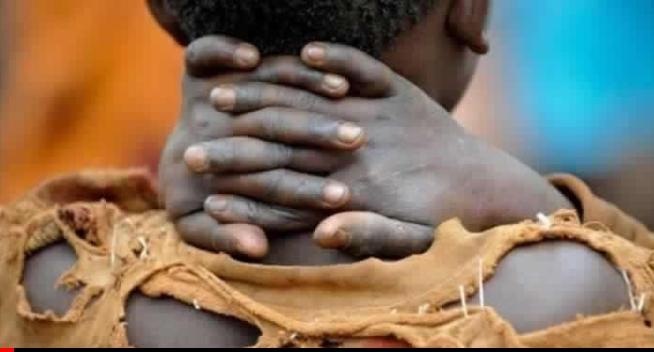
The National Bureau of Statistics has disclosed that 133 million Nigerians are multi-dimensionally poor.
In its latest National Multidimensional Poverty Index report launched on Thursday, the NBS said that 63 per cent of Nigerians were poor due to a lack of access to health, education, living standards, employment and security.
The Multidimensional Poverty Index offers a multivariate form of poverty assessment, identifying deprivations across health, education, living standards, work and shocks.
The Statistician-General of the Federation and CEO of the NBS, Semiu Adeniran, said this was the first time the bureau would conduct a standard multidimensional poverty survey in Nigeria.
“The survey was implemented in 2021 to 2022 and it is the largest survey with a sample size of over 56,610 people in 109 senatorial districts in the 36 states of Nigeria,” he said.
He added, “Unlike the Global MPI which uses three dimensions (Health, Education and Living Standards), we added a fourth dimension, Work and Shocks in the 2022 MPI Survey. This fourth dimension as well as other added variables such as food security, water reliability, underemployment, security shocks and school lag, were all added to reflect the current realities and priorities in Nigeria.”
The 133 million poor Nigerians recorded by the NBS exceeded the World Bank’s projection for Nigeria in 2022.
READ ALSO: World Bank To FG: You Won’t Succeed In Lifting 100m Nigerians Out Of Poverty, If…
The World Bank, which said that poverty reduction stagnated since 2015 under the regime of President, Muhammadu Buhari projected that the number of poor Nigerians would hit 95.1 million in 2022.
This projection was made in its report titled, ‘A Better Future for All Nigerians: 2022 Nigeria Poverty Assessment.’
The report had read, “The COVID-19 crisis is driving up Nigeria’s poverty rate, pushing more than five million additional people into poverty by 2022. With real per capita GDP growth being negative in all sectors in 2020, poverty is projected to have deepened for the current poor, while those households that were just above the poverty line prior to the COVID-19 crisis would be likely to fall into poverty.
“Were the crisis not to have hit (the counterfactual scenario), the poverty headcount rate would be forecast to remain virtually unchanged, with the number of poor people set to rise from 82.9 million in 2018/19 to 85.2 million in 2020 and 90.0 million in 2022, due largely to natural population growth.
“Given the effects of the crisis, however, the poverty headcount rate is instead projected to jump from 40.1 per cent in 2018/19 to 42.0 per cent in 2020 and 42.6 per cent in 2022, implying that the number of poor people was 89.0 million in 2020 and would be 95.1 million in 2022. Taking the difference between these two scenarios, the crisis alone is projected to have driven an additional 3.8 million Nigerians into poverty in 2020, with an additional 5.1 million living in poverty by 2022.”
The rising poverty also defies the government’s plan to life 100 million Nigerians out of poverty in 10 years.
In August 2019, Buhari said his regime would lift 100 million Nigerians out of poverty between 2020 and 2030, which means that an average of 10 million Nigerians would be lifted out of poverty each year.
In June 2021, Buhari inaugurated the National Steering Committee of the National Poverty Reduction with Growth Strategy chaired by Vice President Yemi Osinbajo.
This, he said, re-echoed his commitment to lift 100 million Nigerians out of poverty in 10 years, with a well-researched framework for implementation and funding.
The President was quoted in a statement by his Special Adviser on Media and Publicity, Femi Adesina, as saying, “If India can lift 271 million people out of poverty between 2006 and 2016, Nigeria can surely lift 100 million out of poverty in 10 years. Fortunately, we have already started but we need to unlock the challenges of slow implementation, inappropriate targeting and absence of adequate resources.”
In October last year, the World Bank Lead Economist for the Middle East and North Africa region’s Poverty Reduction and Economic Management Group, Tara Vishwanath, had described the goal of the Nigerian President to lift 100 million Nigerians out of poverty in 10 years as ambitious.
She said the ambitious goal could only be feasible if certain swift policies were put in place to provide opportunities in the labour market and boost investors’ confidence.
World Bank economists, Jonathan Lain and Jakob Engel, said in a blogpost on the bank’s website that rising inflation, persistent population growth, the COVID-19 pandemic and war in Ukraine were threatening Nigeria’s poverty reduction aspiration.
READ ALSO: JUST IN: 133 Million Nigerians Poor, Says NBS
Five poorest states
The NBS report further showed Sokoto, Bayelsa, Gombe, Jigawa and Plateau are the top poorest states in 2022.
Sokoto leads the poorest with 90.5 per cent of people in the state poor. It is followed by Bayelsa with 88.5 per cent poor people, Gombe with 86.2 per cent, Jigawa with 84.3 per cent, and Plateau with 84 per cent.
The least poor states are Ondo with 27.2 per cent poor people, Lagos with 29.4 per cent, Abia 29.8 per cent, Edo with 31 per cent, and Anambra with 32.1 per cent.
The report said that 65 per cent of poor Nigerians (86 million) were in the North, while 35 per cent (nearly 47 million) were in the South.
The report noted, “Overall, 65 per cent of poor people – 86 million people – live in the North, while 35 per cent – nearly 47 million – live in the South. In general, a disparity between North and South is evident in both incidence and intensity of multidimensional poverty, with the North being poorer.
“However, the level and number of poor people needs to be addressed in all zones – each of which are home to between 11 and 20 million poor people except North West, which has 45 million poor people due to its larger population and higher level of poverty.”
It also noted that 72 per cent of people in rural areas were poor. It is the same for 42 per cent of people in urban areas.
The report read, “Multidimensional poverty is higher in rural areas, where 72 per cent of people are poor, compared to 42 per cent of people in urban areas. Approximately 70 per cent of Nigeria’s population live in rural areas…”
The NBS statistician-general also noted that the report covered poverty among children under five years of age in Nigeria.
He said, “The survey also has a linked Child MPI. This Child MPI extends the Nigeria MPI to include appropriate indicators for children under five, by adding a fifth dimension of child survival and development.
“This additional dimension contains eight vital aspects of early childhood development in physical and cognitive domains, including severe undernutrition, immunisation, intellectually stimulating activities, and preschool.
“While it does not offer individual-level data, it uncovers additional children who, according to the extra dimension, should qualify as multidimensionally poor.”
The report noted that 83.5 per cent of children under five years were poor in Nigeria due to lack of intellectual stimulation needed for childhood development.
It noted that the total number of poor under-five children in Nigeria was 22.85 million.
The report read, “Children are a strategic population of concern in Nigeria for several reasons. First, nearly half of all Nigerians are children under the age of 18 (47.2 per cent).
“According to the Child MPI, 83.5 per cent of children under five are poor. Incidence of Child MPI is above 50 per cent in all states and rises to almost 100 per cent in some states.
“The highest deprivations are in the indicator of child engagement – showing that over half of the poor children lack the intellectual stimulation that is pivotal to early childhood development. Child poverty is prevalent in rural areas with almost 90 per cent of rural children experiencing poverty.”
The report also stressed the need to address the issue of child marriage, which contributes to poverty for girls.
Women empowerment
The World Bank Country Director for Nigeria, Shubham Chaudhuri, said that Nigeria’s plan to lift 100 million people out of poverty would be impossible without women empowerment.
He said this during a panel discussion at the Gender and Inclusion summit organised by the Nigeria Economic Summit Group in Abuja on Wednesday.
Chaudhuri said, “In Nigeria, the goal is to lift a 100 million Nigerians out of poverty. It is simple fact that without full economic participation and empowerment of women and girls, Nigeria will not attain that goal.”
He stressed the need for the government to partner with communities and private sector to empower girls and women.
Also, during the panel, the Minister of Finance, Budget and National Planning, Dr Zainab Ahmed, said that the Federal Government was making effort to drive gender inclusion in the federal budgets and projects.
She noted that women had been the major beneficiaries of the government’s cash transfer programme for poor and vulnerable Nigerians.
Effective policies demanded
A professor of Economics and member of the Economic Advisory Council under Buhari’s regime, Prof. Ode Ojowu, said that the report presented a negative outlook for the country.
He charged the government and key stakeholders to come up with policies, programmes and projects that would tackle rising poverty.
He said, “This document is a negative document for our government, but my prayer is that it does not remain the legacy document.”
This is a document describing the conditions of people who are living and dying in this country.
“So, the most effective legacy will be that each of the representatives of the various sectors of the economy and levels of government will take this document home, study it, and work out policies, programmes and projects so that by the time we meet again, we will be reporting how many people have escaped from poverty.”
READ ALSO: CNN Interview: My Plans To Take Nigeria Off Poverty – Peter Obi [Video]
In an earlier Punch report, an Associate Professor of Economics at Pan Atlantic University, Dr Olalekan Aworinde, had noted the link between inflation and poverty.
He said, “Once prices increase, knowing full well the disposable income of the consumer is constant, it means the purchasing power will fall. And if the purchasing power falls, it will affect the standard of living and once it affects the standard of living, it means these individuals will go into absolute poverty.”
A Professor of Economics and Chairman of the Foundation for Economic Research and Training, Prof Akpan Ekpo, said that increased poverty posed a significant number of dangers to Nigerians.
The Minister of State for Finance, Budget and National Planning, Prince Clem Agba, said that it was concerning that despite the Social Investment Programme designed to tackle poverty, with more than five million persons impacted, poverty still persisted in the country.
He expressed optimism that Nigeria would still be able to tackle the rising poverty rate.
PUNCH



Headline
Indian Court Denies Bail To Nigerian Man Over Drug Charges

A court in India has denied bail to a 44-year-old Nigerian national, Cristian Soporuchukwu, who is currently facing drug trafficking charges in the country.
Cristian Soporuchukwu initially entered India on a business visa but was later arrested over allegations of involvement in the sale of hard drugs.
Reports indicated that after arriving in India, Soporuchukwu travelled through Goa, Delhi, and Mumbai, where he allegedly established links with suspected drug traffickers.
READ ALSO:Indian National Arraigned In Lagos Over Alleged N22m Supermarket Fraud
He was accused of purchasing MDMA crystals and distributing them to college students and information technology workers.
According to reports, operatives of the Beguru Police arrested Cristian Soporuchukwu in April 2025 for allegedly selling MDMA crystals around Begur Lake and the AECS Layout Road area.
The New Indian Express reported that the High Court of Karnataka subsequently dismissed the Nigerian’s bail application.
READ ALSO:NDLEA Intercepts Indian Lady With 72 Parcels Of Heroin ON n Chocolate Wraps
“The anti-narcotics wing seized about 1 kg of MDMA crystals, a pocket weighing machine, 10 zip-lock covers, a mobile phone and a scooter from him,” the report stated.
Justice V. Srishananda, while ruling on the bail application, reportedly held that errors relating to the grounds of arrest could not automatically justify bail in serious narcotics-related offences under the Narcotic Drugs and Psychotropic Substances, NDPS, Act.
The court further noted that Cristian Soporuchukwu had allegedly overstayed his visa in India, according to the report.
Headline
Strait Of Hormuz: US Announces Sanctions Against Iran

The United States Treasury has announced sanctions against Iran’s Persian Gulf Strait Authority.
Treasury Secretary, Scott Bessent, said this in a statement on Wednesday.
The statement extended the threat of sanctions to anyone paying the fees, saying they may be providing support to and receiving services from Iran’s Revolutionary Guards, and therefore may be exposed to sanctions risk.
READ ALSO:Strait Of Hormuz: Pakistan Thanks Trump For Pausing ‘Project Freedom’
“The Iranian military’s latest attempt to extort global maritime trade is proof that Economic Fury has left the regime desperate for cash.
“Treasury has deprived the Iranian regime of revenue for their weapons programs, terrorist proxies, and nuclear ambitions,” Bessent said.
Bessent added that the US has succeeded in disrupting tens of billions of dollars’ worth of revenue from being accessible to Tehran.
Headline
US Launches New Airstrikes On Iran
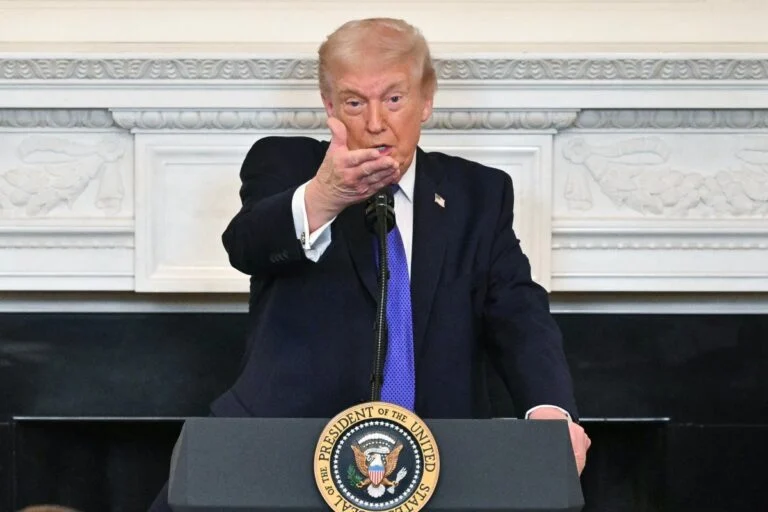
The United States has launched new airstrikes in southern Iran.
The strike shot down four one-way attack drones that posed a threat around the Strait of Hormuz and then a ground control site.
A US official revealed that American forces struck an Iranian ground control station in Bandar Abbas that was about to launch a fifth drone.
READ ALSO:US Restricts Entry Routes For Travellers From DRC, Uganda, South Sudan Over Ebola Outbreak
The official described the strikes as purely defensive, saying the US intended to maintain the ceasefire.
Report says this is the second time in three days that the US has carried out self-defense strikes against Iranian military targets in southern Iran.
Recall that on Monday the US carried out airstrikes against Iranian missile locations and boats that US Central Command said were preparing to launch mines in the Strait of Hormuz.

 Headline4 days ago
Woman Passes Out After Receiving 100 Strokes Of Cane
- Politics5 days ago
Warri Ijaw Hail INEC Delineation Report, Call For Additional Electoral Wards, Others
- Headline4 days ago
JUST IN: White House Locked Down Briefly As Gunman Opens Fire At Security Checkpoint
- Politics3 days ago
Two Masked Men Gun Down Politician In His Rivers State Hotel
- Metro4 days ago
Police Reject N500m Bribe, Recover N7.8bn Illicit Drugs In Lagos
- News3 days ago
More Pain For Nigerians As Cooking Gas Price Increases Nationwide
- Politics5 days ago
What I’ll Do As President Of Nigeria — Amaechi
- Politics3 days ago
‘Tinubu’s Borrowing In 24 Months Surpasses 55 Years’ Debt Record’
- News3 days ago
FG Declares Two Days Public Holiday For Eid-el Kabir Celebration
- Politics2 days ago
Court Clears Goodluck Jonathan To Contest 2027 Presidential Election


