

Business
NNPC Gives IOCs Conditions For Divestment From Nigeria

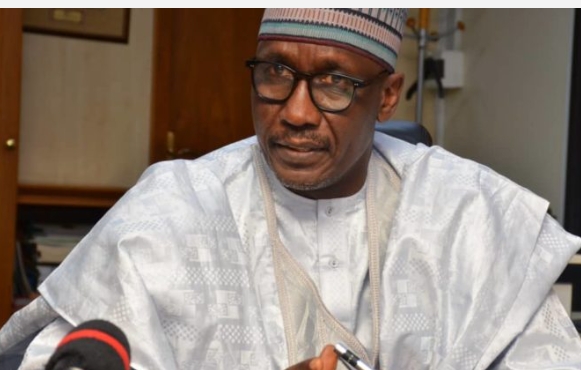


The Group Managing Director of Nigerian National Petroleum Company Limited (NNPC), Mallam Mele Kyari, has said international oil companies (IOCs) that divest from Nigeria’s upstream sector must address issues of abandonment and decommissioning of oil assets.
Kyari said this on Monday in Abuja, at the opening session of the fifth edition of the Nigerian International Energy Summit.
The comment by the NNPC boss comes about six months after he had highlighted key guidelines that would guide the evaluation of would be replacement of divesting partner in the oil and gas industry.
The GMD had in August last year, while speaking at the Nigeria Annual International Conference and Exhibition said learning from previous experiences, the NNPC had developed requisite divestment policy that will provide clear guidelines and criteria for divestment of partners’ interest in all its joint venture and production sharing contracts arrangements.
To ensure that the NNPC sustains a prosperous business environment for Nigeria, he had said the national oil company would pay particular attention to abandonment and relinquishment costs; severance of operator staff; third party contract liabilities; and competency of the buyer.
READ ALSO: NNPC Distributes One Billion Litres Of Fuel Nationwide
On the wave of divestment of international oil companies from Nigeria’s upstream sector, the NNPC boss told participants at the conference that while the country understands the right of companies to freely divest, it was, however, critical to ensure that the right thing is done so as to avoid disruption.
He further said that issues and obligations related to abandonment and decommissioning must be fully addressed and discharged in line with global best practices, regulations, convention, and law. He said,
“Companies that are divesting, they are leaving our country literarily and that’s the way to put it. But they are not leaving because opportunities are not here, these companies are shifting their portfolios where they can add value and not just that but where they can add to the journey of net carbon zero emission.
“We understand this very perfectly. But also, we cannot afford to realise that this country must benefit from the realities of today.
“We will work with our partners, we understand the necessity for their investments, we do know that there are issues, we understand that this must take place, but also it must be done in such a way that we are able to deal with issues around abandonment and decommissioning.
“We will also make sure that whatever arrangement that is put in place, will show that we are also alive to the energy transition journey that we have embarked on.”
The NNPC CEO acknowledged the need for cleaner energy globally, but said that the African continent must shape its narrative to reflect on its realities, including the high level of energy poverty, deficiency of critical infrastructures for electricity and transportation.
He confirmed that NNPC with partners were working together to ensure the attainment of Nigeria 2060 target for carbon neutrality.
He gave some of the measures so far taken to include adoption of low carbon technology across operations, deepening natural gas utilisation to reduce energy poverty – via the National Gas Expansion Programme, and intensifying the use of petrochemicals.
He also stated that the NNPC was making concerted efforts in the gas sector through various projects – NLNG Train 7, AKK, OB3, ELPS and others. He added that the expansion and integration of domestic/ regional power grids and growing the domestic gas markets via Autogas/ Compressed Natural Gas/ Liquified Petroleum Gas to power vehicles remain key to revitalising the industry.
He noted that passage of the PIA remained a key enabler and laudable reform in the Nigerian energy sector clearly delineating various stakeholders’ roles to enhance value realisation in the sector.
The NNPC GMD explained further that government has also intensified policies to increase gas utilisation and eliminate flaring in recognition of the transition from carbon intensive production towards cleaner alternatives.
Within the last decade, the Nigerian upstream sector had witnessed significant transactions involving the sale of interests in oil licences.
Some of these transactions were concluded in the time of high oil prices and in some instances involved asset transfers from international oil companies with long years of carrying on exploration and production activities in Nigeria, to smaller indigenous companies with limited experience in the upstream sector.
Expectedly, decommissioning obligations and the potential liabilities are also transferred to the new holder of the licence.
In August last year, Shell launched divestment of its 30 percent stake in Shell Petroleum Development Company of Nigeria Limited subsidiary.
Few days ago, Seplat Energy Plc announced an agreement to acquire the entire share capital of Mobil Producing Nigeria Unlimited from Exxon Mobil Corporation, Delaware for $1.28 billion.
READ ALSO: Reps Probe Petrol shortage, Fault NNPC Sufficient Supply Claim
The transaction entails the acquisition of ExxonMobil Nigeria’s entire offshore shallow water business. According to the deal, ExxonMobil Nigeria’s shallow water business is an established, high-quality operation with a highly skilled local operating team and a track record of safe operations, producing 95 kboepd in 2020 (92 percent liquids).
Shell Petroleum Development Company of Nigeria and ExxonMobil are presently faced with huge remediation costs over their failure to properly decommission and cap oil and gas assets across the Niger Delta, especially the ones sold to Nigerians in recent divesture programmes.
The situation has created severe environmental risks and pollution to host communities in the oil-rich Niger Delta.
The recent case of Aiteo’s Nembe wellhead blowout has also brought to the fore the need to enforce the relevant laws and to ensure that the multinationals that sold the assets to the Nigerian companies pay remediation charges.
Findings revealed that many of the oil and gas assets sold to Nigerians, mostly by the international oil companies, are rarely decommissioned or properly abandoned, a development that clearly breaches existing laws regulating the industry.


Business
Again, Dangote Refinery Hikes Fuel Price


Dangote Refinery has increased the ex-depot price of petrol by N75, bringing the price up to N1,350 per litre from the previous price of N1,275.
This is the first fuel increase by the Refinery in the month of May.
READ ALSO:JUST IN: Dangote Refinery Reduces Petrol Price
This latest development is coming seven days after the refinery raised its ex-depot price from N1,200 to N1,275 per litre.
Recall that the refinery on April 29 increased the ex-depot price of petrol by N75.
Business
Why We Sited Our Multi-Billion Naira Automobile Firm Branch in Benin – Skyewise Group CEO


Dr. Elvis Abuyere, Chief Executive Officer and Managing Director of Skyewise Group, an automobile firm, has explained the reason for establishing a branch of the company in Benin City, the Edo State capital, describing the ancient city as “a growing economy full of enormous potential for vibrant youth.”
He added that the company considers Edo State one of the most interesting states, noting that the decision aligns with its long-term vision.
Abuyere, who spoke in Benin on Monday while taking journalists on a tour of the new automobile facility, said:
“We started very small — from Abuja to Lagos and now Benin. It is a joy and privilege for us to have completed this amazing regional office with Skyewise Group.”
READ ALSO:BREAKING: Wike Picks Alabo George For Rivers Governorship
According to him, beyond the automobile business, Skyewise Group is in Benin to invest in real estate, logistics, youth empowerment, and credit management. “Aand also to lend our support to what the Edo State Government is doing, knowing the fact that there is an agenda,” he added.
The young CEO urged youths in Nigeria, particularly those in Edo State, to embrace entrepreneurship, stressing that “we believe it is the future of Africa,” especially Nigeria.
He said Nigeria stands as the giant of Africa and that its youth must take bold steps in the entrepreneurship landscape.
According to Abuyere, to ensure Edo youths actualise their entrepreneurial potential, the company has prepared soft loans to help them start businesses, adding that Skyewise Group is not limited to automobile operations.
READ ALSO:Senatorial Seat: Ogbakha-Edo Warns Against Imposition Of Candidates In Edo South
He said: “More importantly to us is youth empowerment. We want our youth to be empowered, and this is where the Skyewise Foundation comes in.
“We believe the future of Africa is entrepreneurship, and that future lies in the hands of the young people of Nigeria. We want to empower them to stand the test of time, build something meaningful, and reduce unemployment and insecurity in our land.
“I believe we need to begin taking bold steps by refining the mindset of our young people. We need to give them a sense of belonging and direction.
“We have been addressing the liquidity gap in society by providing microloans to support businesses in our environment and in Benin City.”
When asked why he chose Benin City for the multi-billion naira automobile firm, Abuyere noted: “I think this is the first automobile showroom in Edo State where you can see a car lifted from the ground floor to the first floor and beyond.”
Business
JUST IN: Nigerian Filling Stations Reduce Fuel Price After Hike

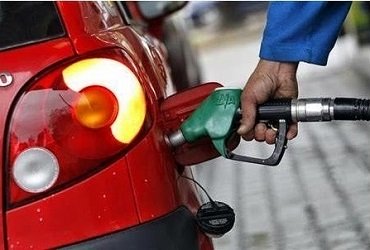
Nigerian filling stations reduced their Premium Motor Spirit price on Saturday, barely 24 hours after the hike.
Checks by DAILY POST showed that Ranoil, Empire Energy, and other filling stations in Abuja adjusted their petrol pumps to N1,365 and N1,375 per litre respectively, down from N1,440 per litre on Friday.
This means that petroleum marketers dropped their fuel price by N65 and N75 per litre. DAILY POST reports that the move was to attract patronage from customers.
Recall that three days ago, Nigerian filling stations had raised their petrol pump price to between N1,365 and N1,440 nationwide after Dangote Refinery and depot owners increased ex-depot prices to around N1,275 and N1,290 per litre.
According to DAILY POST, while the Nigerian National Petroleum Company Limited and MRS Bovas filling stations raised their petrol price to around N1,365 per litre, others adjusted theirs above N1,440 per litre.
READ ALSO:Drivers Protest Fuel Increase, Raise Fares in Benin
However, with the latest fuel price reduction by Ranoil and Empire Energy, the majority of filling station outlets now dispense petrol between N1,365 and N1,375 per litre.
This development comes as the ripple effect of crude oil prices continues to impact Nigeria’s domestic fuel price.
Brent and West Texas Intermediate crude rose to $114 and $105 per barrel before dropping to $108 and $101 after the filing of this report.
-

 Politics4 days ago
2027: Tinubu’s Re-election May Put An End To Nigeria — Baba Ahmed Warns
-

 Business4 days ago
JUST IN: Nigerian Filling Stations Reduce Fuel Price After Hike
-

 Entertainment5 days ago
Actress Eniola Badmus Gets New Federal Appointment
-

 News2 days ago
BREAKING: Wike Picks Alabo George For Rivers Governorship
-

 News4 days ago
2027: Pastor Adeboye Speaks On Nigeria’s Next President
-

 Politics4 days ago
NDC Speaks On Peter Obi, Kwankwaso Joining Party
-

 News3 days ago
OPINION: Why South Africans Murder Nigerians In Cold Blood
-

 Politics5 days ago
2027: Pondi, Otuaro, Other Delta South Stakeholders, Endorse Senator Joel-Onowakpo For Second Term
-

 Politics2 days ago
JUST IN: Why I left ADC For NDC With Kwankwaso – Peter Obi Opens Up
-

 Business2 days ago
Why We Sited Our Multi-Billion Naira Automobile Firm Branch in Benin – Skyewise Group CEO


