

News
NNPCL-Dangote Refineries Rift: HOMEF Demands Transparency, Investigation

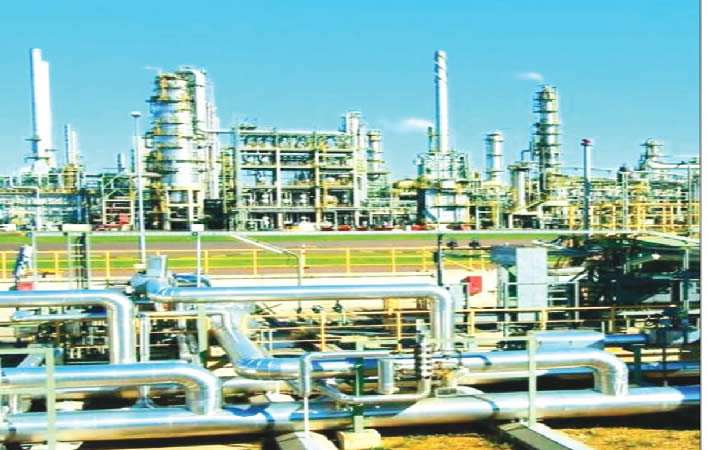


Health of Mother Earth Foundation (HOMEF), has demanded transparency and a thorough investigation into allegations of importing and foisting ‘dirty’ fuels on Nigerians.
HOMEF’s demand is in reaction to the feud between the Nigerian National Petroleum Corporation Limited (NNPCL) and Dangote Refineries.
A statement by Dr. Nnimmo Bassey,
the Executive Director, noted that the NNPCL’s inability to refine petroleum products has been an enormous shame and embarrassment to the
nation.
Bassey, in the statement made available to INFO DAILY by Kome Kome Odhomor Media/Communication Lead, HOMEF, lamented that “over the decades, NNPCL’s poor performance has forced Nigeria into the vice grip of forces of exploitation of colonial proportions, making her the largest exporter of crude oil and, at the same time, the largest importer of refined products of dubious quality.”
The Executive Director noted that the company has epitomised one of the worst that can be imagined of any raw material exporter post- colonial state anywhere in the world.
He explained that while HOMEF acknowledges the high ecological costs of the entire petroleum industry value chain, it regrets that the failure of the comatose NNPC refineries is a critical factor that has allowed toxic bush refineries to proliferate to fill the yawning gaps.
READ ALSO: WED: Declare State of Emergency On Environment, HOMEF Urges FG
He said: “The importation of refined petroleum products has equally foisted heavy economic pressures on the hapless citizens of Nigeria. The arrival of the Dangote Refinery has its own huge ecological baggage, especially regarding the plight of neighboring communities and the general environment. Besides, there are bigger issues related to the creation and operation of what has come to be known as economic zones of exemption.
“HOMEF is alarmed by the cloudy controversies around the Dangote
Refinery. The role of the NNPC in the unfolding disputes highlights the opacity of the sector and the inbuilt boobytraps in the regulatory
frameworks under which the sector operates.
“Nigeria entered the oil
refining business shortly after independence, with the first refinery
built in Port Harcourt to meet domestic needs and curb overreliance on importation.
“Successive “democratic” governments continued to fan the embers of this unproductive but self-serving arrangement, solidifying it with Bills that followed and passed by cronies hooded in different cloaks. The sad realities in the sector include poor governance, poor or non-existent turn around maintenance for the refineries, industrial-scale oil theft,
and even the appointments to offices for political control as seen in having serving presidents appointing themselves as Ministers of Petroleum,” he said.
Bassey noted that the conundrum of dependency on exporting raw crude oil and importing refined products, along with corrupt subsidy regimes, remains intractable to date.
READ ALSO: Food Crisis: HOMEF, GMOs-Free Nigeria Train Abuja Farmers, CSOs, Others On Agroecology
According to the environmentalist, the Dangote Refinery’s 650,000 bpd
capacity could boost Nigeria’s refining capacity and meet its domestic petroleum needs.
He said that the news that Nigeria, through the NNPC Ltd, would have a 20% share in the refinery raised questions, including why the corporation could not focus on making its own refineries work.
“Now we hear that the 20% investment stymied at 7.2% due to the inability of the supposedly profit-making company to meet its financial obligations on schedule. Before the recent closed-door meetings between the Ministry of Petroleum Resources and the Dangote Refineries, there were insinuations and counter-insinuations suggesting an in-fighting. We hear of disputes over the quality of refined products and issues of whether full approvals have been obtained by the private refinery for it to even commence operations.”
Bassey quoted the Nigerian Upstream Petroleum Regulatory Commission (NUPRC) as saying: “The refiners failed in operational approaches because there are operational standards for crude oil supply. These standards go along with international best practices. The local refiners will not put payment instruments in place as expected. They were not also revising delayed vessels at the right time. They will not fix the
vessel to pick up the crude at the right time, or they will bring the
wrong vessel specifications. These are operational inefficiencies on the
part of the local refiners.”
Reacting to the situation, Bassey said: “It is time for the NNPC to come clear on the questions over the quality of products imported petroleum products as well as those coming out of the Dangote Refinery. Nigerians also deserve to know what volume of shares it holds in the refinery.
READ ALSO: HOMEF Applauds NASS On Decision To Investigate GMOs In Nigeria
“The public deserves clarity about what is also going on with regard to
subsidies on imported petroleum products since the purported elimination of subsidies provided one of the planks aiding the economic strangulation of the Nigerian peoples.”
Bassey also demanded a participatory social and environmental audit of all the country’s refineries and put in place environmental management plans to ensure the safety of fence-line communities in Lekki, Port Harcourt, Warri, and Kaduna.
Also, HOMEF’s Fossil Politics Programme Manager, Stephen
Oduware said: “If anything is clear, it is that there are huge transparency questions over the sectoral regulatory frameworks and that the artificially
created complexities orchestrated by the NNPCL have heaped an avoidable burden on the masses.”
They called on the Federal Government to ensure the operations of all its refineries and equally activate an audit of the unfolding crisis.
“The government should also ensure a depoliticization of the petroleum sector. Another important step will be to ensure that the president of
Nigeria does not double as the head of the Petroleum Resources
Ministry.”




News
Report: UK Considers Raising Tax-free Allowance To £15,570


The UK government is reportedly considering increasing the personal income tax allowance from £12,570 to £15,570, a move that could leave millions of workers with more disposable income and prevent most state pensioners from paying tax on part of next year’s pension increase.
The proposal, reported by Sky News citing The Telegraph, would represent the first increase in the personal allowance in five years. The threshold has remained frozen at £12,570 since 2021.
If implemented, the new threshold would be close to the level the allowance might have reached had it continued rising instead of being frozen.
The proposal is being considered by Chancellor John Healey and Prime Minister Andy Burnham, according to the report. It was suggested by Labour donor and Ecotricity owner Dale Vince.
READ ALSO: UK Inflation Rises To Five-month High, Putting Pressure On Bank Of England
Vince said: “If Labour wants to get the economy moving, it should put money into the pockets of people who will spend it.”
He added: “Raising the personal allowance to £15,570 would give millions of people a meaningful boost, with the biggest benefit going to those on the lowest incomes.”
He proposed funding the measure through changes to capital gains tax and by ending interest payments on Bank of England reserves.
“We can pay for it by making the tax system fairer – starting with capital gains and the billions we currently hand to banks in interest,” Vince said.
READ ALSO:Fish Virus Outbreak Hits UK Facilities
However, the government has not confirmed that the proposal will be included in the upcoming Budget.
A Treasury spokesperson said decisions on taxation were matters for the Chancellor to announce at fiscal events, rather than issues the department would “routinely comment on rumour, speculation or proposals”.
The proposed increase could also address an issue facing pensioners.
The UK’s state pension is expected to rise by 3.9% next April under the government’s triple lock system, which guarantees an annual increase based on whichever is highest among inflation, average wage growth or 2.5%.
Provisional wage figures show growth of 3.9%, meaning the full new state pension could increase from £12,547.60 to about £13,036.60.
READ ALSO:Over 150 UK Flights Cancelled After Air Traffic Glitch
That would put the state pension above the current £12,570 personal allowance by approximately £457.
For pensioners with total retirement income below £50,270, that amount would normally be subject to the basic 20% income tax rate, potentially resulting in an annual tax bill of about £91.40.
Increasing the personal allowance to £15,570 would place the projected state pension below the new threshold, meaning pensioners would not pay income tax on the state pension itself, assuming they had no other taxable income.
The proposal comes as the government faces pressure over its finances ahead of the next Budget.
READ ALSO:Top 10 Degrees That Provide Fastest Payback In UK
Official figures showed that the UK public sector borrowed £18.3bn in August, the second-highest borrowing figure recorded for the month. Borrowing for the financial year so far was also £8.1bn above the level forecast by the Office for Budget Responsibility.
The government is therefore expected to face difficult decisions over taxation and spending when the Chancellor delivers the Budget.
Other possible tax changes under discussion include changes to capital gains tax and the proposed high-value council tax surcharge on expensive properties.
No decision on the personal allowance has been announced, and the final policy will depend on the Chancellor’s Budget decisions.
(skynews)
News
Six Corps Members Receive N10m Grants To Boost Agribusiness


Six members of the National Youth Service Corps (NYSC) have received a total of N10 million in grants to expand their agribusiness ventures under the Farmers for the Future Programme.
The programme was organised on Monday by the British American Tobacco Nigeria Foundation (BATNF) in collaboration with the NYSC to encourage young Nigerians to embrace agriculture and develop sustainable businesses.
Presenting the cheques to the beneficiaries in Abuja, the NYSC Director-General, Brigadier General Olakunle Nafiu, urged Corps members to maximise the opportunities provided by the service year by venturing into commodity marketing and other viable businesses.
Nafiu said agribusiness remained a viable avenue for young people to build sustainable enterprises, create employment and generate wealth.
READ ALSO: NYSC Swears In 1,600 Corps Members In Bauchi
He also stressed the importance of value addition to the success and sustainability of business ventures, while commending BATNF for placing Nigerian youths at the centre of its entrepreneurship initiatives through value-chain development, employment creation and its partnership with the NYSC.
“I charge you to spread the news around. We have seen the outcome, and it is a good idea,” he said.
The beneficiaries are Dominic Olufemi (FC/25C/1143), who received N3 million; Temitope Adewole (ED/26A/2251), N2 million; Abdulwaheed Bala (ED/25B/1402), N2 million; Olanike Mayungbe (OG/26B/1037), N1 million; Kingsley Udoeyen (KG/26A/1735), N1 million; and Lorember Lorsue (JG/25B/1742), N1 million.
Speaking on the selection process, the Acting Director, Skills Acquisition and Entrepreneurship Development (SAED), Mrs Winifred Shopeka, said the programme began with an online registration portal through which Corps Members engaged in agribusiness submitted their business plans.
READ ALSO: NCCSALW Deploys NYSC Members In Fight Against Illegal Arms In Northeast
She said nearly 3,000 Corps members applied and underwent a rigorous selection process that produced 20 finalists.
According to her, the finalists participated in a boot camp and a final pitching session, which produced the 10 best presenters before the six ultimate winners were selected.
Shopeka said the beneficiaries had also been mentored and attached to established market operators to assist them in marketing their products.
She added that Corps Members who did not make the final stage of the competition were also trained by BATNF.
The BATNF Team Lead, Mr Oludare Odusanya, congratulated the beneficiaries and urged Corps Members engaged in agribusiness to master the fundamentals and acquire the knowledge and skills necessary to succeed.
“We are happy with our collaboration with the NYSC, and it will continue,” he said.
READ ALSO: NYSC Lauds Gov. Mohammed’s Intervention In Fence Collapse
Odusanya explained that BATNF was an independent organisation established to contribute to poverty reduction in Nigeria through sustainable agricultural practices and other interventions.
He said the Farmers for the Future Programme was instituted in collaboration with the NYSC to encourage Corps Members to venture into agribusiness and become job creators.
He added that the beneficiaries would be attached to mentors who would guide them towards achieving success in their respective businesses.
According to him, the programme has, since its inception, continued to enhance the entrepreneurial capacity of Corps Members.
News
CBN Reduces Interest Rate To 23%

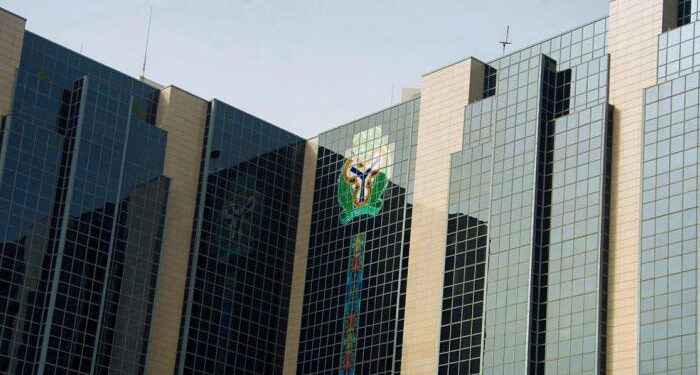
The Central Bank of Nigeria (CBN) on Tuesday announced the reduction of the interest rate, also known as Monetary Policy Rate (MPR) to 23 percent.
Briefing the media in Abuja, the Governor of the CBN, Mr. Olayemi Cardoso, said at the 307th MPC meeting held on September 22, 2026 agreed the resetting of the MPR and recaliberation of the monetary policy market.
According to Cardoso, the committe is satisfied with the disinflation progress, adding that members noted stable banking sector following successful recapitalisation.
READ ALSO: CBN Monetary Tightening Worsening Nigeria’s N50tn Development Finance Gap – Group
Meanwhile, according to Nigerian Tribune, reports that that the MPC, at its 306th meeting in July 2026, disclosed its resolution to retain the interets at 26.5 percent.
According to the Governor of the CBN, Olayemi Cardoso, “the Committee’s decision to maintain the current policy stance followed a thorough assessment of the balance of risks. Although headline inflation moderated marginally in June 2026, global uncertainties have heightened, due mainly to the renewed hostilities in the Middle East.
“In view of the evolving developments, maintaining a cautious monetary policy stance remains appropriate. In arriving at its decision, the Committee noted the recent resurgence of hostilities in the Middle East, with particular attention to its spillover effects on global energy prices and the potential pass-through to domestic inflation.”
-

 News4 days ago
BREAKING: Tinubu Extends Working Vacation
-

 News5 days ago
Six Hidden Health Benefits Of Unsweetened Zobo
-

 News5 days ago
Jehovah’s Witnesses Announce New Position On Blood Transfusion Policy
-

 News5 days ago
How 36 Nigerian States Got Their Names
-

 News5 days ago
2027: Step-by-step Guide To Applying For INEC Ad Hoc Staff Recruitment
-

 Headline4 days ago
How To Format An Academic CV For US Master’s, PhD Applications
-

 Headline5 days ago
Nigerian Man Jailed After Masturbating In Front Of Woman On UK Train
-

 Business5 days ago
Naira Appreciates Against Dollar At Official FX Market
-

 News4 days ago
Benue Govt Suspends Muslim Pilgrims Welfare Board Chairman, Secretary
-

 News5 days ago
Stop Acid Reflux Pain: Foods You Must Ban From Your Kitchen