
News
NUC Gets €3m Loan To Start ICT Projects In Varsities
This initiative, known as the Blueprint-ICT-Dev Project, aims to upgrade digital infrastructure, strengthen ICT capabilities, and promote digital literacy in these institutions.
The National Universities Commission says it has received €3m as the first tranche of the $40 million loan secured from the French Development Agency to support Information, Communication and Technology projects in 10 selected universities across the country.
Executive Secretary of the commission, Abdullahi Ribadu, announced this during the inaugural meeting of the 13th NUC Board on Wednesday at the commission’s headquarters in Abuja.
Ribadu noted that since he assumed office about a year ago, the commission has pushed forward initiatives centred on research, entrepreneurship, digital transformation and skills development across Nigerian universities.
“We have secured $40 million loan from the French Development Agency for the ICT Blueprint Project in 10 selected universities. We have strengthened – only yesterday, the director confirmed to me that the first tranche of €3m has been deposited in our CBN account to kick-start the process.
“We have strengthened internal financial management, expanded access to university education through the licensing of new private universities, and approved new programmes and units.
READ ALSO:Panic In Delta Female School Over False Herdsmen Attack
“We have also supported the take-off of publicly funded universities, expanded open and distance learning centres, and continued system-wide quality assurance exercises. Currently, the 2025 Accreditation Exercise is ongoing.
“These priorities continue to form the foundation of the Commission’s direction, and I am seeking your support in advancing them,” he said.
Ribadu assured the board of the commission’s full cooperation, saying the management stands ready to draw from the members’ expertise.
“We will rely on your wisdom to guide us as we carry out our duties. I am confident that your collective experience will strengthen the commission’s capacity to guide the Nigerian university system at a time when higher education continues to evolve.
“We also look forward to using your networks to help advance projects and partnerships that will benefit the Commission and the entire university system,” he added.
READ ALSO:NUC Begins Nationwide Recruitment, Opens Application Portal
On his part, Chairman of the 13th NUC Board, Emeritus Professor Oluremi Aina, thanked President Bola Tinubu for his sustained support for the university sector.
He said the board is assuming its mandate at a time of transition for higher education, with global standards rising and expectations increasing.
Aina outlined five central pillars that will guide the Board’s work, covering performance evaluation, improved university rankings, digital literacy, research and institutional reforms.
He said, “As we settle into this assignment, but permit me to present what I call five pillars that I believe will help guide our stewardship. One, evaluation of NUC performance.
“We must examine in detail the Act that buffered and laid the foundation for the NUC. We also need to be conversant with the various amendments to the act, its vision and mission, guiding principles and ethics.
READ ALSO:ABU Makes Clarifications On Alleged Production Of Nuclear Weapons
“Then we must study the commission’s operational challenges and landmark achievements. Going forward, we should compare ourselves against global standards, not sentiments, not history, and where we fall short, how we fall short, and why we must adjust boldly. Two, aligning with the renewed hope agenda of the present administration, the president has made education a pillar of national rebirth with the establishment of the fund and other initiatives.
“The signal sent to the world is that Nigeria is ready to reset and rebuild. Through our assignment, we must lead other key stakeholders in the higher education sector. In pragmatically resolving the naughty and nagging agitation of the academic staff union and other university unions.
“Advancements must also be made to enhance digital literacy and especially the use of artificial intelligence, AI, as tools to strategically reposition the universities nationally and internationally. Overall, it will also be a priority for the 13th board to work with the management for radical improvements in both the global and webometric ranking of our universities.”
He added, “Three, identifying and dismantling obstacles to university quality. Governance deficiencies, fund constraints, research stagnation, et cetera, must no longer be accepted as normal. Our duty is to reform and make progress, not to manage decline.
READ ALSO:Nine Countries With Nuclear Weapons In The World
“Four, reviewing existing funding and exploring new channels for sustainable funding. Nigerian universities cannot thrive on ingenuity alone. The board must intensify the research for alternative funding sources. Strengthen utilisation and explore emerging and local opportunities.
“And five, investing in the welfare and capacity of NUC staff and regulatory infrastructure. The system cannot overperform its operators. Credible accreditation and monitoring require strengthened conditions of service and protected regulatory independence.”
Aina added that the board would fully leverage technology in its operations.
“We will seek to leverage technology to ease our burden through the adoption of digital platforms for the advancement of our collective objectives. And I have a charge for the board.
READ ALSO:US Says Strikes ‘Devastated’ Iran’s Nuclear Program
“This board, in whom I am well-pleased, carries with it the weight of expectations and aspirations of the Nigerian people,” he said.
Earlier this year, the French Development Agency provided a €38 million credit facility to the National Universities Commission to support the digital transformation of 10 federal universities in Nigeria.
This initiative, known as the Blueprint-ICT-Dev Project, aims to upgrade digital infrastructure, strengthen ICT capabilities, and promote digital literacy in these institutions.



News
Shatta Wale Bailed Burna Boy From Ghana Prison After Arrest For Smoking Weed – Captan

Ghanian singer, Captan, has claimed that his former record label boss, Shatta Wale, once bailed Nigerian singer Burna Boy out of prison in Ghana after he was allegedly arrested for smoking weed.
Speaking in a recent podcast interview, Captan claimed that Shatta Wale sent him and others to free Burna Boy from police custody.
He also claimed that Shatta Wale and his group once accommodated Burna Boy when he was being hunted by some dangerous men.
READ ALSO: Wale Edun Opens Up After Sack
Captan said, “I once bailed Burna Boy out of prison in Ghana when he was arrested for smoking weed. Shatta Wale sent me and some guys to go and free him from police custody.
“There was a time we also accommodated him when some people were after his life. We helped him settle the case.”
He added that he and Burna Boy are no longer in good terms after the Nigerian artist’s fallout with his mentor, Shatta Wale.
He, however, said he and Shatta Wale are open to reconciling with Burna Boy if he asks for it.
Watch the video here
News
Children’s Day: Chaos At Ogbe Stadium As Dozens Faint

Chaos erupted on Wednesday during the Children’s Day celebration as dozens of students reportedly collapsed following a stampede triggered by the use of pepper spray.
The event,
organised by the Edo State Ministry of Education at the Samuel Ogbemudia Stadium was disrupted after some male students of Ihogbe College allegedly made uncompromising advances towards female students at the venue.
A parent who identified himself as Oboh Emmanuel said, “the behaviour of those uncultured students attracted the attention of bouncers stationed at the stadium as they rebuked the male students.”
Oboh said the affected students later regrouped and attacked the bouncers, leading to a confrontation within the crowded arena.
READ ALSO:Children’s Day: Edo Commits To Child Protection
It was gathered that in the ensuing confusion, the bouncers were reported to have deployed pepper spray in an area occupied by a large number of students.
Several students, particularly female students, reportedly fainted after inhaling the substance, while others sustained injuries after being stepped on during the ensuing melee.
The panic was said to have spread across the stadium as students, teachers and parents scampered for safety.
Many of the affected students were reportedly rushed to the Edo Specialist Hospital for medical attention.
READ ALSO: Egor LG Chair, Ogbemudia, Vice, Osawe Impeached
Reacting to the incident, Chief Press Secretary to Governor Monday Okpebholo, Dr Patrick Ebojele, said the security personnel that fired the tear gas had been detained.
He said all the students, except two, that were rushed to the hospital have been discharged.
Ebojele stated that doctors wanted to observe the students till tomorrow before allowing them to go home.
“The two students are not seriously injured. Doctors want to observe them overnight. Permanent Secretary, Ministry of Education is still at the hospital. The man who used pepper spray has been detained.
“The incident did not happen the way it is being exaggerated. All modalities were put in place to ensure the children enjoyed their day.”
News
Okpebholo Salutes Edo Muslims, Seeks Continued Support, Prayers
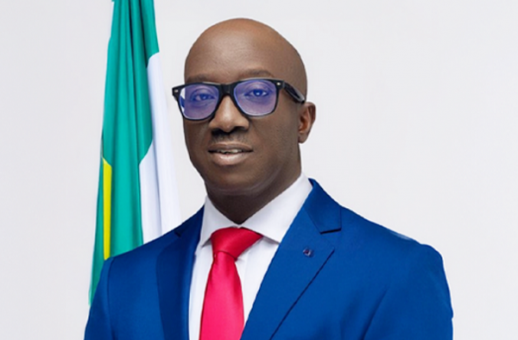
Governor Monday Okpebholo of Edo State has urged Muslims and all Nigerians to continue to pray for peace, unity and progress in the country even as they celebrate the annual Eid-al-Adha
The governor, who was represented by his deputy, Dennis Idahosa, stated this during the annual Eid-al-Adha celebration with Muslim faithfuls held at Government House in Benin City.
He reiterated his administration’s commitment to fairness, inclusivity and equal opportunities for all citizens irrespective of religion and tribe.
READ ALSO:ADC Penetrates Okpebholo’s District As Defections Strengthen Party in Edo Central
According to him, the present administration remains determined to building a government that reflects the diversity of Edo State, noting that competent and qualified Muslims have continued to play vital roles in his government because of their capacity, integrity and commitment to service.
“As a government, we remain committed to fairness, inclusivity and equal opportunity for every Edo citizen, irrespective of religion, ethnicity or political affiliation. This is why quality and competent Muslims are serving in key positions in our administration.”
Okpebholo appreciated the Muslim community in Edo State for their unwavering support and continuous prayers for his administration, noting that such prayers and support have contributed immensely to the peace and steady development being witnessed across the state.
READ ALSO:Okpebholo Felicitates Muslims On Eid-el-Fitr Celebration
He then called on all Nigerians to use the occasion of Eid-al-Adha to pray for the administration of President Bola Ahmed Tinubu, stressing that the country needs collective prayers, unity and cooperation to overcome its present economic and security challenges.
“I urge all Muslims and indeed all Nigerians to use this occasion to pray for our dear nation and for the administration of President Bola Ahmed Tinubu. Nigeria needs our collective prayers, unity and support as we strive to overcome our challenges and build a more prosperous future for all.”
In his remarks, the Chief Imam of Edo State, Abdulfatai Enabulele, applauded the governor for what he described as remarkable developmental strides recorded in less than two years in office.
The cleric commended the administration for ongoing infrastructural development and efforts geared towards improving governance in the state, but appealed to the government to revisit and complete some abandoned projects inherited from the previous administration for the benefit of the people.

 Metro5 days ago
My Husband Abandoned Me On Our Wedding Night To Attend Political Meeting, I Want Our Marriage Dissolved
- Headline4 days ago
Woman Passes Out After Receiving 100 Strokes Of Cane
- Headline4 days ago
JUST IN: White House Locked Down Briefly As Gunman Opens Fire At Security Checkpoint
- Politics5 days ago
Warri Ijaw Hail INEC Delineation Report, Call For Additional Electoral Wards, Others
- Politics3 days ago
Two Masked Men Gun Down Politician In His Rivers State Hotel
- News5 days ago
Alleged Terrorism: Court Rejects Defendant’s Bid To Travel Abroad
- Metro5 days ago
My Wife Stop Cooking My Food, Beats Me Black And Blue All the Time, Man Tells Court
- News3 days ago
More Pain For Nigerians As Cooking Gas Price Increases Nationwide
- Politics5 days ago
What I’ll Do As President Of Nigeria — Amaechi
- Politics3 days ago
‘Tinubu’s Borrowing In 24 Months Surpasses 55 Years’ Debt Record’


