
Headline
Obasanjo Chides Tinubu On Subsidy Removal, Forex Policy, Handling Of Coup In Niger
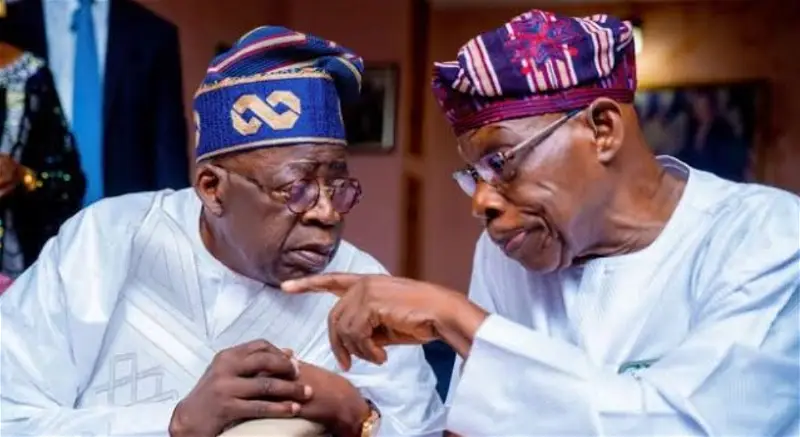
Former Olusegun Obasanjo has tackled President Bola Tinubu for poor handling of fuel subsidy removal, flotation of the naira and the military coup in Niger Republic.
He said though subsidy removal and the government’s forex policy were desirable, they were poorly handled by the government.
The former president observed at a colloquium,” Nigeria’s Development: Navigating the Way Out of the Current Economic Crisis and Insecurity” delivered at the Paul Aje Colloquium, tPAC, in Abuja weekend.
However, efforts made to get reactions from the President’s Media office were unsuccessful but a Presidency source simply said: “It is his personal opinion, he is entitled to that but we don’t want to reply to him.”
But Obasanjo also took a swipe at those against his position on the much-touted refurbished refinery in Port Harcourt, Rivers State, describing them as “sycophants and spin doctors”.
He declared that such people failed to remember that the attempt made in 2007 to partly privatise the refineries was made him, after a thorough study of the situation, hence his knowledge and better understanding of the situation before making his decision late last year.
On what could be described as his position on 365 days of President Bola Ahmed Tinubu’s administration, the former president also spoke on ways out of the situation in the country, including a 25-year development agenda.
He said: “Today, the government has taken three decisions, two of which are necessary but wrongly implemented and have led to impoverishment of the economy and Nigerians. These are the removal of subsidies, closing the gap between the black market and official rates of exchange and the third is dealing with the military coup in Niger Republic.
READ ALSO: Home Delivery Of Passports To Start Soon – Minister
“The way forward is production and productivity which belief and trust in government leadership will engender. No shortcut to economic progress but hard work and sweat.”
‘Economy doesn’t obey orders’
“Economy does not obey orders, not even military orders. I know that. If we get it right, we will begin to see the light beyond the tunnel in two years. It requires a change of characteristics, attributes and attitudes by the leadership at all levels to gain the confidence and trust of investors who have alternatives.
“TotalEnergy has gone to invest $6 billion in Angola, instead of Nigeria. If the truth must be stated, the present administration has not found the right way to handle the economy to engender confidence and trust for investors to start trooping in.
“They know us more than we know ourselves. And now they are laughing at us, not taking us seriously. We have to present ourselves in such a way that we will be taken seriously. If existing investors are divesting and going out of our country, how do we persuade new investors to rush in?
‘’We can be serious if we choose to be, but we need to change from transactional leadership in government to transformational and genuine servant leadership.
“With change by us, the investors will give us the benefit of the doubt, and security is taken care of on a sustainable, long-term basis, they will start to test the waters. With the right economic policies, attribute of integrity and honesty of purpose, all should be well, with all hands on deck and the government become a catalyst for development, growth and progress.
“Tinkering with the exchange rate is not the answer. The answer is consistency and continuity in policy to ensure stability and predictability. That way, we will be sure to incentivize domestic and foreign investment.
READ ALSO: Catholic Priest Bites Woman While Giving Holy Communion During Mass[PHOTOS]
‘’There must be honesty and transparency in government dealings and contracts and not lying with deception about these issues. When the government is seen as pursuing the right policy, the private sector will go for production and productivity.”
The former president’s reaction to the refinery issue is coming six months after the claim that the refinery would begin operation in January.
He noted that to get out of the current situation of the country, the government and the governed needed to look at the past and the present, and ask: How did we get here?.
Obasanjo said further: “Looking at the topic of today’s occasion, the question I would ask is, how do we navigate our way out of these crises and pave the path towards a more secure and prosperous Nigeria?
‘’I believe the answer to this requires a multi-faceted approach that addresses the root causes of these challenges. The central questions are: where were we? And how did we get to where we are today?
“Firstly, we must know where we are coming from. Our economy has consistently suffered from poor policies, lack of long-term, sustainable policies, discontinuity, ad hoc arrangement and corruption firmed on personal greed, avarice, incompetence, lack of knowledge and understanding and lack of patriotism.
READ ALSO: Tinubu’s First Year In Office Tragedy – Elder Statesman
“For instance, the statement and proposed actions given forty-five years ago to stop fuel scarcity is the same statement and action being touted today. I recall when I made the statement that the refineries will not work, the sycophants and spin doctors of this current administration went out to castigate me as not being a petroleum engineer and that I did not know what I was talking about.
“They forgot that the attempt that was made in 2007 to partly privatise the refineries was made by me after a thorough study of the situation. But the decision was reversed by my successor and the $750 million paid was refunded.”
On a way out, the former President said the country needed a 25-year socio-economic development agenda that would be generally agreed to by all political parties and passed into law by the National Assembly, with State Assembly aspects also passed into law by State Houses of Assembly.
‘’We take up the implementation on a five-year basis. In reality, that plan will have the effect of almost a Constitution. The first priority in the implementation will be education for all.
‘’The second should be food and nutrition security through agribusiness. The third should be energy for all. The fourth should be industrialization and manufacturing. And the fifth should be science, technology, innovation and Artificial Intelligence, AI.
‘’In all these, the government should provide a conducive environment for the private sector to operate and thrive. And where the government will be involved at all, other than as a policymaker and enabler, it should be based on private public partnership with the government as a junior partner.”
On the security, “we need stick and carrot approach. Stick to deal with those who cannot be weaned out of criminality and evil deeds and for those weaned, they should be rehabilitated. There should be no Nigerian without being in school compulsorily for eleven years – secondary education level.
“Employment must be a right for all Nigerians from age 18 years to 65 years. With such a carrot in position, the stick must then be made more severe for criminals. Five years must be set out to ensure that every Nigerian child who is not in school is in school and no one is left out of popular education.”
Adult education should be embarked upon to give every Nigerian basic education equivalent to six years of formal education. We should give ourselves ten years to rid Nigeria of illiteracy. No matter what we do, if we do not find a way of educating, giving skills and empowerment, over 20 million Nigerian children that are out of school today will end up being rich recruitment centres for drug addicts, Boko Haram, bandits and other social misfits.
VANGUARD



Headline
‘Pioneer Of Cable TV News’: Key Facts About CNN Founder, Ted Turner
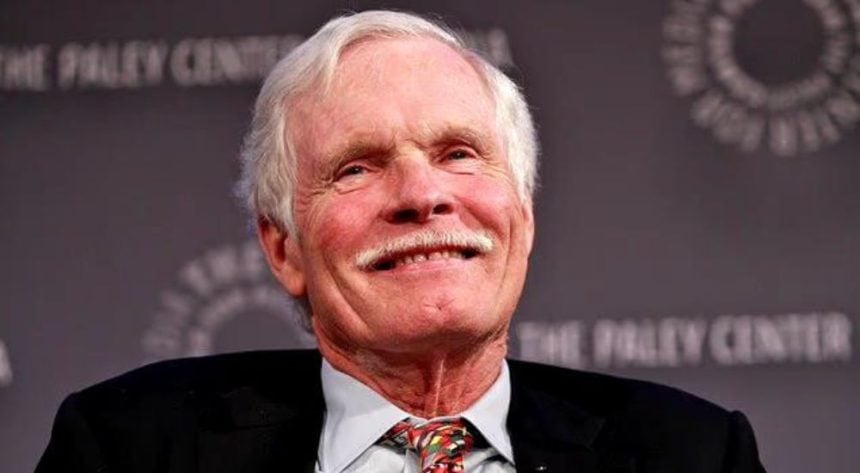
Ted Turner, the media businessman who founded CNN died at the age of 87. He died peacefully on Wednesday, surrounded by family, according to Turner Enterprises.
Contents
Launched 24-hour news television
Built a media network
Expanded through sports
Recognition and influence
Philanthropy and global causes
Environmental efforts
Health and later years
Early career path
Leadership and legacy
Personal life
Exit from business
Family
Below are key facts about his life and impact:
Launched 24-hour news television
Turner founded CNN on June 1, 1980, introducing the first 24-hour news channel and changing how audiences follow global events.
READ ALSO:CNN To Layoff 200 Staff Amid Attempts To Modernise Business
Built a media network
He moved from billboards into broadcasting, turning an Atlanta TV station into a national superstation in 1976. His business later grew to include CNN International, TNT, Turner Classic Movies and Cartoon Network.
Expanded through sports
Turner invested in sports broadcasting and owned teams including the Atlanta Braves and the Atlanta Hawks, using television to reach wider audiences.
Recognition and influence
In 1991, he was named Time magazine’s Man of the Year for his role in shaping modern news coverage.
Philanthropy and global causes
He founded the United Nations Foundation and supported campaigns against nuclear weapons. In 1997, he pledged $1 billion to the United Nations.
READ ALSO:CNN President, Jeff Zucker Resigns After Failing To Disclose Secret Affair With Colleague
Turner supported conservation work, including reintroducing bison in the United States, and backed environmental education through the “Captain Planet” cartoon.
Health and later years
In 2018, Turner revealed he had Lewy body dementia. He also recovered from a mild case of pneumonia in early 2025.
Early career path
He took over his father’s billboard company at 24 after his father’s death and later expanded into radio and television, despite limited experience in journalism.
“I worked until 7 o’clock, and when I got home the news was over,” he once said. “So I missed television news completely. And I figured there were lots of people like me.”
Leadership and legacy
READ ALSO:CNN Reporter Protests Nigeria’s $215 Single Entry Visa Fee
“Ted was an intensely involved and committed leader, intrepid, fearless and always willing to back a hunch and trust his own judgement,” Mark Thompson, Chairman and CEO of CNN Worldwide, said in a statement. “He was and always will be the presiding spirit of CNN. Ted is the giant on whose shoulders we stand, and we will all take a moment today to recognize him and his impact on our lives and the world.”
Personal life
Turner married actress Jane Fonda in 1991, and they later divorced after 10 years, though they remained close.
“I would never love anyone like I love him,” she said. “But I just couldn’t keep moving in his world, along the surface for the rest of my life. I knew that I would get to the end of my life and regret not doing the things that I also needed to do for me.”
Exit from business
He sold his company to Time Warner in 1996 and later stepped away following its merger with AOL.
Reflecting on his life, Turner once said: “I lost Jane. I lost my job here. I lost my fortune, most of it. Got a billion or two left. You can get by on that if you economize.”
Family
He is survived by his five children, 14 grandchildren and two great-grandchildren.
Headline
Iran’s Nationwide Internet Shutdown Hits 70 Days

NetBlocks, a monitoring group, has disclosed that an internet shutdown enforced by the Iranian regime has entered its 70th day, severing key access from swathes of the population under the shadow of war.
NetBlocks reported on Friday that the blackout has now surpassed 1,656 hours, marking more than two months since US-Israeli strikes pounded Tehran and escalated across the Middle East.
“Digital connectivity is vital in times of crisis,” NetBlocks said in a post on X. “Limiting service harms those most in need – people with disabilities, students, small businesses and the general public.”
READ ALSO:US Underestimated Iran Before War – France’s Bardella
According to CNN, Iran imposed a separate internet shutdown on the country’s 92 million people earlier this year, when it launched the most lethal crackdown on anti-government protesters since the Islamic Republic’s founding 47 years ago.
CNN further reports that the latest blackout has cut off another potential lifeline for Iranian residents faced with high unemployment and economic pressure exacerbated by the US-Israeli campaign.
(CNN)
Headline
Gas Prices In US Edge Down After Two Weeks Of Increases

The cost of a gallon of regular gas in the United States (US) has edged down a little more than a penny to $4.55.
According to AAA’s readings, this marks the first decline in the average gas price after 15 straight days of increases.
The decline is minuscule compared to the large increases in gas prices over the last two weeks.
According to CNN, gasoline costs rose an average of nearly 4 cents a day during that period and had several daily increases of between 7 and 9 cents.
READ ALSO:Gas Station Explosion Rocks Calabar, Scores Injured, Property Destroyed
Also Read: Trump insists US-Iran ceasefire intact despite recent exchange of fire
CNN also reports that based on past gas spikes, it will likely take weeks for gas prices to get down below $4 a gallon.
The report, however, states that a previous two-week stretch of gas price declines only shaved 14 cents off the average price, taking the average price to $4.02, before the recent 15-day run of increases.
READ ALSO:Tinubu Signs Executive Order To Protect Nigeria’s Oil & Gas Revenue
According to CNN, it could take months for the average price to fall below $3 per gallon, as it did before the war in Iran.
CNN further reports that only one state – Oklahoma – now has an average price of less than $4 a gallon, and its average stands at $3.98. California has the highest average price at $6.16.
(CNN)

 Politics5 days ago
Fubara Clears Air On ‘Defection’ To NDC [VIDEO]
- News4 days ago
Gun Battle In Oyo Forest As Police Disrupt ₦10m Ransom Collection Plot
- Politics3 days ago
Four Fubara Loyalists Disqualified As APC Clears 21 For Rivers Reps Primaries
- News3 days ago
Lagos Sanctions 15 Money Lending Companies For Sharp Practices
 Metro4 days ago
Drama As Teenagers Stage Secret Wedding With N3,000 Bride Price
- Politics3 days ago
2027: Court Rebukes Plaintiff, Lawyer In Suit Against Jonathan, Awards N1m Fine
- Politics5 days ago
2027: Daniel-Abiodun Feud Deepens Over Senatorial Ticket For Ogun East
- News4 days ago
PAP Sends Additional 15 Scholarship Beneficiaries For Post-Graduate Studies In UK
- Sports4 days ago
CAF Introduces New Laws After Chaotic AFCON Final In Morocco
- Entertainment5 days ago
Grammy Announces Date For 2027 Awards Nominations


