

News
Oil Thieves Are Not From the Creeks – King Dakolo Alleges



By Joseph Ebi Kanjo
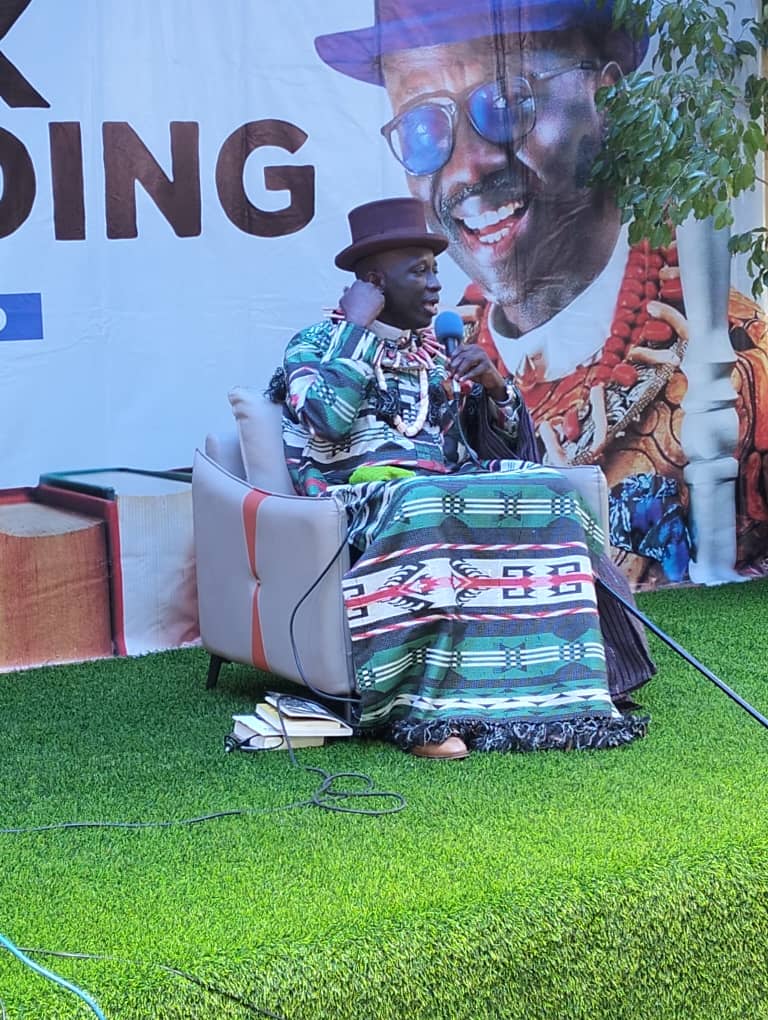
The Ibenanaowei of Ekpetiama Kingdom in Bayelsa State, His Royal Majesty King Bubaraye Dakolo, has urged the Federal Government to redirect its focus in the fight against oil theft, asserting that the real perpetrators are not from the oil-producing communities.
Speaking during the Health of Mother Earth Foundation’s Book Reading Series on the topic Reflections: Ecocide in the Niger Delta, King Dakolo dispelled the popular belief that oil theft is carried out by youths in the creeks. According to him, the real oil thieves are wealthy and influential individuals, often residing far from the region, who exploit impoverished young men to execute their illegal activities.
“The oil thief is usually not from the Niger Delta. He doesn’t live in the swamps and cannot even spend a night there. He is a big man—sometimes a company or even a foreign country—that funds the operations from afar,” the monarch stated.


READ ALSO: Why We’re Heavily Investing In Book And Culture Series – HOMEF Director, Bassey
He explained that oil theft is a sophisticated crime requiring technical expertise, specialized tools, and even ships to transport stolen crude, which makes it far beyond the capacity of ordinary villagers. King Dakolo emphasized that those often labeled as oil thieves are actually victims of poverty, driven by desperation to carry out these dangerous acts for minimal pay.
“Oil theft is not a small man’s business. It involves breaking pipelines, which requires specific knowledge and equipment. The main beneficiaries are insiders in the oil industry who reap massive profits from these illegal activities,” he noted.

King Dakolo pointed fingers at the oil and gas regulators for their continued failure to address the issue. He described regulatory agencies like the Department of Petroleum Resources (DPR) as weak and compromised, accusing them of colluding with International Oil Companies (IOCs).
READ ALSO: HOMEF’s School of Ecology Empowers Young Activists with Environmental Knowledge
“Our regulators are among the worst in the world. They have no helicopters, no boats, not even houseboats. They rely on the oil companies for transport and logistics, which makes them susceptible to manipulation,” he lamented.
He further explained how pipeline vandalism has become a source of massive profit for certain players within the industry.


“When a pipeline is vandalized, repairs can cost up to a billion dollars. And the contracts for these repairs usually go to people within the industry, not locals. So, it’s in their interest to keep the cycle going,” he added.
The king also criticized the Federal Government for failing to provide quality fuel products across the country, arguing that this failure drives demand for illegally refined fuel from vandalized pipelines.
READ ALSO: HOMEF Trains Communities On Energy Transition, Approaches
In his concluding remarks, King Dakolo painted a grim picture of the Niger Delta, describing it as a region ravaged by pollution from oil exploration and theft, and called for decisive action to protect both the environment and the people.


On his part, Dr. Nnimmo Bassey, Executive Director, HOMEF, said those who ought to protect the environment and the people are not interested in that rather profit from the oil and gas sector.
“In Nigeria, the forces that ought to be protecting the environment are not interested. The government and the companies are more interested in the dollars that come from the crude oil, and not about the quality of life the people live.
“Nobody can tell me that those who are in authority care about the environment after over 70 years of non-stop gas fare,” he said.




News
N5m, N10m Zero-interest Loans: SheVentures Opens Applications For Women Entrepreneurs


First City Monument Bank (FCMB) has opened a new round of applications for its SheVentures proposition, offering zero-interest loans of up to ₦10 million to women entrepreneurs to ease access to working capital and support business growth.
The facility provides loans ranging from ₦500,000 to ₦5 million under a general category, and ₦5 million to ₦10 million for sector-specific businesses, with funding capped at up to 50% of an applicant’s average monthly turnover.
At the centre of the offering is a 0% interest rate, with all charges embedded in a transparent structure.
Repayment is structured over four or six months, allowing businesses to match obligations with their cash flow cycles.
READ ALSO:I’ve Been Blacklisted In Music Industry For 13 Years – Seun Kuti
Yemisi Edun, Managing Director and Chief Executive of First City Monument Bank (FCMB), said the initiative reflects a deliberate approach to inclusive growth.
“Inclusive growth requires access to capital and the right conditions for businesses to deploy that capital effectively.
“Women-led enterprises are critical to economic activity, yet they face structural barriers.
This intervention aims to help close that gap by providing financing that supports job creation, business expansion, and long-term sustainability for women entrepreneurs.”
“Access to affordable finance remains a major constraint for women entrepreneurs,” said Nnenna Jacob-Ogogo, Group Head, SheVentures and Impact Segments at First City Monument Bank (FCMB).
READ ALSO:My Beef With Wizkid Is For Life – Seun Kuti
“By removing the cost barrier and offering quick, flexible funding, this zero-interest loan is designed to safeguard existing jobs, enable businesses to invest in growth initiatives, and foster resilience in challenging economic conditions.”
Women-owned businesses account for a significant share of Nigeria’s small and medium-sized enterprises but continue to face high borrowing costs and limited access to credit.
Through these efforts, SheVentures tackles persistent financing gaps facing women-led businesses, combining targeted funding with broader support to empower women entrepreneurs, encourage business innovation, and enhance their ability to compete on a national scale.
Applications for the zero-interest loan are now open.Apply now.
News
Xenophobic Attacks: Oshiomhole Tells FG To Retaliate Against South African Companies In Nigeria

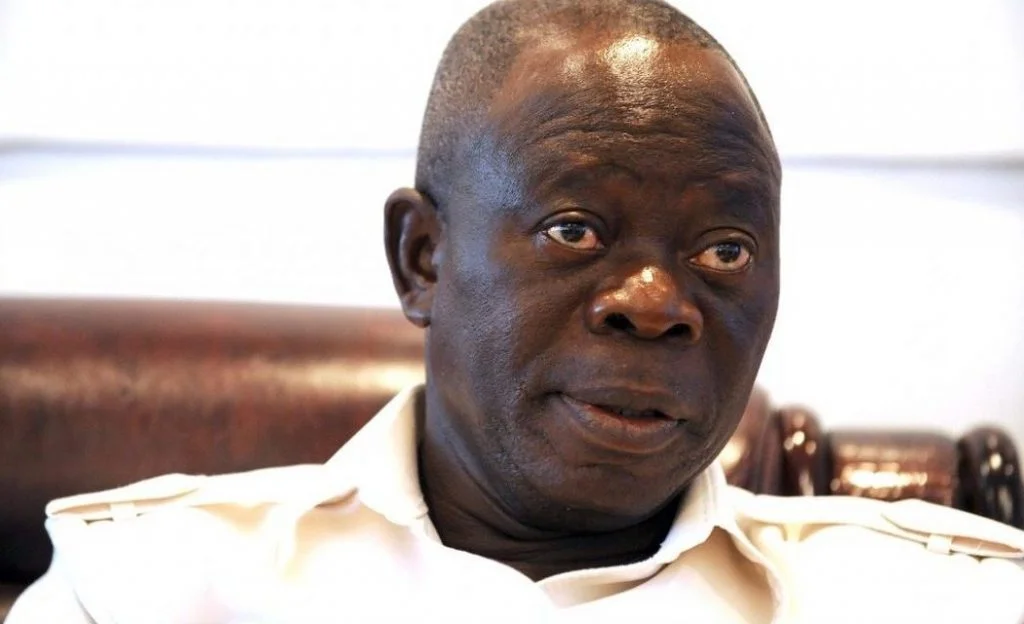
Senator Adams Oshiomhole has called on the Federal Government to retaliate against South African businesses operating in Nigeria following the recent attacks on Nigerians in South Africa.
Speaking during plenary on Tuesday, Oshiomhole said the Federal Government should consider revoking the working license of South African owned companies such as MTN and DSTV.
He argued that Nigeria must respond firmly to what he described as persistent hostility against its citizens.
READ ALSO:South Africa To Investigate ‘Mystery’ Of Planeload Of Palestinians
“I am not going to shed tears. If you hit me, I hit you. I think it is appropriate in diplomacy. It is an economic struggle,” Oshiomhole said.
He argued that while some South Africans accuse Nigerians of taking their jobs, Nigerians should return home and take over employment opportunities created by major South African companies operating in the country, including MTN and DSTV.
“When we hit back, the President of South Africa will not only talk but will also go on his knees to recognise that Nigeria cannot be intimidated.
READ ALSO:South African Ambassador Found Dead Outside Paris Hotel
“We will not condone any life being lost. If a crime has been committed under the South African law they have the right to bring any such person to justice, but to kill our people as if we are helpless, we will not allow that,” Oshiomhole added.
DAILY POST reports that several Nigerians in South Africa have reportedly been attacked, and their businesses destroyed, in ongoing xenophobic attacks in the country.
News
IGP Orders Officers Display Name Tag On Uniform, Gives Update On State Police

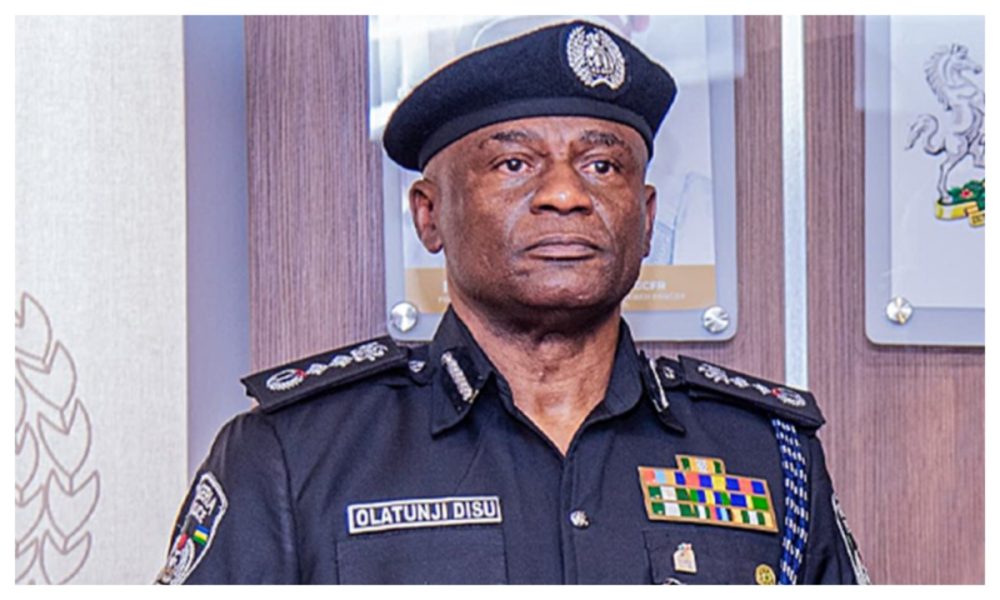
The Inspector General of Police, IGP, Tunji Disu, has ordered all police personnel to always have their name tags on their uniforms for easy identification.
Disu disclosed that only police personnel who are undercover are exempted from displaying their name tags.
Speaking on Tuesday, Disu said: “All police officers should have their name tags. All of us on the high table have our names apart from the undercover among us so if you look at all the Commissioners of Police we have our name tags, so it’s not our standard.
READ ALSO:
“All the Commissioners of Police are here and that is why we called this meeting, we have list of things like this that we will want to discuss with the Commissioners of Police, we have told them earlier and we will still let them know that every that happens within their area of jurisdiction falls under their control.”
On the issue of state police, the IGP said: “Since we got the signal that the Federal Government of Nigeria intend to establish State Police and since we are the federal police, we decided to take the bull by the horn and put down our own side of what we believe on how the state police should be run.
“A lot of things were taken into consideration, a lot of comparative analysis was done and it has been transmitted to the National Assembly.”
-

 Politics4 days ago
2027: Tinubu’s Re-election May Put An End To Nigeria — Baba Ahmed Warns
-

 Politics5 days ago
BREAKING: 2027: Former Adamawa APC Guber Candidate, Aishatu Binani Defects To NDC
-

 Business4 days ago
JUST IN: Nigerian Filling Stations Reduce Fuel Price After Hike
-

 Politics5 days ago
Senatorial Seat: Ogbakha-Edo Warns Against Imposition Of Candidates In Edo South
-

 Entertainment5 days ago
Actress Eniola Badmus Gets New Federal Appointment
-

 News2 days ago
BREAKING: Wike Picks Alabo George For Rivers Governorship
-

 News3 days ago
OPINION: Why South Africans Murder Nigerians In Cold Blood
-

 Politics4 days ago
NDC Speaks On Peter Obi, Kwankwaso Joining Party
-

 News4 days ago
2027: Pastor Adeboye Speaks On Nigeria’s Next President
-

 Politics5 days ago
2027: Pondi, Otuaro, Other Delta South Stakeholders, Endorse Senator Joel-Onowakpo For Second Term
