

Business
Only 100,000 POS Operators Registered, Says CAC

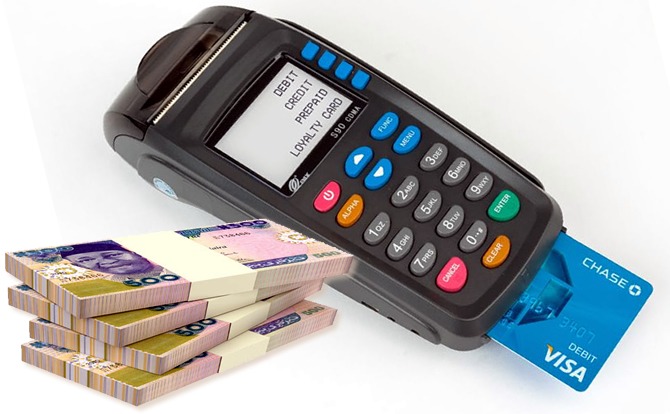


The Registrar General of the Corporate Affairs Commission, Hussaini Ishaq Magaji has revealed that only 100,000 Point of Sale (POS) operators have officially registered their businesses with the commission as part of its POS formalization project.
Magaji said this during the in-house enforcement and compliance training for state offices on Monday in Abuja,
Magaji said that the training, with the themed “Re-engineering the Commission for Compliance and Enforcement Mandates” would ensure efficient management of corporate entities.
He called for a paradigm shift in the commission’s operations, emphasising the importance of compliance and enforcement functions beyond the routine registration of businesses.
“One of the key priorities I identified upon assuming duty in 2023, was the need to bring the commission’s regulatory and management functions to the forefront.
READ ALSO: CAC Warns Unregistered PoS Operators As deadline expires
“This led to the inclusion of compliance enforcement as a key component of my four-point agenda,” he said.
The registrar-general said that advancements in Artificial Intelligence (AI) could handle routine operational tasks like business registration, freeing resources for more complex compliance and enforcement activities.
He reiterated the success of the PoS Formalisation Project, which had registered about 100,000 Point-of-Sale operators under the requirements of Section 863 of the Companies and Allied Matters Act (CAMA) 2020.
According to him, the project aims to formalise at least 250,000 operators in the sector as part of broader efforts to regulate the estimated 40 million micro, small, and medium enterprises (MSMEs) in Nigeria.
“Formalisation is the first step for legitimate business operations and access to government interventions.
READ ALSO: CAC Extends PoS Registration Deadline
” It also mitigates the risks associated with unregistered businesses, such as money laundering and terrorism financing,” Magaji said.
He revealed plans to implement sanctions for operators who fail to comply with formalisation requirements and clarified that multiple registrations across fintech platforms were unnecessary, as one registration sufficed
Beyond pre-incorporation activities, the registrar-general stressed the need to prioritise post-incorporation compliance, which he described as a sustainable revenue stream for modern registries.
He also unveiled plans to address issues like shell companies, opaque ownership structures, and proper disclosure of persons with significant control, in line with global standards and the Persons with Significant Control Regulations.
“This training will position our staff to undertake compliance enforcement and inspection duties with confidence.
” It also marks the start of our drive towards a hyper post-incorporation compliance mode.
READ ALSO: CAC To Cancel Certificates Of BDCs With Revoked Licences
“The training includes technical sessions on statutory books, records, returns, and filings for registered entities, with input from resource persons from law enforcement agencies to share practical experiences, “he said.
He urged participants to engage actively and embrace the reforms as part of efforts to align the commission’s operations with global best practices.
Representing the National Drug Law Enforcement Agency, its Deputy Commander on Narcotics, Harami Wakirwa, said that the initiative demonstrated CAC’s commitment to promoting compliance, integrity and accountability.
“This is a good step in the right direction. I wish you all a productive and engaging experience.
“Let us work together to foster a culture of compliance and make a positive impact in our industries and countries,” he said.
READ ALSO: CAC Opens Centre For Registration Of PoS Operators
Also, DCP Usman Ahmed, Deputy Director, Nigeria Police Force National Cybercrime Center (NPF-NCCC), acknowledged the crucial role compliance and enforcement played in safeguarding and fostering a secure regime for business operations.
“The challenges we face today, especially in cyber-attacks, demand that we continually adapt and improve our strategies and practices.
“This training is not just an opportunity to acquire knowledge, but should allow us to improve cybersecurity, inter-agency collaboration, and share the responsibility to restore confidence in public institutions.
“We must embrace this opportunity to re-engineer our operations and reinforce our ability to excel in cyber security. Together, we can make a significant impact,” he said







Business
Naira Appreciates Against Dollar At Official FX Market


…Black market (Buying and selling rates): N1,385— N1,390
The Nigerian naira appreciated against the United States (US) dollar, trading at N1,331.2027 at the Central Bank of Nigeria (CBN) official foreign exchange (FX) window on Friday, September 18, 2026.
The data shared on the CBN’s official platform shows that the naira traded at the Nigerian Foreign Exchange Market (NFEM) rate of N1,331.2027 per dollar and closed at N1,329.9900 per dollar.
The currency, which traded at an NFEM rate of N1,331.2812 on September 17, 2026, appreciated by at least N0.08 after trading activities on Friday.
READ ALSO: Naira To Dollar Exchange Rate At Official FX Market
At the parallel market, both the buying and selling rate decreased by N5, when compared to the previous trading rate on Thursday, September 17, 2026.
According to Aboki FX , the Naira-to-dollar exchange rate at the black market on Friday, September 18, 2026, was N1,385 and N1,390 per dollar for buying and selling rates, respectively.
Business
Again, Naira Depreciates Against Dollar At Official FX Market
…Black market (Buying and selling rates): N1,380— N1,385
The Nigerian naira depreciated against the United States (US) dollar, trading at N1,329.8568 at the Central Bank of Nigeria (CBN) official foreign exchange (FX) window on Wednesday, September 16, 2026.
The data shared on the CBN’s official platform shows that the naira traded at the Nigerian Foreign Exchange Market (NFEM) rate of N1,329.8568 per dollar and closed at N1,329.5600 per dollar.
The currency, which traded at an NFEM rate of N1,329.1485 on September 15, 2026, depreciated by at least N0.71 after trading activities on Wednesday.
READ ALSO: Naira To Dollar Exchange Rate At Official FX Market
At the parallel market, both the buying and selling rate remained the same, when compared to the previous trading rate on Tuesday, September 15, 2026.
According to Aboki FX , the Naira-to-dollar exchange rate at the black market on Wednesday, September 16, 2026, was N1,380 and N1,385 per dollar for buying and selling rates, respectively.
Business
How To Buy Dangote Refinery Shares As IPO Opens September 14


Investors seeking to own a stake in the Dangote Petroleum Refinery and Petrochemicals FZE will be able to subscribe to its initial public offering (IPO) from September 14, 2026.
The ₦2.15 trillion offer by Dangote, valued at about $1.6 billion, involves 4.1 billion ordinary shares priced at an indicative ₦525 per share.
The offer, which is expected to become Nigeria’s largest-ever public share sale, will remain open until October 13, 2026.
The development gives Nigerians and other eligible investors an opportunity to acquire shares in the refinery as the Dangote Group moves to broaden ownership of the business.
At the signing of the IPO documents in Lagos on September 7, President of Dangote Group, Aliko Dangote, said the offer was designed to enable ordinary Nigerians to become shareholders in the refinery.
“What we are trying to achieve is to make sure our drivers, cooks, servants, and everybody have the opportunity of having stakes in the refinery,” Dangote said.
READ ALSO: BREAKING: Dangote Refinery Reduces Petrol, Diesel Prices
How to subscribe
According to the Managing Director, Investment Banking, Chapel Hill Denham, Mr Lanre Buluro, prospective investors can subscribe digitally using a bank account, Bank Verification Number (BVN) and a mobile phone or laptop.
He said an investor can complete the process within two to three minutes, with the minimum subscription set at 10 shares.
At ₦525 per share, the minimum subscription of 10 shares will cost ₦5,250.
Buluro said investors could access the offer through platforms including Moniepoint, MTN MoMo, Airtel, Payaza, Piggyvest, Paga, Bamboo and Chapel Hill Denham’s Invest Naija platform.
Do I need a CSCS account?
Buluro said prospective investors do not necessarily need an existing Central Securities Clearing System (CSCS) identity number before subscribing.
READ ALSO: Dangote Refinery Reduces Petrol Gantry Price
According to him, a CSCS account can be created for a new investor during the subscription process after the investor’s BVN and bank account details have been verified.
He explained that stockbrokers are behind the participating platforms and would contact subscribers after the transaction to provide their CSCS and Clearing House Number (CHN).
The allotted shares will subsequently be domiciled in the investor’s CSCS account.
What happens after subscription?
Investors can subscribe throughout the offer period, which runs from September 14 to October 13.
At the close of the offer, the advisers and the Securities and Exchange Commission (SEC) will assess the total subscriptions and determine the final allotment.
This means investors may not necessarily receive all the shares they apply for if the offer is oversubscribed.
READ ALSO: Dangote Unveils 10-day Credit Facility For Petrol Station Owners
Buluro disclosed that the offer has a provision to accommodate additional subscriptions in the event of oversubscription.
He said up to about 30 per cent additional shares could be issued under the oversubscription provision, potentially increasing the number of shares available from 4.1 billion to about 5.3 billion.
Before you invest
Buluro advised prospective investors, particularly first-time investors, to read the IPO prospectus carefully and seek guidance from a qualified financial adviser before committing their funds.
Investors should also understand that subscribing to an IPO does not guarantee a profit. The value of shares can rise or fall after allotment, depending on the company’s performance and market conditions.
The Dangote Refinery IPO is expected to significantly deepen public participation in the Nigerian capital market by allowing more individuals to take direct equity positions in one of the country’s largest industrial projects.
(TRIBUNE)
-

 News4 days ago
BREAKING: Tinubu Extends Working Vacation
-

 News5 days ago
Six Hidden Health Benefits Of Unsweetened Zobo
-

 News5 days ago
Jehovah’s Witnesses Announce New Position On Blood Transfusion Policy
-

 News5 days ago
2027: Step-by-step Guide To Applying For INEC Ad Hoc Staff Recruitment
-

 News5 days ago
How 36 Nigerian States Got Their Names
-

 Headline4 days ago
How To Format An Academic CV For US Master’s, PhD Applications
-

 Headline5 days ago
Nigerian Man Jailed After Masturbating In Front Of Woman On UK Train
-

 News5 days ago
Stop Acid Reflux Pain: Foods You Must Ban From Your Kitchen
-

 Business5 days ago
Naira Appreciates Against Dollar At Official FX Market
-

 News4 days ago
Benue Govt Suspends Muslim Pilgrims Welfare Board Chairman, Secretary