
Business
Only Seven Banks Can Meet CBN Recapitalisation Requirements – Report
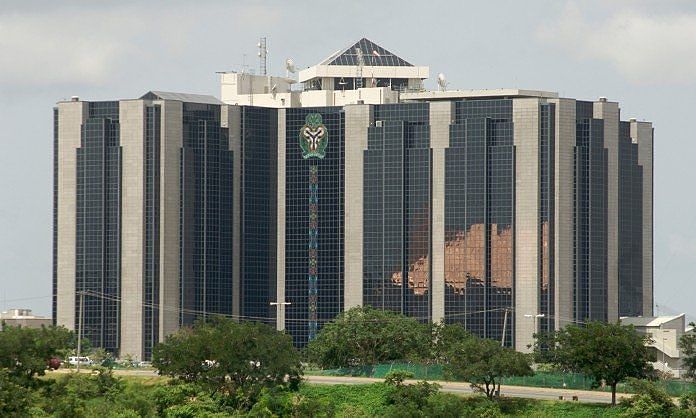
No fewer than 17 out of the existing 24 Deposit Money Banks may be unable to meet the Central Bank of Nigeria’s capital requirement if it is increased from its current N25bn, according to a report by Ernst and Young.
The new report, titled “Navigating the Horizon: Charting the Course for Banks amid Plans for Recapitalisation”, noted that if the apex bank raised the capital base of commercial banks in the country by 15-fold from the current N25bn, only seven banks may survive.
The CBN Governor, Olayemi Cardoso, had in several fora stated that the apex bank would consider an increase in the minimum capital base of banks in the country as part of its efforts to strengthen their capacity to support Nigeria’s drive to become a $1tn economy by 2026.
The current capital base is stratified based on the type of banking license – banks with regional, national and international licenses are currently expected to maintain a minimum capital base of N10bn, N25bn and N50bn, respectively.
READ ALSO: JUST IN: CBN Begins Sales Of Dollars To BDCs
The proposed increase in the capital base is coming nearly two decades after the CBN’s 2004 banking reform, which led to an increase of the then prevailing capital base from N2bn to N25bn.
The 2004 banking reform was characterised by massive mergers and acquisition activities, which ultimately resulted in the reduction of the number of banks in the country from 89 to 25 banks.
In the last few months, FBN Holdings, Wema Bank and Jaiz Bank had proposed Rights Issues, while Fidelity Bank announced plans to raise additional capital via the issuance of 13,200 billion ordinary shares via public offer and rights issue.
Ernst and Young, a global financial services company, said in the report that some banks may depend on different recapitalisation options, which include mergers and acquisitions, initial public offerings, placements and/or right issues and undistributed profit (retained earnings) despite financial soundness indicators show that Nigerian banks were largely safe and resilient as of 2023.
According to the report, the recent plan by the CBN to increase the capital base of banks will lead to a series of mergers and acquisitions as witnessed during the last recapitalisation exercise in 2004/2005.
READ ALSO: FG Breaks Silence On Alleged Suspension Of Student Loan
The report read partly, “The recent plan by the CBN to increase the capital base of banks could again lead to M&A activities but not as widespread as was the case in 2004/2005 given the relatively solid financial positions of the banks today as well as the occurrence of several M&A activities in the banking sector over the past 10 years.
“While the CBN governor did not indicate the magnitude of the proposed hike in the capital base, we have assumed what the proposed increment will be based on three different scenarios underpinned by current macroeconomic conditions. On the back of that, we were able to determine the number of banks (across the three licence types) that may fall below the new minimum capital thresholds.
“In a worst-case scenario, i.e., given a capital multiplier of 15, about 17 out of 24 banks would not meet the new minimum capital.”
The report noted that the plan to recapitalise banks was premised upon the recent devaluation of the naira in 2023.
It explained that the exchange rate as of 2005 during the last exercise in 2005 stood at N132.9/$ but the naira currently exchange for over N1400/$.
According to the firm, this implies that the recapitalisation may require a capital multiplier of 10 or more based on the exchange rate differentials.
“On this basis, a worst-case scenario given a 15x capital multiplier for 24 banks will be considered based on the type of banking licenses held. We have benchmarked the current capital of these banks against the current capital requirement and four recapitalization scenarios,” it noted.
PUNCH



Business
Report Any MRS Filling Stations Selling Fuel Above N739 Per Liter — Dangote Refinery To Nigerians

Dangote Refinery has urged Nigerians to report any MRS filling station outlets nationwide selling fuel above the N739 per liter announced price.
The company disclosed this in a statement on Sunday.
The refinery insisted that its petrol being at retail outlets remain N739 per liter while the gantry price is N699.
It further called on other filling station owners to patronize its refined petroleum products at the N699 rate.
“We also call on other petrol station operators to patronize our products so that the benefits of this price reduction can be passed on to Nigerians across all outlets, ensuring broad-based relief and a more stable downstream market.”
READ ALSO:Dangote Sugar Announces South New CEO
Recall that Aliko Dangote, the president of Dangote Refinery, had pegged the retail price of his petrol at a maximum of N740.
DAILY POST reports that MRS filling and other filling stations had reduced fuel prices to between N739 and N912 per liter in Abuja.
However, reports emerged that some MRS filling stations were selling above the N739 per liter announced price benchmark.
Business
Naira Records Significant Appreciation Against US Dollar
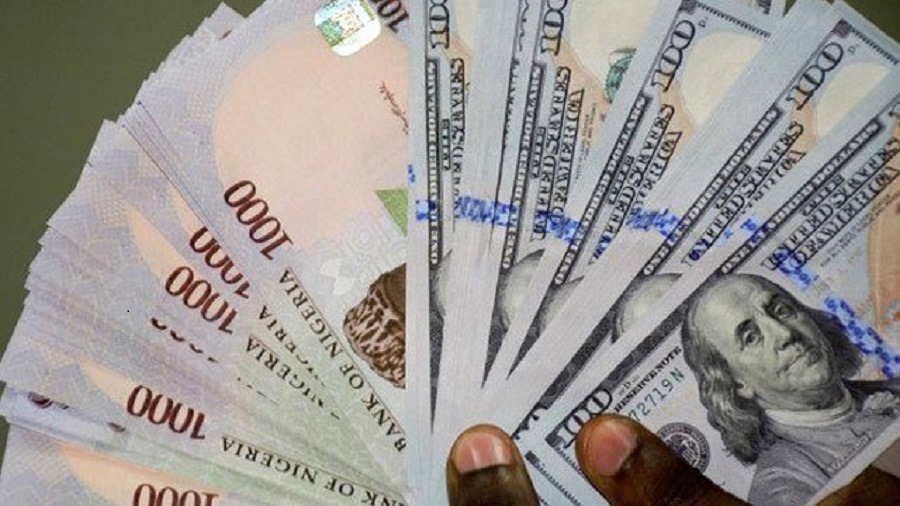
The Naira recorded significant appreciation against the United States dollar on Monday at the official foreign exchange market to begin the week ahead of Yuletide on a good note.
The Central Bank of Nigeria’s data showed that the Naira strengthened to N1,456.56 per dollar on Monday, up from N1,464.49 traded on Friday last week, 19th December 2025.
This means that the Naira gained N7.93 against the dollar when compared with the N1,464.49 was exchanged as of Friday, December 19, 2025. DAILY POST reports that Monday’s gain at the official FX market is the first since December 15th.
READ ALSO:
Meanwhile, at the black market, the Naira remained stable at N1500 per dollar on Monday, according to multiple Bureau De Change operators in Wuse Zone 4, Abuja.
The development comes as the country’s external reserves stood at $44.66 billion as of last week Friday.
Business
CBN Revokes Licences Of Aso Savings, Union Homes As NDIC Begins Deposit Payments
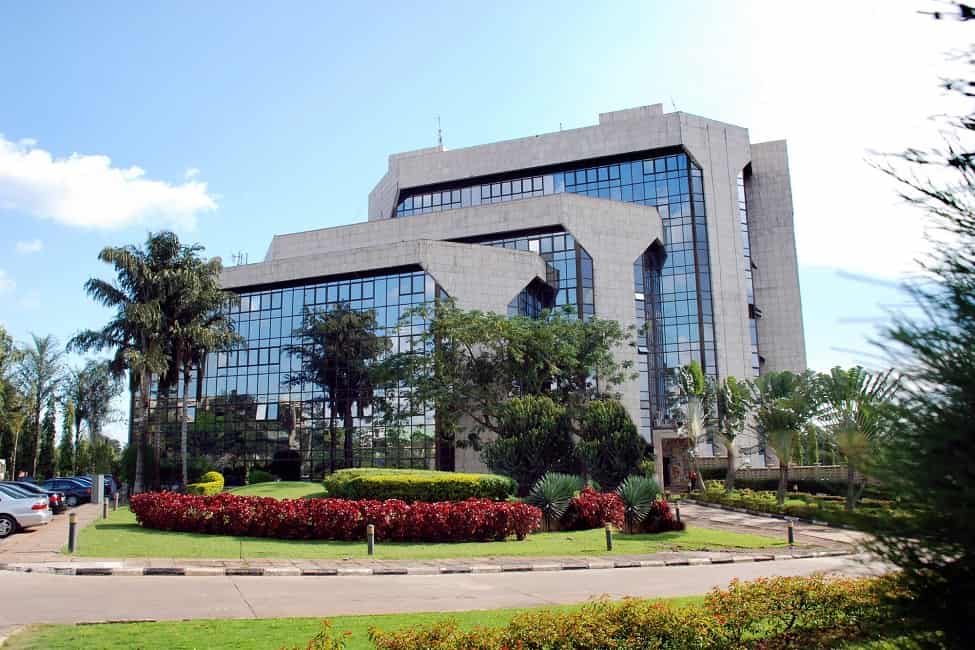
The Central Bank of Nigeria (CBN) has revoked the operating licences of Aso Savings and Loans Plc and Union Homes Savings and Loans Plc, citing persistent regulatory infractions and deepening financial distress in the two primary mortgage banks.
The revocation, which took effect on December 15, 2025, was carried out under Section 12 of the Banks and Other Financial Institutions Act (BOFIA) 2020 and Section 7.3 of the Revised Guidelines for Mortgage Banks in Nigeria, the CBN said in a statement issued on Tuesday.
According to the apex bank, the affected institutions failed to meet minimum paid-up share capital requirements, had insufficient assets to cover their liabilities, recorded capital adequacy ratios below prudential thresholds, and consistently breached regulatory directives.
“The CBN remains committed to its core mandate of ensuring financial system stability,” a statement, signed by the apex bank’s Acting Director, Corporate Communications, Mrs Hakama Sidi Ali said.
READ ALSO:CBN Directs Nigerian Banks To Withdraw Misleading Advertisement
Following the licence revocation, the Nigeria Deposit Insurance Corporation (NDIC) was appointed liquidator of the defunct banks in line with the law.
The Corporation said it has commenced the liquidation process and begun verification and payment of insured deposits to customers.
Under the deposit insurance framework, depositors are entitled to receive up to two million naira per depositor, with payments made through BVN-linked alternate bank accounts.
Depositors with balances above the insured limit will receive the initial two million naira while the remaining sums will be paid as liquidation dividends after the realisation of the banks’ assets and recovery of outstanding loans.
READ ALSO:CBN Issues Directive Clarifying Holding Companies’ Minimum Capital
The NDIC said depositors may submit claims either online or physically at designated branches of the closed banks, while creditors will be paid after all depositors have been fully settled, in accordance with statutory provisions.
The two mortgage banks have faced prolonged operational challenges, including depositor complaints, governance concerns, and delisting from the Nigerian Exchange (NGX) in 2024 for failure to submit audited financial statements for more than six years.
The CBN assured the public that the action was taken to strengthen the mortgage banking sub-sector and protect depositors, adding that banks whose licences have not been revoked remain safe and sound.
This means the two financial institutions can no longer operate as licensed financial institutions.

 News2 days ago
PHOTOS: New Era In Furupagha-Ebijaw As Okpururu 1 Receives Staff Of Office
- Metro4 days ago
JUST IN: Former Edo Information Commissioner Is Dead
- News1 day ago
UBTH CMD Marks 120 Days In Office, Expresses Commitment To Providing Conducive Working Environment
- News2 days ago
FG Declares Public Holidays For Christmas, New Year Celebrations
- News5 days ago
Coordinator, Edo First Lady Office, Majority Leader, Rights Lawyer, Others Bag 2025 Leadership Award
- Metro4 days ago
She Grabs, Pulls My Manhood Anytime We Fight — Husband
- News5 days ago
[OPINION] Tinubu: Ade Ori Okin Befits KWAM 1, Not Awujale Crown
- News2 days ago
OPINION: Gumi And His Terrorists
- News2 days ago
FIRS Confirms NIN As Tax ID
- News4 days ago
My Wife Dented My Image, Took Our Marital Crises To Radio Stations — Husband


