
News
OPINION: A Journey Through Ogoni, The Titusville Of Nigeria
By Suyi Ayodele
“I am happy the mangroves are coming back. I feel happy because for a longtime now, we haven’t had fish, no crabs; life has not been easy. But today, I can walk through that (pointing at the river in Gio) to fetch this jionudor (a palm tree-like stump) that serves as our firewood. Before now, the river was covered by oil. Everything in it died. Now, aquatic life is coming back gradually. I am happy and I know many of our people are happy.”
The above are the words of 65-year-old Godwin kirijio a retired civil servant, as he waded through the shallow end of the Ogoni River in Gio, Gokane Local Government of Rivers State. I engaged the retired civil servant by the bank of the river.
At a time when the Rivers of Crisis is threatening to overflow its bank, I was on a tour of the creeks of Ogoniland.
My beat is the South-South and the South-East as Regional Editor of the Nigerian Tribune. I had heard stories of poisoned soil and dead fishes and wanted a feel of the life that killed them. Then, I had an opportunity through an agency of the government called HYPREP (Hydrocarbon Pollution Remediation Project) which is charged with cleaning up the polluted soil and water of Ogoniland. The Dr Peterside Dakuku-led Media Voices for Accountability extended the opportunity to me which I grabbed without hesitation. I wish there was a political equivalent of that agency HYPREP. If there was, we would empower it to detoxify our politics, clean up the beds of Rivers and make the people live again.
The two-day voyage in Ogoniland opened my eyes to the effects of the damages caused in that locality by the activities of the International Oil Companies (IOCs), which have operated in Ogoniland for over six decades. I saw what many may never see.
Remember Titusville, Pennsylvania, United States of America? It is the ‘Oil Creek Valley’, where Edwin L. Drake first struck oil in commercial quantity on August 27, 1859. The story of the once booming creek-turned city presents for every good student of petroleum history, the evil associated with the wealth obtained from the black substance known as crude oil.
The unfortunate story of Titusville has nothing to do with the fact that the first oil explorer, Drake, died as a poor prisoner in 1880. The tragedy of Titusville lies in the environmental degradation caused by the oil exploration activities that have affected the environment and the people.
The most unfortunate account of the misfortune of oil exploration in Titusville is contained in what petroleum experts call ‘Orphaned Oil Wells’, a euphemism for abandoned oil wells that have passed their usefulness. Those once-prosperous oil wells, now abandoned, cause unmitigated environmental damages.
The American Environmental Protection Agency (EPA,) states that over three million ‘Orphaned Oil Wells’, which “have not been properly plugged and decommissioned”, are scattered all over the country with “over nine million Americans living within a mile of the abandoned oil wells!”
The implications, according to the EPA, are that: “When an oil well is abandoned, it may emit toxins and pollution that contaminate groundwater, affecting local communities and the environment. Abandoned and orphaned wells are also considered major contributors to greenhouse gas emissions… Improperly plugged or decommissioned oil and gas wells are essentially open holes in the ground. They may release toxins like methane, arsenic, benzene, and hydrogen sulphide into the environment, even when they are no longer productive. They can cause fires and explosions. Even a small leak from a single well could have a tremendous impact over years or decades, affecting the soil and groundwater and causing air pollution.”
As it was with Titusville in God’s Own Country, America, so it is with the oil-rich Niger Delta region of Nigeria. The elders of my place say that a whirlwind which troubles the ogi (raw akamu) seller must have rendered the yam-flour seller empty of her wares (Ategun to damu ologi ti so elelubo d’ofo). If America with its sophistication in technology could lament about environmental degradation because of oil exploration, one can imagine the fate of the environment and the people of the Niger Delta.
MORE FROM THE AUTHOR: OPINION: Akpabio’s Senate And A Child’s Recollection
The history of Ogoniland is one that humanity will never forget. The oil-rich locality was largely unknown until the early ’90s when the indigenes began agitating against the adverse effects of oil exploration in the area and demanded action to alleviate their suffering. The flagship of that agitation was the Ogoni Bill of Rights of November 1990, endorsed by leaders of Ogoni from Babbe, Gokana, Ken Khana, Nyo Khan and Tai.
The Bill, an intellectual arm of the struggle against environmental devastation in Ogoniland, also had its militant wing known as the Movement for the Survival of Ogoni People (MOSOP). MOSOP was led by the State-murdered environmentalists, writer and poet, Kenule Beeson Saro-Wiwa, otherwise known as Ken Saro-Wiwa, or simply, Saro-Wiwa.
The agitation for the emancipation of Ogoniland from the shackles of IOCs visiting untold environmental pollution in the area took a tragic-dramatic turn on May 21, 1994, when the foursome of Albert Badey, Edward Kobani, Theophilus Orage and Samuel Orage, who were holding a meeting in Giokoo Community in the Gokana Local Government Area of Rivers State, were attacked by an irate mob and murdered.
The Federal Military Government of the expired Head of State, General Sani Abacha, wasted no time as it arrested Ken Saro-Wiwa and eight others, accusing them of being the masterminds of the killing of the four Ogoni leaders. Saro-Wiwa and his eight Ogoni leaders: Saturday Dobee, Nordu Eawo, Daniel Gbooko, Paul Levera, Felix Nuate, Baribor Bera, Barinem Kiobel, and John Kpuine, were railroad before Justice Ibrahim Auta’s special tribunal which found them all guilty and sentenced them to death by hanging.
The Abacha-led military junta affirmed the sentence on November 8, 1995, and had all the nine Ogoni leaders executed on November 10, 1995. Their bodies were never released to their families! In all, Ogoniland lost 13 of its illustrious sons to the agitation to have a clean environment for the people. Many of the IOCs left the area and have not returned. Many oil wells in the locality became ‘orphaned’ and the attendant effects of such ‘Orphaned Oil Wells’ combined with the already environmental degradation, made Ogoniland lie in waste!
The death of the initial Ogoni Four and the State murder of the Ogoni Nine opened the eyes of the international communities to the happenings in Ogoniland. Taking a clue from the happenings, the United Nations Environment Programme (UNEP) commissioned a report on the environmental devastation in Ogoniland. The UNEPA report recommended, among others, the immediate remediation of the soil and groundwater in Ogoniland.
The report was presented to President Olusegun Obasanjo’s government, which did nothing. Thus, the Ogoni Clean-Up project became a political sloganeering in the hands of successive governments until, surprisingly, the lethargic administration of General Muhammadu Buhari took over the challenge and initiated the Ogoni Clean-Up Project with the establishment of HYPREP under the Federal Ministry of Environment, vide a memo dated April 28, 2022, with Ref No, PRES/81/SGF/82.
Before the Ogoni Clean-Up Tour, Ogoni had remained, to me, a mystery; a land of fairy tales, typical of the mystical city of Kathmandu in Nepal. So, the tour became experiential, especially as the team was taken through the landscapes to have first-hand information of what happened in the land of Ken Saro-Wiwa, and what HYPREP is doing in fulfilling the mandate given to it to remediate Ogoniland.
MORE FROM THE AUTHOR: IBB: He Who Borrows Till The Creditor Forgets [OPINION]
The idea of the tour, when it was first mooted by Dr Dakuku, ignited in me a deep sense of enthusiasm. I knew it was an opportunity I must take, first, out of curiosity. But more importantly, to have a first-hand idea of what the famous Ogoniland of the late KenSaro-Wiwa and his eight other heroes of the 1995 agitation against the inhuman environmental degradation caused in the area, and the entire Niger Delta in general, looks like, by the operations of the IOCs extracting crude oil.
My first impression as we took a detour to Ogoniland was that life had returned to the once-devastated land. The pre-tour presentation by the Communication Department of HYPREP headed by Dr Enuolare Mba-Nwighoh on what the body had put on the ground, no doubt fired inspiration to explore the famed Ogoniland. Ditto the idea, as suggested by the Project Coordinator (PC) of HYPREP, Professor Nenibarin Zabbey, that HYPREP had gone beyond the original mandate of remediation to providing basic infrastructures to make life abundant for the Ogoni people.
So, as we hit Ogoniland, I looked out to see if indeed the narratives have changed and if life is back in Ogoniland. I admit here that indeed, Ogoniland is getting back its glory before the devastation. The peasants and their farmlands, the luxuriant vegetation, the new road networks and the presence of government in the locality all combined to show that Ogoniland will be great again.
Just as Professor Zabbey, HYPREP Project Coordinator assured that: “HPREP will implement the UNEP reports and recommendations but not sheepishly” but would “add value to the report. Beyond the core value of remediation as recommended by UNEP, we are adding electricity, healthcare delivery services and potable water facilities”, the agency can be said with empirical evidence that it has lived up to its billing as an interventionist agency.
The HYREP water projects in Korghor/Gio and Barako, the giant ongoing 100-bed specialist hospital in Dotem due for completion in September; the 40-bed cottage hospital at Buan Community slated for commissioning in July and the N40 billion Centre of Excellence, a research institute with its Integrated Soil Management Centre (ISMC), sitting on a 28-hectare of land, are mind-boggling!
With what HYPREP has been able to do, one can confidently say that life is back in Ogoniland! The remediation works ongoing in Ogoniland to address the pain of the people are pointers to the fact that life could become abundant in the area again.
MORE FROM THE AUTHOR: OPINION: Gambaryan’s Flower Of Thorns
Day two of the tour of the HYPREP remediation sites opened one’s eyes to the level of devastation visited on the agrarian community by the various oil companies that had operated in Ogoniland in the last 60 years! I saw for the first time what oil spillage looks like. I was shocked and sad to see, for instance, at LOT 15 of the Obajioken remediation site, a land measuring 30,750 square metres, polluted up to 6.2 metres deep! Even with my almost total anosmia state, I could perceive the smell of crude oil in the environment!
But it is heartwarming to note that gradually, life is returning to Ogoniland. Revegetation is taking place and aquatic habitats are being restored. The massive excavation sites geared towards removing the contamination in the soil and groundwater are encouraging. One can boast that the Ogoni Clean-up project has gone beyond political sloganeering and has now become a reality.
More engaging is the fact that HYPREP is also focusing on reforestation of the ancient Ogoni mangroves. Though I couldn’t follow the team on the voyage to the big sites for the mangrove replanting because of my phobia of water, the few sites by the banks of the Ogoni River at Goi in Gokana Local Government Area, are enough testimonials that aquatic elements and avian species would soon return to their natural habitats. The simple implication of this is that the locals would soon have their aquatic delicacies and means of livelihood back!
More delightful is the engagement of the locals in the projects. The sense of belonging, relevance and ownership given to the Ogoni rural dwellers cannot be quantified. This is the physical manifestation of light at the end of the tunnel!
This is why HYPREP cannot afford to drop the ball. Its ambitious projects in Ogoniland indicate that with the right mindset, sustainable willpower, and determination to make a difference, establishments can indeed change the narrative for a people once on the verge of extinction. One can only hope and pray that Nigeria will not happen to those giant strides in Ogoniland.
The Ogoni people, nay, the entire Nigerian people, owe it a duty to sustain the efforts of HYPREP in Ogoniland by building a solid wall of protection around the facilities deployed to redress the injustices of the past six decades. HYPREP must be self-challenged to keep upping the ante. The success of the Ogoni Clean-Up Project is the success of the Niger Delta people.
The PC of HYPREP, Professor Zabbey, re-echoed this when he intoned that “HYPREP sees the Ogoni clean-up project beyond Ogoniland. What we are doing is a sustainable project for the entire Niger Delta region and the whole country at large. We are determined to ensure that what we are doing in Ogoniland will serve as a template for other areas where we have that kind of experience as Ogoni.” Nothing can be more encouraging!
As the tour ended, the biggest message for me is that the late environmentalists, Ken Saro-Wiwa, and his fellow Ogoni patriots who were murdered by the State, and the four Ogoni chiefs who paid the supreme price for a better Ogoniland, in the wake of the Ogoni crisis, did not die in vain. Without any intention to engage in necromancy, I say this: Ken Saro-Wiwa, hear this: You and your ideas live on in HYPREP.

News
Shatta Wale Bailed Burna Boy From Ghana Prison After Arrest For Smoking Weed – Captan

Ghanian singer, Captan, has claimed that his former record label boss, Shatta Wale, once bailed Nigerian singer Burna Boy out of prison in Ghana after he was allegedly arrested for smoking weed.
Speaking in a recent podcast interview, Captan claimed that Shatta Wale sent him and others to free Burna Boy from police custody.
He also claimed that Shatta Wale and his group once accommodated Burna Boy when he was being hunted by some dangerous men.
READ ALSO: Wale Edun Opens Up After Sack
Captan said, “I once bailed Burna Boy out of prison in Ghana when he was arrested for smoking weed. Shatta Wale sent me and some guys to go and free him from police custody.
“There was a time we also accommodated him when some people were after his life. We helped him settle the case.”
He added that he and Burna Boy are no longer in good terms after the Nigerian artist’s fallout with his mentor, Shatta Wale.
He, however, said he and Shatta Wale are open to reconciling with Burna Boy if he asks for it.
Watch the video here
News
Children’s Day: Chaos At Ogbe Stadium As Dozens Faint
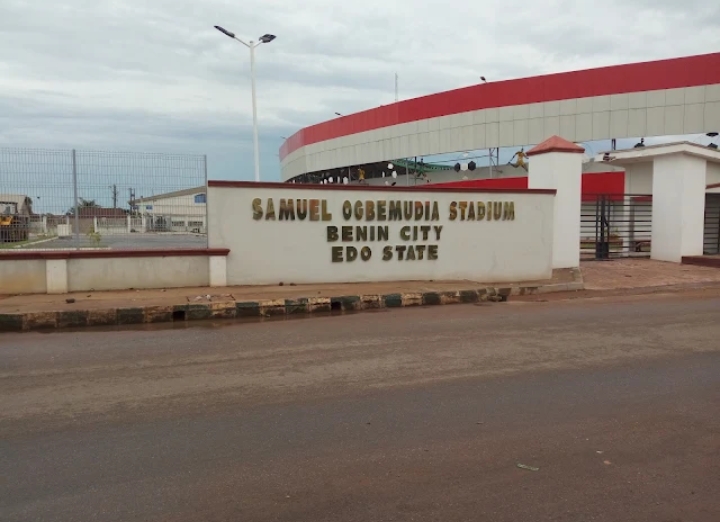
Chaos erupted on Wednesday during the Children’s Day celebration as dozens of students reportedly collapsed following a stampede triggered by the use of pepper spray.
The event,
organised by the Edo State Ministry of Education at the Samuel Ogbemudia Stadium was disrupted after some male students of Ihogbe College allegedly made uncompromising advances towards female students at the venue.
A parent who identified himself as Oboh Emmanuel said, “the behaviour of those uncultured students attracted the attention of bouncers stationed at the stadium as they rebuked the male students.”
Oboh said the affected students later regrouped and attacked the bouncers, leading to a confrontation within the crowded arena.
READ ALSO:Children’s Day: Edo Commits To Child Protection
It was gathered that in the ensuing confusion, the bouncers were reported to have deployed pepper spray in an area occupied by a large number of students.
Several students, particularly female students, reportedly fainted after inhaling the substance, while others sustained injuries after being stepped on during the ensuing melee.
The panic was said to have spread across the stadium as students, teachers and parents scampered for safety.
Many of the affected students were reportedly rushed to the Edo Specialist Hospital for medical attention.
READ ALSO: Egor LG Chair, Ogbemudia, Vice, Osawe Impeached
Reacting to the incident, Chief Press Secretary to Governor Monday Okpebholo, Dr Patrick Ebojele, said the security personnel that fired the tear gas had been detained.
He said all the students, except two, that were rushed to the hospital have been discharged.
Ebojele stated that doctors wanted to observe the students till tomorrow before allowing them to go home.
“The two students are not seriously injured. Doctors want to observe them overnight. Permanent Secretary, Ministry of Education is still at the hospital. The man who used pepper spray has been detained.
“The incident did not happen the way it is being exaggerated. All modalities were put in place to ensure the children enjoyed their day.”
News
Okpebholo Salutes Edo Muslims, Seeks Continued Support, Prayers
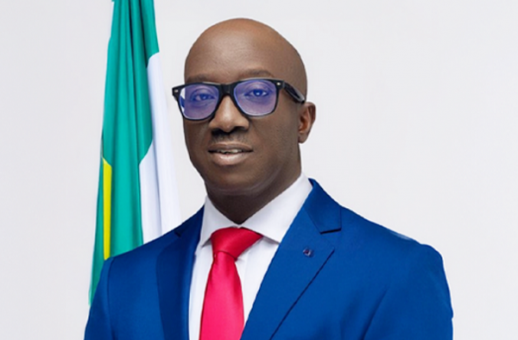
Governor Monday Okpebholo of Edo State has urged Muslims and all Nigerians to continue to pray for peace, unity and progress in the country even as they celebrate the annual Eid-al-Adha
The governor, who was represented by his deputy, Dennis Idahosa, stated this during the annual Eid-al-Adha celebration with Muslim faithfuls held at Government House in Benin City.
He reiterated his administration’s commitment to fairness, inclusivity and equal opportunities for all citizens irrespective of religion and tribe.
READ ALSO:ADC Penetrates Okpebholo’s District As Defections Strengthen Party in Edo Central
According to him, the present administration remains determined to building a government that reflects the diversity of Edo State, noting that competent and qualified Muslims have continued to play vital roles in his government because of their capacity, integrity and commitment to service.
“As a government, we remain committed to fairness, inclusivity and equal opportunity for every Edo citizen, irrespective of religion, ethnicity or political affiliation. This is why quality and competent Muslims are serving in key positions in our administration.”
Okpebholo appreciated the Muslim community in Edo State for their unwavering support and continuous prayers for his administration, noting that such prayers and support have contributed immensely to the peace and steady development being witnessed across the state.
READ ALSO:Okpebholo Felicitates Muslims On Eid-el-Fitr Celebration
He then called on all Nigerians to use the occasion of Eid-al-Adha to pray for the administration of President Bola Ahmed Tinubu, stressing that the country needs collective prayers, unity and cooperation to overcome its present economic and security challenges.
“I urge all Muslims and indeed all Nigerians to use this occasion to pray for our dear nation and for the administration of President Bola Ahmed Tinubu. Nigeria needs our collective prayers, unity and support as we strive to overcome our challenges and build a more prosperous future for all.”
In his remarks, the Chief Imam of Edo State, Abdulfatai Enabulele, applauded the governor for what he described as remarkable developmental strides recorded in less than two years in office.
The cleric commended the administration for ongoing infrastructural development and efforts geared towards improving governance in the state, but appealed to the government to revisit and complete some abandoned projects inherited from the previous administration for the benefit of the people.

 Metro5 days ago
My Husband Abandoned Me On Our Wedding Night To Attend Political Meeting, I Want Our Marriage Dissolved
- Headline4 days ago
Woman Passes Out After Receiving 100 Strokes Of Cane
- Politics5 days ago
Warri Ijaw Hail INEC Delineation Report, Call For Additional Electoral Wards, Others
- Headline4 days ago
JUST IN: White House Locked Down Briefly As Gunman Opens Fire At Security Checkpoint
- News3 days ago
More Pain For Nigerians As Cooking Gas Price Increases Nationwide
- Politics3 days ago
Two Masked Men Gun Down Politician In His Rivers State Hotel
- Metro5 days ago
My Wife Stop Cooking My Food, Beats Me Black And Blue All the Time, Man Tells Court
- News5 days ago
Alleged Terrorism: Court Rejects Defendant’s Bid To Travel Abroad
- Metro4 days ago
Police Reject N500m Bribe, Recover N7.8bn Illicit Drugs In Lagos
- Politics5 days ago
What I’ll Do As President Of Nigeria — Amaechi


