
News
OPINION: A Review Of IBB’s Book Of Billions [Monday Lines]

By Lasisi Olagunju
In five parts, thirteen chapters, six appendices, including an interview; a prologue and an epilogue, he sought to give a definite definition of himself. But, for me, the deepest insight into the person of General Ibrahim Babangida is not in his expensive book (it fetched him billions; I bought a copy for N40,000). The greatest revelation was at the launch of the book in Abuja. His comrade-in-arms and childhood friend, General Abdulsalami Abubakar, revealed that a cleric told them about 80 years ago that Babangida would one day be president of his country.
Now, when you, a seer, tell a child that he would be king one day, the palace cannot be safe until the child becomes man and he becomes king – or he dies. We read exactly that in Shakespeare’s story of the Scottish General, Macbeth. Three witches tell Macbeth that he will be King of Scotland. Macbeth becomes impatient; he kills the reigning king and takes the throne. Because of the security of his throne, paranoia pushes King Macbeth to take other desperate measures. People die; civil war erupts, more people die. Darkness falls. Please, go back and read again your Macbeth.
My people have several proverbs and sayings on royalty and fate. They say one’s destiny makes one a king but one’s character dethrones one (Orí ẹni ni í fini j’ọba, ìwà èyàn ni í yọ èyàn l’óyè). Like Macbeth, IBB joined the army and rose to become a General. Again, like Macbeth, the Thane of Cawdor prophecy came true for Babangida and he became Chief of Army Staff. Finally, like Macbeth, he became king and pronounced himself president and proceeded to do as Macbeth did until he left almost the Macbeth way. If you had been wondering why the amiable General from Minna chose ‘president’ as his official title, now you know it was in fulfillment of a prophecy.
Babangida once named his heroes: Zulu’s Emperor Chaka and General Hannibal of Carthage. Read again about those Generals, their careers and their exploits, their end. Read page 121 of IBB’s book and decide if you are convinced by his reasons for not answering what all his predecessors answered: Head of State. He says in the book that he chose to be different not because he wanted to copy Turkey’s General Kemal Ataturk or Emperor Chaka the Great. He says he chose to be ‘president’ as a demonstration of his commitment to “our suspended constitution.”
Babangida’s feet walked corridors of power; he befriended, and ‘charmed’ power even before he installed Buhari as Head of State in December 1983. His feet took him, or he took his feet everywhere his inner head (his Ori Inu) could be found. He was intrepid, smooth and daring. I read Shehu Shagari’s autobiography, ‘Beckoned to Serve’ published in 2001: “In late October or early November 1983, Major General Babangida and Colonel Aliyu Mohammed came to the State House to see me and we had a long discussion. They did pay me such visits usually at night long before I became President.” Shagari had that recorded on page 497 of his own autobiography. You are likely to ask what IBB was looking for in Shagari’s home at night. The way Babangida walked hallways of power was the way persons kept awake by destiny walked, restlessly.
MORE FROM THE AUTHOR: [OPINION] Pa Adebanjo: A Celebration Of Death
In the Foreword to Babangida’s book written by his boss, General Yakubu Gowon, we gain better discernment on the labyrinth called IBB. The older General describes Babangida as “a natural leader but also a devoted follower.” Sun Tzu, in ‘The Art of War’ tells Generals: “Appear weak when you are strong, and strong when you are weak.” Is that why President Babangida is read in the book bossing and, at the same time, bowing to his army chief, General Sani Abacha, in double-quick manner? Many commentators have said that his June 12 account is a mesh of courage and cowardice. ‘Abacha did this, Abacha did that but I regrettably take full responsibility for everything that happened’! Here, before you abuse IBB as a General without biceps, know that he did not walk alone. Apart from Murtala Muhammed who came fast and left fast, every military regime we had had its internal tormentor. For Gowon, it was Murtala Muhammed who was both boy and boss to the boss. All accounts say Gowon ruled under Murtala’s shadows until the kingmaker said enough and took the crown from Gowon alias Jack. Read the Gowon/Murtala story in Theophilus Akindele’s ‘Memoir of Mixed Blessings’ – especially the contract controversies. In his own book, Babangida says Murtala Muhammed, in Gowon’s government, “was quite a handful in matters pertaining to control” (page 85). IBB himself played the Murtala role to Muhammadu Buhari, 1984-85. He made the lanky General from Daura sit on the throne then shoved him off the seat because of his “excesses.” It should, therefore, not shock the reader that Abacha was the captain of the ship who allowed IBB to be there until the groom was ready for the bride. Babangida’s ‘A Journey in Service’ tears the mask.
Somewhere in that book, like a river nearing its sea, for whatever reasons, IBB reproduced (introduced) a 1995 interview he granted TELL magazine, and it reads like a summary of the entire IBB story. At a point in the interview, TELL magazine editors remind him of how he dealt ruthlessly with them and their magazine, IBB asks “What happened to TELL? TELL? Seriously, what happened?” He is told that over half a million copies of TELL were seized, and some of the editors speaking with him there were arrested. His response: “You see, when I sat up there, I didn’t know most of these things that happened…At times, the information only reached me later.” If what he said here is true, for a man who boasted that he was trained to dominate his environment, the fact that big things happened in his government without his knowledge could only tell how hopelessly imprisoned people of power could be.
Some people’s luck or escape route is in dying young. One loud example is General Murtala Muhammed. Would he be the hero he is if he had ruled for three, four years? Nigeria would definitively have happened to him. Unlike Murtala, some other people are very lucky to live hard and live long. Babangida is one of such. He is 83 years old. Imagine if he had died when his enemy, Muhammadu Buhari, was president. He would not have made the loud statement he made in Abuja last week! Or worse, if he had died during the June 12 crisis. He lived those bloody moments and validated Musician Odolaye Aremu’s theory that “if we don’t die young, enemies of fifteen years will become our friends.” At his book launch last week, his enemies and friends dropped offerings at his altar. NADECO man, Bola Tinubu, described him as “visionary Babangida.” Gowon in the Foreword declares that “in the post-Civil War period, his (IBB’s) tenure in office is easily the most remarkable.” That is an interesting verdict. Almost five of those post-Civil War years belong to Gowon himself. Some people are very good at scoring own goals.
In language and structure, I find this book by IBB to be very solid and uncomplicated. But, certainly, the most contentious of the content of the book is the June 12 story. And, the author’s treatment of the matter is the most extensive – almost 40 pages. Very unlike IBB, he named his friend, Sani Abacha, as the head of the forces that cancelled the election. But the annulment was just a culmination of a long, dark, bad process triggered by IBB himself long before the election was held. He said he was away in Katsina when Abacha and his boys annulled the election. But IBB came back from Katsina; why didn’t he undo what Abacha did? If he did anything at all, it is not in the book. Instead, what we see are hand-wringing cliches on the annulment and its consequences. The Abacha family is angry, furious; Abiola’s people are not impressed; they wondered why he waited for ‘all’ his witnesses to die before coming out. But what he wrote is no news. What is news is that those facts are directly from IBB himself. Snippets of what he said were in the media of that period. And we heard all sorts of weird things in newsrooms, the scrambling for and partitioning of power. For instance, we heard (or read) that Abacha, one heated meeting day, followed General Joshua Dogonyaro to the toilet and told him: “Let IBB go and we remain.” And Dogonyaro’s reply was “Who are the we?” Soldiers are great followers of Sun Tzu: “in the midst of chaos, there is opportunity.”
MORE FROM THE AUTHOR: OPINION: El-Rufai, Obasa And Other Godfather Stories [Monday Lines]
Professor Omo Omoruyi was one of the key architects of IBB’s transition programme and, perhaps, the closest to IBB in the dark days of the annulment. In 1999, Omoruyi published ‘The Tale of June 12: The Betrayal of the Democratic Rights of Nigerians’. It is his account of the June 12 tragedy. More than twenty five-years after it was published, I have not read anyone that is mentioned in the book coming out to say the professor lied. So, I take Omoruyi’s account of the pre and post-annulment events as reliable. He claims in his book (page 37) that the June 12 election “was aborted by forces external to its design.” He is more direct on page 257: “General Abacha felt humiliated when General Babangida yielded to the US pressure to order on June 11, 1993 that the June 12 election must go on. From that June 11, General Abacha showed no interest in the matter and waited for when it would crash…It was Lt.-General Alani Akinrinade, a former Chief of Defence Staff and an experienced professional officer, who read the situation right in the interview he granted to reporters in October 1993 when he said that ‘Shonekan is a mask…the masquerade itself is the armed forces and Abacha is the personification of that masquerade.’ See TELL, November 1, 1993. p.25.”
Omoruyi accuses IBB of betraying his country and its people with his disruptive handling of the last leg of the transition programme. He says IBB lost control of the military and the government soon after the election held. He said Babangida was in a fix as of 9.30pm on 21 June, 1993 when he met him. His book (page 162 – 164) quotes the General copiously: “I see disaster for myself and my family. Where do I go from here?” Omoruyi quotes IBB as confirming that Abiola won the election but that “they” would kill him if he allowed the results to stay. Omoruyi wrote further that at the end of that outburst, Babangida made a telling remark. He quotes him as saying “I told you that I am a prisoner. What do I do? I think I need a psychiatrist” (page 171). Two days after all these, the annulment announcement was made via an unsigned, undated paper circulated to the media through the Vice President’s office.
Can we, at this point, ask journalist Nduka Irabor to come out and tell the world who gave him the unsigned annulment statement that he released to the world on 23 June 1993? He can no longer be quiet.
Now, if Abacha emitted such negative vibrations in his government, why did Babangida leave him behind after retiring himself and all service chiefs? IBB offers no cogent reason for this in his ‘A Journey in Service’. Instead, what we read is his admission of “a grave mistake” in retaining Abacha as chairman of the joint Chief of Staff and “as enforcer-in-chief for the new government” of Ernest Shonekan. Omoruyi addresses the same issue better in his own book (page 257): “In response to my question as to who would guard the guards after August 26, 1993, he (Babangida) said he would remove the operational control from him (Abacha) and assign it to Lt.-General Joshua Dogonyaro.” It is interesting that IBB thought that running into Dogonyaro’s fire was a better option to staying in Abacha’s fire. In any case, Abacha sacked Dogonyaro and all other “guards” soon after Babangida stepped aside. The other arms of the IBB boys, he used them to get rid of Shonekan and his Interim National Government (ING). He then cavalierly gave them the tissue-paper treatment – he used, dumped and flushed them down the drain.
We saw a convergence of all the forces in Abuja last week. NADECO and the military factions swam in open adultery. They wined and partied and gave the General of Generals a generous pat on the back. One of my university classmates described the Abuja event as “not funny.” Her post to me dripped with so much pain. She told tales of death and dying and suffering. She gave accounts of personal experiences and sacrifices. She felt betrayed.
MORE FROM THE AUTHOR: [OPINION] Islam: Beyond terrorism and Boko Haram [Monday Lines 1]
I begged her to let me include her tears here without mentioning her name: “I watched the launch of the book written by IBB and took a cursory look at the parade of eminent personalities in attendance. I listened to the speeches one after the other and saw them laughing. I was stunned that people therein, one after the other, eulogized IBB. I thought for a moment that I was in another planet or that I had mental issues by asking myself if these people were describing the same events that I witnessed as a 26-year old spinster living in Lagos and trying to chart a course for the future. Significantly, I remember how I walked from Aguda in company of a friend to queue up and vote at Adebola Street, off Bode Thomas in Surulere, Lagos and walked back home. I remember sitting at the reception of the school of nursing on Awolowo Road waiting to collect my sister’s transcript when an elderly woman fainted on hearing the news of the annulment. I recall her colleagues trying to revive her and crying at the same time that their hope for a better Nigeria had just been dashed. I remember having woken up early one morning to go to work and arriving in Norman Williams in Ikoyi only to realize that Lagos was on lockdown and going back home became an arduous task. I remember getting a ride through the Third Mainland Bridge to Obanikoro and walking back home in Aguda, dodging bullets and escaping area boys who took advantage of the situation. I survived but some did not. What I saw in that hall last week was a mockery of those who died and of those of us who did not die but are yet to recover from the trauma of that period. It is not funny!”
My friend spoke for millions seething helplessly in the dimly-lit parlours of their lives. But, there must be a closure, and I think that was what that Abuja gathering thought it was doing. For those who are angry and crying betrayal, I give what I gave my friend – a quote: “Whatever happens, stay alive. Don’t die before you’re dead.” Some say the quote is from English writer, Virginia Woolf; some others credit Polish writer and Nobel Laureate, Olga Tokarczuk. Whoever the writer is between those two ladies gave a valuable advice. “Whatever happens, stay alive.”
Daedalus was a mythical sculptor who lived in Athens. In one desperate moment, the man threw a stone at a bird and killed it; the stone ricocheted and killed a second bird. With the feathers, he and his son created wings with which they escaped from detention in a high tower which they had helped their tormentor to design. That appears to be the objective of General Ibrahim Babangida’s autobiography. To kill many birds with one lone stone. Still all storms; settle all scores; explain all controversies; and they are many: OIC membership, Dele Giwa’s death, Mamman Vatsa’s coup, the C-130 Plane Crash, the Gideon Orkar Coup, June 12; the SAP riots, Gulf Oil Windfall. The author thoroughly explains and analyses these as “challenges of leadership” all across the 420 pages, some from page 203 to 220. But, has he succeeded in getting these cases closed? Dirty water may quench fire but if you want to fight fire, you don’t wear clothes made of dry grass. Has Babangida’s book helped him to calm or further enrage the sea? Well, in Chinua Achebe’s words, it is “morning yet on creation day.”



News
Migration Agency Warns Migrants Against Irregular Travel Routes

The International Organisation for Migration (IOM), in collaboration with Giving is Healing Foundation, has sensitised residents of Ayobo in Alimosho Local Government Area of Lagos State on the dangers of irregular migration and the need to embrace legal travel procedures.
Speaking during a sensitisation programme held at Megida Ifelodu Community Development Association in Ayobo, the founder of Giving is Healing Foundation, Mr. Gbolahan Ayediran, warned intending migrants against using illegal travel routes.
Ayediran said many Nigerians desire to migrate abroad in search of better opportunities but often ignore proper procedures, thereby exposing themselves to several dangers.
“Lots of people want to migrate and most of them do it in the wrong direction. The reason for the programme is for us to advise people on how they can migrate in the right way. As much as migration is their right, they should do it correctly,” he said.
READ ALSO:How Wike Rescued Me From Political Oblivion — Oshiomhole
He advised intending travellers to obtain the necessary travel documents before embarking on any journey, noting that such documents include international passports, visas, flight tickets and yellow cards, depending on the destination country.
According to him, migrants should also gather adequate information about their destination countries to enable them make informed decisions before travelling.
Ayediran further highlighted some of the dangers associated with irregular migration, including abuse, exploitation, discrimination and forced labour.
Also speaking, the Chairman of Megida Ifelodu Community Development Association, Elder Mathews Amusan, commended the organisers for enlightening members of the community on safe migration practices.
READ ALSO: He Can’t Fix His Party Let Alone Nigeria – Oshiomhole Blasts Atiku
He urged residents planning to travel abroad to always follow legal migration procedures to avoid falling victim to human trafficking and other migration-related challenges.
One of the participants, Mr. Kolawole Adenoko, said the programme enlightened him on the dangers of irregular migration and the importance of travelling through the proper channels.
He added that he would also educate his relatives and friends on the risks associated with illegal migration.
News
Shatta Wale Bailed Burna Boy From Ghana Prison After Arrest For Smoking Weed – Captan
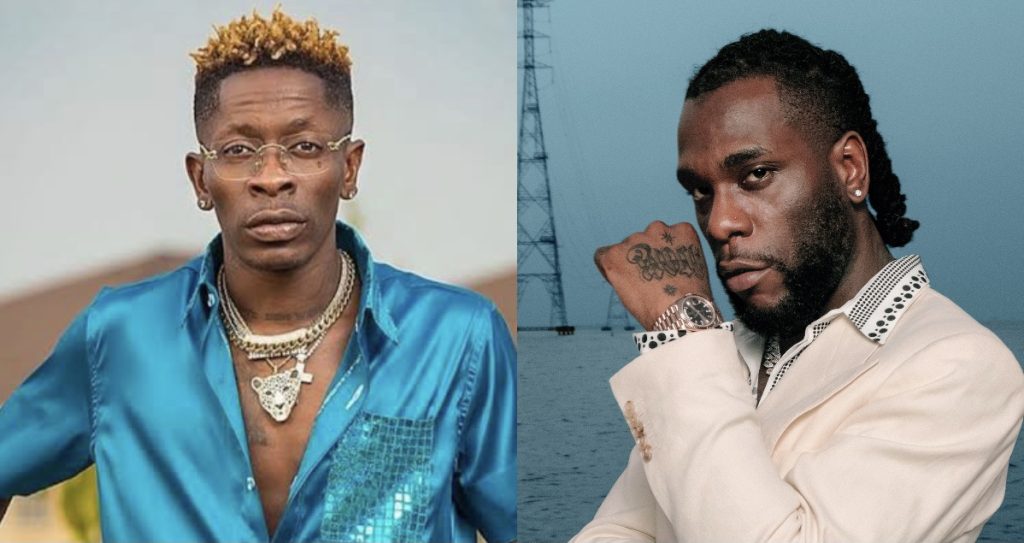
Ghanian singer, Captan, has claimed that his former record label boss, Shatta Wale, once bailed Nigerian singer Burna Boy out of prison in Ghana after he was allegedly arrested for smoking weed.
Speaking in a recent podcast interview, Captan claimed that Shatta Wale sent him and others to free Burna Boy from police custody.
He also claimed that Shatta Wale and his group once accommodated Burna Boy when he was being hunted by some dangerous men.
READ ALSO: Wale Edun Opens Up After Sack
Captan said, “I once bailed Burna Boy out of prison in Ghana when he was arrested for smoking weed. Shatta Wale sent me and some guys to go and free him from police custody.
“There was a time we also accommodated him when some people were after his life. We helped him settle the case.”
He added that he and Burna Boy are no longer in good terms after the Nigerian artist’s fallout with his mentor, Shatta Wale.
He, however, said he and Shatta Wale are open to reconciling with Burna Boy if he asks for it.
Watch the video here
News
Children’s Day: Chaos At Ogbe Stadium As Dozens Faint
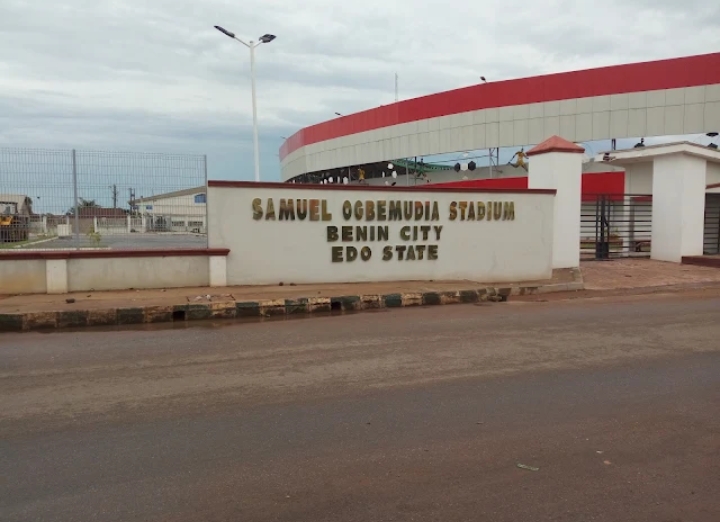
Chaos erupted on Wednesday during the Children’s Day celebration as dozens of students reportedly collapsed following a stampede triggered by the use of pepper spray.
The event,
organised by the Edo State Ministry of Education at the Samuel Ogbemudia Stadium was disrupted after some male students of Ihogbe College allegedly made uncompromising advances towards female students at the venue.
A parent who identified himself as Oboh Emmanuel said, “the behaviour of those uncultured students attracted the attention of bouncers stationed at the stadium as they rebuked the male students.”
Oboh said the affected students later regrouped and attacked the bouncers, leading to a confrontation within the crowded arena.
READ ALSO:Children’s Day: Edo Commits To Child Protection
It was gathered that in the ensuing confusion, the bouncers were reported to have deployed pepper spray in an area occupied by a large number of students.
Several students, particularly female students, reportedly fainted after inhaling the substance, while others sustained injuries after being stepped on during the ensuing melee.
The panic was said to have spread across the stadium as students, teachers and parents scampered for safety.
Many of the affected students were reportedly rushed to the Edo Specialist Hospital for medical attention.
READ ALSO: Egor LG Chair, Ogbemudia, Vice, Osawe Impeached
Reacting to the incident, Chief Press Secretary to Governor Monday Okpebholo, Dr Patrick Ebojele, said the security personnel that fired the tear gas had been detained.
He said all the students, except two, that were rushed to the hospital have been discharged.
Ebojele stated that doctors wanted to observe the students till tomorrow before allowing them to go home.
“The two students are not seriously injured. Doctors want to observe them overnight. Permanent Secretary, Ministry of Education is still at the hospital. The man who used pepper spray has been detained.
“The incident did not happen the way it is being exaggerated. All modalities were put in place to ensure the children enjoyed their day.”

 Headline4 days ago
Woman Passes Out After Receiving 100 Strokes Of Cane
- Headline4 days ago
JUST IN: White House Locked Down Briefly As Gunman Opens Fire At Security Checkpoint
- Politics3 days ago
Two Masked Men Gun Down Politician In His Rivers State Hotel
- Politics5 days ago
Warri Ijaw Hail INEC Delineation Report, Call For Additional Electoral Wards, Others
- News3 days ago
More Pain For Nigerians As Cooking Gas Price Increases Nationwide
- Metro4 days ago
Police Reject N500m Bribe, Recover N7.8bn Illicit Drugs In Lagos
- Politics5 days ago
What I’ll Do As President Of Nigeria — Amaechi
- News3 days ago
FG Declares Two Days Public Holiday For Eid-el Kabir Celebration
- Politics3 days ago
‘Tinubu’s Borrowing In 24 Months Surpasses 55 Years’ Debt Record’
- Politics2 days ago
Court Clears Goodluck Jonathan To Contest 2027 Presidential Election


