
News
OPINION: Adesina And Nigeria’s Fatal Abduction

By Lasisi Olagunju
“What is the State?” Louis Blanc, politician and historian in 19th century France, asks himself.
He answers:
“The State, under democratic rule, is the power of all the people, served by their elect; it is the reign of liberty.
“The State, under monarchical rule, is the power of one man, the tyranny of a single individual.
“The State, under oligarchical rule, is the power of a small number of men, the tyranny of a few.
“The State, under aristocratic rule, is the power of a class, the tyranny of many.
“The State, under anarchical rule, is the power of the first comer who happens to be the most intelligent and the strongest; it is the tyranny of chaos.”
The lines above I took from Pierre-Joseph Proudhon’s ‘The State: Its Nature, Object, and Destiny’ (1849). Nigeria is a fine combination of four of the five Louis Blanc’s definitions of the state. In case you pretend not knowing what the four are, this should be a guide: Last week, Finance Minister, Olawale Edun, frontally accused the defunct Muhammadu Buhari regime of criminal printing of about N23 trillion naira. Northern senators on Saturday alleged a criminal infusion of N3 trillion into the 2024 budget of Nigeria by powerful ghosts in Abuja. On Friday, in one northern state, a judge sentenced two kidnappers to death by hanging but quickly undermined himself with an advice to the felons to seek pardon from the executive “since no life was lost in the process of kidnapping.” On Thursday, bandits abducted 287 students in Kaduna. On Saturday, bandits invaded a Zamfara school and stole 15 students. Before the school abductions, senior brothers of the bandits, Boko Haram, had kidnapped over 400 displaced persons in Borno. In Benue and Plateau, a murderous campaign against helpless people is on without ceasing. From the desert to the coast, agonizing cries of existential woes rend the land. What we have is chaos pro-max.
Yet, we remain here. To whom or to where shall we turn? “We must make Nigeria a viable place for people to stay, and not a place to run away from.” I heard that counsel from African Development Bank Group’s president, Akinwumi Adesina, last week Wednesday in his lecture after receiving the Obafemi Awolowo Prize for Leadership in Lagos. I heard him and asked myself who would make Nigeria “a viable place for people to stay.” Those who print money and steal what they print? Those who serenade banditry with negotiation? Where are the leaders? Adesina in that same lecture looked deep into the past and declared that “Nigeria missed its best opportunity to be great under a ‘President’ Awolowo.” I heard that truth and whispered to myself that Nigeria is an expert at missing ways. Yoruba musician, Ayinla Omowura, sings about the one destined to eat hideous vulture, forbidden bird of carrion. Omowura sings that “the head that will eat vulture will not listen. If we give him chicken to eat, he will reject it.”
That is the nature of destiny – determinist philosophers say it is inevitable; people of religion agree but add that it is also inscrutable. Should it be Nigeria’s destiny to be a jungle forever? It looks like there is nothing we can do about it. Arab folklore character, Nasrudin, walks with utmost innocence along an alleyway. He is deep in thought and careful about not putting his feet where he may have them injured. But a man falls from a nearby roof and lands on Nasrudin’s neck. The fallen man is unhurt; innocent Nasrudin has a broken neck. He is asked what lessons he learnt from that experience. Nasrudin tells his disciples to note the place of fate in his fate. He asks them to note that the other man “fell — but my neck is broken!” At independence, Nigeria had all the chances to be great, but it soon had the ill-luck of falling into the mouths of big cats of the jungle. They’ve finished with the flesh, they are cracking the bones.
FROM THE AUTHOR: OPINION: Kumuyi, Tortoise And Looters Of Noodles
Adesina’s lecture focused on what he called five critical areas that would save Nigeria and transform the people’s lives. He said the government should make rural economy work and provide food security. He said our rural areas “have become zones of economic misery.” He is right and correct. He said the city falters today because the village has been abandoned to faltering. The result is “the spread of anarchy, banditry, and terrorism” – what he called the “troika of social disruption” entrenching themselves to our collective sorrow. Adesina said our leaders should give health security for all, provide education for all, give affordable housing for all. He told us quoting data by UN-Habitat, that “in Nigeria, 49 percent of the population live in slums …That is a staggering 102 million people!” He exclaimed and told our leaders that what Nigerians needed “is decent housing and not upgrading of slums…There is nothing like a 5-star slum. A slum is a slum… ”
Then, Adesina reached the fifth of his points: Our leaders should be accountable: “If people pay taxes, governments must deliver services,” he said and quickly added that “taxation in the absence of a social contract between governments and citizens is simply fiscal extortion.” He stressed that Nigeria must enthrone fiscal decentralisation for a true federalism.: “To get out of the economic quagmire, there is a compelling need for the restructuring of Nigeria…Instead of a Federal Government of Nigeria, we could think of the United States of Nigeria.”
Those are great ideas. But in this country, the bush is the way – because the blind is the guide. Leadership will always make a difference. In a 2002 academic piece, psychologists Daniel Goleman, Richard Boyatzio and Annie Mckee speak on the imperative of societies enthroning leaders with positive emotions. They say the society achieves equilibrium when it is governed by leaders with a sense of accountability; leaders who know how to transform “the art of leadership to the science of results.” One writer said “the executive mind is impotent without power, power is dangerous without vision, and neither is lasting or significant in any human broad sense without the force of integrity.”
FROM THE AUTHOR: OPINION: Our President’s Love Affair With The IMF
No enduring structure can stand on a faulty foundation. American singer and songwriter, David Allan Coe, asked us not to look at the beauty of a building. He said “it is the construction of the foundation that will stand the test of time.” British architect, Stephen Gardiner, was more philosophical about the place of foundation in people’s affairs. He wrote that “good buildings come from good people, and all problems are solved by good design.” We cannot solve Nigeria’s problem by ignoring the fissures in its foundation.
We tell the knock-kneed that what he carries on his head threatens a fall, he asks us to stop looking at the top. “Look at the base!” He points at his impairment, the awkward gait of his lower limbs. Think about how every road taken has led to nowhere. Think about our propensity to leave the vaults of our destiny open and complain about theft later. The Monday, October 10, 1960 edition of TIME magazine contained a report with the title: ‘Nigeria: The Free Giant.’ It was supposed to be a celebration of Nigeria’s independence which happened ten days earlier. But the author of the piece nursed a fear about the future of the brand new country. He wrote that “backward African nations inevitably must suffer the chaos of a Congo when the blacks take over.” Congo got its independence from Belgium on June 30, 1960. It fell apart on July 5, 1960 – less than a week after independence. The TIME magazine described that Congo as “a panorama of disaster.” How do we describe our Nigeria since independence?
A dark prophecy of inevitable chaos was published for Nigeria ten days after independence. To “inevitably suffer the chaos of the Congo” was a strong statement. The dictionary meaning of ‘chaos’ is “complete disorder”. If you like you can replace the word with “mayhem” or “bedlam” or “a mess.” There are a million other words that share meanings of madness with the chaotic. ‘Inevitable’ means “certain to happen.” Its other synonyms are ‘unavoidable’; ‘inescapable’; ‘fated’. In Shakespeare’s Hamlet we hear the protagonist, Hamlet, King of Denmark, seeing “providence in the fall of a sparrow.” In Romeo and Juliet, Shakespeare says the love birds are “star-cross’d” – stuck with their tragic end, their fate. It was the destiny of the Congo to explode within a week of its freedom from foreign rule. It has been Nigeria’s destiny to hop from disaster to catastrophe. But why?
FROM THE AUTHOR: OPINION: The Scandals In Abuja
If destiny will manifest itself in a disaster, it presages itself. It is not rain that falls without warning the blind and tapping the deaf. Thirty-eight years ago, Chief Awolowo himself spoke on the evils which dominated the hearts of Nigerians “at all levels and in all sectors of our political, business and governmental activities.” In his famous letter to the political bureau set up by the military in 1986, Chief Awolowo spoke about “the abominable filth that abounds in our society.” He said as long as Nigerians remained “what they are, nothing clean, principled, ethical, and idealistic can work with them.” He warned that unless we allowed our hearts to be impelled “to make drastic changes for the better,” Nigeria stood the chance of succumbing to what he described as “permanent social instability and chaos.”
The chaos is here. We feel it in the price of food and drugs and in the cost of life itself. It is overwhelming. Today’s government reacts by grumbling about the malfeasance of its predecessor. Yet, the past was a disaster that came dancing without a mask. After Muhammadu Buhari was declared reelected in 2019, the late Dr. Obadiah Mailafia said in his March 4, 2019 Nigerian Tribune column titled ‘A guide for the Perplexed’ that Nigeria faced “what amounts to a peace of the graveyard.” He said he saw “fear and alarm in the eyes of certified patriots.” He noted that “only Almajirai in tattered rags from the president’s home region are celebrating with daggers and bayonets spoiling for a fight that nobody is really interested in.” He called on “genuine statesmen to (come and) salvage our democracy from the jaws of catastrophe.” History should have guided the public intellectual. Mailafia should have read Chief Awolowo. Nigeria is not structured to have “genuine statesmen” as its managers. Vulture does not eat clean meat; its meal is carrion.
FROM THE AUTHOR: OPINION: Tinubu, Matter Don Pass Be Careful
Adesina declared that “Chief Awolowo was bigger than Nigeria. He said Awo “was the pacesetter and forerunner for development in Africa.” He spoke about Awolowo’s “intellectual capacity, vision, pragmatic social welfarism (which) helped him accomplish what was seemingly unimaginable at the time.” Adesina listed Awolowo’s firsts: “He built the first skyscraper in Africa — the Cocoa House. He built the first television station in Africa, WNTV. He built the Liberty Stadium, the first of its kind in Africa. He implemented a blueprint for development that focused on building human capacity through massive programs to educate the people, develop skills, lift people out of poverty, provide massive rural infrastructure, and develop institutions that turned farmers into wealthy entrepreneurs…Chief Awolowo implemented the sustainable development goals decades before the phrase was coined. He was an inspiration for Africa, far beyond the shores of Nigeria. His philosophy…helped shape programs and policies in other countries.”
Where I sat was some seats away from where Adesina stood and spoke from. Where he stood was a few seats away from where the government of Nigeria sat, expressionless. I heard Adesina; I turned and asked a colleague who sat beside me if he thought Nigeria could benefit from the wisdom of the bow-tied. I told my friend that Adesina’s first four points rested on the fifth. Nothing positive will happen unless Nigeria’s crooked structure is worked on by surgeons. But, where are the physicians? Even if the surgeon is found and present, Nigeria is as difficult and dangerous as danger could be. The country is that mental patient who hates his doctor because he hates being cured of his ailment. Nigeria kills its prophets.
Adesina’s five pills are capable of healing Nigeria. But Nigeria won’t listen to him. It did not listen to Awolowo. It doesn’t listen to the wise. It is a conundrum – an abductee of its crooked structure. In the 1999 Yoruba political film, Saworoide, we hear the old man Adebayo Faleti (Bàbá Òpálábá) chanting the praise name of his Jogbo Kingdom: “Jogbo bí orógbó, Jogbo bí orò (Jogbo, bitter as bitter kola; dangerous as oro cult). With two eyes, you can cope at the riverside; with two eyes, you will survive Kaduna; but you need twelve eyes to survive in Jogbo. With two mouths, you get by in Ibadan; with two mouths you get by in Lagos; but you need 18 mouths to survive in Jogbo…” Nigeria is that Jogbo – a sick, deformed, bitter country in need of a surgeon.



News
Out-of-school: Group To Enroll Adolescent Mothers In Bauchi
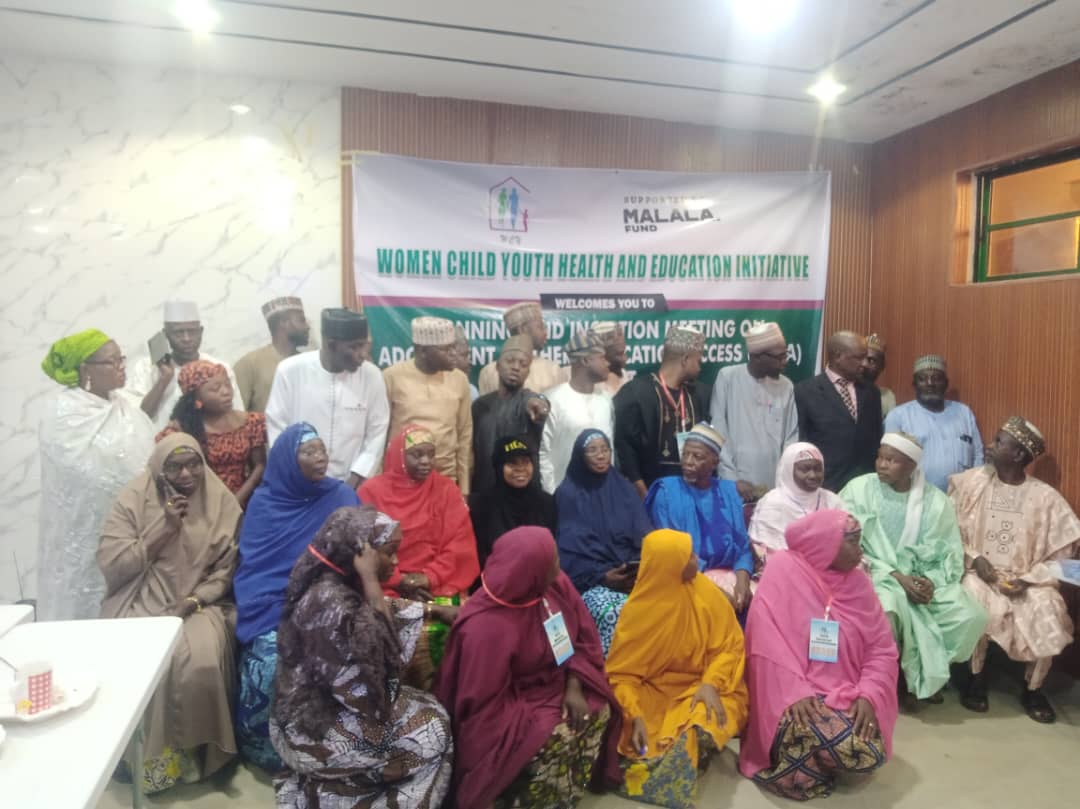
Women Child Youth Health and Education Initiative (WCY) with support from Malala Education Champion Network, have charted a way to enroll adolescent mothers to access education in Bauchi schools.
Rashida Mukaddas, the Executive Director, WCY stated this in Bauchi on Wednesday during a one-day planning and inception meeting with education stakeholders on Adolescent Mothers Education Access (AMEA) project of the organisation.
According to her, the project targeted three Local Government Areas of Bauchi, Misau and Katagum for implementation in the three years project.
She explained that all stakeholders in advancing education in the state would be engaged by the organisation to advocate for Girl-Child education.
READ ALSO:Maternal Mortality: MMS Tackling Scourge —Bauchi Women Testify
The target, she added, was to ensure that as many as married adolescent mothers and girls were enrolled back in school in the state.
“Today marks an important step in our collective commitment to ensuring that every girl in Bauchi state, especially adolescent who are married, pregnant, or young mothers has the right, opportunity, and support to continue and complete her education.
“This project has been designed to address the real and persistent barriers that prevent too many adolescent mothers from returning to school or staying enrolled.
“It is to address the barriers preventing adolescent mothers from continuing and completing their education and adopting strategies that will create an enabling environment that safeguard girls’ rights to education while removing socio-cultural and economic obstacles,” said Mukaddas.
READ ALSO:Bauchi: Auto Crash Claimed 432, Injured 2,070 Persons In 1 Months — FRSC
She further explained to the stakeholders that the success of the project depended on the strength of their collaboration, the alignment of their actions, and the commitments they forge toward the implementation of the project.
Also speaking, Mr Kamal Bello, the Project Officer of WCY, said that the collaboration of all the education stakeholders in the state with the organisation could ensure stronger enforcement of the Child Rights Law.
This, he said, could further ensure effective re-entry and retention policies for adolescent girls, increased community support for girls’ education and a Bauchi state where no girl was left behind because of marriage, pregnancy, or motherhood.
“It is observed that early marriage is one of the problems hindering girls’ access to education.
READ ALSO:Bauchi: Auto Crash Claimed 432, Injured 2,070 Persons In 1 Months — FRSC
“This organisation is working toward ensuring that girls that have dropped out of school due to early marriage are re-enrolled back in school,” he said.
Education stakeholders present at the event included representatives from the state Ministry of Education, Justice, Budget and Economic Planning and Multilateral Coordination.
Others were representatives from International Federation of Women Lawyers, Adolescent Girls Initiative for Learning and Empowerment (AGILE), Bauchi state Agency for Mass Education, Civil Society Organization, Religious and Traditional institutions, among others.
They all welcomed and promised to support the project so as to ensure its effective implementation and achieve its set objectives in the state.
News
OPINION: Fubara, Adeleke And The Survival Dance
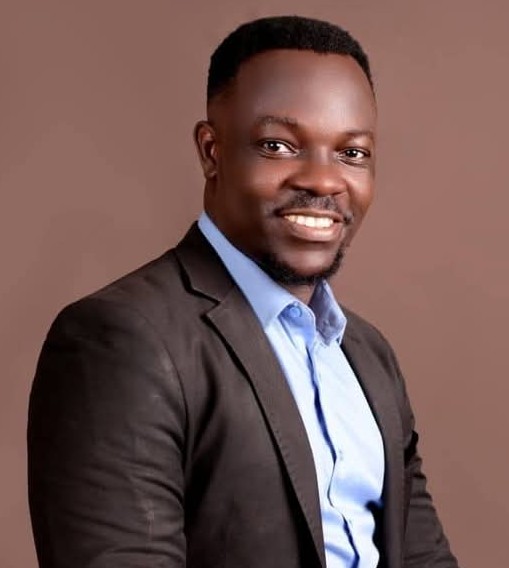
By Israel Adebiyi
You should be aware by now that the dancing governor, Ademola Adeleke has danced his last dance in the colours of the Peoples Democratic Party. His counterpart in Rivers, Siminalayi Fubara has elected to follow some of his persecutors to the All Progressive Congress, after all “if you can’t beat them, you can join them.”
Politics in Nigeria has always been dramatic, but every now and then a pattern emerges that forces us to pause and think again about where our democracy is heading. This week on The Nation’s Pulse, that pattern is what I call the politics of survival. Two events in two different states have brought this into sharp focus. In both cases, sitting governors elected on the platform of the same party have found new homes elsewhere. Their decisions may look sudden, but they reveal deeper issues that have been growing under the surface for years.
In Rivers, Governor Siminalayi Fubara has crossed into the All Progressives Congress. In Osun, Governor Ademola Adeleke has moved to the Accord Party. These are not small shifts. These are moves by people at the top of their political careers, people who ordinarily should be the ones holding their parties together. When those at the highest levels start fleeing, it means the ground beneath them has become too shaky to stand on. It means something has broken.
A Yoruba proverb captures it perfectly: Iku to n pa oju gba eni, owe lo n pa fun ni. The death that visits your neighbour is sending you a message. The crisis that has engulfed the Peoples Democratic Party did not start today. It has been building like an untreated infection. Adeleke saw the signs early. He watched senior figures fight openly. He watched the party fail to resolve its zoning battles. He watched leaders undermine their own candidates. At some point, you begin to ask yourself a simple question: if this house collapses today, what happens to me? In Osun, where the competition between the two major parties has always been fierce, Adeleke was not going to sit back and become another casualty of a party that refused to heal itself. Survival became the most reasonable option.
His case makes sense when you consider the political temperature in Osun. This is a state where the opposition does not sleep. Every misstep is amplified. Every weakness is exploited. Adeleke has spent his time in office under constant scrutiny. Add that to the fact that the national structure of his party is wobbly, divided and uncertain about its future, and the move begins to look less like betrayal and more like self-preservation.
MORE FROM THE AUTHOR:OPINION: Wike’s Verbal Diarrhea And Military Might
Rivers, however, tells a slightly different story. Fubara’s journey has been a long lesson in endurance. From the moment he emerged as governor, it became clear he was stepping into an environment loaded with expectations that had nothing to do with governance. His political godfather was not content with being a supporter. He wanted control. He wanted influence. He wanted obedience. Every decision was interpreted through the lens of loyalty. From the assembly crisis to the endless reconciliation meetings, to the barely hidden power struggles, Fubara spent more time fighting shadows than building the state he was elected to lead.
It soon became clear that he was governing through a maze of minefields. Those who should have been allies began to treat him like an accidental visitor in the Government House. The same legislators who were meant to be partners in governance suddenly became instruments of pressure. Orders came from places outside the official structure. Courtrooms turned into battlegrounds. At some point, even the national leadership of his party seemed unsure how to tame the situation. These storms did not come in seasons, they came in waves. One misunderstanding today. Another in two weeks. Another by the end of the month. Anyone watching closely could see that the governor was in a permanent state of emergency.
So when the winds started shifting again and lawmakers began to realign, those who understood the undercurrents knew exactly what was coming. Fubara knew too. A man can only take so much. After months of attacks, humiliations and attempts to cage his authority, the move to another party was not just political. It was personal. He had given the reconciliation process more chances than most would. He had swallowed more insults than any governor should. He had watched institutions bend and twist under the weight of private interests. In many ways, his defection is a declaration that he has finally chosen to protect himself.
But the bigger question is how we got here. How did two governors in two different parts of the country end up taking the same decision for different but related reasons? The answer goes back to the state of internal democracy in our parties. No party in Nigeria today fully practices the constitution it claims to follow. They have elaborate rules on paper but very loose habits in reality. They talk about fairness, but their primaries are often messy. They preach unity, but their caucuses are usually divided into rival camps. They call themselves democratic institutions, yet dissent is treated as disloyalty.
MORE FROM THE AUTHOR:OPINION: Nigerian Leaders And The Tragedy Of Sudden Riches
Political parties are supposed to be the engine rooms of democracy. They are the homes where ideas are debated, leaders are groomed, and future candidates are shaped. In Nigeria, they increasingly look like fighting arenas where the loudest voices drown out everyone else. When leaders ignore their own constitutions, the structure begins to crack. When factions begin to run parallel meetings, the foundation gets weaker. When decisions are forced down the throats of members, people begin making private plans for their future.
No governor wants to govern in chaos. No politician wants to be the last one standing in a sinking ship. This is why defections are becoming more common. A party that cannot manage itself cannot manage its members. And members who feel exposed will always look for safer ground.
But while these moves make sense for Adeleke and Fubara personally, the people they govern often become the ones left in confusion. Voters choose candidates partly because of party ideology, even if our ideologies are weak. They expect stability. They expect continuity. They expect that the mandate they gave will remain intact. So when a governor shifts political camp without prior consultation, the people feel blindsided. They begin to wonder whether their votes carry weight in a system where elected officials can switch platforms in the blink of an eye.
This is where the politics of survival becomes dangerous for democracy. If leaders keep prioritizing their personal safety over party stability, the system begins to lose coherence. Parties lose their identity. Elections lose their meaning. Governance becomes a game of musical chairs. Today you are here. Tomorrow you are there. Next week you may be somewhere else. The people become bystanders in a democracy that is supposed to revolve around them.
Rivers and Osun should serve as reminders that political parties need urgent restructuring. They need to rebuild trust internally. They need to enforce their constitutions consistently. They need to treat members as stakeholders, not spectators. When members feel protected, they stay. When they feel targeted, they run. This pattern will continue until parties learn the simple truth that power is not built by intimidation, but by inclusion.
MORE FROM THE AUTHOR:The Audacity Of Hope: Super Eagles And Our Faltering Political Class
There is also the question of what these defections mean for governance. When governors are dragged into endless party drama, service delivery suffers. Time that should be spent on roads, schools, hospitals, water projects and job creation ends up being spent in meetings, reconciliations and press briefings. Resources that should strengthen the state end up funding political battles. The public loses twice. First as witnesses to the drama. Then as victims of delayed or abandoned development.
In Rivers, the months of tension slowed down the government. Initiatives were stalled because the governor was busy trying to survive political ambush. In Osun, Adeleke had to juggle governance with internal fights in a crumbling party structure. Imagine what they could have achieved if they were not constantly looking over their shoulders.
Now, as both men settle into new political homes, the final question is whether these new homes will provide stability or merely temporary shelter. Nigeria’s politics teaches one consistent lesson. New alliances often come with new expectations. New platforms often come with new demands. And new godfathers often come with new conditions. Whether Adeleke and Fubara have truly found peace or simply bought time is something only time will tell.
But as citizens, what we must insist on is simple. The politics of survival should not become the politics of abandonment. Our leaders can fight for their political life, but they must not forget that they hold the people’s mandate. The hunger, poverty, insecurity and infrastructural decay that Nigerians face will not be solved by defection. It will be solved by steady leadership and functional governance.
The bigger lesson from Rivers and Osun is clear. If political parties in Nigeria continue on this path of disunity and internal sabotage, they will keep losing their brightest and most strategic figures. And if leaders keep running instead of reforming the system, then we will wake up one day to a democracy where the people are treated as an afterthought.
Governors may survive the storms. Parties may adjust to new alignments. But the people cannot keep paying the price. Nigeria deserves a democracy that works for the many, not the few. That is the real pulse of the nation.
News
Human Rights Day: Stakeholders Call For More Campaigns Against GBV
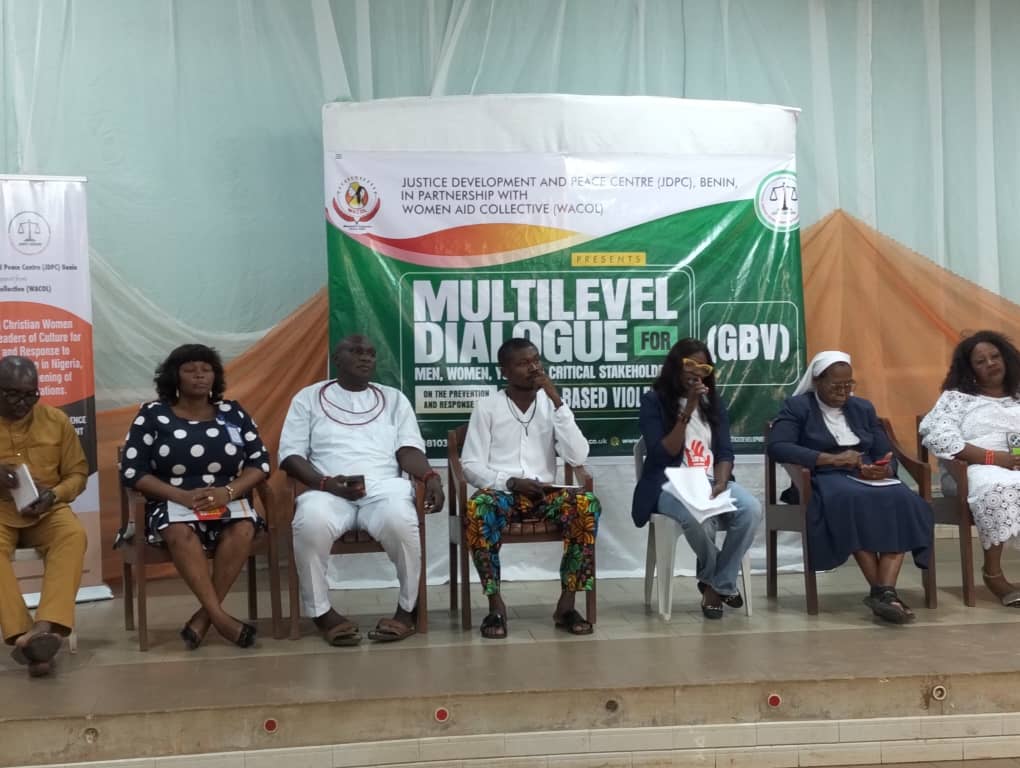
Panel of discussants at an event to commemorate the International Human Rights Day, 2025 on Wednesday called for more campaigns against Gender-Based Violence, adding that it must start from the family.
The panel of discussants drawn from religious and community leaders, security agents, members of the civil society community, chiefs, etc, made the call in Benin in an event organised by Justice Development & Peace Centre (JDPC), Benin, in collaboration with Women Aid Collective (WACOL) with the theme: Multilevel Dialogue for Men, Women, Youth and Critical Take holders on the Prevention and Response to Gender-Based Violence (GBV).
The stakeholders, who said causes of GBV are enormous, called for more enlightenment and education in the family, community and the religious circle.
Security agents in the panel charged members of the public to report GBV cases to security agents regardless of the sex Involved, adding: “When GBV happens, it should be reported to the appropriate quarters. It doesn’t matter if the woman or the man is the victim. GBV perpetrators should not be covered up, they must be exposed. We are there to carry out the prosecution after carrying out the necessary investigation.”
READ ALSO:World Human Rights Day: CSO Tasks Govt On Protection Of Lives
Earlier in his opening remarks, Executive Director, JDPC, Rev. Fr. Benedicta Onwugbenu, lamented that (GBV) remains the most prevalent in the society yet hidden because of silence from victims.
According to him, GBV knows no age, gender or race, adding that “It affects people of all ages, whether man or woman, boy or girl.”
“It affects people from different backgrounds and communities, yet it remains hidden because of silence, stigma, and fear. Victims of GBV are suffering in silence.”
On her part, Programme Director, WACOL, Mrs. Francisca Nweke, who said “women are more affected, and that is why we are emphasising on them,” stressed “we are empowering Christian women and women leaders of culture for prevention and response to Gender-Based Violence in Nigeria through the strengthening of grassroots organisations.”

 Politics4 days ago
JUST IN: Tinubu Holds Closed-door Meeting With Rivers, Ebonyi Govs
- News4 days ago
Why My Lineage Qualifies Me For Awujale Throne — K1 De-Ultimate
- Politics4 days ago
Tinubu, Six APC Governors Hold Closed-door Meeting At Aso Villa
- News5 days ago
How I and Obey’s Son Escaped Getting Caught In Benin’s Coup —Dele Momodu
- News4 days ago
Group Wants Edo AG Professorship Investigated
- News4 days ago
Gbaboyor’s Allegations Against Otuaro Baseless, Malicious — PAP Office
- Politics3 days ago
JUST IN: Fubara Dumps PDP For APC
- News4 days ago
Step-by-step Guide On How To Register For 2026 UTME
- News3 days ago
Otuaro: IPF Urges Reps To Take Caution Over Arrest Threat
- News4 days ago
FG Offered 4,000 Pregnant Women Free C-section – Report


