

News
OPINION: Aso Rock And Kitoye Ajasa’s Lickspittle Press


By Festus Adedayo
President Bola Tinubu did the unexpected last Wednesday. He attended the Nigerian Guild of Editors (NGE) Conference 2025. It was the very first for any Nigerian president. Quite absurdly, the watchdog, the Nigerian press, willingly moved into the tiger’s buba – the lair – for deliberation on its welfare. Ayinla Ade-Gaitor, the Iganna, Ìwájòwà LGA of Oyo State-born Apala musician of the 1970s/80s fame, equally wondered at this quixotic equation. My compatriots, can a tiger and a dog cohabitate in the same lair? – “K’ájá ó dúró, k’ékùn ó dúró, ńjé yíó seé se, èyin alárá wa?” Ade-Gaitor asked in his melodious Iganna-flavoured voice.
But at the 21st NGE Annual Conference (ANEC) 2025 held in its lair – the Aso Rock State House Conference Centre in Abuja – the tiger and the dog became so giddy after clinking wine glasses, so much that they both shared titivating embraces. They had both been soused to their eyeballs. When it was time for the tiger to speak, clanking its incisors menacingly and magisterially, with recent blood dripping from its lips and caked blood stuck round its nose, this strange incest reminded me of Sir Kitoye Ajasa.
Ajasa (1866 – 1937) was a Nigerian lawyer from the Saro family migrants of Dahomey, present-day Benin Republic. He was however conservative, pacifist and a lackey of the colonial authorities. While the likes of Herbert Macaulay fell out with the British rulers over their insistence that British rule was self-serving and a little in the interest of the natives, Ajasa thought otherwise. He believed that national progress could only be made if Africans were subservient to and cloned European ideas and institutions. He was an apologist of the British government, believing that criticising it was counter-productive. His reasoning was that, grovelling before white-haired, long-nosed, pink-skinned men who called themselves salvationists, was the guarantee for development.
To achieve this persuasion, Ajasa became a newspaper founder. Of course, his Nigerian Pioneer newspaper, founded in 1914, the year of Nigeria’s birth, invited so much reproach. He deliberately founded it as counterpoise to the radical Lagos Weekly Record newspaper of John Payne Jackson that was a thorn in the flesh of the colonialists. Ajasa’s brand of journalism frowned upon anti-government polemics as other papers of the time did. In return, the people of Lagos extremely distrusted it. In 1923, Ajasa wrote that his newspaper “existed in order to interpret thoroughly and accurately the Government to the people and the people to the Government”. In fact, he was a known confidant of Sir Frederick Lugard, the colonial Governor-General, and the general belief was that the Lugard government funded his Nigerian Pioneer newspaper. In its stories and editorial comments, the newspaper provided staunch support for the colonial government’s measures and cynically attacked people and organizations that were thorns in the flesh of government.
MORE FROM THE AUTHOR:[OPINION] Trump: Kurunmi’s Lessons For Tinubu
To demonstrate their opprobrium for Ajasa’s leaflet, the Nigerian Pioneer newspaper, the people scoffed at it on the newsstand. To Ajasa’s contemporaries, his lickspittling was bothersome. They could not fathom his boot-licking attitude and openly disdained his Nigerian Pioneer as “the guardian angel of an oligarchy of reactionaries”.
Ajasa’s newspaper itself became more or less the unofficial bulletin of the colonial government. It publicly mocked nationalists who fought for development and in a particular case, in the 1916 Lagos water rate protest against the colonial government, Ajasa labeled agitators like Macaulay ‘radicals.’ In 1921, with the help of Alimotu Pelewura, leader of Lagos Women’s Association, the powerful market women’s group, who at her death in 1951, was succeeded by Abibatu Mogaji, Macaulay again led a major protest on this agitation. To Ajasa, the colonized natives must fully adopt European ideas and institutions as expressway to national progress. He was in the Nigerian parliament till 1933 and shortly after 1937 when he died, the Nigerian Pioneer died.
So, when on Wednesday, President Tinubu urged the Nigerian media to “report boldly, but do so truthfully; critique government policy but do so with knowledge and fairness. Your aim must never be to tear down, but to help build a better society,” my mind told me that that fluid and racy speech was for the klieg. In actual fact, the president wanted Kitoye Ajasa-reincarnates for journalists, an Ajitóoba-phlegm-eater – media conscripts who would blind their eyes to government’s wobbly feet at national parade. Just as Kitoye Ajasa did for Frederick Lugard and the British colonial lords.
Since Lugard, the Kitoye Adisa-kind press had always been the preference of governments thereafter. Ever since the establishment of the Nigerian Daily Times on June 1, 1926 and even prior, the Nigerian press and Nigerians themselves had always been thirsty for adversarial journalism as a weapon of combating the colonial government. Since then, the Nigerian media’s treatment of news became binary: it was either they were for the people against government, or against the people, but in romance with government, like Kitoye Ajasa’s.
Since the Muhammadu Buhari government, the Nigerian media has operated under a very precarious situation. Its first blow was economic. As Eze Anaba, the editors’ president said, the Nigerian democracy, resilient through the ages, is currently under the bayonet of “insecurity, economic hardship, misinformation, and declining public trust in institutions, (as well as) government officials’ intolerance, sometimes, to freedom of the press.” The gravamen of Anaba’s speech can be found in his quip that “editors must therefore defend the sanctity of truth, insist on transparency, and hold power to account — not as adversaries of government, but as constructive partners in the pursuit of national progress.”
MORE FROM THE AUTHOR:OPINION: Abulu, The Prophetic Madman, At Akure Summit
In what would look like a systematic but gradual decimation of the Nigerian press, governments have since 1999 corroded its powers. The ostensible aim is to ensure that the Nigerian press barks but bites seldom. For those who can recall, the battle to wean Nigeria of military rule was largely fought on the pages of its newspapers. The press literally yielded its space for democracy activists to make use of it for their campaign for democracy. In the process, many journalists were sacrificed. Many were jailed and maimed. Bagauda Kaltho of The News signposted the clan of journalists who paid the ultimate price, in anticipation of liberty for Nigerians today. The newspaper press was so formidable that both Generals Ibrahim Babangida and Sani Abacha had to roll out tanks to extinguish its irritating flame. At the end of the day, the Nigerian press was largely responsible for the rout of military rule in Nigeria and its replacement with civil rule.
By 1999 when Nigeria returned power to civilians, the Nigerian newspaper press was still blistering. Its armaments were still potent and practitioners retained their energy which seemed to be bursting at its seams. Not long after the commencement of the Fourth Republic, the newspaper press made public examples of the carried-over rots of Nigeria’s governmental dysfunctionality. One after the other, even at a time when its tools were analogue, the press made mincemeat of public officers who, as it was later revealed, were evil doppelgängers of what they claimed to be in public. Salisu Buhari, the young Kano State legislator, who became Speaker of the House of Representatives, had his bubble burst. So also did Evan Enwerem. But for his street craftiness, the man who is the Nigerian president today would have been drowned by that hyper-ventilating press energy of the early 4th Republic.
The press of this period’s investigative acumen was top-notch and it could compete with any newspaper press anywhere in the world. My haunch is that, alarmed by the enormous power at its disposal and the system-purifying but dirty people-destroying powers within its grips, governments since 1999, either deliberately or otherwise, perfected plans to castrate the deadly watchdog of the Nigerian press. Today, they have made a huge success of this engagement. The success is such that, the wily politicians in agbada, babariga and Ishiagu can thump their individual chests that the battle to rid the Nigerian governance space of the irritancy of the Nigerian press, which the military, with their tanks and artillery, couldn’t achieve in decades, were effortlessly executed by them.
Today, the Nigerian newspaper press has been so mercilessly drubbed that it is barely existing. Gradually, an underground and sustained shellacking was waged on it and what is left is its decimated carcass. Many of Nigeria’s erstwhile matador press houses, where the warriors who fought military rule to a standstill operated from, are desecrated and abandoned. Their print-runs are caricatures of those noble eras when they proudly bore the tag “mass” in their media operations. Governments after governments since 1999 would seem to have deliberately jerked up costs of running newspapers to the league of what you needed to procure nukes. The newsroom has emaciated so terribly that you would imagine it was afflicted by a weight-pining cancer.
MORE FROM THE AUTHOR:OPINION: Ted Cruz’s Genocide, Blasphemy And Ida The Slave Boy
Last Wednesday, I reckon that the tiger was happy that the watchdog had been finally castrated, can bark and cannot bite. It lay prostrate by its feet with a begging bowl. All those ills that plague the Nigerian media today, itemized by Anaba, the League’s president, are physical manifestations of a conquered press whose conquest is a product of gradual decimation. The graveyard of the print media is luxuriant with lofty memories.
Thanks to the broadcast and social media which have both taken over the “mass” in print journalism’s erstwhile “mass media” pedigree. But for them, the Nigerian press would have today been a totally conquered battlefield. The watchdog must have entered the tiger’s lair last Wednesday, believing that the tiger’s smiles approximated its love for it. Truth be told, in the eyes of its newly acquired tiger friend, the press is a gourmet meal it has prepared for the dining table. Odolaye Aremu, Ilorin’s talented bard, once explained the danger in that emergency dalliance. “Adìye òpìpí” is the Yoruba name for a featherless hen which, in stature and outlook, bears striking resemblance to a hawk. The bard warned this hawk-lookalike hen to be wary of its newfound friendship with this carnivore, lest its entrails end in the belly of the raptor. Perhaps deceived that, being a media owner himself, like Odolaye’s òpìpí hen, the president is one of them, the Nigerian press, like this mistaken hen, would realize its folly too late when its flesh ends inside the hawk’s belly.
Any country of the world where the press and government are cosseted in such an amorous and adulterous relationship as we saw in Aso Rock last Wednesday has unilaterally tossed good governance out of its window. It reminds me of a paraphrase of a famous quote by US Supreme Court Justice, Hugo Black. Black wrote: “The press was protected so that it could bare the secrets of the government and inform the people. Only a free and unrestrained press can effectively expose deception in government. And paramount among the responsibilities of a free press is the duty to prevent any part of the government from deceiving the people.” But, when the press deliberately hands itself over to government, what then happens?
The Nigerian press today lives in The Wailers’ archetypal concrete jungle. In this jungle, though there are no physical chains around its feet, it is not free. Three young Jamaican boys, which included Bob Marley, had in 1973, in their ‘Catch A Fire’ album, sang about the melancholic life of a wanderer which the Nigerian press found itself living today. Glory lost, barely living and now captive in the hands of the state, those young Jamaican boys’ melancholy is a fitting description of today›s press.
The only way the Nigerian media can play its rightful role in the success of democracy, especially the success of the Tinubu government, isn’t by sucking up to people in power or being their lapdog. A century after Kitoye Ajasa played his groveling role to Lugard and British colonialists, history hasn’t forgotten him. It reserves a place for him till today. What will it say about us tomorrow?




News
Iranian Airlines Hit By US Sanctions As Oil Prices Rise On Saudi Attacks

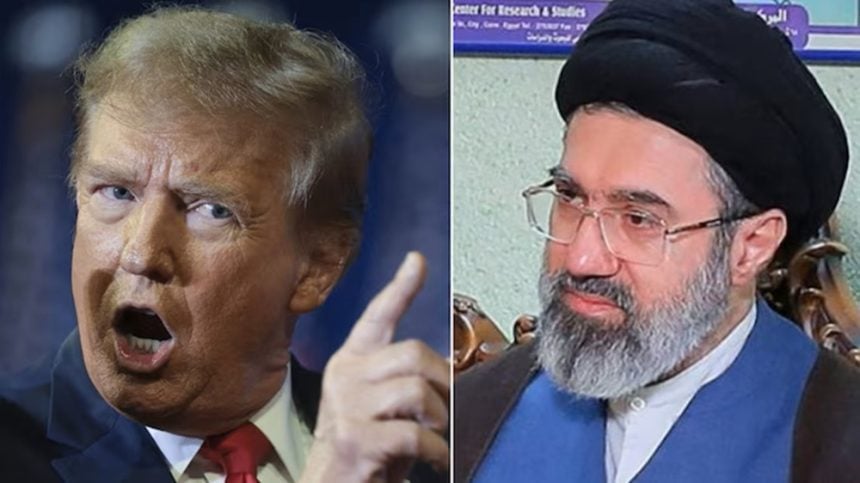
Iranian airlines have been barred from operating in several neighbouring countries following the implementation of new US sanctions, as the wider Middle East conflict continued to put pressure on regional energy supplies and push oil prices higher.
The United Arab Emirates suspended all flights operated by Iranian airlines until further notice after a US deadline for companies around the world to stop doing business with Iran’s aviation sector expired.
Iran’s Tasnim news agency also reported that flights to Oman, Georgia, Azerbaijan and Baghdad had been halted. Iranian authorities were reportedly working to redirect some services to Najaf in Iraq.
The measures are part of a broader US effort to isolate Iran economically by imposing sanctions on companies in third countries that continue doing business with Iranian firms.
Washington had set September 23 as the deadline for companies worldwide to comply with restrictions targeting Iranian airlines, with the stated aim of grounding Iran’s entire civilian aircraft fleet.
READ ALSO: Iran War Is ‘Small Potatoes’ For US – Trump
The restrictions have already affected Iran’s international air links, with Tehran’s Imam Khomeini Airport showing scheduled services to countries including Afghanistan, Armenia, China, Iraq, Pakistan, Tajikistan and Turkey, but no flights to or from several Gulf states.
Iran has warned that neighbouring countries complying with the US restrictions could face retaliation.
A senior Iranian official warned on Wednesday that airports in countries enforcing the ban could be made “unusable”.
The latest sanctions came as tensions across the region continued to affect global energy markets.
Oil prices rose sharply on Thursday after Yemen’s Iran-backed Houthi fighters launched missile attacks against Saudi Arabia, raising fresh concerns about disruptions to crude supplies.
READ ALSO: Iran Plans New Restricted Gulf Zone As Hormuz Tensions Rise
Saudi Arabia said it intercepted six ballistic missiles fired by the Houthis towards areas including Taif and the Yanbu region on the Red Sea.
Yanbu is particularly important to Saudi Arabia’s oil-export strategy because the port provides an alternative route for crude when shipments through the Strait of Hormuz are disrupted.
Brent crude futures settled at $106.60 a barrel, gaining $3.52, or 3.4 per cent, while US West Texas Intermediate crude rose $2.45, or 2.7 per cent, to settle at $94.61.
Both benchmarks had risen by about 5 per cent at their session highs. Brent recorded its highest closing price since September 15, while the gain represented WTI’s first rise after six consecutive sessions of losses.
The price increase came despite signs that diplomatic efforts between Washington and Tehran could eventually ease pressure on oil supplies.
READ ALSO: Iran Executes Man Accused Of Aiding US, Israel
Reuters reported that US and Iranian negotiators in New York were exploring a possible phased agreement under which Iran would reopen the Strait of Hormuz while the United States eased its economic blockade of Iran.
The Strait of Hormuz is a crucial global oil route and its disruption has been a major factor behind the volatility in energy markets during the conflict.
The prospect of negotiations helped crude prices retreat from their intraday highs.
The wider conflict has also affected Saudi Arabia’s ability to export crude. Saudi Arabia has been using its East-West pipeline to divert oil towards the Red Sea after disruptions to Gulf shipping routes. The country has been working to restore export capacity through Yanbu.
READ ALSO: Burutu Ex-Aspirants Trash Vote Of Confidence On Takeme, Demand Probe Of ₦23.7bn Council Funds
Meanwhile, the latest US sanctions threaten to deepen Iran’s economic isolation.
President Donald Trump previously described the expanded sanctions strategy as “economic D-Day”, referring to Washington’s attempt to increase pressure on Tehran by targeting companies outside Iran that continue to do business with sanctioned Iranian entities.
Iranian authorities have warned that the sanctions and wider blockade could worsen the country’s economic difficulties.
The latest developments have therefore created two competing pressures for oil markets: continued military escalation around major energy infrastructure and shipping routes could push prices higher, while progress in US-Iran negotiations and a reopening of the Strait of Hormuz could ease supply concerns.
(Reuters)
News
Report: UK Considers Raising Tax-free Allowance To £15,570


The UK government is reportedly considering increasing the personal income tax allowance from £12,570 to £15,570, a move that could leave millions of workers with more disposable income and prevent most state pensioners from paying tax on part of next year’s pension increase.
The proposal, reported by Sky News citing The Telegraph, would represent the first increase in the personal allowance in five years. The threshold has remained frozen at £12,570 since 2021.
If implemented, the new threshold would be close to the level the allowance might have reached had it continued rising instead of being frozen.
The proposal is being considered by Chancellor John Healey and Prime Minister Andy Burnham, according to the report. It was suggested by Labour donor and Ecotricity owner Dale Vince.
READ ALSO: UK Inflation Rises To Five-month High, Putting Pressure On Bank Of England
Vince said: “If Labour wants to get the economy moving, it should put money into the pockets of people who will spend it.”
He added: “Raising the personal allowance to £15,570 would give millions of people a meaningful boost, with the biggest benefit going to those on the lowest incomes.”
He proposed funding the measure through changes to capital gains tax and by ending interest payments on Bank of England reserves.
“We can pay for it by making the tax system fairer – starting with capital gains and the billions we currently hand to banks in interest,” Vince said.
READ ALSO:Fish Virus Outbreak Hits UK Facilities
However, the government has not confirmed that the proposal will be included in the upcoming Budget.
A Treasury spokesperson said decisions on taxation were matters for the Chancellor to announce at fiscal events, rather than issues the department would “routinely comment on rumour, speculation or proposals”.
The proposed increase could also address an issue facing pensioners.
The UK’s state pension is expected to rise by 3.9% next April under the government’s triple lock system, which guarantees an annual increase based on whichever is highest among inflation, average wage growth or 2.5%.
Provisional wage figures show growth of 3.9%, meaning the full new state pension could increase from £12,547.60 to about £13,036.60.
READ ALSO:Over 150 UK Flights Cancelled After Air Traffic Glitch
That would put the state pension above the current £12,570 personal allowance by approximately £457.
For pensioners with total retirement income below £50,270, that amount would normally be subject to the basic 20% income tax rate, potentially resulting in an annual tax bill of about £91.40.
Increasing the personal allowance to £15,570 would place the projected state pension below the new threshold, meaning pensioners would not pay income tax on the state pension itself, assuming they had no other taxable income.
The proposal comes as the government faces pressure over its finances ahead of the next Budget.
READ ALSO:Top 10 Degrees That Provide Fastest Payback In UK
Official figures showed that the UK public sector borrowed £18.3bn in August, the second-highest borrowing figure recorded for the month. Borrowing for the financial year so far was also £8.1bn above the level forecast by the Office for Budget Responsibility.
The government is therefore expected to face difficult decisions over taxation and spending when the Chancellor delivers the Budget.
Other possible tax changes under discussion include changes to capital gains tax and the proposed high-value council tax surcharge on expensive properties.
No decision on the personal allowance has been announced, and the final policy will depend on the Chancellor’s Budget decisions.
(skynews)
News
Six Corps Members Receive N10m Grants To Boost Agribusiness

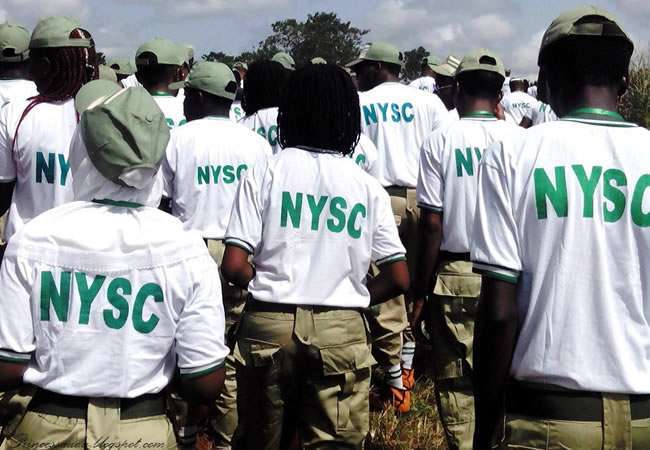
Six members of the National Youth Service Corps (NYSC) have received a total of N10 million in grants to expand their agribusiness ventures under the Farmers for the Future Programme.
The programme was organised on Monday by the British American Tobacco Nigeria Foundation (BATNF) in collaboration with the NYSC to encourage young Nigerians to embrace agriculture and develop sustainable businesses.
Presenting the cheques to the beneficiaries in Abuja, the NYSC Director-General, Brigadier General Olakunle Nafiu, urged Corps members to maximise the opportunities provided by the service year by venturing into commodity marketing and other viable businesses.
Nafiu said agribusiness remained a viable avenue for young people to build sustainable enterprises, create employment and generate wealth.
READ ALSO: NYSC Swears In 1,600 Corps Members In Bauchi
He also stressed the importance of value addition to the success and sustainability of business ventures, while commending BATNF for placing Nigerian youths at the centre of its entrepreneurship initiatives through value-chain development, employment creation and its partnership with the NYSC.
“I charge you to spread the news around. We have seen the outcome, and it is a good idea,” he said.
The beneficiaries are Dominic Olufemi (FC/25C/1143), who received N3 million; Temitope Adewole (ED/26A/2251), N2 million; Abdulwaheed Bala (ED/25B/1402), N2 million; Olanike Mayungbe (OG/26B/1037), N1 million; Kingsley Udoeyen (KG/26A/1735), N1 million; and Lorember Lorsue (JG/25B/1742), N1 million.
Speaking on the selection process, the Acting Director, Skills Acquisition and Entrepreneurship Development (SAED), Mrs Winifred Shopeka, said the programme began with an online registration portal through which Corps Members engaged in agribusiness submitted their business plans.
READ ALSO: NCCSALW Deploys NYSC Members In Fight Against Illegal Arms In Northeast
She said nearly 3,000 Corps members applied and underwent a rigorous selection process that produced 20 finalists.
According to her, the finalists participated in a boot camp and a final pitching session, which produced the 10 best presenters before the six ultimate winners were selected.
Shopeka said the beneficiaries had also been mentored and attached to established market operators to assist them in marketing their products.
She added that Corps Members who did not make the final stage of the competition were also trained by BATNF.
The BATNF Team Lead, Mr Oludare Odusanya, congratulated the beneficiaries and urged Corps Members engaged in agribusiness to master the fundamentals and acquire the knowledge and skills necessary to succeed.
“We are happy with our collaboration with the NYSC, and it will continue,” he said.
READ ALSO: NYSC Lauds Gov. Mohammed’s Intervention In Fence Collapse
Odusanya explained that BATNF was an independent organisation established to contribute to poverty reduction in Nigeria through sustainable agricultural practices and other interventions.
He said the Farmers for the Future Programme was instituted in collaboration with the NYSC to encourage Corps Members to venture into agribusiness and become job creators.
He added that the beneficiaries would be attached to mentors who would guide them towards achieving success in their respective businesses.
According to him, the programme has, since its inception, continued to enhance the entrepreneurial capacity of Corps Members.
-

 News4 days ago
BREAKING: Tinubu Extends Working Vacation
-

 News5 days ago
Six Hidden Health Benefits Of Unsweetened Zobo
-

 News5 days ago
Jehovah’s Witnesses Announce New Position On Blood Transfusion Policy
-

 News5 days ago
How 36 Nigerian States Got Their Names
-

 News5 days ago
2027: Step-by-step Guide To Applying For INEC Ad Hoc Staff Recruitment
-

 Headline4 days ago
How To Format An Academic CV For US Master’s, PhD Applications
-

 Headline5 days ago
Nigerian Man Jailed After Masturbating In Front Of Woman On UK Train
-

 Business5 days ago
Naira Appreciates Against Dollar At Official FX Market
-

 News4 days ago
Benue Govt Suspends Muslim Pilgrims Welfare Board Chairman, Secretary
-

 News5 days ago
Stop Acid Reflux Pain: Foods You Must Ban From Your Kitchen