

News
OPINION : Awujale’s Burial And Aso Rock’s Graveyard Politics


Why should I bother myself with what is done to my body when I die? Oyomesi (the council of seven high-ranking chiefs in the Oyo Empire) knows what to do with my body!” That was what immediate past Alaafin of Oyo, Oba Lamidi Adeyemi 111, told me in his palace, a few weeks before he journeyed to Ibara – where Oyo buries its kings. He was furious with Ogun State traditional rulers. His grouse was with the Obas and Chiefs Law of 2021. That law has aberrant stipulations that are repugnant to tradition and customs. One of them is the provision stipulating that traditional rulers can be buried according to their religious dispositions. The Awujale of Ijebuland, Oba Sikiru Adetona, who recently passed, initiated it. The bill sought to make “a law to provide for the Preservation, Protection and Exercise by Traditional Rulers of their fundamental rights to be installed and buried according to their religions or beliefs and for other related matters.” In 2022, Governor Dapo Abiodun became the pall-bearer of this sacred, even if mythical, ritual of traditional burial of kings transmitted from our forebears.
To fortify institutions and systems that they revered, our forebears curated a number of taboos, myths, wise-sayings and social mores which served to make them distinct in everyday relations. An ancient saying that explains the secrecy of their kings’ burial is, “it is a taboo (èèwò) to bury the initiate the same way you bury a non-initiate.” It is one of Yoruba’s ancient aphorisms which escaped into the modern time. Though modernity has afforded us opportunity to see those inherited myths as mere decorative palm fronds (màrìwò) on a masquerade, they are the pillars upon which Yoruba traditional institution stands.
On Tuesday last week, as I stepped into the Obafemi Awolowo Auditorium of the Federal University of Technology, Akure (FUTA) Ondo State, I was confronted with two choices. Before me were traditional rulers of immense renown. They gúnwà-ed (pardon my inflection for their royal sitting) in their ancient majesties. The Olowo of Owo and Chairman of the State Council of Traditional Rulers, Oba Ajibade Gbadegesin, Ogunoye III, was there. He reminded me of one of his mythical predecessors, Sir Olateru Olagbegi, KBE. The Deji of Akure, Oba Aladetoyinbo Ogunlade Aladelusi, whose stool parades lustering pedigree of great kings like the British-trained lawyer, 42nd Deji, Oba Ademuwagun Adesida, was there. The king of my village, Ilu Abo, and former Secretary to the Government of the Federation, Oba Olu Falae, was there. And many others. They were all gathered for the 10th coronation anniversary colloquium of the Deji. The topic for discussion was, “Role of Nigeria’s Traditional Institutions in Nation Building: Impediments and Prospects” and I was one of its three discussants. The options before me were binary: Give the Kabiyesis the platitudes they were used to, or tell them the absolute truth they needed to know? I chose the latter.
So, I began. The traditional institution parades a great pedigree. Today, however, the traditional institution is at its lowest ebb. Seldom regarded, kings would seem to have lost their relevance and sacredness. Entrance into the institution has been generally bastardized. Money dictates who becomes king and in the process, illegitimates and dregs of society get smuggled into the system. An Oba is known to smoke marijuana. The bulk of them are land-grabbers who make money from the tears of their people. We now have kings who are ignorant about the customs of their people. I once heard a thoroughly confused Oba introduce himself as “Oba Assistant Pastor” on television. The most annoying part of it is the ease with which they repudiate the customs and myths surrounding their offices. The latest is the funeral of the late Awujale of Ijebuland. A few days ago, Kabiyesi, one of the most revered monarchs of Yorubaland, was buried like an ordinary mortal and soldiers prevented traditionalists from having a hand in his burial. As I spoke, there was pin-drop silence. While many felt I was audacious in the presence of the Irunmole, some agreed that our fathers needed to hear the gospel truth. “The traditional institution must redeem itself if it wants to be taken seriously,” I concluded.
MORE FROM THE AUTHOR: OPINION: The Rotten Apples At Louis Edet House
In an interview Oba Adetona granted before his death, he cavalierly disdained the traditional institution. A valiant man who stood staunchly against General Sani Abacha, in that interview, Awujale exposed virtually all the sacred innards of Yoruba kingship. For instance, the cult of secrecy preceding installation of Yoruba kings got massively shellacked by the Awujale. “What we did in seclusion is nothing secret. We were just there making merry and enjoying ourselves while relatives, friends and other well-wishers come around to visit and rejoice with the king. What is the fortification they are talking about? …Where were the traditionalists you talk about then? And what rites are you referring to? I cannot recall any rite that was done behind the scene. Let them come and tell me. It is all lies. Nothing like that. They even tell you that they give the heart of a deceased Oba to the new one to eat! They are crazy…I didn’t eat anything oooo. So, no such thing happened,” he said.
This was the very first time I would see a Yoruba king expose and explode the myths of the centuries-old traditional institution. By their very definition, myths are lies. You will find many of Yoruba ancient myths in German editor, scholar and writer, Ulli Beier’s book with the title, Yoruba Myths (1980). Andrew Apter of the Yale University, in his journal article entitled, “The Historiography of Yoruba Myth and Ritual” History in Africa, Vol. 14 (1987), pp. 1-25, said of it, “Myth is… a false reflection of the past” or a “testimony of the past in oral societies”.
Several other myths were curated to fortify their kingship system. Yoruba needed to differentiate their kings from ordinary mortals. Their aim was to invoke dread, respect and an eternal relevance for the system. One is that, kings’ heads are not to be seen by ordinary mortals. The rationale is that, if every Tom, Dick and Harry sees and touches their kings’ heads, it deconstructs them and the overall system. Again, in the process of carving immortality for their kings, Yoruba compare them to the gods, “igbá kejì òrìsà” and say their kings do not die. So, if they don’t die, a taboo was then needed to literally demonize sighting the corpse of an Oba. Like Christians did to mythologize their founding patriarch, Jesus Christ, the Yoruba also created and surrounded their kings with myths. It is a taboo, for instance, to say an Oba dies but appropriate to use the euphemism, “Oba w’àjà” – he ascended up through the rafters. Obas’ exits are not announced like mortals’ but with elements of sacredness and sobriety. As Christians are not allowed to query the non-empirical claim of their patriarch’s birth and anyone who does so is a social outcast or an atheist, the Yoruba do not take kindly to attempts to remove the ancient shawls surrounding their kings.
MORE FROM THE AUTHOR: [OPINION] ADC: Death, Onikoyi And A Hunter’s Pouch
Myths were essential to the ancient Yoruba people. Many of them are found in palaces. For instance, if you enter the palace of the Alaafin of Oyo today, you must remove your shoes, sandals and slippers. It is said that it is a taboo not to. No one has ever been let into the repercussions of dissension. Until recently, no one shook the hands of an Oba. Oba Lamidi Adeyemi was lucky. As he aged, providence, the designer of his visage, decorated his face with dread. You couldn’t look at Oba Adeyemi’s face without a dread running down your spine. You would assume you were looking at the frightening face of a lion. As close as I was to him, whenever I was in his presence, rather than his face, I looked at my feet.
All the above make attempt by traditional rulers in Ogun State, in concert with their governor and legislators, to commonize the burial of their kings, a cultural heresy. Some other parts of Yorubaland have also partaken of this despicable heresy. All Yoruba of goodwill must get Dapo Abiodun and his co-travelers on this journey to retrace their steps. It is a calamitous journey. Obas must go through the seclusion rites of Ipebi and must be buried according to the tradition they willingly subjected themselves to. It is called traditional rule, not modern rule. The burial of Oba Lipede, the Aláké Egbaland, some years ago, was going to end up a calamity but for a momentary recourse to reason. In Ogbomoso, the body of Soun, Oba Ajagungbade III, was subjected to a despicable act of public viewing. Ibadan people seem to have made this desecration of their Obas’ bodies an art. They did it with the bodies of two previous Olubadan who ‘w’àjà’-ed, Oba Saliu Adetunji and Oba Lekan Balogun. The two Obas’ bodies were carted round and about like skinned goats from the abattoir. The greatest calamity would have befallen Yorubaland when Aláàfin Adeyemi ‘w’àjà’-ed and Islamicists attempted to bury him like an ordinary mortal. It took the firmness of Sango cult adherents to stop the drift. They instantly stopped the madness.
I have heard canvassers for the modernization of traditional institutions talk about the dynamism of culture. Yes, I agree, culture is not static and should not be resistant to change. However, as I said earlier, the glue that holds that institution in this age of modernity is the survival of those ancient myths. Without them, kings lose their differentiation from all of us. Come to think of it, why are so-called kings this cowardly that they are afraid of what becomes of their bodies which would be consumed by maggots anyway? Even an atheist, Dr. Tai Solarin, asked that his body parts should be given to medical students for anatomical studies.
At the Deji of Akure’s 10th coronation, the Olowo of Owo came to the rescue of the institution of his forefathers. He told anyone not ready to take the heat to steer clear of the kitchen.
MORE FROM THE AUTHOR: OPINION: Tinubu’s Chicago Certificate As Afó’kéèmù
Still talking about burials, the passage of President Muhammadu Buhari has elicited diverse comments. To start with, I do not agree that when a person dies, regardless of the evils they commit while on earth, they should be sacralized. I began canvassing my opposition to this view, said to have been inherited from our past, long time ago. For eight good years of Buhari’s reign, I made my views of him available to all. The summary is that he was a disaster. In saner societies, his kind should never come near the dais of responsible governance. Today, many Nigerians queue where I stand.
Last week, President Bola Tinubu harvested the proceeds of Buhari’s death. I enjoyed his graveyard politics and diplomatic burial shuttles to Daura and Kano last week, ostensibly in pursuit of the mythic 12 million CPC votes said to have been sequestered in the hands of Buhari. More importantly, I hope Tinubu reckons with the lessons in his predecessor›s sudden death? One is that, you cannot sow tears and sorrow and expect a debased, pummeled and traumatized people to garland your corpse with deodorants as elegies. Apart from Tinubu and his graveyard politics crew, Nigerians literally pelted Buhari’s body with pellets at his departure.Tinubu should use this lesson to review his policies and find ways of making the rest of his life count in favour of the people. In the same vein, our traditional rulers should have a rethink. Most of them seem to have, by their conduct and proclamations, borrowing from the lesson from an ancient old anecdote, shown the fox that the crown on their cock›s head holds no fire. If we continue to label our beautiful calabash ‘pankara’, what South Africans call wanzagsi – a broken calabash – we should not be surprised if the ignorant elect to pack their dirt with it.




News
N5m, N10m Zero-interest Loans: SheVentures Opens Applications For Women Entrepreneurs


First City Monument Bank (FCMB) has opened a new round of applications for its SheVentures proposition, offering zero-interest loans of up to ₦10 million to women entrepreneurs to ease access to working capital and support business growth.
The facility provides loans ranging from ₦500,000 to ₦5 million under a general category, and ₦5 million to ₦10 million for sector-specific businesses, with funding capped at up to 50% of an applicant’s average monthly turnover.
At the centre of the offering is a 0% interest rate, with all charges embedded in a transparent structure.
Repayment is structured over four or six months, allowing businesses to match obligations with their cash flow cycles.
READ ALSO:I’ve Been Blacklisted In Music Industry For 13 Years – Seun Kuti
Yemisi Edun, Managing Director and Chief Executive of First City Monument Bank (FCMB), said the initiative reflects a deliberate approach to inclusive growth.
“Inclusive growth requires access to capital and the right conditions for businesses to deploy that capital effectively.
“Women-led enterprises are critical to economic activity, yet they face structural barriers.
This intervention aims to help close that gap by providing financing that supports job creation, business expansion, and long-term sustainability for women entrepreneurs.”
“Access to affordable finance remains a major constraint for women entrepreneurs,” said Nnenna Jacob-Ogogo, Group Head, SheVentures and Impact Segments at First City Monument Bank (FCMB).
READ ALSO:My Beef With Wizkid Is For Life – Seun Kuti
“By removing the cost barrier and offering quick, flexible funding, this zero-interest loan is designed to safeguard existing jobs, enable businesses to invest in growth initiatives, and foster resilience in challenging economic conditions.”
Women-owned businesses account for a significant share of Nigeria’s small and medium-sized enterprises but continue to face high borrowing costs and limited access to credit.
Through these efforts, SheVentures tackles persistent financing gaps facing women-led businesses, combining targeted funding with broader support to empower women entrepreneurs, encourage business innovation, and enhance their ability to compete on a national scale.
Applications for the zero-interest loan are now open.Apply now.
News
Xenophobic Attacks: Oshiomhole Tells FG To Retaliate Against South African Companies In Nigeria

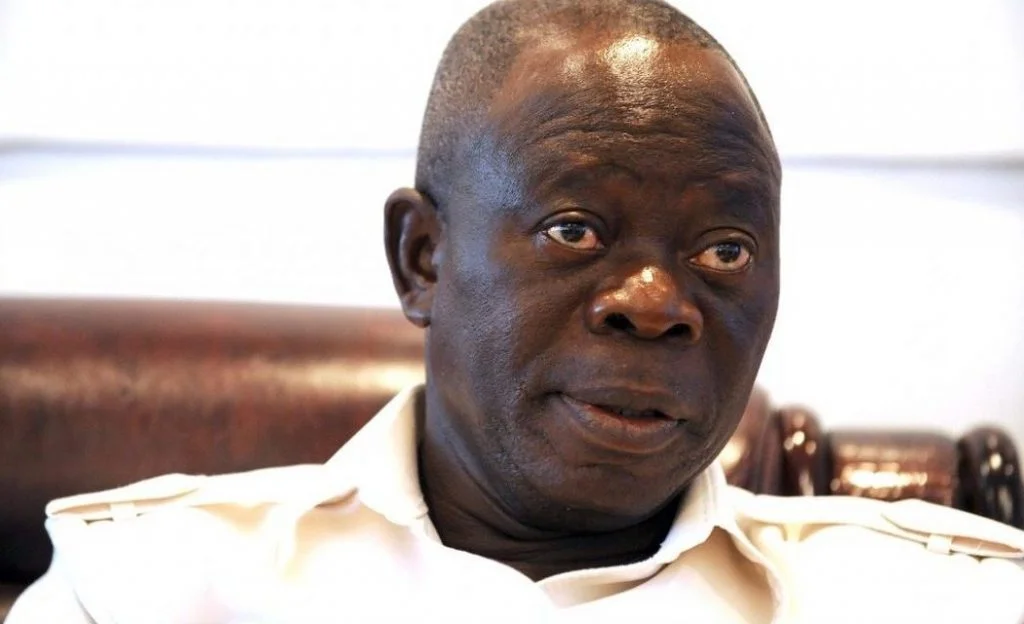
Senator Adams Oshiomhole has called on the Federal Government to retaliate against South African businesses operating in Nigeria following the recent attacks on Nigerians in South Africa.
Speaking during plenary on Tuesday, Oshiomhole said the Federal Government should consider revoking the working license of South African owned companies such as MTN and DSTV.
He argued that Nigeria must respond firmly to what he described as persistent hostility against its citizens.
READ ALSO:South Africa To Investigate ‘Mystery’ Of Planeload Of Palestinians
“I am not going to shed tears. If you hit me, I hit you. I think it is appropriate in diplomacy. It is an economic struggle,” Oshiomhole said.
He argued that while some South Africans accuse Nigerians of taking their jobs, Nigerians should return home and take over employment opportunities created by major South African companies operating in the country, including MTN and DSTV.
“When we hit back, the President of South Africa will not only talk but will also go on his knees to recognise that Nigeria cannot be intimidated.
READ ALSO:South African Ambassador Found Dead Outside Paris Hotel
“We will not condone any life being lost. If a crime has been committed under the South African law they have the right to bring any such person to justice, but to kill our people as if we are helpless, we will not allow that,” Oshiomhole added.
DAILY POST reports that several Nigerians in South Africa have reportedly been attacked, and their businesses destroyed, in ongoing xenophobic attacks in the country.
News
IGP Orders Officers Display Name Tag On Uniform, Gives Update On State Police

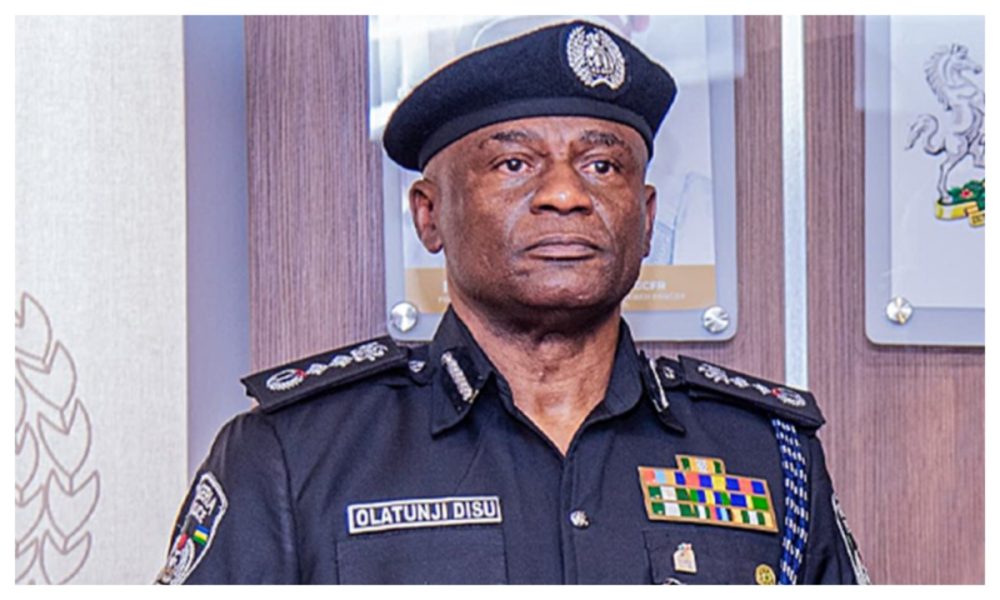
The Inspector General of Police, IGP, Tunji Disu, has ordered all police personnel to always have their name tags on their uniforms for easy identification.
Disu disclosed that only police personnel who are undercover are exempted from displaying their name tags.
Speaking on Tuesday, Disu said: “All police officers should have their name tags. All of us on the high table have our names apart from the undercover among us so if you look at all the Commissioners of Police we have our name tags, so it’s not our standard.
READ ALSO:
“All the Commissioners of Police are here and that is why we called this meeting, we have list of things like this that we will want to discuss with the Commissioners of Police, we have told them earlier and we will still let them know that every that happens within their area of jurisdiction falls under their control.”
On the issue of state police, the IGP said: “Since we got the signal that the Federal Government of Nigeria intend to establish State Police and since we are the federal police, we decided to take the bull by the horn and put down our own side of what we believe on how the state police should be run.
“A lot of things were taken into consideration, a lot of comparative analysis was done and it has been transmitted to the National Assembly.”
-

 Politics4 days ago
2027: Tinubu’s Re-election May Put An End To Nigeria — Baba Ahmed Warns
-

 Politics5 days ago
BREAKING: 2027: Former Adamawa APC Guber Candidate, Aishatu Binani Defects To NDC
-

 Business4 days ago
JUST IN: Nigerian Filling Stations Reduce Fuel Price After Hike
-

 Politics5 days ago
Senatorial Seat: Ogbakha-Edo Warns Against Imposition Of Candidates In Edo South
-

 Entertainment5 days ago
Actress Eniola Badmus Gets New Federal Appointment
-

 News2 days ago
BREAKING: Wike Picks Alabo George For Rivers Governorship
-

 News3 days ago
OPINION: Why South Africans Murder Nigerians In Cold Blood
-

 Politics4 days ago
NDC Speaks On Peter Obi, Kwankwaso Joining Party
-

 News4 days ago
2027: Pastor Adeboye Speaks On Nigeria’s Next President
-

 Politics5 days ago
2027: Pondi, Otuaro, Other Delta South Stakeholders, Endorse Senator Joel-Onowakpo For Second Term
