
News
OPINION: Babangida’s Journey And His Service

By Festus Adedayo
Since Thursday when his autobiography, A Journey In Service, was launched, former military president, Ibrahim Badamasi Babangida, has taken center-stage of national attention. The autobiography reminds me of James Hadley Chase’s Make the Corpse Walk. It is the story of eccentric millionaire, Kester Weidmann, who in his weirdest best, believed money could buy everything, life and death inclusive. So, one day, Weidmann woke up with the crazy idea that his dead brother could be brought back to life. He then enlisted the services of a voodoo specialist to perform this crazed task. Rollo, crooked nightclub, owner was his perfect find to act out this massive con artistry of a lifetime. Things however went awry with the cast of this weird task who soon told themselves that Weidmann’s wealth was more attractive a pie than his absurd voodoo fabrication.
A couple of weeks ago, I recall citing Dr. Nina Mba’s description of biographers as “People who knead people.” It was in the process of taking a bird’s-eye view of Chief Bisi Akande’s autobiography, My Participations. My interpretation of Mba’s phrasal coinage was that biographers knead their subjects like bakers make raw flour into edible pancake, doughnut or bread. I also found my own label for autobiographers. Many a times, I submitted, they are self-conjurers. A Journey In Service didn’t just attempt to knead an edible dough out of an IBB Nigerians would love to hate, it is a re-conjuration, a Nigerian Kester Weidmann retired Army General, ex-Head of State and military dictator’s attempt to knead a compelling dough from his raw self-perception in the estimation of history.
While the last 25 years of civilian rule have paraded accidents as leaders, Babangida wanted power, romanced power, was besotted by power and prepared for power, mentally and physically. While in office, his statecraft and style of leadership were a total lift from and replica portraiture of the precepts in The Prince, 16th century Italian writer, diplomat and politician, Niccolo Machiavelli’s famous but deadly portrait of and prescriptions for tough leadership.
To reinforce this and create a look-alike model of Machiavelli’s quintessential ruler, IBB garnished power with the deadly image of a lethal ruler. In the same vein, he decorated the cottage of power with the sweet icing of a patrimonial leader. Like Machiavelli, Babangida concentrated and centered power round himself. This gave semblance of a leadership that was people-centered, under the pretence of running a government that carried the people along. He was also unpredictable and eccentric with power, like the Machiavelli Prince, springing surprises at the drop of a hat, a portraiture that is also a dip into the playbook of Machiavelli. In the same way, like a concentration camp, he gathered people of contravening persuasions into government, sucking them in via gifts and purchase of their loyalties. Respected academics fell to his suasion through appointments while his smiles acted as facade to hide the graffiti of a sadistic rule.
MORE FROM THE AUTHOR: OPINION: Nuhu Ribadu’s Hell And Other Hellish Stories
Like Machiavelli, IBB believed in the withdrawal of force from his scabbard and unleashing it to silence opposition. In the same vein, his smilingly harmless look turned his opposition into jelly. For instance, he swayed hitherto unbending critics like Tai Solarin who he brought into the People’s Bank and subsequently humiliated. Babangida ran a government that was unpredictable and which he maneuvered to sustain his hold in office. He was a genie of a genius, deservedly earning the sobriquets of “evil genius” and “Maradona.” But, as a replay of the epic downfall of Emperors, rulers and suzerains of old has shown, wisdom kills the wise. Many times, they die in graveyards dug by the unwise. My people render this as “Ogbón pa ọlọgbọn ”.
Very few Nigerian leaders built institutions that endure like Babangida. In A Journey In Service, Babangida gave an impression of a ruler who was not driven by self to serve. Which was not completely true. By the time he vacated power in 1993, allegations of frittering off more than $14 Billion 1992 Gulf War oil windfall hung on his head like a Sword of Damocles.
While A Journey In Service contains the histrionics of Babangida’s eight-year rule, it sidestepped some basic realities that Nigerians had to grapple with within this period. Of all these, Babangida’s handling of the political transition programme of his administration would seem to be the hugest pain whose hurt has refused to disappear from the Nigerian backbone. This makes Chapter 12 of his memoir, which comes under the title “Transition to Civil Rule and the June 12 Saga” the most contentious of the autobiography. Therein, IBB made spirited efforts to explain off his clear mindedness and intention of bequeathing a civilian government to Nigerians. Data on ground however point at a self-vaunting ambition for life rule. He started off by rationalizing his government’s political agenda, beginning with the political bureau. The more he explained, the more he revealed gaping holes fraught with his demonstrable intention to transmute into a civilian president. His romance with diarchy is a clear example.
During the twilight of his rule, with the June 12 fiasco becoming a whirlwind, it was as if Babangida was shopping for justifications for the annulment of the election, right, left and center. At another time, he said the annulment of the election was due to the fact that some military officers had sworn that Abiola would never be president of Nigeria. He then glibly called for a new election which would still lead to the handing over of power on August 27, 1993, setting new criteria for eligibility to contest. The whirlwind eventually swept him off, with a quixotic admittance that he was “stepping aside” form power.
MORE FROM THE AUTHOR: OPINION: Bisi Akande, Poverty And Ige’s Death
A Journey In Service, while collating some of the events above, attempted to rationalize Babangida’s decisions for taking fatal decisions of state but fell face flat, and fatally, too. For instance, he attempted to state that he was not a power-besotting ruler, which was a wrong self-appraisal. As he retreated to Minna in August, 1993, palpable fears hovered in the polity that he would yet take over the reins of office of Nigerian president in the shortest time. On August 15, 2006, in an interview he granted the Financial Times, he gave inkling of his intention to fulfil this fear. He had vaguely told the newspaper that in 2007, he would run for office “under the banner of the Nigerian people”. Less than three months after, specifically on November 8, 2006, he showed up to pick the party nomination form of the PDP which the then chairman, Ahmadu Alli, personally issued him. Not long after, IBB timidly fled like a frightened cat, from his aspiration, citing as reason for the withdrawal which people found untenable. He had said that his withdrawal was due to a “moral dilemma” because the younger brother of Shehu Yar-Adua, his late military boss, Umaru Musa Yar’Adua, was also in the race. The speculation was however that he ran inside his hole as a result of mounting opposition. Again, in September, 2010, the retired General expressed the desire to run for the 2011 presidential election but withdrew the intention almost immediately.
The book is also a fatal deconstruction of a Babangida whose heroism and valour were almost a legend before now. It would have been better if Babangida had continued playing the ostrich on June 12 by not talking about it at all. Nigerians, and indeed the world, would have continued to be beguiled by the facade picture of a tough hombre Babangida. In that wise, Babangida would have gone to his grave with the impression of a man of valour. Recall that, at some point in his rule, he had told a news-magazine that he loved dreaded military Generals, 19th century Shaka the Zulu, often depicted with a long throwing assegai and heavy shield; and Hannibal, a Carthaginian military general and statesman who led the forces of Carthage against the Roman Republic. When the interviewers reminded Babangida that both were ruthless and dreaded, he flashed his gap-tooth in a weird grin.
What we have in A Journey In Service is a pusillanimous army General that didn’t resemble the picture of General Babangida we had. The General in that book, on the outward, merely wears the epaulette of a valiant five-star General but was a buck-passer. How does the world reconcile the picture of a Babangida who fought valiantly in the civil war and got wounded in the process; one who smilingly and fearlessly almost disarmed Lt- Col Bukar Suka Dimka inside the Radio Nigeria studio; who had the steely heart to order the execution of his best friend, Mamman Vatsa, now selling himself the portraiture of a Sani Abacha bootlicker? The book is a portrait of a military General who didn’t want to die after Gideon Orkar fiercely dealt him a mortal blow inside the Dodan Barracks. It appears to every reader, back-grounded by what we heard in April 1990, though he refuted it, that aftermath his rescue by Abacha, a blood oath was made between the duo to hand over power to the Kanuri-born psychopath General. All the fatal decisions Babangida later took were predicated on this assumption. He was sore afraid of Abacha and his sadism and in the process, cost Nigerians their lives in their thousands, vicariously triggered the disequilibrium Nigeria witnessed thereafter and was responsible for the trillions of Naira Nigeria wasted in the process. Babangida is also vicariously responsible for the ghastly rule of Abacha, the many people he killed and the stagnation of reason during the period.
MORE FROM THE AUTHOR: [OPINION] Islam: Beyond terrorism and Boko Haram [Monday Lines 1]
That chapter on June 12 was just a buck-passing script. It drowned the other revealing and intellectually stimulating chapters of the book which are very useful for historical corroboration of facts and fictions. Unfortunately, virtually all the dramatis personae of the election are now diseased. Did Babangida wait for this auspicious moment to unleash his revisionist chapter of his memoir? Or, was it merely to make peace with history and his creator when he passes? Whatever it is, that chapter was poor artistry. It is akin to eccentric millionaire, Kester Weidmann’s weird attempt to make a corpse walk, a clear Babangida absurd voodoo fabrication of sainthood for himself. Thirty two years after, the anti-hero of that grisly political drama which almost splintered Nigeria and was on the verge of tossing the country into a huge internecine war, chose to canonize himself.
However, A Journey In Service has shown the path of a road to travel wide open to travelers in government. Babangida traced his geneology from grandfather, Malam Ibrahim, a prominent Muslim cleric and wanderer who migrated from Sokoto to Kano and Kontagora and settled in Wushishi. He also wrote about how Ibrahim married his pretty wife, Halima. He traced the family roots up to his father, Malam Muhammadu Badamasi, ostensibly to explain how he got his middle name, ‘Badamasi’ which many confused with ‘Gbadamosi’ a Yoruba name. Now, or in the future, we will expect President Tinubu, VP Kashim Shettima’s and others’ autobiographies. They must all write their memoirs, so that we can indeed meet the characters who govern us.
Lastly, many have disdained the gathering in Abuja for the book launch and the huge billions of Naira announced as donations. No one remembered to even offer a minute silence for the dead of June 12. The gathering has been explained off as elite regrouping and this class’ clear disconnect from the everyday issues of the average Nigerian. It should serve as a lesson to the Nigerian people. In Osun State now, power-mongers are seeking state capture, the same way IBB sought to, over three decades ago. The APC is baring its fangs, using Bola Tinubu’s hold on federal power as Malacca cane with which to grope in the dark. The Attorney General of the Federation is rudely descending into the arena with partisan and needless threat laced in the garb of harmless advice, while the IGP is flexing his muscles with impunity. As they all gathered by the feet of IBB last Thursday, they should have learned a fundamental lesson from the senescent General: that it is only an allotted time that power-wielders use; no one wears the apron of power forever until it becomes a tattered rag (Ìgbà l’oni’gba n’lo, ẹnìkan o ló ilé ayé gbó). It speaks to the temporality and ephemerality of the power they use to harass Nigerians.



News
Shatta Wale Bailed Burna Boy From Ghana Prison After Arrest For Smoking Weed – Captan

Ghanian singer, Captan, has claimed that his former record label boss, Shatta Wale, once bailed Nigerian singer Burna Boy out of prison in Ghana after he was allegedly arrested for smoking weed.
Speaking in a recent podcast interview, Captan claimed that Shatta Wale sent him and others to free Burna Boy from police custody.
He also claimed that Shatta Wale and his group once accommodated Burna Boy when he was being hunted by some dangerous men.
READ ALSO: Wale Edun Opens Up After Sack
Captan said, “I once bailed Burna Boy out of prison in Ghana when he was arrested for smoking weed. Shatta Wale sent me and some guys to go and free him from police custody.
“There was a time we also accommodated him when some people were after his life. We helped him settle the case.”
He added that he and Burna Boy are no longer in good terms after the Nigerian artist’s fallout with his mentor, Shatta Wale.
He, however, said he and Shatta Wale are open to reconciling with Burna Boy if he asks for it.
Watch the video here
News
Children’s Day: Chaos At Ogbe Stadium As Dozens Faint

Chaos erupted on Wednesday during the Children’s Day celebration as dozens of students reportedly collapsed following a stampede triggered by the use of pepper spray.
The event,
organised by the Edo State Ministry of Education at the Samuel Ogbemudia Stadium was disrupted after some male students of Ihogbe College allegedly made uncompromising advances towards female students at the venue.
A parent who identified himself as Oboh Emmanuel said, “the behaviour of those uncultured students attracted the attention of bouncers stationed at the stadium as they rebuked the male students.”
Oboh said the affected students later regrouped and attacked the bouncers, leading to a confrontation within the crowded arena.
READ ALSO:Children’s Day: Edo Commits To Child Protection
It was gathered that in the ensuing confusion, the bouncers were reported to have deployed pepper spray in an area occupied by a large number of students.
Several students, particularly female students, reportedly fainted after inhaling the substance, while others sustained injuries after being stepped on during the ensuing melee.
The panic was said to have spread across the stadium as students, teachers and parents scampered for safety.
Many of the affected students were reportedly rushed to the Edo Specialist Hospital for medical attention.
READ ALSO: Egor LG Chair, Ogbemudia, Vice, Osawe Impeached
Reacting to the incident, Chief Press Secretary to Governor Monday Okpebholo, Dr Patrick Ebojele, said the security personnel that fired the tear gas had been detained.
He said all the students, except two, that were rushed to the hospital have been discharged.
Ebojele stated that doctors wanted to observe the students till tomorrow before allowing them to go home.
“The two students are not seriously injured. Doctors want to observe them overnight. Permanent Secretary, Ministry of Education is still at the hospital. The man who used pepper spray has been detained.
“The incident did not happen the way it is being exaggerated. All modalities were put in place to ensure the children enjoyed their day.”
News
Okpebholo Salutes Edo Muslims, Seeks Continued Support, Prayers
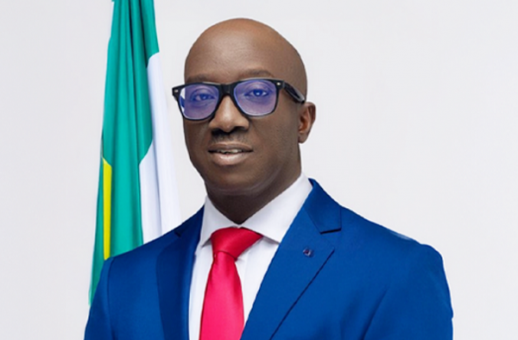
Governor Monday Okpebholo of Edo State has urged Muslims and all Nigerians to continue to pray for peace, unity and progress in the country even as they celebrate the annual Eid-al-Adha
The governor, who was represented by his deputy, Dennis Idahosa, stated this during the annual Eid-al-Adha celebration with Muslim faithfuls held at Government House in Benin City.
He reiterated his administration’s commitment to fairness, inclusivity and equal opportunities for all citizens irrespective of religion and tribe.
READ ALSO:ADC Penetrates Okpebholo’s District As Defections Strengthen Party in Edo Central
According to him, the present administration remains determined to building a government that reflects the diversity of Edo State, noting that competent and qualified Muslims have continued to play vital roles in his government because of their capacity, integrity and commitment to service.
“As a government, we remain committed to fairness, inclusivity and equal opportunity for every Edo citizen, irrespective of religion, ethnicity or political affiliation. This is why quality and competent Muslims are serving in key positions in our administration.”
Okpebholo appreciated the Muslim community in Edo State for their unwavering support and continuous prayers for his administration, noting that such prayers and support have contributed immensely to the peace and steady development being witnessed across the state.
READ ALSO:Okpebholo Felicitates Muslims On Eid-el-Fitr Celebration
He then called on all Nigerians to use the occasion of Eid-al-Adha to pray for the administration of President Bola Ahmed Tinubu, stressing that the country needs collective prayers, unity and cooperation to overcome its present economic and security challenges.
“I urge all Muslims and indeed all Nigerians to use this occasion to pray for our dear nation and for the administration of President Bola Ahmed Tinubu. Nigeria needs our collective prayers, unity and support as we strive to overcome our challenges and build a more prosperous future for all.”
In his remarks, the Chief Imam of Edo State, Abdulfatai Enabulele, applauded the governor for what he described as remarkable developmental strides recorded in less than two years in office.
The cleric commended the administration for ongoing infrastructural development and efforts geared towards improving governance in the state, but appealed to the government to revisit and complete some abandoned projects inherited from the previous administration for the benefit of the people.

 Metro5 days ago
My Husband Abandoned Me On Our Wedding Night To Attend Political Meeting, I Want Our Marriage Dissolved
- Headline4 days ago
Woman Passes Out After Receiving 100 Strokes Of Cane
- Politics5 days ago
Warri Ijaw Hail INEC Delineation Report, Call For Additional Electoral Wards, Others
- Headline4 days ago
JUST IN: White House Locked Down Briefly As Gunman Opens Fire At Security Checkpoint
- Politics3 days ago
Two Masked Men Gun Down Politician In His Rivers State Hotel
- Metro5 days ago
My Wife Stop Cooking My Food, Beats Me Black And Blue All the Time, Man Tells Court
- News5 days ago
Alleged Terrorism: Court Rejects Defendant’s Bid To Travel Abroad
- News3 days ago
More Pain For Nigerians As Cooking Gas Price Increases Nationwide
- Politics5 days ago
What I’ll Do As President Of Nigeria — Amaechi
- News3 days ago
FG Declares Two Days Public Holiday For Eid-el Kabir Celebration


