

News
OPINION: Between Wike And Gumi, Who Really Owns Abuja?



By Lasisi Olagunju
Before Abuja, there was Lagos as our Federal Capital. And this is where I would want to believe that there is something about our North and Federal Capital Territories. Before independence and immediately after independence, Lagos had a succession of two ministers of Lagos Affairs, both were northerners. One was Alhaji Musa Yar’Adua, father of the late President Umaru Musa Yar’Adua. There was also Muhammadu Ribadu, grandfather of our immediate past First Lady, Hajia Aisha Buhari. Years later, Nigeria moved to Abuja and a long line of FCT ministers was recorded for the North. Now, some of the power elite from the north are said to be bellyaching over a southerner currently holding the steering wheel of Abuja, Lagos’ successor as the Federal Capital Territory. Leading the ground troops is fiery cleric, Sheikh Ahmad Gumi. He and his army of angry purists are not happy with Nyesom Wike’s presence as minister and with his ways in the FCT.
Juju musician, Ebenezer Obey, sings in one of his records that there is nothing new under the sun (Kò s’oun tuntun l’ábé òrun mó…). There is nothing the current FCT minister, Wike, is doing in Abuja today that was not done in Lagos of the first republic by Minister Ribadu in his days as Lagos Affairs Minister. Ribadu and Wike are more than two generations apart but if you ask 18th century Irish writer, poet and lyricist, Thomas Moore, to study the two and describe his findings in a poetic phrase, he would likely say he discovered a pair of kindred spirits. Guts for guts, tongue for tongue, their adjectival numerals would be six and half a dozen. Wike can talk and do anything; Ribadu could talk and do anything. He did what he had to do in Lagos before he was moved to the Ministry of Defence, then he died suddenly on May 1, 1965 at the age of 55. This is what Ribadu’s biographer wrote on him and how he ran the affairs of Lagos: “Before going over to Defence, Ribadu held the post of Minister of Lagos Affairs where he was so effective for his admirable performance. He was in charge when the city was being rebuilt. He had several decisions not being implemented because of the opposition of some people to move out of their places of abode to new sites given them by the government after they had collected their compensations… (They) refused to move out in spite of constant reminders. One morning, he visited the area and to the surprise of the Power of Powers (Ribadu’s nickname), instead of those people to come and plead, they shouted at ‘Gambari’. He parked his car and sent a message for a tractor (a bulldozer) which he personally supervised (while it) pulled down buildings owned by those residents. From then, when Ribadu was seen, he was called ‘Baba Eko’ – the father of Lagos.
“A particular incident which made him more feared was the house of one feared babalawo or juju priest. Some prominent Lagosians who were good friends of Ribadu pleaded with him to skip that man’s house for fear of serious consequences befalling him, but he ignored them. The chief priest himself visited Ribadu’s quarters pouring some powder, and three times, deposited chained chickens, goat and even a ram. On Ribadu’s order, his houseboys made feasts whenever these were brought in. Finally, he went to the (juju man’s) house the day it was to be broken down. Today, the place is occupied by a multi-storey building housing several offices. This, indeed, was the man Ribadu. Contrary to what the Babalawo and his friends believed, not even a headache troubled the indefatigable Ribadu. Had he not put his feet firmly on the ground, probably we could not have done any development in Lagos as it is today” (see page 21-22 of ‘The Power of Powers: A biography of the Late Alhaji Muhammadu Ribadu’ by Sidi H. Ali).
FROM THE AUTHOR: OPINION: A Yoruba King’s Sodom And Gomorrah
There are speculations about errant churches and mosques being threatened by Wike’s bulldozers. Mosques are sacred; churches are sacred. But Islam and Christianity are against persons who disdain the law and break it with impunity. The two religions have special hell fires for law breakers. If a mosque or a church finds itself running foul of the law, should it not willingly pay the price? A priest’s house was caught by the law in Lagos in the early sixties, Muhammadu Ribadu, the minister of Lagos Affairs, pulled down the sacred house. I do not think Wike would be doing anything new or strange if he also moves against sacred structures that offend the law.
Sheikh Gumi and his supporters spoke on the ownership status of Abuja. The sheikh has not stopped being in the news since then. (Apologies to Justice Victor Ovie Whisky and his Verdict ’83), the Supreme Court and its Verdict ’23 of last Thursday hasn’t stopped Gumi from trending. Nor has the ghastly parting gift of filth and odium from Justice Musa Dattijo Muhammad who declared that our judiciary had “become something else.” Gumi said some things that were as weighty as heavy. He spoke about Abuja and its ownership. He spoke on who was qualified to wield power there and who was not. He called the FCT minister “a satanic person” who should never have occupied a space reserved for Abuja, a city of saints. Gumi said “The Minister of the FCT is a satanic person; I said it before when he was appointed and some people were grumbling.” The sheikh said other things and it was from him that I learnt that nepotism has tribe and it is better in some than in others. Gumi said “Yet they kept blabbing about Buhari’s so-called nepotism. There was an element of nepotism under Buhari, I reckon. But our (northern Muslim) nepotism is not evil because it does no harm to anyone. If it cannot promote your interest, it won’t harm it either; here is the difference. That’s why I keep warning that power should not slip from our hands into theirs. Look how they took over all juicy and lucrative positions in the country. And they believe they’ll continue to govern us in the next four years and beyond. They think through their tricks they’ll get re-elected for another four-year term to make eight years in power. But that will not happen while we’re here by the will of God. Their ultimate goal is to impoverish the North…”
I asked questions and I was told Bola Tinubu’s choice of a southerner as FCT minister is heresy to the powers in the North. They think Abuja is the North’s property and a northerner must be in charge there in perpetuity.
FROM THE AUTHOR: OPINION: The North And Tinubu’s Appointments
But, shall we ask who really owns Abuja, the Federal Capital Territory? General Murtala Muhammed, the Kano man who created it, asked and answered that question at the very beginning. In his February 3, 1976 broadcast announcing that area as our new Federal Capital, he said it would “belong to all Nigerians” of all tribes and tongues. Here, I think I should quote him copiously: “The area is not within the control of any of the major ethnic groups in the country. We believe that the new capital created on such virgin lands as suggested will be for all Nigerians a symbol of their oneness and unity. The Federal Territory will belong to all Nigerians. The few local inhabitants in the area who need to be moved out of the territory for planning purposes will be resettled outside the area in places of their choice at government expense.” But, until Tinubu’s appointment of Wike to man that space, Abuja had been ruled as northern Nigeria’s 20th state to the shame of its history and the promise that birthed it.
Why did Nigeria build a new Federal Capital? And why the name Abuja? Linguistic historians say ‘Abuja’ is a combination of two lexical items: one is the name of the historical person who founded that emirate, the other an adjective: Abu+ja; ja is the Hausa word for red or fair in colour, while Abu is the shortened form of Abubakar. If I would translate ‘Abuja’ to Yoruba, it would be ‘Abú pupa.’ Two researchers, Julius Unumen and Adewale Adepoju, quoting several credible sources, give insights into this in a seminal article with the title: ‘Lessons of History for Planning and Development in Nigeria: The Example of the Contrast between Lagos and Abuja’, published in the January 2019 edition of the African Research Review, number 53. According to them, the old Abuja was named after its founder, Abubakar (Abu) Makau, who was said to be ‘red’ (fair) in complexion. When, in 1976, Nigeria chose that site as its new capital, it gave it no name – it was just FCT. But by 1978, it had become absurd that a country’s federal capital would be without a name. A committee was asked to recommend a name; it suggested Gurara (after River Gurara). The recommendation was rejected by the government which decided to snatch the name of the nearby Abuja emirate that contributed 80 percent of the FCT land. Would the Federal Capital Territory then be sharing a name with an emirate? The Olusegun Obasanjo military government said no, the virgin FCT must not be betrothed to any ‘tribe or tongue’. The government proceeded to force the then reigning emir of Abuja, Alhaji Suleiman Bara, to drop the name of his domain and coin a new one. The new one is today’s Suleja (Sule + ja) – the Sule in the name being coined from ‘Suleiman’ the fair complexioned emir. Now, why did Nigeria build a new Federal Capital?
In a 1984 article, Jonathan Moore of the Centre for International Affairs at Harvard University, United States, noted that “the removal of the seat of government from Lagos was a volatile issue throughout the period of British rule.” Lord Lugard and his successor, Hugh Clifford, clashed over it. Before Lugard, there was Sir Ralph Moore who was the High Commissioner of the Niger Coast Protectorate and Sir Henry Edward McCallum, Governor of Lagos (1897-1899). Both grappled with the location issue. Indeed, Moore continues, “each administrator who followed Clifford until Nigeria’s independence had to deal with the exigencies of the capital’s location.” Before and after independence, the issue of where the capital should be was one of the potent threats to the unity of the country. The Action Group and its leadership clashed several times with the NCNC and its Northern Peoples Congress over Lagos and where it should be. The war over Lagos and its status was a back and forth struggle. The matter remained alive throughout the first republic and in the life of the succeeding military governments. There were concerns of inadequate infrastructure, lack of land for expansion and what the system called “the dominance of a single tribe” in Lagos. (see ‘The Political History of Nigeria’s New Capital’ by Jonathan Moore in the Journal of Modern African Studies, 22, 1 (1984) page 167-175).
FROM THE AUTHOR: OPINION: ‘Alaafin’s Stool Is Not For Sale’
The fate of Lagos as the capital was finally decided by the Murtala-Obasanjo regime in February 1976. It felt Nigeria needed a new capital city and went for it. On August 7, 1975, less than three months after he took over, General Murtala Mohammed set up the Justice Akinola Aguda Panel and charged it with the duty of locating a suitable place as the Federal Capital Territory of Nigeria. On the Aguda panel were Chief E.E. Nsefik, Dr. Tai Solarin, Professor O. K. Ogan, Alhaji Muhammed Musa Isma, Chief Owen Fiebai, Dr. Ajato Candonu and Colonel Monsignor Pedro Martins.
The Aguda panel submitted its report in December 1975 recommending that: “1. The city of Lagos is incapable of functioning as both a federal capital and state capital, due to the problem of inadequate land space for development commensurate with its status as the capital of Nigeria. 2. Lagos is identified with predominantly one ethnic group, and a new capital is needed in a location that would provide equal access to Nigeria’s great diversity of cultural groups. 3. A new capital is desirable that would be secure, ethnically neutral, centrally accessible, comfortable and healthful, and possess adequate land and natural resources to provide a promising base for urban development. 4. A new capital is needed as a symbol of Nigeria’s aspirations for unity and greatness” (see page XII of Akinola Arabambi’s ‘A critique of the Planning of Abuja, The New Federal Capital of Nigeria’, an unpublished thesis submitted to the California Polytechnic State University in October 1980).
The Murtala Mohammed government accepted the recommendations and on February 5, 1976, it promulgated Decree 6 giving legal teeth to its white paper on the Aguda panel’s report. The law carved out 8,000 square kilometers from states in an area in the Middle Belt part of Nigeria. It stated that “as from the promulgation of the decree (the FCT land) ceases to be portion of the states concerned and would henceforth be governed and administered by or under the control of the Federal Government of Nigeria. No other person or authority was permitted to continue to exercise control over the entire area of the new Federal Capital Territory besides the Federal Government of Nigeria. Similarly, ownership of the lands comprised in the territory was vested in the Federal Government of Nigeria,” (see Unumen and Adepoju, 2019: 54). That law and all assurances given by Murtala Mohammed and the safety valves subsequently put in place by the succeeding military government of Obasanjo were wantonly subverted by the contradiction called Nigeria.
Abuja has had sixteen substantive ministers, fifteen of them came from the North. The exception is the incumbent. When you consider the pan-Nigerian character of the Aguda panel, the patriotic tone of its terms of reference and the nationalist innocence of its recommendations, you would feel sad at the great betrayal that Abuja has turned out to become. You would be ashamed of those who today think Abuja is their inheritance. It is on record that Dr Akinola Aguda, jurist without blemish, died regretting doing the duty of getting Abuja for Nigeria as Federal Capital. He lived to see a succession of governments at the federal level as they worked very hard to make Abuja another northern city/state. Aguda died 22 years ago but not before he wrote a piece for The Guardian with the title: ‘My Regret about Abuja’. Dr Aguda’s son, Olumuyiwa, an oba in Akureland, Ondo State, reinforced his dad’s feeling of being used for parochial causes. In an interview published by the New Telegraph newspaper two months ago, the younger Aguda said his father was disappointed that “Abuja became more like (the) capital of the North.”
Nigeria is built on a foundation of subversion of all things noble, and of iniquity and unfairness. But, I think on Abuja, a needle has fallen off the leper’s hands. With Wike’s appointment, a jinx of insults is broken. Today, the FCT belongs to all of Nigeria; it is no longer somebody’s inheritance. God is great.




News
Xenophobic Attacks: Oshiomhole Tells FG To Retaliate Against South African Companies In Nigeria

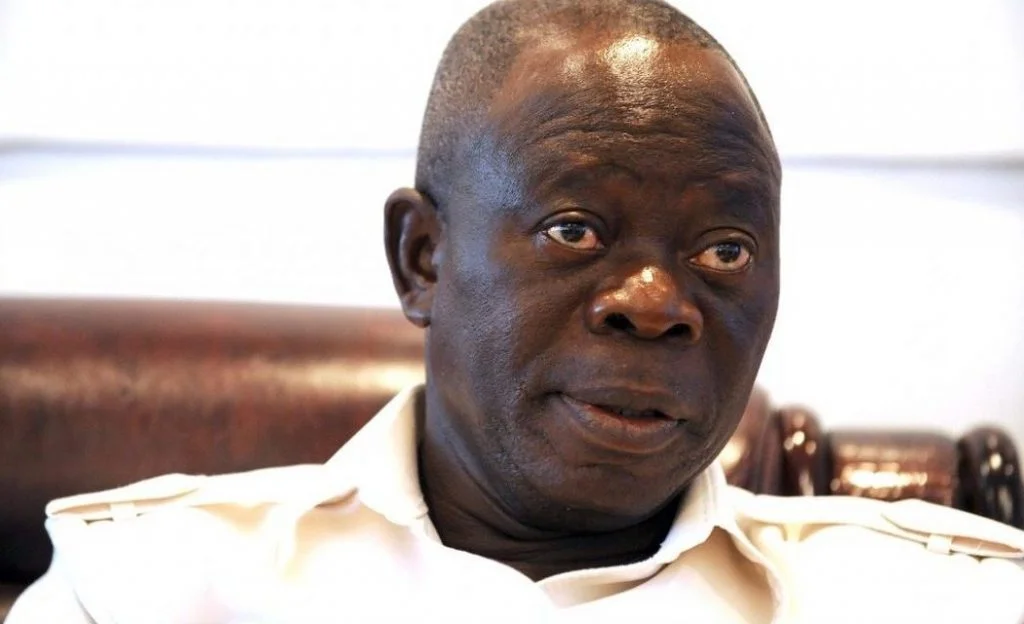
Senator Adams Oshiomhole has called on the Federal Government to retaliate against South African businesses operating in Nigeria following the recent attacks on Nigerians in South Africa.
Speaking during plenary on Tuesday, Oshiomhole said the Federal Government should consider revoking the working license of South African owned companies such as MTN and DSTV.
He argued that Nigeria must respond firmly to what he described as persistent hostility against its citizens.
READ ALSO:South Africa To Investigate ‘Mystery’ Of Planeload Of Palestinians
“I am not going to shed tears. If you hit me, I hit you. I think it is appropriate in diplomacy. It is an economic struggle,” Oshiomhole said.
He argued that while some South Africans accuse Nigerians of taking their jobs, Nigerians should return home and take over employment opportunities created by major South African companies operating in the country, including MTN and DSTV.
“When we hit back, the President of South Africa will not only talk but will also go on his knees to recognise that Nigeria cannot be intimidated.
READ ALSO:South African Ambassador Found Dead Outside Paris Hotel
“We will not condone any life being lost. If a crime has been committed under the South African law they have the right to bring any such person to justice, but to kill our people as if we are helpless, we will not allow that,” Oshiomhole added.
DAILY POST reports that several Nigerians in South Africa have reportedly been attacked, and their businesses destroyed, in ongoing xenophobic attacks in the country.
News
IGP Orders Officers Display Name Tag On Uniform, Gives Update On State Police

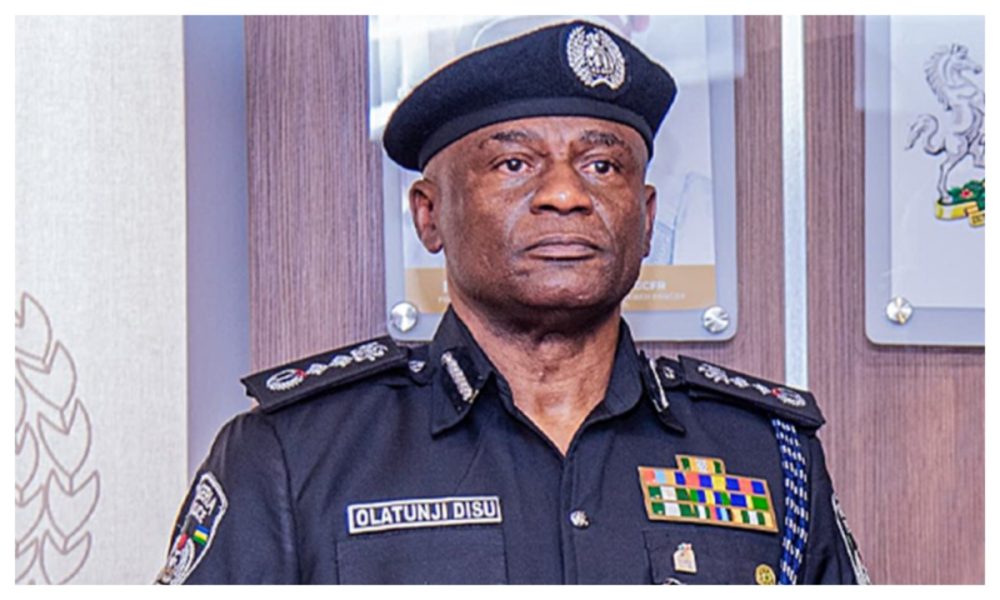
The Inspector General of Police, IGP, Tunji Disu, has ordered all police personnel to always have their name tags on their uniforms for easy identification.
Disu disclosed that only police personnel who are undercover are exempted from displaying their name tags.
Speaking on Tuesday, Disu said: “All police officers should have their name tags. All of us on the high table have our names apart from the undercover among us so if you look at all the Commissioners of Police we have our name tags, so it’s not our standard.
READ ALSO:
“All the Commissioners of Police are here and that is why we called this meeting, we have list of things like this that we will want to discuss with the Commissioners of Police, we have told them earlier and we will still let them know that every that happens within their area of jurisdiction falls under their control.”
On the issue of state police, the IGP said: “Since we got the signal that the Federal Government of Nigeria intend to establish State Police and since we are the federal police, we decided to take the bull by the horn and put down our own side of what we believe on how the state police should be run.
“A lot of things were taken into consideration, a lot of comparative analysis was done and it has been transmitted to the National Assembly.”
News
Court Orders SERAP To Pay DSS Operatives N100m For Defamation
The High Court of the Federal Capital Territory has ordered a non-governmental organization, the Socio-Economic Rights and Accountability Project, SERAP, to pay N100 million as damaged to two operatives of the Department of the State Services, DSS, for unjustly defaming them in some publications.
The court also ordered SERAP to tender public apologies to the defamed officers,
Sarah John and Gabriel Ogundele, in two national newspapers, two television stations and its website.
Besides, the organization was also ordered to pay the two operatives N1 million as cost of litigation and 10 percent post-judgment interest annually on the judgment sum until it’s fully liquidated.
Justice Yusuf Halilu of the High Court of the Federal Capital Territory gave the order on Tuesday while delivering judgment in a N5.5 billion defamation suit instituted against SERAP by the DSS operatives.
The judge found SERAP liable for unjustly defaming the two DSS operatives with allegations that they unlawfully invaded its Abuja office, harassed and intimidated its staff, in September 2024.
READ ALSO:How We Arrested Terror Suspect Who Threatened To Kill Students, Teachers In Abuja — DSS
In the offending publication on its website and Twitter handle, SERAP alleged that the two operatives unlawfully invaded and occupied its office with sinister motives.
The judge held that the publication was in bad taste especially from an organization established to promote transparency and accountability, as nothing in the publication was found to be truthful.
The DSS staff had listed SERAP as 1st defendant in the suit marked CV/4547/2024. SERAP’s Deputy Director, Kolawole Oluwadare, was listed as the 2nd defendant.
In the suit, the claimants – Sarah John and Gabriel Ogundele – accused the two defendants of making false claims that they invaded SERAP’s Abuja office on September 9, 2024..
Counsel to the DSS, Oluwagbemileke Samuel Kehinde, had while adopting his final address in the mater urged the judge to grant all the reliefs sought by his client in the interest of justice.
READ ALSO:DSS Arrests Suspected Gunrunner, Recovers 832 Rounds Of Ammunition
He admitted that although the names of the two claimants were not mentioned in the defamation materials, they had however established substantial circumstances that they are the ones referred to in the published defamation article by SERAP on its website.
The counsel submitted that all ingredients of defamation have been clearly established and the offending publication referred to the two officials of the secret police.
However, SERAP, through its counsel, Victoria Bassey from Tayo Oyetibo, SAN, law firm, asked the court to dismiss the suit on the ground that the two claimants did not establish that they were the ones referred to in the alleged defamation materials.
She said that SERAP used “DSS officials” in the alleged offending publication, adding that the two claimants must establish that they are the ones referred to before their case can succeed.
Similar arguments were canvassed by Oluwatosin Adefioye who stood for the second defendant, adding that there was no dispute in the September 9, 2024 operation of DSS in SERAP’s office.
READ ALSO:Alleged Cyberstalking: DSS Plays Video Evidence In Sowore’s Trial
He said that since SERAP in the publication did not name any particular person, the claimants must plead special circumstances that they were the ones referred to as the DSS officials.
Besides, he said that there is no organization by name Department of State Services in law, hence, DSS cannot claim being defamed adding that the only entity known to law is National Security Agency.
The claimants had in the suit stated that the alleged false claim by SERAP has negatively impacted on their reputation.
The DSS also stated, in the statement of claim, that, in line with the agency’s practice of engaging with officials of non-governmental organisations operating in the FCT to establish a relationship with their new leadership, it directed the two officials – John and Ogunleye – to visit SERAP’s office and invite them for a familiarization meeting.
The claimants added that in carrying out the directive, John and Ogunleye paid a friendly visit to SERAP’s office at 18 Bamako Street, Wuse Zone 1, Abuja on September 9 and met with one Ruth, who upon being informed about the purpose of the visit, claimed that none of SERAP’s management staff was in the country and advised that a formal letter of invitation be written by the DSS.
READ ALSO:DSS, Police Partner NCCSALW To End Terrorism, Mop Up Illegal Arms
John and Ogundele, who claimed that their interactions with Ruth were recorded, said before they immediately exited SERAP’s office, Ruth promised to inform her organisation’s management about the visit and volunteered a phone number – 08160537202.
They said it was surprising that, shortly after their visit, SERAP posted on its X (Twitter) handle – @SERAPNigeria – that officers of the DSS are presently unlawfully occupying its office.
The claimant added, “On the same day, the defendants also published a statement on SERAP’s website, which was widely reported by several media outfits, falsely alleging that some officers from the DSS, described as “a tall, large, dark-skinned woman” and “a slim, dark skinned man,” invaded their Abuja office and interrogated the staff of the first defendant (SERAP).
John and Ogundele stated that “due to the false statements published by the defendants, the DSS has been ridiculed and criticised by international agencies such as the Amnesty International and prominent members of the Nigerian society, such as Femi Falana (SAN)”.
“Due to the false statements published by the defendants, members of the public and the international community formed the opinion that the Federal Government is using the DSS to harass the defendants.”
READ ALSO:SERAP To Court: Stop CBN From ‘Implementing ‘Unlawful, Unjust ATM Fee Hike’
They added that the defendants’ statements caused harm to their reputation because the staff and management of the DSS have formed the opinion that the claimants did not follow orders and carried out an unsanctioned operation and are therefore, incompetent and unprofessional.
The claimants therefore prayed the court for the following reliefs: “An order directing the defendants to tender an apology to the claimants via the first defendant’s (SERAP’s) website, X (twitter) handle, two national daily newspapers (Punch and Vanguard) and two national news television stations (Arise Television and Channels Television) for falsely accusing the claimants of unlawfully invading the first defendant’s office and interrogating the first defendant’s staff.
“An order directing the defendants to pay the claimants the sum of N5 billion as damages for the libellous statements published about the claimants.
“Interest on the sum of N5b at the rate of 10 percent per annum from the date of judgment until the judgment sum is realised or liquidated.
“An order directing the defendants to pay the claimants the sum of N50 million as costs of this action.”
-

 Politics4 days ago
2027: Tinubu’s Re-election May Put An End To Nigeria — Baba Ahmed Warns
-

 Metro5 days ago
I’m A Street Girl’ – Bimbo Ademoye Clashes With Area Boys [VIDEO]
-

 Politics5 days ago
Senatorial Seat: Ogbakha-Edo Warns Against Imposition Of Candidates In Edo South
-

 Politics4 days ago
BREAKING: 2027: Former Adamawa APC Guber Candidate, Aishatu Binani Defects To NDC
-

 Business3 days ago
JUST IN: Nigerian Filling Stations Reduce Fuel Price After Hike
-

 Entertainment4 days ago
Actress Eniola Badmus Gets New Federal Appointment
-

 News5 days ago
10 African Countries With Highest Petrol Prices In Prices In April 2026
-

 News1 day ago
BREAKING: Wike Picks Alabo George For Rivers Governorship
-

 News3 days ago
OPINION: Why South Africans Murder Nigerians In Cold Blood
-

 Politics4 days ago
2027: Pondi, Otuaro, Other Delta South Stakeholders, Endorse Senator Joel-Onowakpo For Second Term
