

News
OPINION: Black Is White, Foul Is Fair, Wrong Is Right



By Lasisi Olagunju
A trending video shows Uganda’s president, Yoweri Museveni, interrogating his national football team after their recent loss to Nigeria. His question was simple but unsettling: Why did you all go to attack and leave the goalkeeper to do your work? Then came the clincher: In the army, we don’t do that.
This is far more than a lesson in football; it is a theory of state failure. We run our country the same way Uganda’s team played that match. Museveni spoke of AOR (Area of Responsibility). A Nigerian (politician) would likely ask: What is that? We do not have AOR in the management of our national affairs in Nigeria. Everyone rushes forward to score, to be seen, to take credit. No one stays back to defend the system from predatory goal-poachers. We chase goals and gold—and in the process, we concede goals. The result is a nation that is structurally broken and perpetually defeated.
We wasted the whole of 2025 chasing what may be farfetched – the goals and gold of 2027. The year in-between the two is here now with the certainty that it will be a year of baleful politics, of deepening crises and ‘wars’ across the divides.
The New Year invites reflection. Politicians defect, chasing elite deals; with disdain and contempt, they spurn public good; the people look on, envying the very hands that bruise them. Thirty-five days before his death, Chief Obafemi Awolowo took a deep look at the bedridden Nigeria, and said the “fault is in our attitudes and ways of life”; he then declared that “our stars have been dimmed by incompetent rulers.” Today, those stars no longer merely flicker; the dimming have burnt out. Why does the past always appear kinder than the present? The lodestars have been dimmed.
Was it Shakespeare who suggested that the golden age lies before us, not behind us? Whoever said it may well have been right, for his time. The harder question is whether that view holds true for us.
I start with this long note from a classmate:
“I cannot now clearly say whether it was 1972 or 1973. Dates blur with age, but some memories refuse to fade. What I know with certainty is that I had not yet started school. We lived then on Hogan Bassey Crescent, just behind the National Stadium in Lagos—a neighbourhood of the displaced Lagosians uprooted in the late sixties to make way for the Eko Bridge. We were tenants in one of the flats, ordinary people in an ordinary struggle.
“One afternoon, I wandered away from home with a neighbour who was only two days younger than I was. My mother, a seamstress, was indoors stitching dresses, unaware that two little girls had slipped beyond the gate. About 800 metres from home, we crossed a road the way children do—without caution, without calculation. There was no looking right, left, and right again. There was only play, and then, impact.
I remember it was a Volkswagen. The next clear memory is of regaining consciousness in a hospital bed, my body swaddled in bandages. My friend escaped with minor injuries. I did not. My left thigh was fractured. Both legs were suspended in the air for what felt like an eternity; how long, I could not tell. Childhood has no calendar for pain.
“That period offered experiences that today’s Nigerian child would dismiss as fiction. My family, at the time, was navigating financial turbulence. We shared a two-bedroom flat with another family. My father was no one of consequence, just a struggling Nigerian, protective of his own, with little beyond that instinct. I say this only to establish context: there was no privilege here, no influence to deploy.
“Before my mother even knew that disaster had struck, a passing military vehicle stopped, rescued us, and took us to the Lagos University Teaching Hospital, Idi-Araba. By the time our families arrived (after searching hospitals blindly) we had been stabilised. No one asked for money. No one asked for a guarantor. No one asked where our parents were. Two little girls arrived without names or contacts, and were properly treated – and saved.
“My mother stepped in where the nurses stopped. When I was eventually discharged, my legs were free but my body was not. I remained bedridden and had to return to the hospital every two days for follow-up checks. My father had no car. Transporting a child with a healing thigh bone every other day would have been an ordeal. So LUTH sent an ambulance.
MORE FROM THE AUTHOR:OPINION: Trump Must Finish What He Started
“Every other day, for weeks, an ambulance came to our house, took my mother and me to the hospital, and brought us back. Recently, I asked my mother if she paid for this service. She could not remember paying a kobo for the treatment, or for the ambulance runs.
“When I tell my children this story, they argue with me. They insist it could not have happened in this same country. Sometimes, even I wonder if it was a dream.
“As I write this, another memory returns: me, a small child, singing “ambulance mi ti ń bọ” (my ambulance is on the way) while the little feet of my friends gathered by my bed every morning after breakfast, dancing and clapping at the arrival of my ambulance.
“What changed?
“Who changed it?
“How did a system once guided by duty fracture beyond repair?
“The Anthony Joshua accident has been on my mind. Sometimes, class pales before a system that no longer works.
God bless Nigeria, my country.”
The above happened to one of my university classmates. Nigeria took care of her in her childhood and in her youth, she today works with a multi-national agency. The lady shared the experience with me as we discussed the state of the nation on New Year’s Day.
Memories, sometimes, are cherished; nostalgia is beautiful. Thoroughly disillusioned, today we say the best days are behind us. The very optimistic among us say the best is waiting somewhere ahead. Whatever it is, “old is gold”, we celebrate timeless moments and the lessons distilled from experience.
There is another story about another person, this time, the narrator is a male:
Schooling in another town, the teenager always looked forward to his weekends when he would reunite with his parents. This Friday, he got home from school and met the family house shut.
He was shocked. It was the first time he would meet the front door locked and the whole house desolate.
What happened? Neighbours came around and informed the teenager that his mother had been ill and taken to Osogbo five days earlier.
He burst into tears. Neighbours took him in for the night. The following day, he was by his mother’s bedside at the Our Lady of Fatima Catholic Hospital (Jaleyemi), Osogbo.
For the next three months or so, the sick was there receiving the best attention anyone could get. Then, one day, she was told she was now okay and should prepare to go home the following day.
MORE FROM THE AUTHOR:OPINION: Gov Makinde, His Sons And His ‘Friends’
Her husband and other relations were worried. Since she was brought into the hospital, the bills had piled up. How much? There was no information. Then the shock: She wasn’t going to pay a dime; government had taken care of it. Health is now free, courtesy of the new government – the UPN government of Bola Ige.
The patient in the above story was my mother; my own mother. It was in 1980, forty-five years ago. I am the narrator.
Now, this: the hospital was not a government hospital; it was (still is) a Catholic hospital, private. How it was done and made free for my mother, I am still trying to find out. I am not sure any of my children would believe this story if I told them. But the experience happened; it was real, I am a living witness to it.
That same era was a time when education was free, truly free. I got admitted into what was known as Secondary Modern School in September 1978. I paid N18 as school fees. The following September, I paid the same amount. The following month, October, 1979, we got a refund of the fees. The school authorities told us “education is now free” courtesy of the new government of Awolowo’s party. Our teachers did not steal and eat the refund; we (I) did not steal it too. I took it home. I saw something like satisfaction in my father’s eyes when I gave him the money; something like “my vote for Awolowo’s party (Unity Party of Nigeria, UPN) was worth it.”
Growing up, I saw government in close proximity with the people. Take this letter from my governor to every secondary school child in the old Oyo State who was set for Form Two in 1981:
14 July, 1981.
My dear child,
You have just completed the first year of your secondary school education; I hope you had a very useful school year and laid a good foundation for your career.
Shortly before you left your primary school last year, many people thought it was not possible to admit you and the over 120,000 of your colleagues into secondary schools in one year. Because of the commitment of our government and our party, the Unity Party of Nigeria, to providing all of you with free secondary education, we believed it was possible.
MORE FROM THE AUTHOR:OPINION: Gumi And His Terrorists
We made it possible because we also believe that every child, like yourself, is entitled to be provided with education by the state. We believe, too, that we must not let any of you become the servant of the opponents of this programme; hence we did all we could to make it possible. Everyone has now seen that it has been made possible.
Let me recall some of what I told you on September 26, last year, your first day in Grammar School: “Today, some 100,000 of you, boys and girls, in all parts of Oyo State, in cities, towns and villages from poor homes, from rich homes, from not-so-rich homes, are entering secondary school for the first time. I want you to realise that there are millions of Nigerian children in other parts of the country who do not have this opportunity as you have.”
I hope you make use of the great opportunity. I trust that you took care of the books you were given at school. I hope you shall be of great help to your parents during the holidays. As a member of the Young Pioneers Movement, you must and shall be good example to others and to your junior brothers and sisters who will join you in September this year.
Have a nice holiday, enjoy yourself and be good.
I am, Your Uncle ‘Bola.
That was 44 years ago. Every secondary school student going into class two got a copy of the letter signed by the governor, Uncle Bola Ige.
My first day at the University of Ife, I was assigned a bed space at Angola Hall. At the Porters’ Lodge, every Jambite got a note on the dos, don’ts and the services offered in the facility. In that note was this line: “electricity is constant; the taps are running…”
The past was golden. We look back not because yesterday was perfect, but, as someone said,it is because it helps us measure how far we have come, and sometimes, how far we have drifted.
Andrew S. Cairncross in his ‘Shakespeare and the Golden Age’ (1970)
draws a line between two opposite sides of the same coin: the golden age and the age of gold. The first was Eden, Paradise, the past with its fair and fairness. The second is “the age where money was the supreme or the only value…”
The past of today was definitely golden; today is the age of gold, money is the supreme and the only value.
In ‘Timon of Athens’ Shakespeare says where gold is allowed to rule, it never hestates to make “Black white, foul fair, wrong right,
Base noble, old young, coward valiant…
knit and break religions, bless the accursed,
Make the hoar leprosy adored,
place thieves
And give them title…”
The playwright wrote about today’s Nigeria.
MORE FROM THE AUTHOR:OPINION: Christmas And A Motherless Child
We lost the golden age of the First Republic and the silver of the Second. We’ve made a jungle of what is supposed to be our Garden of Eden. Why has the good we once knew eluded us? In Chief Awolowo’s time, it was bad leadership that dimmed the stars; today, it is no longer leadership; it is not followership; it lies deeper than both. We are a patch-patch nation, fractured by prolonged structural fissures, with the grim potential for simmering tensions to erupt. A country called Somalia shows the end point of unrestrained central failure. What we today call insecurity and an epidemic of poverty frighteningly place Nigeria at the Somalia crossroads.
Why is it difficult for us to accept that reforming federalism can give the right leadership, strengthen unity and peace, and engender prosperity while its neglect will open doors to forces that pull apart the parts? And centrifugal pressures don’t abate until they are done. In its abject failure as a state, Somalia still has a Somaliland that is almost out of its map. Politicians in this country think they have conquered the people and that all we deserve are the coming elections and the elections after the next. In the Yoruba play, Saworoide, there is this repetition that builds tension and inevitability: “Ko i ye won; y’o ye won l’ola” (They do not understand now; they will understand tomorrow).
In droves, politicians defect from the people to the palace’s comfort; they circle power like carrion-eating birds. The people no longer matter. Professor Toyin Falola, in an interview I did for him at the weekend, spoke about defections, democracy and decay. I flow with him. A ‘democratic’ system that conquers its people, that criminally gives no alternative, is rotted; it is an ant-infested wood. Ant-infested woods end by fire. Who will tell our husbands that where there is internal decay, foreign intrusion comes easily. Because Venezuela’s promise went rancid and lost its savour, as the Yoruba would say, it became easy for Donald Trump to pour sand into the salt of its sovereignty on Saturday. For Nigeria, the vultures are hovering.
May the new year redeem our country.




News
Xenophobic Attacks: Oshiomhole Tells FG To Retaliate Against South African Companies In Nigeria

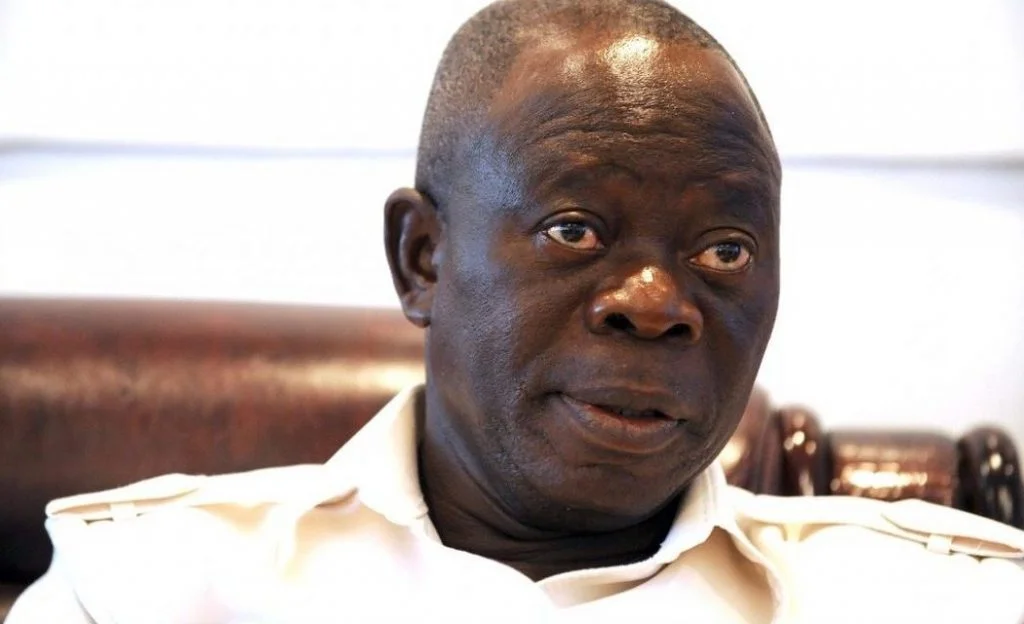
Senator Adams Oshiomhole has called on the Federal Government to retaliate against South African businesses operating in Nigeria following the recent attacks on Nigerians in South Africa.
Speaking during plenary on Tuesday, Oshiomhole said the Federal Government should consider revoking the working license of South African owned companies such as MTN and DSTV.
He argued that Nigeria must respond firmly to what he described as persistent hostility against its citizens.
READ ALSO:South Africa To Investigate ‘Mystery’ Of Planeload Of Palestinians
“I am not going to shed tears. If you hit me, I hit you. I think it is appropriate in diplomacy. It is an economic struggle,” Oshiomhole said.
He argued that while some South Africans accuse Nigerians of taking their jobs, Nigerians should return home and take over employment opportunities created by major South African companies operating in the country, including MTN and DSTV.
“When we hit back, the President of South Africa will not only talk but will also go on his knees to recognise that Nigeria cannot be intimidated.
READ ALSO:South African Ambassador Found Dead Outside Paris Hotel
“We will not condone any life being lost. If a crime has been committed under the South African law they have the right to bring any such person to justice, but to kill our people as if we are helpless, we will not allow that,” Oshiomhole added.
DAILY POST reports that several Nigerians in South Africa have reportedly been attacked, and their businesses destroyed, in ongoing xenophobic attacks in the country.
News
IGP Orders Officers Display Name Tag On Uniform, Gives Update On State Police

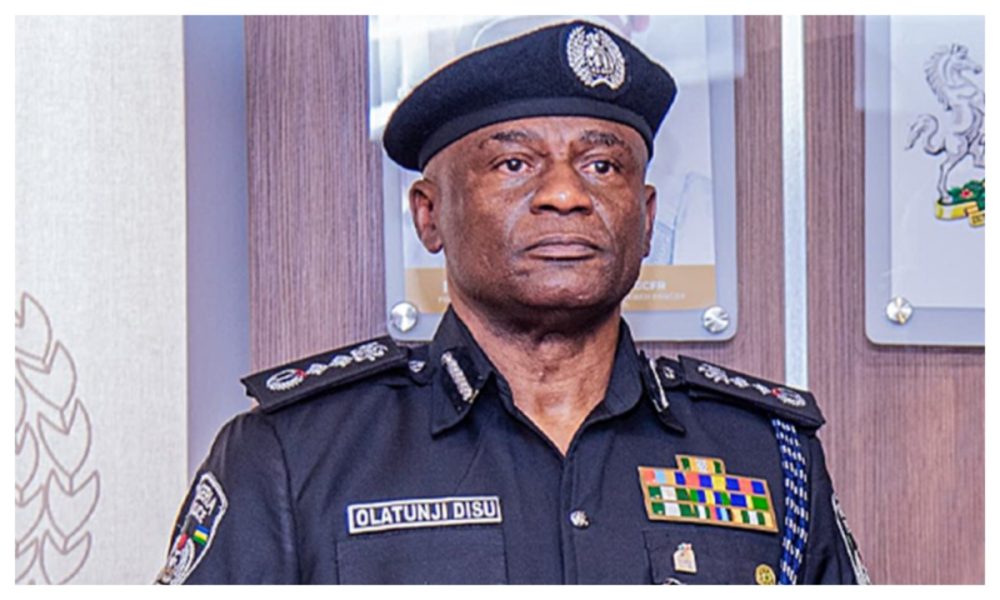
The Inspector General of Police, IGP, Tunji Disu, has ordered all police personnel to always have their name tags on their uniforms for easy identification.
Disu disclosed that only police personnel who are undercover are exempted from displaying their name tags.
Speaking on Tuesday, Disu said: “All police officers should have their name tags. All of us on the high table have our names apart from the undercover among us so if you look at all the Commissioners of Police we have our name tags, so it’s not our standard.
READ ALSO:
“All the Commissioners of Police are here and that is why we called this meeting, we have list of things like this that we will want to discuss with the Commissioners of Police, we have told them earlier and we will still let them know that every that happens within their area of jurisdiction falls under their control.”
On the issue of state police, the IGP said: “Since we got the signal that the Federal Government of Nigeria intend to establish State Police and since we are the federal police, we decided to take the bull by the horn and put down our own side of what we believe on how the state police should be run.
“A lot of things were taken into consideration, a lot of comparative analysis was done and it has been transmitted to the National Assembly.”
News
Court Orders SERAP To Pay DSS Operatives N100m For Defamation
The High Court of the Federal Capital Territory has ordered a non-governmental organization, the Socio-Economic Rights and Accountability Project, SERAP, to pay N100 million as damaged to two operatives of the Department of the State Services, DSS, for unjustly defaming them in some publications.
The court also ordered SERAP to tender public apologies to the defamed officers,
Sarah John and Gabriel Ogundele, in two national newspapers, two television stations and its website.
Besides, the organization was also ordered to pay the two operatives N1 million as cost of litigation and 10 percent post-judgment interest annually on the judgment sum until it’s fully liquidated.
Justice Yusuf Halilu of the High Court of the Federal Capital Territory gave the order on Tuesday while delivering judgment in a N5.5 billion defamation suit instituted against SERAP by the DSS operatives.
The judge found SERAP liable for unjustly defaming the two DSS operatives with allegations that they unlawfully invaded its Abuja office, harassed and intimidated its staff, in September 2024.
READ ALSO:How We Arrested Terror Suspect Who Threatened To Kill Students, Teachers In Abuja — DSS
In the offending publication on its website and Twitter handle, SERAP alleged that the two operatives unlawfully invaded and occupied its office with sinister motives.
The judge held that the publication was in bad taste especially from an organization established to promote transparency and accountability, as nothing in the publication was found to be truthful.
The DSS staff had listed SERAP as 1st defendant in the suit marked CV/4547/2024. SERAP’s Deputy Director, Kolawole Oluwadare, was listed as the 2nd defendant.
In the suit, the claimants – Sarah John and Gabriel Ogundele – accused the two defendants of making false claims that they invaded SERAP’s Abuja office on September 9, 2024..
Counsel to the DSS, Oluwagbemileke Samuel Kehinde, had while adopting his final address in the mater urged the judge to grant all the reliefs sought by his client in the interest of justice.
READ ALSO:DSS Arrests Suspected Gunrunner, Recovers 832 Rounds Of Ammunition
He admitted that although the names of the two claimants were not mentioned in the defamation materials, they had however established substantial circumstances that they are the ones referred to in the published defamation article by SERAP on its website.
The counsel submitted that all ingredients of defamation have been clearly established and the offending publication referred to the two officials of the secret police.
However, SERAP, through its counsel, Victoria Bassey from Tayo Oyetibo, SAN, law firm, asked the court to dismiss the suit on the ground that the two claimants did not establish that they were the ones referred to in the alleged defamation materials.
She said that SERAP used “DSS officials” in the alleged offending publication, adding that the two claimants must establish that they are the ones referred to before their case can succeed.
Similar arguments were canvassed by Oluwatosin Adefioye who stood for the second defendant, adding that there was no dispute in the September 9, 2024 operation of DSS in SERAP’s office.
READ ALSO:Alleged Cyberstalking: DSS Plays Video Evidence In Sowore’s Trial
He said that since SERAP in the publication did not name any particular person, the claimants must plead special circumstances that they were the ones referred to as the DSS officials.
Besides, he said that there is no organization by name Department of State Services in law, hence, DSS cannot claim being defamed adding that the only entity known to law is National Security Agency.
The claimants had in the suit stated that the alleged false claim by SERAP has negatively impacted on their reputation.
The DSS also stated, in the statement of claim, that, in line with the agency’s practice of engaging with officials of non-governmental organisations operating in the FCT to establish a relationship with their new leadership, it directed the two officials – John and Ogunleye – to visit SERAP’s office and invite them for a familiarization meeting.
The claimants added that in carrying out the directive, John and Ogunleye paid a friendly visit to SERAP’s office at 18 Bamako Street, Wuse Zone 1, Abuja on September 9 and met with one Ruth, who upon being informed about the purpose of the visit, claimed that none of SERAP’s management staff was in the country and advised that a formal letter of invitation be written by the DSS.
READ ALSO:DSS, Police Partner NCCSALW To End Terrorism, Mop Up Illegal Arms
John and Ogundele, who claimed that their interactions with Ruth were recorded, said before they immediately exited SERAP’s office, Ruth promised to inform her organisation’s management about the visit and volunteered a phone number – 08160537202.
They said it was surprising that, shortly after their visit, SERAP posted on its X (Twitter) handle – @SERAPNigeria – that officers of the DSS are presently unlawfully occupying its office.
The claimant added, “On the same day, the defendants also published a statement on SERAP’s website, which was widely reported by several media outfits, falsely alleging that some officers from the DSS, described as “a tall, large, dark-skinned woman” and “a slim, dark skinned man,” invaded their Abuja office and interrogated the staff of the first defendant (SERAP).
John and Ogundele stated that “due to the false statements published by the defendants, the DSS has been ridiculed and criticised by international agencies such as the Amnesty International and prominent members of the Nigerian society, such as Femi Falana (SAN)”.
“Due to the false statements published by the defendants, members of the public and the international community formed the opinion that the Federal Government is using the DSS to harass the defendants.”
READ ALSO:SERAP To Court: Stop CBN From ‘Implementing ‘Unlawful, Unjust ATM Fee Hike’
They added that the defendants’ statements caused harm to their reputation because the staff and management of the DSS have formed the opinion that the claimants did not follow orders and carried out an unsanctioned operation and are therefore, incompetent and unprofessional.
The claimants therefore prayed the court for the following reliefs: “An order directing the defendants to tender an apology to the claimants via the first defendant’s (SERAP’s) website, X (twitter) handle, two national daily newspapers (Punch and Vanguard) and two national news television stations (Arise Television and Channels Television) for falsely accusing the claimants of unlawfully invading the first defendant’s office and interrogating the first defendant’s staff.
“An order directing the defendants to pay the claimants the sum of N5 billion as damages for the libellous statements published about the claimants.
“Interest on the sum of N5b at the rate of 10 percent per annum from the date of judgment until the judgment sum is realised or liquidated.
“An order directing the defendants to pay the claimants the sum of N50 million as costs of this action.”
-

 Politics3 days ago
2027: Tinubu’s Re-election May Put An End To Nigeria — Baba Ahmed Warns
-

 Metro4 days ago
I’m A Street Girl’ – Bimbo Ademoye Clashes With Area Boys [VIDEO]
-

 Politics4 days ago
BREAKING: 2027: Former Adamawa APC Guber Candidate, Aishatu Binani Defects To NDC
-

 Politics4 days ago
Senatorial Seat: Ogbakha-Edo Warns Against Imposition Of Candidates In Edo South
-

 Business3 days ago
JUST IN: Nigerian Filling Stations Reduce Fuel Price After Hike
-

 Entertainment4 days ago
Actress Eniola Badmus Gets New Federal Appointment
-

 News4 days ago
10 African Countries With Highest Petrol Prices In Prices In April 2026
-

 Headline5 days ago
UK-based Nigerian Jailed 17 Years For Raping 19-year-old
-

 Politics5 days ago
Wabara-led BoT Assumes Control Of PDP, Mulls Caretaker Committee
-

 News3 days ago
2027: Pastor Adeboye Speaks On Nigeria’s Next President
