
News
[OPINION] Breaking Bad: The Nigerian Episode
By Israel Adebiyi
There is a moment in the iconic series
_Breaking Bad_ when Walter White, a high school chemistry teacher turned meth kingpin, declares, “I am not in danger… I am the danger.” That transformation—from a man broken by a failed system to one willing to burn it all down—captures the soul of a story far beyond television. It captures Nigeria.
Ours is a country where the line between villain and victim often blurs. Where desperation becomes a driving force and crime can masquerade as strategy. And like Walter White, many Nigerians—especially the youth—are forced to break bad, not because they are evil, but because they have been cornered by a system that does not work.
For example, we must ask ourselves: what becomes of the honest man in a dishonest system? Walter White did not start off as a criminal. He was a teacher, a father, a man with pride and potential—crushed by a healthcare system that could not save his life, a job that could not pay his bills, and a nation that offered him nothing but slow death. In Nigeria, thousands of graduates roam the streets jobless. Skilled professionals migrate en masse, not for adventure but for survival. Honest men and women are broken daily by a system that undermines integrity and rewards manipulation. They “break bad”—morally, mentally, and sometimes criminally.
The tragedy, both in the show and in Nigeria, is not the struggle but the system that fails its people. Walter’s cancer diagnosis was not the villain. The villain was the structure that made illegal drug production seem like a legitimate way to fund treatment. Similarly, Nigeria’s tragedy is not only in its poverty—it is in the betrayal of its promise. A country endowed with oil wealth cannot provide basic electricity, quality education, or even security. Pensioners die waiting to be paid. Students lose years to strikes. The social contract is constantly breached—and when the people get tired, they stop playing by the rules.
READ ALSO: OPINION: The Politics Of Protest In Nigeria [Nation’s Pulse]
As people adapt, morality itself becomes political. Walter justified his crimes by claiming he did it for his family. In Nigeria, we hear the same rationalizations: Politicians loot to “secure the future” for their children; clergies cover abuse to “protect the gospel”; the middle class stays silent to “avoid trouble.” The line between right and wrong fades when survival becomes the only metric. But the same justifications that fuel survival also fertilize corruption—and the descent becomes cultural.
This breakdown persists because of weak institutions and selective justice. In _Breaking Bad, law enforcement is either asleep, compromised, or tragically late. Nigeria is no different. The law bends before the rich and crushes the poor. When a politician steals billions, he is celebrated with chieftaincy titles. When a jobless youth steals a phone, he faces jungle justice. Our justice system does not serve—it discriminates. The problem is not just criminal behaviour—it is unequal accountability.
And then there are the Nigerian “Heisenbergs”—powerful individuals who exploit loopholes in the system to dominate it. Just as Walter evolved into a figure feared more than any cartel boss, Nigeria has birthed its own overlords in agbadas and uniforms—those who manipulate government, military, and the economy for personal gain. The parallel underworld is no longer underground—it is policy, it is power, it is public.
But perhaps what enables all of this more than anything is silence, the co-conspirator. In the show, Skyler knew. Jesse knew. Hank suspected. But they all kept quiet until it was too late. In Nigeria, we know. We see the rigging, the looting, the lies. But we shrug: “E no concern me.” “God will judge.” “Let me face my hustle.” This complicity gives corruption its staying power. When we normalize dysfunction, we forfeit the right to complain about its consequences.
READ ALSO: OPINION: When Bandits Took Over Ondo State
Worse still is the madness of control. Walter believed he could control everything—his illness, the drug market, his family. But it all spiraled. Nigerian leaders too believe they can suppress the masses, manipulate elections, and weaponize poverty without consequence. But history disagrees. From the Aba Women’s Riot to the End SARS protests, Nigerians have shown that when the people rise, no amount of force can hold back a tidal wave of discontent.
So we must ask: must we all break bad to survive? Or can we break better? Nigeria does not need more Heisenbergs. It needs people with courage to disrupt the cycle—not with crime, but with creativity; not with silence, but with defiance. It needs voters who understand power, entrepreneurs who refuse shortcuts, clergies who preach conscience, and leaders who serve, not steal.
_Breaking Bad_ ends in fire and blood. But Nigeria does not have to. We still have a choice. A choice to stop cooking the poison and start healing the nation. A choice to stop being Walter White—and start being right.
Because Nigeria does not need another lord. It needs citizens who are tired of breaking and ready to build.
And that is the pulse. Until next week, keep your finger on it.
Writer’s note: This piece is not intended to make an excuse for criminality, deviance, or the erosion of moral values. Rather, it seeks to hold a mirror to our society—to reflect how a broken system can turn honest men into desperate actors. In Nigeria today, many argue that it is nearly impossible to succeed without engaging in some form of irregularity. That, right there, is the psychological power of a failed system: it rebrands evil as a necessary tool for survival and presents wrongdoing as the only route to being right. This piece is an indictment of such a reality and a call to re-examine the systemic dysfunctions that are normalizing corruption, compromise, and silence.
Israel Adebiyi is the Head of News, Super FM, Benin City, Edo State.



News
NiMet Warns Of Flash Flooding In 19 States
The Nigerian Meteorological Agency (NiMet) has warned that 19 states across the country may experience flash flooding.
In an advisory issued yesterday, NiMet said increased surface runoff and flash flooding could occur during heavy early rains due to dry and hardened soils that prevent water from properly soaking into the ground.
The agency listed the states likely to be affected as Zamfara, Nasarawa, Kwara, Oyo, Lagos, Ogun, Ekiti, Delta, Imo, Anambra, Enugu, Ebonyi, Akwa Ibom, Cross River, Rivers, Edo, Ondo, and Bayelsa.
NiMet said the possible impacts include flooded roads, traffic disruption, damage to homes, farmlands, and infrastructure, blocked drainage systems, power outages, telecommunication disruptions, and increased risks of injuries and water-borne diseases.
READ ALSO:Meningitis: NiMet Lists High-risk States
The agency advised residents to clear blocked drainage and stay updated with weather and flood alerts.
NiMet also cautioned motorists and pedestrians against driving or walking through flooded areas.
The agency asked relevant authorities and stakeholders to strengthen coordination, preparedness, and emergency response measures to reduce flood-related risks.
“An informed community is a prepared community. Know the risks and act early,” the advisory read.
READ ALSO:NiMet Predicts Three-day Rain, Thunderstorms From Monday
The Federal Government had warned that 14,118 communities in 33 states and the Federal Capital Territory (FCT) are at risk of severe flooding in 2026.
The states include Abia, Adamawa, Anambra, Bauchi, Bayelsa, Benue, Borno, Cross River, Delta, Ebonyi, Edo, Enugu, Gombe, Imo, Jigawa, Kaduna, and Kano.
Others are Kebbi, Kogi, Kwara, Lagos, Nasarawa, Niger, Ogun, Ondo, Osun, Oyo, Plateau, Rivers, Sokoto, Taraba, Yobe, and Zamfara, and the FCT.
READ ALSO:NiMet Predicts 3-day Thunderstorms, Rains
Meanwhile, Nimet and the National Emergency Management Agency (NEMA) have intensified efforts to improve disaster management in the country with plans to develop a national early warning system roadmap.
The move was announced yesterday during a courtesy visit by the Director General of NEMA, Zubaida Umar, to the Director General of NiMet, Charles Anosike, at the NiMet headquarters in Abuja.
Mrs Umar applauded NiMet for the timely release of the 2026 Seasonal Climate Prediction and its consistent weather forecasts, noting that the agency had recorded significant improvements under Prof. Anosike’s leadership.
News
‘Nothing New’ – Wike Defends Houses For Judges, Dismisses NBA Criticism
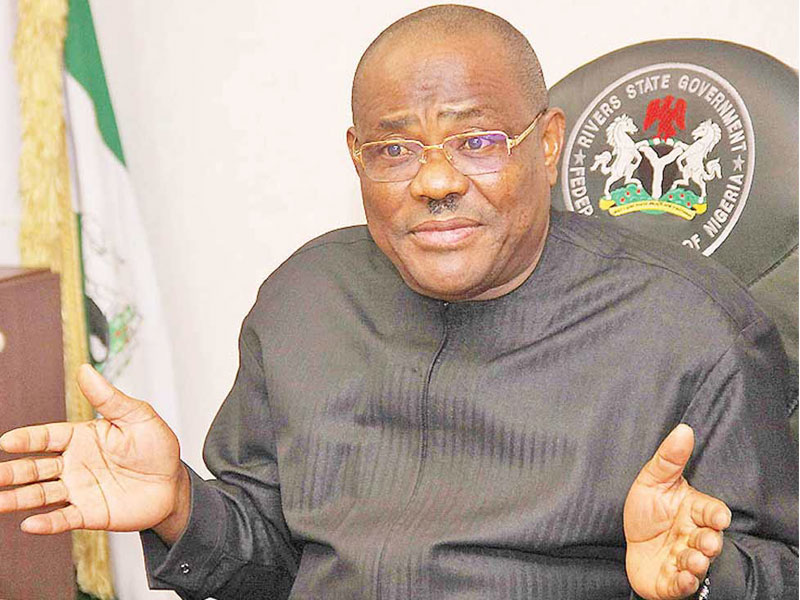
Federal Capital Territory, FCT, Minister, Nyesom Wike, on Friday defended the construction of houses for judges and justices in Abuja, dismissing concerns that the projects could compromise the independence of the judiciary.
Wike spoke after inspecting ongoing judicial infrastructure projects, including judges’ residences, the Court of Appeal Abuja Division and proposed residential projects for judges of the Industrial Court and the Code of Conduct Tribunal.
The minister’s remarks followed criticisms reportedly raised by the Nigerian Bar Association (NBA) over executive involvement in the provision of infrastructure for the judiciary.
Rejecting the concerns, Wike argued that government provision of facilities for judicial officers was neither new nor a threat to judicial autonomy.
He said: “The mere fact that the executive constructs buildings does not mean it will interfere with the judiciary.
READ ALSO:2027: Wike Opens Up On Preferred Rivers Guber Candidate
“We have built public houses for the National Assembly and for the judiciary before. The Supreme Court was built by government. So there is nothing new in this.”
Wike accused the NBA leadership of inconsistency, alleging that the association frequently sought financial support from state governments for its conferences and activities while criticising government interventions in the judiciary.
“All they are interested in is when state governments will sponsor NBA activities. If governments fund their conferences, does that mean they are no longer independent?” he queried.
He maintained that the FCT Administration would not be distracted from implementing projects designed to improve the welfare and working conditions of judges and justices.
“This is a voluntary act by government to make judicial officers comfortable and focused on their work. It is not done to erode judicial independence,” the minister added.
READ ALSO:Open Bank Account In PDP Name, See What Will Happen – Wike Dares Turaki Faction
Wike said the projects formed part of activities lined up to mark President Bola Tinubu’s third anniversary in office.
He expressed satisfaction with the completion level of the judges’ quarters, describing the project as well executed and nearly ready for inauguration.
“We’ve seen the judges’ quarters beautiful. I’m very elated that the job was done well. The houses are well furnished and almost 99 per cent ready,” he stated.
The minister also disclosed that preparations had begun for the groundbreaking ceremony of residences for judges of the Industrial Court and the Code of Conduct Tribunal.
However, he expressed dissatisfaction with aspects of the finishing at the Court of Appeal Abuja Division project, despite its advanced stage of completion.
READ ALSO:Trump Tired Of War In Iran – Shehu Sani
“Almost 90 per cent complete, but I must say it’s not the quality I expected. I have told the contractor that several errors must be corrected before inauguration,” he said.
Wike assured that the administration would continue monitoring contractors to ensure all projects are delivered according to specification and within schedule.
“All the promises that have been made, we are going to fulfil them. That is why we are going around to inspect and ensure contractors are ready,” he added.
News
LASG Fixes Dates For Public Service Exams, Releases CBT Guidelines

The Lagos State Government, through the Ministry of Basic and Secondary Education and the Lagos State Examinations Board, has released the timetable and guidelines for the 2026 Public Service Examinations.
In a statement by the Lagos State Government, the announcement, which aligns with a prior circular from the Head of Service with Ref No: CIR/HOS/’26/005 dated January 21, 2026, sets out key instructions for candidates preparing for the exercise.
The examinations will hold between Tuesday, May 12 and Tuesday, May 19, 2026, at the Lagos State Public Service Staff Development Centre (PSSDC), Magodo, Lagos.
They include the Compulsory Examination for all cadres in the State Public Service, the Combined Confirmation/Promotion Examination for Clerical Officers II (CO II) and Clerical Assistants (CA), as well as the External Secretarial Examination.
READ ALSO:Lagos Begins 2026 Civil Service Promotions
According to the board, candidates are expected to begin printing their examination slips from Tuesday, May 5, 2026, through the official portal using their registration login details.
The slip will contain key information such as each candidate’s exam date and time.
“All candidates are required to present valid identification at the examination centre. Acceptable forms of identification include Staff Identity Cards, National Identification Number (NIN) slips, and Lagos State Residents Registration Agency (LASRRA) cards,” the statement said.
Candidates are also required to bring printed copies of their examination slips to the venue and must strictly follow the date and time allocated to them.
READ ALSO:Why Tinubu Didn’t Attend Project Commissioning In Lagos —Presidency
The board further advised candidates to acquaint themselves with basic computer skills ahead of the exercise, as the examinations will be conducted using a Computer-Based Test, CBT, format.
It also warned that dressing must be formal, adding that inappropriate dressing will not be allowed at the examination centre.
Candidates were urged to comply fully with all instructions to ensure a smooth and orderly process.
“The Lagos State Examinations Board urges all candidates to comply fully with these guidelines to ensure a smooth and orderly examination process,” the statement added.

 News5 days ago
BREAKING: Wike Picks Alabo George For Rivers Governorship
- Business4 days ago
Why We Sited Our Multi-Billion Naira Automobile Firm Branch in Benin – Skyewise Group CEO
- Politics4 days ago
JUST IN: Why I left ADC For NDC With Kwankwaso – Peter Obi Opens Up
- Politics4 days ago
BREAKING: 17 ADC Reps Follow Join NDC
- Entertainment5 days ago
Why I Stopped Attending Church Service – Funke Akindele
- Business3 days ago
Again, Dangote Refinery Hikes Fuel Price
- News3 days ago
Xenophobic Attacks: Nigerian Students To Picket MTN, MultiChoice, Other Businesses
- News4 days ago
OPINION: APC’s Politics Of Consensus
- Entertainment5 days ago
‘My Mum Started Quoting Bible’ — Shank Sparks Debate After Tattoo Confession
- News3 days ago
IGP Orders Officers Display Name Tag On Uniform, Gives Update On State Police


