

News
[OPINION] Breaking Bad: The Nigerian Episode

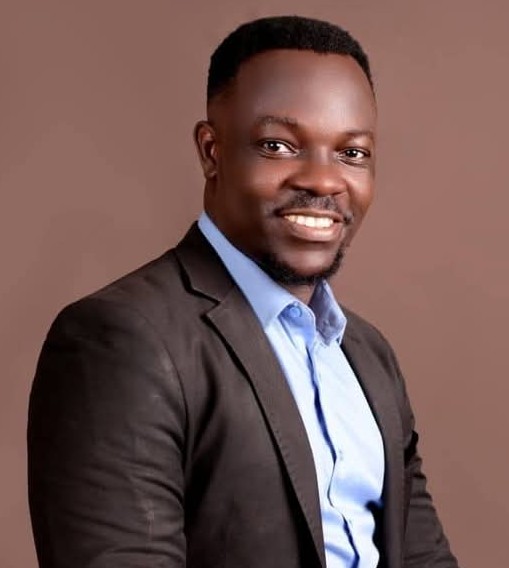


By Israel Adebiyi
There is a moment in the iconic series
_Breaking Bad_ when Walter White, a high school chemistry teacher turned meth kingpin, declares, “I am not in danger… I am the danger.” That transformation—from a man broken by a failed system to one willing to burn it all down—captures the soul of a story far beyond television. It captures Nigeria.
Ours is a country where the line between villain and victim often blurs. Where desperation becomes a driving force and crime can masquerade as strategy. And like Walter White, many Nigerians—especially the youth—are forced to break bad, not because they are evil, but because they have been cornered by a system that does not work.
For example, we must ask ourselves: what becomes of the honest man in a dishonest system? Walter White did not start off as a criminal. He was a teacher, a father, a man with pride and potential—crushed by a healthcare system that could not save his life, a job that could not pay his bills, and a nation that offered him nothing but slow death. In Nigeria, thousands of graduates roam the streets jobless. Skilled professionals migrate en masse, not for adventure but for survival. Honest men and women are broken daily by a system that undermines integrity and rewards manipulation. They “break bad”—morally, mentally, and sometimes criminally.
The tragedy, both in the show and in Nigeria, is not the struggle but the system that fails its people. Walter’s cancer diagnosis was not the villain. The villain was the structure that made illegal drug production seem like a legitimate way to fund treatment. Similarly, Nigeria’s tragedy is not only in its poverty—it is in the betrayal of its promise. A country endowed with oil wealth cannot provide basic electricity, quality education, or even security. Pensioners die waiting to be paid. Students lose years to strikes. The social contract is constantly breached—and when the people get tired, they stop playing by the rules.
READ ALSO: OPINION: The Politics Of Protest In Nigeria [Nation’s Pulse]
As people adapt, morality itself becomes political. Walter justified his crimes by claiming he did it for his family. In Nigeria, we hear the same rationalizations: Politicians loot to “secure the future” for their children; clergies cover abuse to “protect the gospel”; the middle class stays silent to “avoid trouble.” The line between right and wrong fades when survival becomes the only metric. But the same justifications that fuel survival also fertilize corruption—and the descent becomes cultural.
This breakdown persists because of weak institutions and selective justice. In _Breaking Bad, law enforcement is either asleep, compromised, or tragically late. Nigeria is no different. The law bends before the rich and crushes the poor. When a politician steals billions, he is celebrated with chieftaincy titles. When a jobless youth steals a phone, he faces jungle justice. Our justice system does not serve—it discriminates. The problem is not just criminal behaviour—it is unequal accountability.
And then there are the Nigerian “Heisenbergs”—powerful individuals who exploit loopholes in the system to dominate it. Just as Walter evolved into a figure feared more than any cartel boss, Nigeria has birthed its own overlords in agbadas and uniforms—those who manipulate government, military, and the economy for personal gain. The parallel underworld is no longer underground—it is policy, it is power, it is public.
But perhaps what enables all of this more than anything is silence, the co-conspirator. In the show, Skyler knew. Jesse knew. Hank suspected. But they all kept quiet until it was too late. In Nigeria, we know. We see the rigging, the looting, the lies. But we shrug: “E no concern me.” “God will judge.” “Let me face my hustle.” This complicity gives corruption its staying power. When we normalize dysfunction, we forfeit the right to complain about its consequences.
READ ALSO: OPINION: When Bandits Took Over Ondo State
Worse still is the madness of control. Walter believed he could control everything—his illness, the drug market, his family. But it all spiraled. Nigerian leaders too believe they can suppress the masses, manipulate elections, and weaponize poverty without consequence. But history disagrees. From the Aba Women’s Riot to the End SARS protests, Nigerians have shown that when the people rise, no amount of force can hold back a tidal wave of discontent.
So we must ask: must we all break bad to survive? Or can we break better? Nigeria does not need more Heisenbergs. It needs people with courage to disrupt the cycle—not with crime, but with creativity; not with silence, but with defiance. It needs voters who understand power, entrepreneurs who refuse shortcuts, clergies who preach conscience, and leaders who serve, not steal.
_Breaking Bad_ ends in fire and blood. But Nigeria does not have to. We still have a choice. A choice to stop cooking the poison and start healing the nation. A choice to stop being Walter White—and start being right.
Because Nigeria does not need another lord. It needs citizens who are tired of breaking and ready to build.
And that is the pulse. Until next week, keep your finger on it.
Writer’s note: This piece is not intended to make an excuse for criminality, deviance, or the erosion of moral values. Rather, it seeks to hold a mirror to our society—to reflect how a broken system can turn honest men into desperate actors. In Nigeria today, many argue that it is nearly impossible to succeed without engaging in some form of irregularity. That, right there, is the psychological power of a failed system: it rebrands evil as a necessary tool for survival and presents wrongdoing as the only route to being right. This piece is an indictment of such a reality and a call to re-examine the systemic dysfunctions that are normalizing corruption, compromise, and silence.
Israel Adebiyi is the Head of News, Super FM, Benin City, Edo State.




News
N5m, N10m Zero-interest Loans: SheVentures Opens Applications For Women Entrepreneurs


First City Monument Bank (FCMB) has opened a new round of applications for its SheVentures proposition, offering zero-interest loans of up to ₦10 million to women entrepreneurs to ease access to working capital and support business growth.
The facility provides loans ranging from ₦500,000 to ₦5 million under a general category, and ₦5 million to ₦10 million for sector-specific businesses, with funding capped at up to 50% of an applicant’s average monthly turnover.
At the centre of the offering is a 0% interest rate, with all charges embedded in a transparent structure.
Repayment is structured over four or six months, allowing businesses to match obligations with their cash flow cycles.
READ ALSO:I’ve Been Blacklisted In Music Industry For 13 Years – Seun Kuti
Yemisi Edun, Managing Director and Chief Executive of First City Monument Bank (FCMB), said the initiative reflects a deliberate approach to inclusive growth.
“Inclusive growth requires access to capital and the right conditions for businesses to deploy that capital effectively.
“Women-led enterprises are critical to economic activity, yet they face structural barriers.
This intervention aims to help close that gap by providing financing that supports job creation, business expansion, and long-term sustainability for women entrepreneurs.”
“Access to affordable finance remains a major constraint for women entrepreneurs,” said Nnenna Jacob-Ogogo, Group Head, SheVentures and Impact Segments at First City Monument Bank (FCMB).
READ ALSO:My Beef With Wizkid Is For Life – Seun Kuti
“By removing the cost barrier and offering quick, flexible funding, this zero-interest loan is designed to safeguard existing jobs, enable businesses to invest in growth initiatives, and foster resilience in challenging economic conditions.”
Women-owned businesses account for a significant share of Nigeria’s small and medium-sized enterprises but continue to face high borrowing costs and limited access to credit.
Through these efforts, SheVentures tackles persistent financing gaps facing women-led businesses, combining targeted funding with broader support to empower women entrepreneurs, encourage business innovation, and enhance their ability to compete on a national scale.
Applications for the zero-interest loan are now open.Apply now.
News
Xenophobic Attacks: Oshiomhole Tells FG To Retaliate Against South African Companies In Nigeria

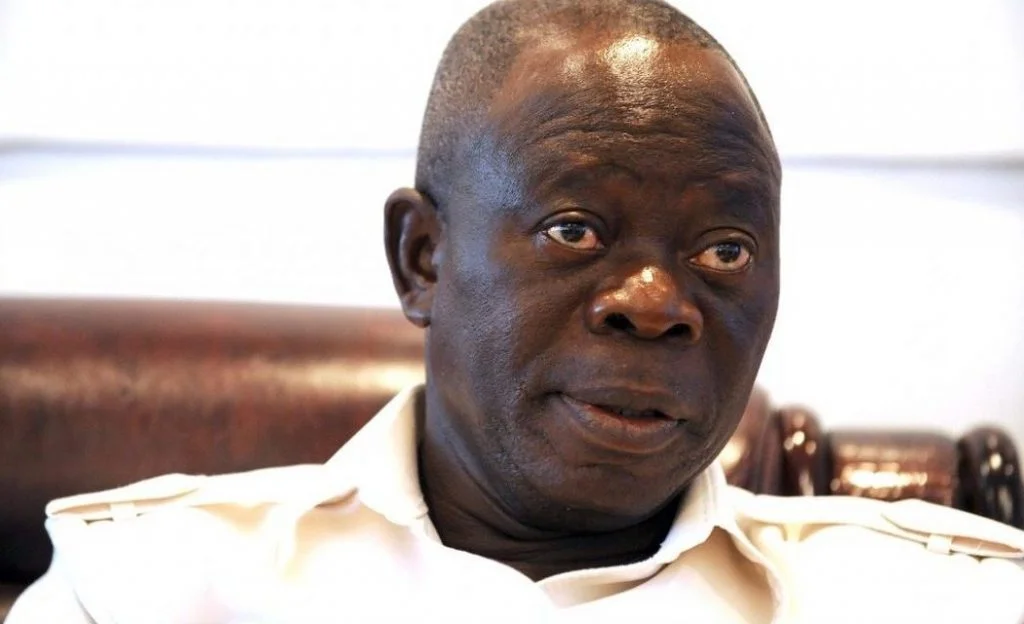
Senator Adams Oshiomhole has called on the Federal Government to retaliate against South African businesses operating in Nigeria following the recent attacks on Nigerians in South Africa.
Speaking during plenary on Tuesday, Oshiomhole said the Federal Government should consider revoking the working license of South African owned companies such as MTN and DSTV.
He argued that Nigeria must respond firmly to what he described as persistent hostility against its citizens.
READ ALSO:South Africa To Investigate ‘Mystery’ Of Planeload Of Palestinians
“I am not going to shed tears. If you hit me, I hit you. I think it is appropriate in diplomacy. It is an economic struggle,” Oshiomhole said.
He argued that while some South Africans accuse Nigerians of taking their jobs, Nigerians should return home and take over employment opportunities created by major South African companies operating in the country, including MTN and DSTV.
“When we hit back, the President of South Africa will not only talk but will also go on his knees to recognise that Nigeria cannot be intimidated.
READ ALSO:South African Ambassador Found Dead Outside Paris Hotel
“We will not condone any life being lost. If a crime has been committed under the South African law they have the right to bring any such person to justice, but to kill our people as if we are helpless, we will not allow that,” Oshiomhole added.
DAILY POST reports that several Nigerians in South Africa have reportedly been attacked, and their businesses destroyed, in ongoing xenophobic attacks in the country.
News
IGP Orders Officers Display Name Tag On Uniform, Gives Update On State Police

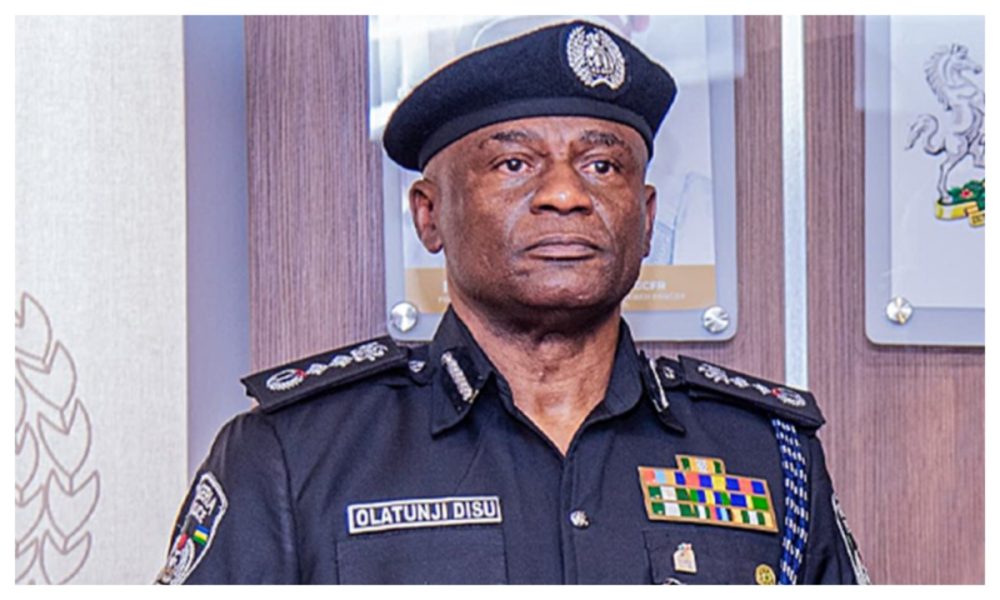
The Inspector General of Police, IGP, Tunji Disu, has ordered all police personnel to always have their name tags on their uniforms for easy identification.
Disu disclosed that only police personnel who are undercover are exempted from displaying their name tags.
Speaking on Tuesday, Disu said: “All police officers should have their name tags. All of us on the high table have our names apart from the undercover among us so if you look at all the Commissioners of Police we have our name tags, so it’s not our standard.
READ ALSO:
“All the Commissioners of Police are here and that is why we called this meeting, we have list of things like this that we will want to discuss with the Commissioners of Police, we have told them earlier and we will still let them know that every that happens within their area of jurisdiction falls under their control.”
On the issue of state police, the IGP said: “Since we got the signal that the Federal Government of Nigeria intend to establish State Police and since we are the federal police, we decided to take the bull by the horn and put down our own side of what we believe on how the state police should be run.
“A lot of things were taken into consideration, a lot of comparative analysis was done and it has been transmitted to the National Assembly.”
-

 Politics4 days ago
2027: Tinubu’s Re-election May Put An End To Nigeria — Baba Ahmed Warns
-

 Politics5 days ago
BREAKING: 2027: Former Adamawa APC Guber Candidate, Aishatu Binani Defects To NDC
-

 Business4 days ago
JUST IN: Nigerian Filling Stations Reduce Fuel Price After Hike
-

 Politics5 days ago
Senatorial Seat: Ogbakha-Edo Warns Against Imposition Of Candidates In Edo South
-

 Entertainment5 days ago
Actress Eniola Badmus Gets New Federal Appointment
-

 News2 days ago
BREAKING: Wike Picks Alabo George For Rivers Governorship
-

 News3 days ago
OPINION: Why South Africans Murder Nigerians In Cold Blood
-

 Politics4 days ago
NDC Speaks On Peter Obi, Kwankwaso Joining Party
-

 News4 days ago
2027: Pastor Adeboye Speaks On Nigeria’s Next President
-

 Politics5 days ago
2027: Pondi, Otuaro, Other Delta South Stakeholders, Endorse Senator Joel-Onowakpo For Second Term
