
News
[OPINION] BUHARI: The Man Who Missed Redemption
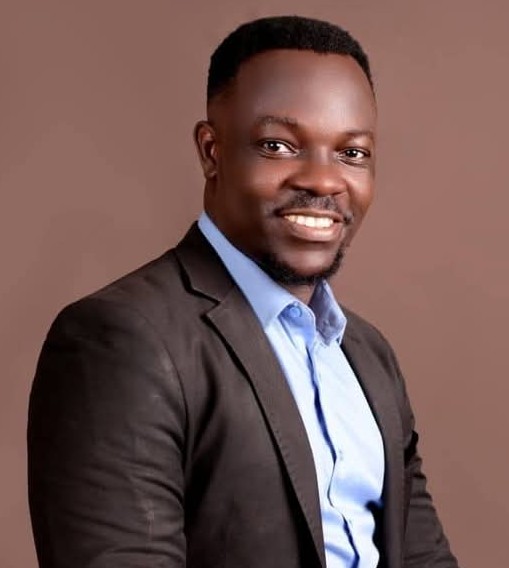
By Israel Adebiyi
In literature, few tales haunt the conscience as profoundly as that of Jean Valjean in Victor Hugo’s Les Misérables. A former convict hardened by the cruelty of the world, Valjean was presented a second chance—one forged in grace, offered through the kindness of a Bishop. That moment became the fulcrum on which his life turned, from darkness to light, from bitterness to redemption. Hugo’s message was clear: second chances, rare and divine, must not be squandered.
Sadly, Nigeria’s former President, Muhammadu Buhari, squandered his.
Twice gifted with the reins of power—first as a military Head of State from 1983 to 1985, and later as a democratically elected President from 2015 to 2023—Buhari had before him a canvas few in history are offered. He had the rare privilege of rewriting his story, of cleansing the stain of his authoritarian past with the balm of democratic growth, reform, and inclusion. But instead, Nigerians witnessed a man whose second coming bore frightening resemblance to his first.
As a military leader, Buhari ruled with an iron fist, cloaked in the garb of national discipline. His regime dismantled civil liberties, wielded decrees like cudgels, and created a climate where dissent was criminalized. The infamous Decree Number 2 gave the state security service the authority to detain individuals indefinitely without charge—essentially legalizing tyranny. Decree Number 4, arguably more draconian, muzzled the press, silenced truth, and enshrined fear.
The civil service was purged, not reformed. About 200,000 workers were reportedly shown the door in a wave of retrenchment that carried no clear vision for recovery or sustainability. Strikes were banned. Musicians like Fela Kuti were jailed. Corruption trials, while applauded by some, often bore the unmistakable scent of vendetta. Public officers were bundled into prison cells—some deservedly, others questionably. The National Security Organization (NSO) became a state-sanctioned menace.
MORE FROM THE AUTHOR: OPINION: Saro Wiwa, Eight Ogoni Posthumous Pardon, And The New Drill Dream
It was in this furnace of repression that Buhari carved his reputation as rigid, unyielding, and unlistening.
Three decades later, Buhari returned, this time cloaked in the hope of democracy. Nigerians, wearied by years of underperformance, chose to believe in the rebranded General. This was a man, they thought, who had tasted the winepress of power and would now offer water to a thirsty nation. In 2015, he was swept into office on a wave of hope. Eight years later, that wave had receded, leaving behind the wreckage of dashed expectations.
Under his civilian rule, the country found itself battered on all fronts. The economy floundered under inconsistent policies and excessive borrowing. Inflation rose with a vengeance, while unemployment surged. National insecurity expanded with an alarming boldness—banditry, terrorism, and kidnappings claimed thousands of lives. Entire communities vanished overnight. Farmers abandoned their lands. Parents mourned their abducted children. And the president remained largely aloof, a distant figure in the Villa, often silent when his voice was most needed.
Even the petroleum sector—Buhari’s personal portfolio as Minister—suffered under an opaque, inefficient regime. The refineries remained comatose, salaries paid for jobs not done, and fuel subsidies ballooned into bottomless pits of corruption. Nigeria, Africa’s top oil producer, couldn’t provide fuel to her citizens without long queues and inflated prices. It was an irony so cruel it could only be Nigerian.
MORE FROM THE AUTHOR: OPINION: Nigerian Electricity Lie And The Old Northern Folklore
Then came #EndSARS, the haunting proof that the voice of the Nigerian youth—brimming with pain, anger, and frustration—had reached its boiling point. Instead of dialogue, the administration responded with force. On October 20, 2020, at the Lekki Tollgate, gunshots echoed in a night of horror, and a nation’s hope was drenched in blood. The president’s silence was louder than the bullets. A moment for empathy and leadership was missed. It revealed a government disconnected from the emotional temperature of its people, especially the young who had dared to ask for better.
If that was emotional violence, then the Naira redesign policy was economic. Near the twilight of his administration, a sudden, chaotic push to swap the nation’s currency, allegedly to curb vote-buying and mop up excess cash, plunged Nigerians into financial paralysis. ATMs went dry, queues grew wild, and families scrambled just to afford food. Markets stalled, businesses collapsed, and citizens were humiliated in their own banks. It was a policy executed with such shocking lack of empathy that even his most ardent defenders found themselves bewildered. A president once sold as the messiah had returned as an indifferent king.
As his tenure crawled to a close, many looked back not with nostalgia, but with numbing relief. His second coming, hoped to be redemptive, proved retrogressive. Not only did he fail to correct the wrongs of the past, he institutionalized new ones: nepotism cloaked as federal character, ethno-religious favoritism masquerading as competence, and an inability to build bridges across the nation’s many divides.
Upon his passing, Nigeria did not weep with reverence, but reflected with resignation. The tributes that poured in were often polite, diplomatic, and carefully worded. But beneath them all was a collective sigh—a sense of a man who had been given everything, and yet changed very little.
In the end, Muhammadu Buhari’s tale reads not like that of a redeemer, but a ruler who walked twice through the corridors of power and left the halls colder than he met them. Even in death, his name has evoked more sighs than salutes.
He could have been the one to restore dignity to the Nigerian state, to reimagine governance, to redefine leadership. Instead, he will be remembered as the man who had two chances—and failed twice.
History will not be cruel to him—it will merely be truthful. And in that truth lies his legacy: not one of transformation, but of a tragic, missed redemption.
Adieu “Mai gaskiya”!



News
Shatta Wale Bailed Burna Boy From Ghana Prison After Arrest For Smoking Weed – Captan
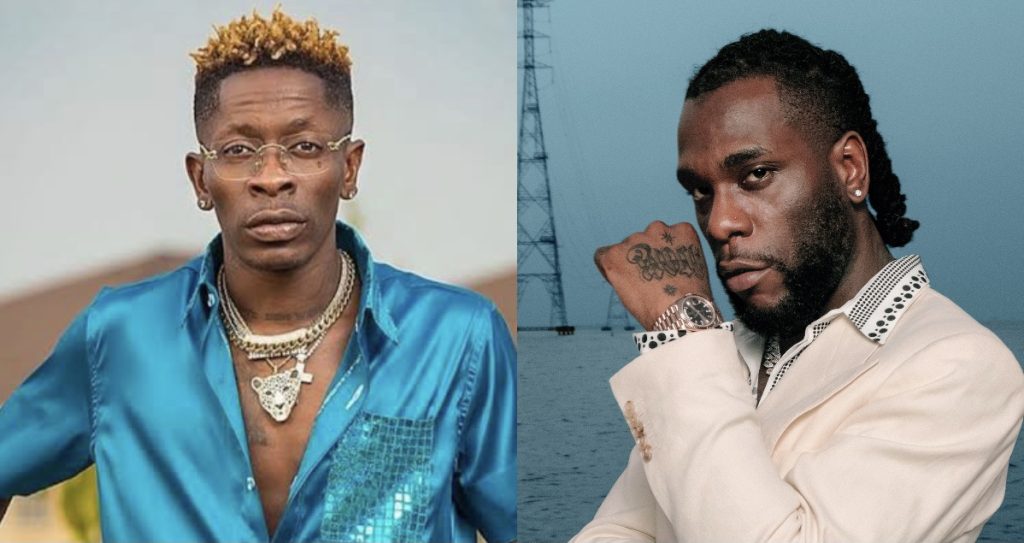
Ghanian singer, Captan, has claimed that his former record label boss, Shatta Wale, once bailed Nigerian singer Burna Boy out of prison in Ghana after he was allegedly arrested for smoking weed.
Speaking in a recent podcast interview, Captan claimed that Shatta Wale sent him and others to free Burna Boy from police custody.
He also claimed that Shatta Wale and his group once accommodated Burna Boy when he was being hunted by some dangerous men.
READ ALSO: Wale Edun Opens Up After Sack
Captan said, “I once bailed Burna Boy out of prison in Ghana when he was arrested for smoking weed. Shatta Wale sent me and some guys to go and free him from police custody.
“There was a time we also accommodated him when some people were after his life. We helped him settle the case.”
He added that he and Burna Boy are no longer in good terms after the Nigerian artist’s fallout with his mentor, Shatta Wale.
He, however, said he and Shatta Wale are open to reconciling with Burna Boy if he asks for it.
Watch the video here
News
Children’s Day: Chaos At Ogbe Stadium As Dozens Faint
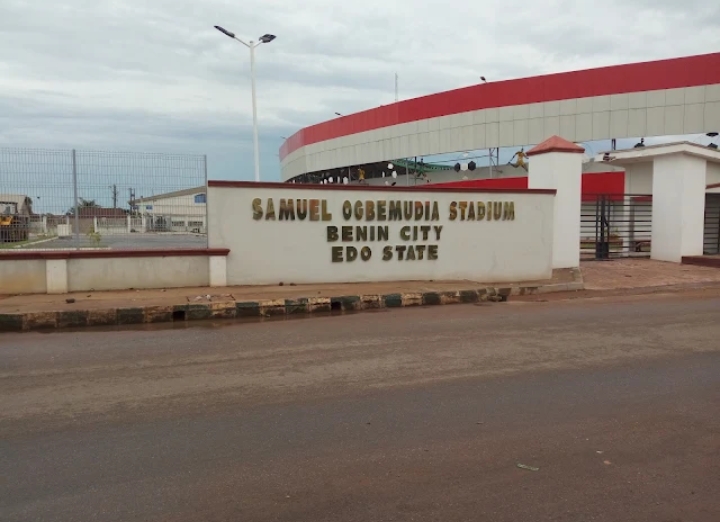
Chaos erupted on Wednesday during the Children’s Day celebration as dozens of students reportedly collapsed following a stampede triggered by the use of pepper spray.
The event,
organised by the Edo State Ministry of Education at the Samuel Ogbemudia Stadium was disrupted after some male students of Ihogbe College allegedly made uncompromising advances towards female students at the venue.
A parent who identified himself as Oboh Emmanuel said, “the behaviour of those uncultured students attracted the attention of bouncers stationed at the stadium as they rebuked the male students.”
Oboh said the affected students later regrouped and attacked the bouncers, leading to a confrontation within the crowded arena.
READ ALSO:Children’s Day: Edo Commits To Child Protection
It was gathered that in the ensuing confusion, the bouncers were reported to have deployed pepper spray in an area occupied by a large number of students.
Several students, particularly female students, reportedly fainted after inhaling the substance, while others sustained injuries after being stepped on during the ensuing melee.
The panic was said to have spread across the stadium as students, teachers and parents scampered for safety.
Many of the affected students were reportedly rushed to the Edo Specialist Hospital for medical attention.
READ ALSO: Egor LG Chair, Ogbemudia, Vice, Osawe Impeached
Reacting to the incident, Chief Press Secretary to Governor Monday Okpebholo, Dr Patrick Ebojele, said the security personnel that fired the tear gas had been detained.
He said all the students, except two, that were rushed to the hospital have been discharged.
Ebojele stated that doctors wanted to observe the students till tomorrow before allowing them to go home.
“The two students are not seriously injured. Doctors want to observe them overnight. Permanent Secretary, Ministry of Education is still at the hospital. The man who used pepper spray has been detained.
“The incident did not happen the way it is being exaggerated. All modalities were put in place to ensure the children enjoyed their day.”
News
Okpebholo Salutes Edo Muslims, Seeks Continued Support, Prayers
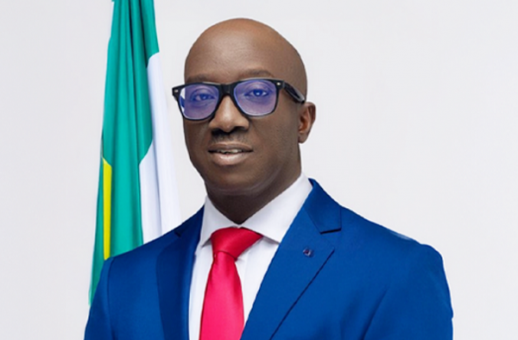
Governor Monday Okpebholo of Edo State has urged Muslims and all Nigerians to continue to pray for peace, unity and progress in the country even as they celebrate the annual Eid-al-Adha
The governor, who was represented by his deputy, Dennis Idahosa, stated this during the annual Eid-al-Adha celebration with Muslim faithfuls held at Government House in Benin City.
He reiterated his administration’s commitment to fairness, inclusivity and equal opportunities for all citizens irrespective of religion and tribe.
READ ALSO:ADC Penetrates Okpebholo’s District As Defections Strengthen Party in Edo Central
According to him, the present administration remains determined to building a government that reflects the diversity of Edo State, noting that competent and qualified Muslims have continued to play vital roles in his government because of their capacity, integrity and commitment to service.
“As a government, we remain committed to fairness, inclusivity and equal opportunity for every Edo citizen, irrespective of religion, ethnicity or political affiliation. This is why quality and competent Muslims are serving in key positions in our administration.”
Okpebholo appreciated the Muslim community in Edo State for their unwavering support and continuous prayers for his administration, noting that such prayers and support have contributed immensely to the peace and steady development being witnessed across the state.
READ ALSO:Okpebholo Felicitates Muslims On Eid-el-Fitr Celebration
He then called on all Nigerians to use the occasion of Eid-al-Adha to pray for the administration of President Bola Ahmed Tinubu, stressing that the country needs collective prayers, unity and cooperation to overcome its present economic and security challenges.
“I urge all Muslims and indeed all Nigerians to use this occasion to pray for our dear nation and for the administration of President Bola Ahmed Tinubu. Nigeria needs our collective prayers, unity and support as we strive to overcome our challenges and build a more prosperous future for all.”
In his remarks, the Chief Imam of Edo State, Abdulfatai Enabulele, applauded the governor for what he described as remarkable developmental strides recorded in less than two years in office.
The cleric commended the administration for ongoing infrastructural development and efforts geared towards improving governance in the state, but appealed to the government to revisit and complete some abandoned projects inherited from the previous administration for the benefit of the people.

 Metro5 days ago
My Husband Abandoned Me On Our Wedding Night To Attend Political Meeting, I Want Our Marriage Dissolved
- Headline4 days ago
Woman Passes Out After Receiving 100 Strokes Of Cane
- Politics5 days ago
Warri Ijaw Hail INEC Delineation Report, Call For Additional Electoral Wards, Others
- Headline4 days ago
JUST IN: White House Locked Down Briefly As Gunman Opens Fire At Security Checkpoint
- Politics3 days ago
Two Masked Men Gun Down Politician In His Rivers State Hotel
- News3 days ago
More Pain For Nigerians As Cooking Gas Price Increases Nationwide
- Metro5 days ago
My Wife Stop Cooking My Food, Beats Me Black And Blue All the Time, Man Tells Court
- News5 days ago
Alleged Terrorism: Court Rejects Defendant’s Bid To Travel Abroad
- Politics5 days ago
What I’ll Do As President Of Nigeria — Amaechi
- News3 days ago
FG Declares Two Days Public Holiday For Eid-el Kabir Celebration


