

News
OPINION: David Mark, Dele Giwa, Abiola And Other Stories



By Lasisi Olagunju
Who killed Dele Giwa? Who was Gloria Okon and where is she today? How did David Mark accurately predict in 1994 that Sani Abacha would spend five years in power and would attempt to contest a multi-party presidential election with only himself as candidate? Why did M. K.O. Abiola contest the 1993 election even after he had been told eight years earlier that he would one day successfully gun for the nation’s top job but would have the crown blown away by a storm at his crowning ceremony?
A book that contains those details (with even more ghastly ones) is certain to stir up a hurricane across the nation. That is what Mr. Yakubu Mohammed, Dele Giwa’s friend and colleague at the Concord and Newswatch, has written. He gave the autobiography the title: ‘Beyond Expectations’. The old media entrepreneur graciously last week ushered me into the locked room of his soon-to-be-released book of stories. He gave me an advance copy for a preview which this piece is all about.
Good books are a compass to the past and a guide to the future. If not for a book as this, how many of us would recollect that in April 1994, Brigadier-General David Mark in exile in London told Dan Agbese, editor-in-chief of Newswatch, in an interview that General Sani Abacha was determined to stay put, at least for five years, and thereafter, transmute into a civilian president through an election in which he would be the only contestant? That was five months after Abacha sacked Ernest Shonekan and gullible Nigerians were waiting on him to cede power after six months to M.K.O. Abiola. It turned out that David Mark was right; pro-June 12 Nigerians who enthroned Abacha were dead wrong.
Was it David Mark’s party or the party of NADECO that eventually deposed Abacha? This question is a knot in the untangling hands of time. But the same David Mark who saw tomorrow in 1994 is in charge of a democratic onslaught against the incumbent president today. Mark is a trained marksman. It would be scary to have a reticent sniper gentleman officer leading a coalition against a self-sure president and his over-confident party. My dictionary says a sniper is a marksman. It says a sniper is a dead shot with uncommon skills. His missile is long-range, his position concealed. He employs stealth and camouflage techniques to remain undetected, and he is rarely detected. His training is specialised, his tools are high-precision; and his sight telescopic. The marksman’s engagement of targets is with pin-point accuracy. God help those at the receiving end of his shots.
Yakubu Mohammed complains loudly in his book that he suffered several arrests and detentions from the government and its agents. But it is always better to lose one’s cap than to lose one’s head. Hubert Ogunde sings in an album that a man that is beaten by the rains but escapes the withering celts of Sango should learn to thank God (eni òjò pa tí Sàngó ò pa, opé l’ó ye é). Mohammed is lucky that he lives to write his story. His friend, Dele Giwa, was not that lucky; he died before his time.
MORE FROM THE AUTHOR:OPINION: Super Falcons’ Lesson For Kwankwaso
Giwa’s author-friend has ample space for an interrogation of the nagging question: Who killed Dele Giwa? He asks that question and raises posers which only he, Ray Ekpu and Dan Agbese could raise. Then he provides insights. Was Newswatch doing a story on a certain Gloria Okon? Who really was she? Yakubu’s book answers the questions in a manner that may activate many more people to write their own books or update existing ones on the case.
Given the stories we’ve read on their bitter-sweet relationship, I expected to see David Mark and M.K.O Abiola appearing in the same sentence or paragraph; I couldn’t find that in the book. But there are several MKO surprises that should extract gasps from the reader. Imagine Abiola as a reporter pursuing a story with his editor in the dead of the night. As editor of Abiola’s National Concord, Yakubu Mohammed says “one night, I was going to meet a news contact in Surulere. He (Abiola) had an idea of the story I was pursuing and he inserted himself into the investigation team. He offered to accompany me. We took off from his residence in my car. Only three of us; he, in the passenger’s seat and I, in the driver’s seat with one security detail at the back seat. We did not return to Ikeja until about 4.00 the following morning, mission accomplished” (Page 168). Accounts of several escapades like this make the book a thriller. Or how should I describe a scene that has billionaire Abiola stranded in a motor park one midnight in Benin? The money man finally got bailed out by the police and on the way to Lagos that night, Abiola entertained his boys in the police car with good music – a fork and a plate supplying the percussion.
When the book is out, readers will confirm that a time there was in Nigeria when a newspaper financed a bank. It is difficult to believe but that is what I read in Yakubu Mohammed’s autobiography. Hear the author: “Abiola’s initial contribution to the establishment of Habib Bank which he co-founded with his friend, Shehu Musa Yar’Adua, was paid from the Concord purse. I knew it because I signed the cheque”.” (Page 176).
As Concord journalists, Dele Giwa, Yakubu Mohammed and Ray Ekpu were famous for the unconventional work they did; they were even more famous for the flamboyance of their social life and engagements. They were brilliant, hardworking and rich. They lived big. A columnist with the rival New Nigerian newspaper based in Kaduna went with the pseudonym Candido (someone said he was Malam Mamman Daura). One day, the columnist turned his musket on the trio and called them “the Benzy journalists in Lagos who wear Gucci shoes.”
A journalist, even if an editor, riding a Mercedes Benz in Nigeria of the early 1980s was a big deal. But Yakubu Mohammed does not think it should be a big deal. He has a space for a confirmatory rebuttal of that charge in his book: “That was when the famous Candido column of the New Nigerian, the man behind the mask, who claimed to see all and everything from afar, referred to the trio of Dele Giwa, Ray Ekpu and Yakubu Mohammed as Benzy journalists wearing Gucci shoes. The column did not mean to be offensive but it helped to add something to the amour of our potential detractors. Yes, we were riding Mercedes Benz cars, but we were not the first journalists or editors to do so. I don’t know about Gucci shoes but we were frequent visitors to New Bond Street and Oxford Street, the high-end shopping areas of London. If we were the envy of colleagues, it was thanks largely to (MKO) Abiola’s large-heartedness…” (Page 199).
MORE FROM THE AUTHOR:[OPINION] Buhari: A Tale Of Two Deaths
In the 1970s through early/mid 80s, the Lagos/Ibadan powerhouse of the Nigerian media had “The Three Musketeers.” That was the honorific tag hung on Messrs Felix Adenaike, Peter Ajayi and Olusegun Osoba who were at the helm of the Nigerian Tribune, Daily Times/Daily Sketch, and Nigerian Herald. They were the reigning big boys of that period. Then came the three “Benzy journalists” in imported, expensive shoes. Professor Olatunji Dare in the Foreword to this book drops a positive line on the “quiet elegance” of Yakubu’s wardrobe.
Before their time, a time there was when the Nigerian journalist lived poor and sore. They lived solely for work, booze, cigarettes and sex. The males among them worked hard during the day and retired in the evening to the NUJ Press Centre loosening up into an orgy of excesses. The newsman of that era was a church rat; he commanded neither genuine respect nor genuine pity. The society simply accommodated him as a gesture of tolerance, a necessary evil.
It was a period of derision, a black phase which journalists in other climes also passed through. In the United Kingdom of the 1800s, a Scottish nobleman described journalism as a job fit only for the “thorough-going blackguard.” Blackguard? Check the meaning: someone who behaves in a dishonourable or contemptible way. Sir Walter Scott (15 August 1771 – 21 September 1832), novelist, poet, and historian, used that description for the newspaper journalist. It would appear that he didn’t really coin the insult. Charles Abbot, who later became Speaker of the British House of Commons, wrote in his diary that he was going to the Cockpit on I9 December I798, then he found the room nearly full of strangers and “blackguard news-writers.” Again in the same Britain, a certain Thomas Grenville told his brother, Lord Grenville, the Prime Minister, that “his aversion to all editors was such that he had never had and never would have any communication with them.” Thomas Barnes (11 September 1785 – 7 May 1841) was famous and hugely successful as the editor of The Times of London, yet a powerful gentleman could only compliment him as “an insolent, vulgar fellow.” There was Sir Robert Peel, British conservative statesman who was twice Prime Minister of the United Kingdom (1834–1835, 1841–1846), and simultaneously Chancellor of the Exchequer (1834–1835). Before getting into all those big offices, he was Irish Chief Secretary during which time he described Irish journalists as “vile and degraded beings.”
In 1807, the Benchers of Lincoln’s Inn made a rule to the effect that no one who had ever been a newspaper journalist should be entitled to be called to the Bar. It took a 23 February 1810 petition to the House of Commons by journalist George Farquharson to defeat that prejudice. Read ‘The Social Status of Journalists at the Beginning of the Nineteenth Century’ (1945) by A. Aspinall. It harbours all these UK cases I cited above, and more. Across the borders in Germany, we meet in Arthur Schnitzler’s satiric comedy ‘Fink und Fliederbusch’ (1917) the journalist as essentially “a man without substance and without conviction.’ Statesman and Chancellor of the German Reich, Otto von Bismarck in 1862 was quoted as describing journalism as a “dumping ground for those who had failed to find their calling in life.”
It was as bad in Nigeria. Read Alhaji Ismai’l Babatunde Jose’s ‘Walking Tight Rope: Power Play in Daily Times’ (1987). Read Chief Obafemi Awolowo’s ‘Awo: An Autobiography’ (1960). Chapter 7 of Chief Awolowo’s autobiography is an interesting read on the life of the Nigerian journalist in the 1930s, especially. The very second paragraph of that chapter says journalism “was an unprofitable, frustrating and soul-depressing career at that time in Nigeria.” The third paragraph says “there was a general but inarticulate contempt for newspapermen, particularly, the reporters. They were regarded as the flotsam and jetsam of the growing community of Nigerian intelligentsia: people who took to journalism because they were no good at anything else…” Chief Awolowo joined the Nigerian Daily Times in September 1934 as a reporter-in-training; three months later, he became the newspaper’s resident correspondent in Ibadan. Then he saw journalism in its abject, stark nakedness. He jumped out of it after just eight months. He writes that it was clear to him that he “would never succeed in raising enough money to become a lawyer from the reporting business.” He was in journalism because he needed money to study law.
MORE FROM THE AUTHOR: OPINION: The Body Of The Yoruba King
“That time offer’d sorrow;/ This, general joy”, Shakespeare writes in Henry VIII; Act 4, Scene 1. Every night must yield to the compulsory break of dawn. One of the concluding clauses in Aspinall’s 1945 piece cited earlier above is a reference to John Lord Campbell’s ‘The lives of the Lord Chancellors and Keepers of the Great Seal of England’ (1848). In it, the author holds that “whereas half a century earlier, newspapers had been in the lowest state of degradation, they were now conducted by men of education and honour.”
Some fifty, forty years ago, debauchery was not a negative word in the life of the average Nigerian journalist. But today, if he has excesses, he does not wear them on his sleeves. This is 2025, almost 100 years after the Awolowo experience with the poverty of the press. As with other professions, the story has changed substantially positively for the Nigerian journalist. If the journalist is the town, he competes competently today with the gown. A contest for intellectual and resource success is ongoing across newsrooms. The Benzy journalists of the 1980s were the pioneers in modern Nigerian journalists becoming entrepreneurs. Today’s journalists learnt from them and are living well. They write great books, do business, make good money and amass wads of certificates. The Nigerian Guild of Editors celebrates new PhDs with the regularity of new arrivals in busy maternity wards. When the Nigerian Tribune clocked 75 last year, a former colleague wrote that the Tribune had more PhDs than some university faculties. That is a fact that has remained very true. Unfortunately, we lost one of us two weeks ago. Dr Leon Usigbe, highly resourceful gentleman, was our Bureau Chief in Abuja. Death took him two Fridays ago and impoverished us. May God repose his soul and look after his family.
Yakubu Mohammed’s autobiography is a bare-it-all history of the journalism of his era. I told him he has written a monumental book: brisk, breezy, smooth and sweet like bitterleaf soup. I asked him when and where the book would be presented to the public, he replied that he did “not have the capacity to do public launching.” I wish it is done the way it should, so that it will turn out the way it normally does.
The media is a long suffering entity. The same with its operatives. When it is out, you will find Yakubu Mohammed’s ‘Beyond Expectations’ a book of tribulations, of a few ups and many downs. It is in there, how people of power use and dump journalists, and how journalists disgracefully undermine journalists for patronage, positions and privileges. You also see and feel accounts of the journalist’s patriotic actions, many times unappreciated by the beneficiary-society. German playwright and novelist, Gustav Freytag, in 1854 published his famous play, ‘Die Jouralisten’ (The Journalists), a comedy in four acts. A voice in that play describes journalists as “worthless fellows, these gentlemen of the quill! Cowardly, malicious, deceitful in their irresponsibility” (Act 3, Scene 1). At a point in the plot, one of the characters, in utter mockery and despair exclaims: “The evil spirit of journalism has caused all this mischief! The whole world complains of him, yet everyone would like to use him for his own benefit.” Yakubu experienced this many times and it is there in the book. His partner, Dan Agbese, puts this starkly in the Preface: “He expects no rewards and receives none. Some pay him back with the coins of ingratitude. That should make a lesser man bitter but not Yakubu. He takes it in his strides.”
MORE FROM THE AUTHOR:OPINION: ‘They Chop Their Own, They Chop Our Own’
‘They’ asked orò (masquerade) to stop throwing stones, he countered that the one in his hand, what should he do with it? This is a preview, it is not a review and so, I should put a stop to spoilers here. But like orò did, can I take the liberty of my having read the book to drop this last paragraph? In the first paragraph of this piece, I said Abiola was told of the annulment of his election eight years before the June 12 tragedy. How? Yakubu Mohammed writes: “It happened in 1985, not quite one year after I had left Abiola’s Concord. At about 2.00 o’clock after midnight, I was startled out of bed by a dream that left me shaking and sweating. I dreamt that the government conducted a presidential election and MKO Abiola won it fair and square. The country went wild with jubilation. We trooped to the National Stadium where he was scheduled to be crowned. As we all gathered for the ceremony and before the crown could be placed on his head, there was an unprecedented storm that swept the crown off and scattered the crowd away from the arena. The storm thus brought the inauguration ceremony to an abrupt end. Then, I woke up with a start. The following morning, I began to contemplate how to handle this development. One option was to call MKO and tell him. I demurred because, knowing him very well, I did not want Abiola to regard me as Joseph the dreamer looking for a way to get back to him, having resigned as his editor. I then decided to invite Femi Abbas to my residence. When I asked him if our boss was back in politics, he was taken aback. He then asked: “Where is the politics? You guys succeeded in persuading him out of it and even now the military is in power.” Then I told him about the dream. He promised to do something. But strangely enough, as soon as he stepped out of my house, I had completely forgotten all about the dream. Up to the time the publisher went back into the presidential contest and until the election was annulled; even until Abbas narrated the whole experience in the Sunday Vanguard which I read with absolute amazement and some trepidation, nothing reminded me of the dream. In the article, Abbas recounted my discussion with him way back in 1985, leaving out no details. He revealed all the measures they (he and Abiola) took including prayers in Abiola’s Ikeja residence, followed by another series of prayers in Saudi Arabia and the advice Abiola was given concerning constant prayers to ward off disappointment. He ended his piece with the same conclusion: that it was all divine, something that was destined to happen.”




News
Edo NLC Crisis: Caretaker Committee Drags Rival Exco, Govt To Court

The division in the Edo State Council of the Nigeria Labour Congress (NLC), took a new dimension on Wednesday as Prof. Monday Monday Lewis Igbafen-led caretaker committee approached the National Industrial Court of Nigeria, Benin Judicial Division, seeking to affirm its authority and restrain a rival executive from parading itself as the council’s leadership.
Joined in the suit are the Edo State Government, the Commissioner for Labour and Productivity, and the Attorney-General and Commissioner for Justice.
In a suit marked: NICN/BEN/12/2026, and filed before the court in Benin, the claimant, Igbafen, acting for himself and on behalf of the NLC Caretaker Committee in Edo State, is challenging the continued occupation of the union’s secretariat and control of its assets by members of the Bernard Egwakhide-led factional State Executive Council.
READ ALSO:Edo NLC Divided Over May Day Celebration
The claimants are asking the court to declare that the caretaker committee (Igbafen-led faction), constituted on August 11, 2025, by the NLC national leadership, remains the only lawful authority to administer the affairs of the Edo State Council pending fresh elections.
They further seek a declaration that the continued occupation of the NLC secretariat located at No. 1 Teboga Road, Benin City, as well as the retention of union assets, financial records, and official instruments by the defendants, is illegal and void.
The suit also prays for an order of perpetual injunction restraining the defendants from parading themselves as officials of the NLC Edo Council or interfering with the functions of the caretaker committee.
In addition, the claimants are seeking a mandatory order compelling the defendants to immediately hand over the secretariat, vehicles, financial documents, cheque books, and all other properties belonging to the union.
READ ALSO:JUST IN: NLC Begins Meeting With ASUU, Other Unions Over Strike
The caretaker committee further urged the court to restrain the state government and its officials from interfering in the internal affairs of the union, alleging undue support for the dissolved executive.
The claimants further demand N50 million as general and exemplary damages against the defendants for alleged unlawful usurpation of office and acts prejudicial to the administration of the council.
According to court documents made available to our correspondent, the crisis followed the dissolution of the Edo State Council by the NLC National Executive Council on February 27, 2025, over allegations of misconduct, anti-union activities, and constitutional violations.
However, the matter has yet to be assigned a hearing date.
News
Transfer: Premier League Clubs Scramble For Dele-Bashiru

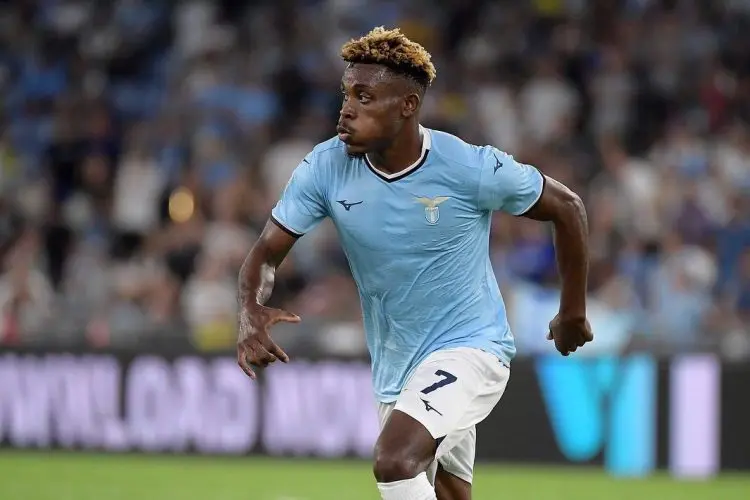
Lazio midfielder, Fisayo Dele-Bashiru is a subject of interest from three Premier League clubs, according to Sky Sports.
Lazio reportedly rejected offers from Nottingham Forest and Bournemouth for the Nigeria international in January.
READ ALSO:Film Premiere: Edo In Talks With Embassies To Promote Safe Migration —Agazuma
La Biancolesti are bracing for more interest in Dele-Bashiru ahead of the summer transfer window, according to Sky Sports.
The 24-year-old has two years left on his contract with the Serie A club.
The attacking midfielder joined the Rome-based club from Turkish Super Lig outfit Hatayspor in 2024.
He has been a regular feature for Lazio this season.
News
Xenophobic Attacks: Nigerian Students To Picket MTN, MultiChoice, Other Businesses


The leadership of the National Association of Nigerian Students, NANS South-West Zone D, has announced plans to picket South African companies in Nigeria following the ongoing xenophobic attacks in the country.
DAILY POST reports that some Nigerians were recently killed in South Africa over the violent attacks.
A statement issued to newsmen by Comrade Adeyemo Josiah Kayode, Coordinator, NANS South-West, Zone D, said that the association is mobilizing to take decisive and lawful action by organizing peaceful picketing and mass advocacy against South African business interests operating in Nigeria.
READ ALSO:Xenophobic Attacks: Oshiomhole Tells FG To Retaliate Against South African Companies In Nigeria
“We categorically state that the continued targeting of Nigerians under any guise is unacceptable and must come to an immediate end.
“This will include major corporations such as MTN Group and MultiChoice Group. It is morally indefensible for businesses to thrive in an environment where the lives of Nigerians are protected, while Nigerians are subjected to fear and violence elsewhere.
“This contradiction will no longer be tolerated,” the statement said.
-

 Politics5 days ago
2027: Tinubu’s Re-election May Put An End To Nigeria — Baba Ahmed Warns
-

 Business4 days ago
JUST IN: Nigerian Filling Stations Reduce Fuel Price After Hike
-

 News2 days ago
BREAKING: Wike Picks Alabo George For Rivers Governorship
-

 News4 days ago
2027: Pastor Adeboye Speaks On Nigeria’s Next President
-

 Politics4 days ago
NDC Speaks On Peter Obi, Kwankwaso Joining Party
-

 Politics2 days ago
JUST IN: Why I left ADC For NDC With Kwankwaso – Peter Obi Opens Up
-

 News3 days ago
OPINION: Why South Africans Murder Nigerians In Cold Blood
-

 Business2 days ago
Why We Sited Our Multi-Billion Naira Automobile Firm Branch in Benin – Skyewise Group CEO
-

 Entertainment4 days ago
Again, Tragedy Hits Nollywood As Another Actress Dies
-
Politics3 days ago
Peter Obi, Kwankwaso Formally Join NDC, Warn Members Against Litigation
