
News
[OPINION] Democracy Under Pressure: Threats to Nigeria’s 2027 Elections

By Samson Itodo
As Nigeria transitions into full election mode for the 2027 general elections, the political temperature is heating up at a scale that puts the country’s democracy under intense pressure. Democratic institutions are struggling to respond to pressures emanating from the actions of political actors. The political landscape has been marked by heightened elite bargaining, strategic political realignments, and premature campaigns. These developments reflect a troubling pathology of Nigeria’s electoral politics, which relegates governance for the advancement of electoral ambition.
Consistent with historical precedent in previous election seasons, political actors are spending less time on governance and paying more attention to getting elected. Policy actions and government programs are structured to advance political aspirations ahead of the elections. Even though the ban on political campaigns has not been lifted by the Independent National Electoral Commission (INEC), overt campaign activities began immediately after the 2023 elections. This early campaign reveals weak accountability mechanisms that perpetuate a culture of impunity, threatening the credibility of the forthcoming elections.
INEC is scheduled to conduct three strategically important elections in 2026. They include the Federal Capital Territory Area Council elections and the governorship elections in Ekiti and Osun States. Early signs indicate that the FCT Area Council and Osun elections will be highly competitive and politically contentious, given their strategic importance for the 2027 elections and the disposition of political actors determined to consolidate control of states. These elections will test INEC’s resilience and commitment to protecting its independence, especially the transparency of the results management process. The manner in which these elections are conducted will shape public confidence ahead of 2027. It may increase citizens’ enthusiasm or deepen voter disengagement. While the National Assembly is yet to conclude amendments to the Electoral Act, there are indications that the proposed Electoral Act 2026 will mandate compulsory electronic transmission of results, amongst other transformative reforms.
Recent elections have increasingly failed to serve as instruments of public choice. Instead, they have become tools exploited by captured institutions for regime protection or consolidation of incumbent power. Since assuming office, the new Chairman of INEC has expressed commitment and readiness to rewrite Nigeria’s electoral history by ensuring the integrity of the 2027 elections surpasses previous elections. The chairman has emphasized that “the 2027 General Election must be free and fair and be a watershed moment in Nigeria’s history”. This rhetoric, though customary of previous INEC leadership, presents a critical opportunity to restore the lost confidence in the electoral process. However, the ambitious goal remains severely constrained by a constellation of systemic, political, and security-related threats, including the following:
READ ALSO: OPINION: The Guest Who Ate Before The Owner
Possible elimination of electoral competition
The legitimacy of elections is derived from competition and contestation. Where competition is eliminated, election lose their democratic ingredient. One of the most profound threats to the 2027 elections is the systematic erosion of political competition through induced defections from political parties and the incremental decimation of opposition parties. This distortion of the political landscape could disincentivize public participation in the 2027 elections, as voters will have limited political choices. Constricting the political space and the gradual descent towards a one-party state threaten Nigeria’s democratic trajectory ahead of the 2027 elections. When political pluralism is overtly or covertly removed from electoral politics, authoritarianism creeps in, and it diminishes the legitimacy of electoral outcomes.
Deepening electoral cynicism
While the majority of Nigerians are interested in voting in 2027, a substantial number of Nigerians believe their vote makes no difference and that electoral outcomes are predetermined. This is largely driven by what I regard as a triangle of compromise involving three major institutions: security agencies, INEC, and the judiciary. This crisis of confidence is not unfounded. Instances of conflicting results from the same polling units, bypass of the Bimodal Voter Authentication System (BVAS), and tampering with election results drive distrust in election outcomes. Political elites continue to affirm the narrative that voters don’t matter with the manner in which the defections to the ruling party have been framed. The party defections seem to be driven by the belief that joining the ruling party guarantees electoral victory in 2027, regardless of voter choices.
Insecurity and escalating tensions
The current multi-dimensional security crisis poses a serious threat to the 2027 elections. As the National Voting Intentions Round 1 Survey shows, insecurity may drive low voter turnout in 2027 despite high voting interest. Insurgency, banditry, communal conflicts, separatist agitations, and organized criminal violence continue to overstretch Nigeria’s security architecture. This expanded geography of insecurity undermines the likelihood of a safe and peaceful environment for elections. INEC may be constrained to organize elections in volatile and ungoverned spaces, while voters in conflict zones may be disenfranchised. Where insecurity impedes the deployment of election personnel, materials, and security assets, the credibility and inclusiveness of the electoral process are fundamentally compromised.
Addressing the Threats to the 2027 Elections
Although these factors pose a threat to the 2027 elections, practical actions can be taken to address them. Whether Nigeria slides into full-blown electoral authoritarianism or advances toward democratic legitimacy depends on the constellation of three interdependent forces, namely;
An Activist and Principled INEC
Encouragingly, the Chairman of the Independent National Electoral Commission (INEC), Prof. Joash Amupitan, SAN, has outlined five non-negotiable pillars to guide the Commission’s work: institutional independence and freedom from interference; fairness and equal treatment of all political parties and candidates; credibility in the eyes of Nigerians and the international community; transparency across every stage of the electoral process; and inclusivity to ensure that no eligible voter is disenfranchised. If implemented, these standards will radically transform the electoral process, restore public confidence, and place Nigeria back on the path of democratic progress.
However, achieving these milestones will require intentional and courageous leadership from INEC. The Commission must exercise its regulatory powers cautiously, especially in matters of party registration, recognition of party leadership, and the monitoring and validation of the list of candidates. These issues have been a major driver of distrust amongst stakeholders. Equally important is the urgent need to fix the election results management value chain, which currently suffers from systemic vulnerabilities. The recurrence of multiple results emanating from the same polling units and the conflicting results on the INEC Result Viewing Portal (IReV) must become relics of the past.
A determined citizenry committed to defending its franchise
The most potent antidote to election manipulation is citizens’ vigilance. When democracy is under pressure, citizens must rise to defend it. This onerous responsibility begins with turning up to vote and ensuring vigilance to prevent elections from being stolen. Unpopular and insecure political actors are deeply threatened by high voter turnout because it limits opportunities for election manipulation. Political elites benefit most when citizens disengage from elections. They exploit two most potent tools: fear and distrust, to discourage participation. They amplify insecurity and accounts of election manipulation to convince the public that votes don’t count, even in the face of impactful electoral reforms. Therefore, the credibility of the 2027 elections will depend on the collective resolve of Nigerians to defend their votes. Every voter must approach the polling unit on election day not only with the intention to vote but with the resolve to remain present, observe the process, and ensure that accreditation, voting, counting, and results transmission are conducted strictly in accordance with the electoral legal framework.
A patriotic and non-aligned security architecture
The credibility of elections is threatened when security agencies fail to uphold neutrality, professionalism, and fidelity to the constitution. It doesn’t matter whether all the other elements of electoral integrity are in place. As long as security agencies maintain a partisan posture, then the next election may be considered compromised. The Interagency Consultative Committee on Election Security (ICCES) must now retool and adopt the principle of patriotic non-alignment, which promotes an election security framework that is hinged on the respect for the rule of law and commitment to constitutional fidelity and Nigerian citizens rather than loyalty to the ruling political elite, political party, or incumbent authority in any strata of society. Without a patriotic and non-aligned security framework, even the most well-planned elections will remain vulnerable to manipulation and coercion.
Samson Itodo is an election, democracy, and public policy enthusiast. Itodo serves as the Executive Director of Yiaga Africa, Principal Partner of the Election Law Center and Chairperson of the African Union Advisory Group on AI in Peace, Security and Governance. He is also a member of the Kofi Annan Foundation board and the Board of Advisers of the International Institute for Democracy and Electoral Assistance (IDEA). Comments and feedback to sitodo@yiaga.org



News
Otuaro: Baseless Allegations, Disregard Them, Group Urges Public
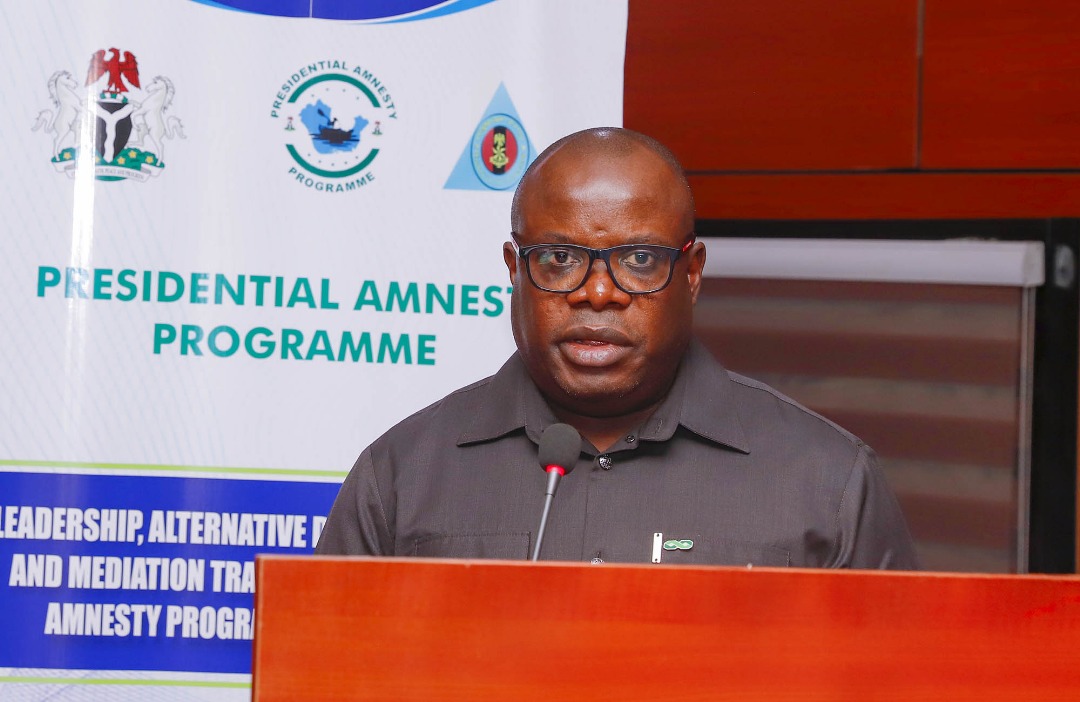
The Ijaw People’s Development Initiative, IPDI has reacted to a statement circulating online regarding the Presidential Amnesty Programme (PAP), describing it as baseless.
The statement under the disguise ‘Niger Delta Stakeholders Forum and Niger Delta Ethnic Nationalities,’ had demanded accountability regarding the management of the Programme and its administrator, Dr Dennis Otuaro.
Reacting to the statement, National President, IPDI, Comrade Austin Ozobo, said: “We consider it necessary to respond point by point to correct misconceptions, reject unsubstantiated claims, and keep the record straight in the interest of PAP beneficiaries, stakeholders, and the general public.
“It is worthy of note that the PAP operates under strict federal financial regulations and is subject to routine audits by the Office of the Auditor-General of the Federation, the Ministry of Finance, and other oversight bodies.
“All disbursements, including stipends, vocational training, education support, and third-party contracts, are processed through the Treasury Single Account, TSA, with verifiable records”, the statement read.
READ ALSO:PAP Sends Additional 15 Scholarship Beneficiaries For Post-Graduate Studies In UK
According to the IPDI, the Programme welcomes lawful criticism and scrutiny at any time. However, linking such a call to specific individuals without evidence amounts to trial by the media and undermines due process.
“Dr Dennis Otuaro, administrator of the Presidential Amnesty Programme has maintained a good record of financial management, hence no formal petition with verifiable evidence has been submitted to any anti-graft agency till date”.
“It may interest you to know that the N65,000 monthly stipend is fixed by the Appropriation Act and can only be reviewed through a budgetary process approved by the National Assembly and the Presidency.
‘The PAP management has consistently conveyed beneficiaries’ concerns on cost of living to relevant authorities”.
“Again, claims that allocations to the Programme have risen significantly while stipends remain unchanged misrepresents the budget structure.
READ ALSO:PAP: N’Delta Stakeholders Laud Otuaro’s 2 Years Of Strategic Reforms
“Note, increased allocations in recent years have been tied to expanded reintegration programs, education sponsorships, skills acquisition, and infrastructure support for training centers, not solely to stipend payments”.
The group reiterated that the allegation that the Amnesty Programme Office “kidnaps and detains delegates” is false, reckless, and defamatory, adding that the PAP has no paramilitary or law enforcement mandate, nor does it operate detention facilities and that any incident involving law enforcement is outside the control and purview of the Programme.
“We challenge the authors to provide verifiable details of time, place, and persons involved so the matter can be addressed through appropriate legal channels,” the group said
On Claims of Selective Empowerment and 500% Payment Increases, the group maintained that payments to contractors, ex-agitator leaders, and service providers were governed by existing contracts and agreements predating the current administration.
“No individual or camp has received unilateral increases without contractual basis or due process. Allegations of 500% increases are unsubstantiated and designed to stoke division among beneficiaries,” it added.
READ ALSO:Otuaro Links Increase In PAP Scholarship Beneficiaries To Tinubu
“The current administration has maintained a policy of transparency in engagement with leaders and has expanded inclusion by verifying and capturing previously omitted beneficiaries where due“, IPDI added.
The group further said, “The PAP remains a neutral, peace-building institution established under the 2009 Amnesty Declaration. Its mandate is to coordinate disarmament, demobilization, and reintegration. The Office does not engage in political victimization, intimidation, or exclusion of stakeholders. Engagement with ex-agitator leaders and community structures is conducted based on their role in maintaining peace and facilitating reintegration, not political alignment”.
“The PAP under Chief Denis Otuaro’s leadership remains committed to transparency, fairness, and the original mandate of the Amnesty Programme. Constructive criticism is welcome and has informed policy adjustments in the past. However, campaigns of calumny, unverified allegations, and attempts to drag the Programme into commercial or political disputes do not serve the interest of peace in the Niger Delta”, IPDI said.
“We urge all stakeholders to channel grievances through the established engagement channels of the Programme and to avoid statements that threaten the fragile stability we have worked to sustain”.
Consequently, the IPDI urges members of the public to disregard what its described as “flimsy and unsubstantiated allegations, misconception, and missives by faceless groups above“.
News
[OPINION] Olukoyede’s EFCC: Taming The ‘Fantastically-Corrupt’

Since its creation 23 years ago, by Chief Olusegun Obasanjo, as president of Nigeria, Africa’s most populous and influential country, the Economic and Financial Crimes Commission (EFCC), had apparently not gotten a head, who had piloted the affairs of the commission, like Mr. Olanipekun Olukoyede, its Executive Chairman, a chief-operations-officer of the Commission.
It could be said that Olukoyede, the Czar thief catcher and arrestor of economic saboteurs, has given the EFCC’s enemies such a tough time as he has taking the anti-graft fight to the doorsteps of the high-profile individuals across the country. These range from former state governors, serving and former ministers, retired and serving civil servants, businessmen, clergies, traditional rulers, cyber-influencer, entertainers, professionals and numerous others.
Olukoyede brings years of experience in law, fraud management, and business intelligence to bear on the position. Before him, Mallam Nuhu Ribadu was EFCC’s inaugural chair; succeeded by the first and only female, Mrs. Farida Waziri; Ibrahim Lamorde, Ibrahim Magu, and Abdul Rasheed Bawa.
The anti-graft agency has its hands full with massive financial fraud and money laundering cases. In the clause of “physicians, look at thyself”, EFCC in its resolve is known to have been flushing out officers within the body, who run foul to the law.
In the past, before Olukoyede’s appointment, it was widely believed that it was only the “fries and not the big fishes”, who the Commission could summon the courage to prosecute; and that most culprits were also left from the hook, because of compromise by some corrupt officers of the Commission, and feeble litigation processes.
Mr. Godwin Emefiele, former Governor of the Central Bank of Nigeria (CBN), happened to have opened to Olukoyede’s a deluge of “big-men and women”, who have been arrested, investigated and cooling their feet in detention or those bailed, that are facing severe court trials. There is the biggest 19-count charge at the Ikeja Special Offences Court, involving an alleged $4.5 billion fraud.
Immediate-paste governor of Kogi State, Yahaya Bello, faces two massive, but separate legal battles totalling over N190 billion on fraud allegation. EFCC secured from the Court of Appeal, forfeiture of 14 properties and huge money linked to him.
Abubakar Malami (former Attorney-General of the Federation), with his son, Abdulaziz and his wife, is currently charged on a-16-count of money laundering. The court has stayed interim forfeiture of 57 properties valued at over N213 billion.
MORE FROM THE AUTHOR:OPINION: Contesting The Portable Vs Carter Efe’s Cruel Ring-fight
EFCC had also secured the arrest of Sadiya Umar-Farouq, a female former Minister of Humanitarian Affairs, and a former Permanent Secretary, through a Federal High Court, on a 21-point alleged fraud and corruption charge, involving $1.3 million and N746.6m and others amounting to 37.1 billion.
Uju Kennedy-Ohanenye, also female and former Minister of Women Affairs, was removed from office by President Bola Tinubu, over alleged misappropriation and diversion of N138.4 million, and had been under EFCC questioning.
A recent discovery, which startled Nigerians and the world, the Commission (EFCC) had reportedly arrested a serving Director-General of the Energy Commission of Nigeria, Dr. Mustapha Abdullahi, over alleged money laundering involving about ₦500 billion.
Somewhat, this had deflated the claim that those arrested and persecuted are political opponents and not serving officers of the Tinubu’s government.
EFCC is a “Nigerian law enforcement and anti-graft agency that investigates financial crimes, such as advance fee fraud (419 Fraud) and money laundering. It was also set up to fight against corruption and to protect the country from economic saboteurs”.
The Commission, whilst responding to pressures from the Financial Action Task Force on Money Laundering (FATF), that named Nigeria as one of 23 countries not cooperating in the international community’s efforts to fight money laundering, had revved in performance, in a bid to roll back the blights.
And so, it is a strenuous goal for EFCC, as entrenched in the ‘EFCC Establishment Act 2004’, which gives it specialist jurisdiction against severe financial and commercial crime – covering multiple high and lower levels.
MORE FROM THE AUTHOR:OPINION: Tenebe Could Deprive Tinubu From Winning Edo Election
Born on 14 October 1969, Olukoyede, a civil servant, has had a clear break from past, where past executive chairmen of the Commission had left the Commission, where all serving officers were drafted from the Nigerian Police Force (NPF). However, President Bola Ahmed Tinubu is widely commended for Olukoyede’s appointment to the position, with the Senate also eulogized for screening him.
Whilst briefing the Press in Abuja, on his two-year activities in office, on October 23, 2025, the Commission’s boss certainly made unprecedented progress in the fight against economic and financial crimes. He spoke through the Director of Public Affairs of the Commission, Wilson Uwujaren, as he listed the recovery of N566 billion, alongside other currencies and assets, among the achievements of the Commission.
He further revealed that the Commission received over 19,000 petitions, conducted 29,240 investigations, filed 10,525 cases in court, and secured 7,503 convictions.
Olukoyede asserted that the Commission recovered ₦566,319,820,343.40, $411,566,192.32, £71,306.25, €182,877.10, and other foreign currencies from proceeds of financial and economic crimes. Added to this was the recovery of 1,502 non-monetary assets, comprising 402 properties in 2023, 975 in 2024, and 125 so far in 2025.
“Among these recovered assets are two notable landmarks: the final forfeiture of 753 units of duplexes in Lokogoma, Abuja, and the forfeiture of Nok University, now the Federal University of Applied Sciences, Kachia, Kaduna State,” he said.
He listed several high-profile cases prosecuted within the period, including those involving former governors Willie Obiano, Abdulfatah Ahmed, Darius Ishaku, Theodore Orji, and Yahaya Bello. Others are former ministers Olu Agunloye, Mamman Saleh, Hadi Sirika, Charles Ugwu, and former Central Bank Governor, Godwin Emefiele.
EFCC was also said to have reentered and invigorated some longstanding fraud cases, such as ones linking Fred Ajudua, former People Democratic Party, PDP National Chairman Haliru Bello Mohammed, ex-National Security Adviser Sambo Dasuki, and former Nigerian Social Insurance Trust Fund, NSITF boss, Ngozi Olojeme.
MORE FROM THE AUTHOR:OPINION: The Rough Games Arewa Bourgeoisies Play With The Talakawas
The EFCC said it arrested 792 suspects involved in asset and cryptocurrency frauds in Lagos, among who were 192 foreigners who were prosecuted and deported.
A Task Force on Naira Abuse and Dollarisation of the Economy was established by EFCC, which accordingly, had notable impacts in sanitizing money actions countrywide. “The campaign against naira abuse, racketeering, and speculative currency trading has helped reduce pressure on the naira and complemented the Central Bank’s efforts in stabilizing the economy,” he said.
Olukoyede also spoke on the Commission’s strengthened partnerships with foreign law enforcement agencies, including the Korean Police, Royal Canadian Mounted Police, Spanish Police, and German Police.
He also mention benefitting synergy with the FBI, the UK’s National Crime Agency (NCA), INTERPOL, and Japan’s JICA, in subsequent joint investigations and the repatriation of stolen assets to victims from Spain, Canada, and the United States.
Strengthening EFFC’s mandate at the regional level, and in Africa, Olukoyede and the Commission are said to be up and doing. For instance, a thing that had never happened to EFFC, he had been twice elected as President of the Network of National Anti-Corruption Institutions in West Africa (NACIWA), which led to the founding of a permanent secretariat in Abuja.
A strong media presence is needed to successfully inform the public of the ideals of EFCC and its update activities. And so, ‘EFCC Radio 97.3FM’, Nigeria’s first anti-corruption radio station, was established Olukoyede. EFCC should count itself very lucky for having in its fold, tested, diligent and veteran journalists who are ostensibly seasoned in the ideals and watchdog principles of the Commission.
News
APC Primaries: Johnny Rallies Support For Senator Thomas’ Re-election Bid

A chieftain of the All Progressives Congress in Delta State, Chief Michael Johnny, has called on Delta South Senatorial District’s party faithful to come out in large tomorrow and vote for Senator Joel-Onowakpo Thomas (JOT) in the party senatorial primary election.
Johnny, widely regarded as a leader par excellence within the APC, described the primary election as a critical moment that will determine the political stability, unity, and future direction of Delta South.
According to him, Delta South needs a detribalized leader with the capacity to unite people beyond ethnic sentiments and political divisions.
He warned against leaders whose style of politics promotes ethnic division and unnecessary tension within the region.
READ ALSO:Violence Rocks APC Reps Primary In Ekiti Ward, Exercise Declared Inconclusive
Chief Johnny stated that Senator Thomas has continued to distinguish himself as a leader who carries everyone along, irrespective of tribe, political background, or local government affiliation.
He noted that JOT’s leadership style has strengthened cooperation, peace, fairness, and political inclusion across Delta South.
Speaking further, Chief Johnny declared that the Ijaw people have resolved to stand firmly behind Thomas because fairness, justice, and political balance must prevail in Delta South.
“As Ijaw people, we have decided to support Senator Joel because this is the turn of the Isoko nation, and Ijaw stands for truth. That is our position,” he stated.
READ ALSO:APC Clears Wike Loyalists, Disqualifies All Fubara-aligned Aspirants For State Assembly
He also appreciated what he described as “genuine Itsekiri sons and daughters” who believe in fairness, equity, and peaceful coexistence, adding that Delta South can only move forward when the various ethnic nationalities work together in unity and mutual respect.
Chief Johnny maintained that the senatorial district must not be dragged backward by divisive politics or ethnic interests capable of weakening the collective strength of the region.
He stressed that all APC members in Delta South must remain united in their support for Senator Joel-Onowakpo Thomas.
“Delta South is bigger than personal interests. This election is about unity, stability, fairness, and the future of our people. Senator JOT represents continuity, experience, and inclusive leadership for all ethnic groups in Delta South,” Chief Johnny added.

 Politics5 days ago
Fubara Clears Air On ‘Defection’ To NDC [VIDEO]
- News4 days ago
Gun Battle In Oyo Forest As Police Disrupt ₦10m Ransom Collection Plot
- Politics3 days ago
Four Fubara Loyalists Disqualified As APC Clears 21 For Rivers Reps Primaries
 Metro4 days ago
Drama As Teenagers Stage Secret Wedding With N3,000 Bride Price
- Politics3 days ago
2027: Court Rebukes Plaintiff, Lawyer In Suit Against Jonathan, Awards N1m Fine
- News3 days ago
Lagos Sanctions 15 Money Lending Companies For Sharp Practices
- Politics5 days ago
2027: Daniel-Abiodun Feud Deepens Over Senatorial Ticket For Ogun East
- News4 days ago
PAP Sends Additional 15 Scholarship Beneficiaries For Post-Graduate Studies In UK
- Sports4 days ago
CAF Introduces New Laws After Chaotic AFCON Final In Morocco
- Entertainment5 days ago
Grammy Announces Date For 2027 Awards Nominations


