

News
[OPINION] El-Rufai: Tinubu’s Angry Kingmaker




By Lasisi Olagunju
Alhaji Shehu Shagari first met General Murtala Mohammed in August 1974. Newly appointed Federal Commissioner for Communications, Murtala, wrote a memo for cabinet approval and needed financial clearance from Shagari, then Commissioner for Finance.
Shagari recalled the encounter: “I studied the memo carefully and made a number of comments and suggestions. He replied it was too late to make any amendments given the urgency. Thereupon I expressed my regret for being unable to support the memo. He took leave of me, apparently disappointed. When the memo came before the cabinet, it was debated but rejected. Murtala was very angry. The following morning, he came into my office filled with remorse. He said to me, ‘Mr Commissioner, I have come to eat my words. I am sorry to have refused your advice but I am now all the wiser. Please, tell me how best to modify my memo in order to make it acceptable to the Council.’”
Shagari said he was “deeply touched by his modesty and courtesy.” His office revised and redrafted the memo to secure approval.
Later, Murtala asked Shagari to present the revised memo to the Cabinet on his behalf, as he would be on pilgrimage to Mecca before the next meeting. Shagari agreed. But when he attempted to present it, General Yakubu Gowon, the Head of State, objected. Gowon argued it was inappropriate for someone who had previously opposed the memo to present it, especially as it sought allocations from his ministry.
On his return, Shagari briefed Murtala on Gowon’s rejection of the memo and expressed regret at being unable to fulfill his request.
Murtala flared:
“Don’t mind him! We shall soon change him. We put him there and we can remove him any time!”
Shagari replied, “Please don’t. We need peace and stability in Nigeria.”
Murtala smiled, shook Shagari’s hand warmly, and left.
“I never thought that he was serious about the threat,” Shagari later wrote — until, a few weeks later, when it was carried out.
All the above are carefully recorded by Shagari on page 178 of his autobiography, ‘Beckoned to Serve’.
When kingmakers turn angry, they are rarely quiet about it. Wounded influence can ferment into insurgent energy; those who once built thrones sometimes feel compelled to test the pillars that frame them. Throughout history, sufficiently aggrieved makers of kings always probe, and even shake, the very structures they help hold and stabilise the throne.
I remembered to go back to Shagari’s book and then searched for the page after I watched Mallam Nasir El-Rufai’s Abuja airport drama on Thursday, and his fiery Friday appearance on Arise News television. In temper and outburst, Murtala and El-Rufai, like Caesar and Danger are “two lions littered in one day”; both of them deadly. In power relations, El-Rufai did for Tinubu in 2023 what Murtala did for Gowon in July 1966. The short man from Kaduna is now as angry as the Kano General who sacked Gowon in July 1975.
The jilted man has even added scarlet letters to his scud missiles. In politics, as in drama, affection curdled into estrangement does generate a force more combustible than the flare of hell. Centuries ago, William Congreve anticipated such metamorphosis in ‘The Mourning Bride’:
“Heaven has no rage like love to hatred turned,
“Nor Hell a fury like a woman scorned.”
I saw the way angry El-Rufai bluffed off security at the airport and the daredevilry he displayed on live TV on Friday night. I remembered Murtala Mohammed, his bloody godfather-role in getting Gowon into power, his open threat to sack the boss and his putsch that ended Gowon’s reign.
MORE FROM THE AUTHOR:OPINION: Small Talks With A Childless Mother
To what end was Mallam Nasir El-Rufai’s huff and puff of last week? The end, he said, is to remove Bola Tinubu from power. “This government is gone by the grace of God,” he declared on television. “We are going to surprise this government and give Nigerians a very credible alternative platform and a candidate that will defeat the incumbent in the next election.” It was a promise delivered in his familiar register.
What followed that promise was vintage El-Rufai — small frame, large combustion engine. He sensationally announced that he had participated in bugging the telephone line of Tinubu’s National Security Adviser. A poisonous letter followed at the weekend.
This is not the first time El-Rufai’s words have outrun restraint. He has a reputation for boasting about enthroning and dethroning presidents. There was a time he threw a verbal party in celebration of the death of a president who had the effrontery to jilt him.
In January 2017, Daily Nigerian, an online newspaper published by journalist Jaafar Jaafar, quoted him from an interview audio as saying: “Now, regarding the question about Umaru Yar’Adua, yes, I am grateful to God because I am alive and Umaru is dead.” Around the same period, at an APC stakeholders’ meeting at Murtala Mohammed Square in Kaduna, he boasted that he had fought two presidents: Umaru Musa Yar’Adua, who “ended up in his grave,” and Goodluck Jonathan, who “ended up in Otuoke.”
That was in 2017. In 2023, he was central to the coalition of northern governors that frustrated President Muhammadu Buhari’s preferred succession direction, a move that substantially cleared the path for Bola Tinubu’s APC candidacy. Now El-Rufai says he “ought to have retired” from politics but for “the disaster that I contributed to imposing on Nigeria.” That “disaster,” in his telling, is the Tinubu presidency which he has vowed to terminate at the next election.
When men who helped enthrone a president now vow to dethrone him, and invoke methods that corrode the law; the issue becomes larger than politics. It becomes a matter of acute national interest.
Yet the man who El-Rufai is threatening to de-crown is very well schooled in the hard, wise Yoruba ways of power. One proverb Tinubu once deployed while angling for where he is was: Ojú bòrò kó ni wọ́n fi ń gb’ọmọ l’ówó èkùró — you do not use a soft eye to extract palm kernel from its mother, the hard shell. Unless you have seen how kernels are wrested from rock-like shells, you may not grasp the warning in that proverb. Tinubu’s friends would say he is not Jonathan who was cooked in his very presence. They would insist that he is not Yar’Adua whose nimble fingers were cut off the soup plate before his time. They would say he is not Muhammadu Buhari, an overhyped General with balls made of rubber. Tinubu is Bola Ahmed Tinubu — a truly hard man blessed enough to make law and process bend before the weight of his ambition. More appropriately, he is Ogboju Ode, the intrepid hunter who has walked forests thicker than the wild dread of D.O. Fagunwa’s Forest of a Thousand Demons.
But El-Rufai also has a history of snatching meat from the jaws of lions. If I were Tinubu, I would know that this man deserves close scrutiny. What kind of man says what he says and gets away saying them? All his engagements last week left no one in doubt that he is ready for the state. He get mind!
His witch is one battle axe who never denies his witchery. On Friday, while threatening to sack Tinubu as Murtala said of Gowon, El-Rufai made the whole nation gasp. He admitted that someone close to him had tapped the telephone line of the National Security Adviser. “He (NSA) made the call because we listened to their calls. The government thinks they are the only ones that listen to calls but we also have our ways. He made the call and gave the order. Someone tapped his phone. The government listens to our calls all the time without a court order. Someone tapped his phone and told us that he gave the order.” The man had just confessed to committing a crime.
MORE FROM THE AUTHOR:[OPINION] Idolatry: The Worship Of A President
When someone says what El-Rufai said, the Yoruba would quietly wonder whether he is not under a spell. They call it Èèdì.
In Yoruba thought, the spiritual affliction called Èèdì describes destructive hubris. It is different from the other no less costly spell called àsàsí; àsàsí harms from outside, Èèdì works from within. It pushes and incites its victim toward self-sabotage. The afflicted person becomes the instrument of his own undoing.
So, when a man publicly normalises what should alarm him; when he boasts of practices that drench him in petrol for his enemy to set alight, the Yoruba mind may not first think of law or politics. It may think of Èèdì — the quiet force that leads a person to injure himself with his own hand and tongue.
But whether èèdì or àsàsí, El-Rufai does not give a damn. He is a witch who eats the heart and liver of his victim in the open marketplace. He said what he said about phone tapping calmly as if it was a national duty he faithfully carried out. His excuse was that government also does phone tapping illegally. Now, can two criminalities cancel each other out? No. Two wrongs do not neutralise themselves; they compound the injury. Reciprocal criminality does not cure the disease, it makes the cancer metastatic.
In Nigeria, unlawful interception of communications is not a grey area. It does violence to what Australian jurist, Richard Blackburn, called “the most comprehensive of rights and the right most valued by man… the right to be left alone.” It violates Section 37 of Nigeria’s 1999 Constitution – privacy of correspondence and telephone conversations. It breaches the Cybercrimes (Prohibition, Prevention, etc.) Act 2015. It offends the Criminal Code and established telecommunications regulations.
It may be illegal but who will convince the tempest that his tumultuous ocean should not breach the beach of law and decency? Who will tell our big man that illegality does not become lawful because it is reciprocal?
When crime and crime play table tennis (ping-pong) across the net, peace packs its bags and leaves in a hurry. Every retaliatory strike sends the ball back harder, faster, and more reckless than before. No one wins the game. The table collapses. The racket tears. Even the ball turns to bubble and bursts.
What Mallam El-Rufai blithely dropped as a contest has personal and institutional ruin as its end. The players will be left standing in debris, surveying the wreckage of institutions needed for national stability.
MORE FROM THE AUTHOR:OPINION: Ibadan Is Oyo
Despite what my ears have heard about government, until El-Rufai broke the table, I never knew there was a parallel private power strong enough to compete with the state in that act of infamy. When you are truly strong, you would know you are strong. El-Rufai uttered that heavy stuff and slept in his house that Friday and throughout the weekend. Like Julius Caesar, he is made of sterner stuff.
While the big men bicker, the people suffer unrelenting violence. El-Rufai, his friends and the government are very erect listening to conversations and banters across classrooms and newsrooms, but they are limp when bandits and terrorists carry on their business online and offline. The eunuch of the feuding husbands is very impotent in threading his own woman, yet he boasts he can thread any needle in the dark.
When those entrusted with state power treat surveillance as sport, and those outside power treat it as justified revenge, when interception becomes culture, privacy becomes casualty. What we treat as bravado is actually erosion of trust, of law, and of the fragile peace that holds this democracy together.
In 1952, Professor of Public Law and Government at Columbia University, Alan F. Westin, in his ‘The Wire-Tapping Problem’ hinted that once surveillance becomes routine in government hands, it rarely remains confined there; it spreads to private actors, political rivals, corporations, and eventually becomes an industry. He wrote: “Telephone monitoring is frequently used by private persons for purposes as diverse as labor espionage and assuring a wife’s domestic fidelity.” That trajectory is precisely what makes normalisation dangerous. If the government taps phones unlawfully, it violates the constitution. If private citizens tap phones, they commit a crime. If both do it, there are simply two violators — two criminals.
When you do what El-Rufai confessed being accessory to, lawyers and the police would say you have committed a crime. “Government does it to me” is not a legal justification. It is an allegation of state misconduct. The remedy for misconduct is legal challenge, not imitation. Otherwise, the rule of law is replaced with competitive espionage. Retaliatory illegality is not self-defence; it is escalation of criminality. In law, illegality by one party does not legalise illegality by another. Two criminalities cannot cancel each other out. They will simply multiply themselves.
In a trending 2017 video, El-Rufai states his creed with chilling clarity: “Anybody that tries to criminalize Nasir El-Rufai should know that he has a battle on his hands till one of us drops dead. And if they have any doubt, they should go and ask Umaru Yar’Adua. I will fight you until I’m dead or you’re dead.” Every era produces its apt actors. This is the new opposition leader framing his convictions in the language of mortal combat. I can only exclaim: What an era!
Literature has long imagined such characters as we have in this drama. As F. C. Tilden observed, literature interprets life; and as Richard Eldridge notes, serious literature responds to the complexities of modern existence. Listening to El-Rufai, one literary character comes readily to mind: Esu Kekere Ode (the Little Devil of the Street) in Igbo Olodumare by D. O. Fagunwa.
If one were to extend the metaphor, Nigeria’s incumbent president might be cast as Olowo-Aiye, the Rich Man of the World — adventurous, wealthy, and audacious. In Fagunwa’s tale, Olowo-Aiye strays into the domain of Esu Kekere Ode, who taunts him with dreadful boasts: that the spot Olowo-Aiye stands is his death place; that the skulls of greater men fill his cooking pot; that the backbones of the thoughtless lie in his room; that his seat is fashioned from the bones of those who had come before Olowo-Aiye. The encounter, as translated in Bernth Lindfors’ ‘Amos Tutuola: Debts and Assets’ (1970), is theatre — dark, dramatic, foreboding.
A duel between a short, unyielding Esu and a daring man of money and power would be an epoch. And what is an epoch if it is not a decisive turning point — a thunderclap that alters the course of conflict, history, and power relations?
From what we heard from Nasir, he is not alone in the mission to block Tinubu’s Suez Canal, his route to victory in 2027. People who had the capacity to do the unthinkable of tapping the telephone line of a whole National Security Adviser will do more than what they did and stand by it. It is clear that what is coming is not merely an electoral battle; it is lightning and thunder and rain shrieking, crashing, and seeking to reshape history. The real question, therefore, is not who wins this fight; it is who survives it.




News
Shatta Wale Bailed Burna Boy From Ghana Prison After Arrest For Smoking Weed – Captan

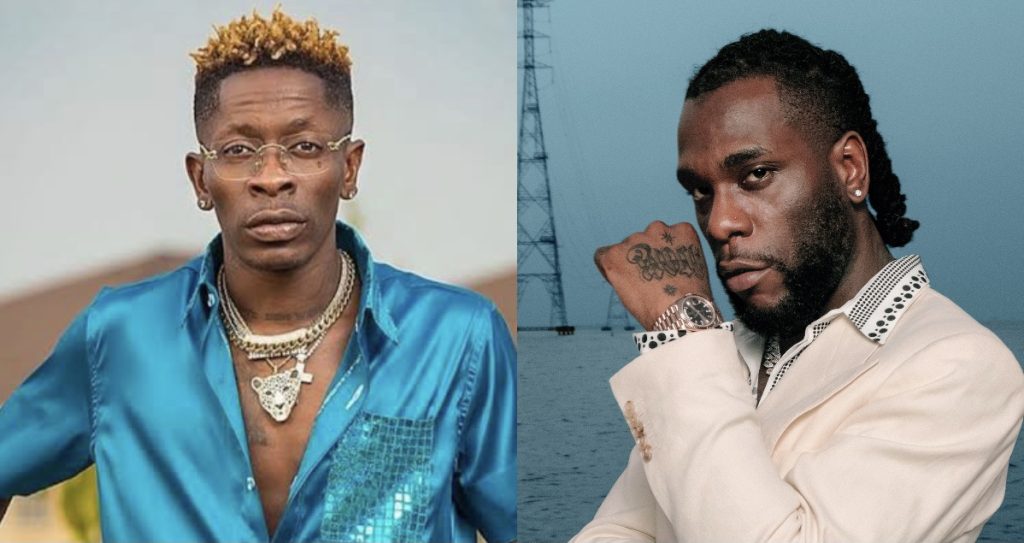
Ghanian singer, Captan, has claimed that his former record label boss, Shatta Wale, once bailed Nigerian singer Burna Boy out of prison in Ghana after he was allegedly arrested for smoking weed.
Speaking in a recent podcast interview, Captan claimed that Shatta Wale sent him and others to free Burna Boy from police custody.
He also claimed that Shatta Wale and his group once accommodated Burna Boy when he was being hunted by some dangerous men.
READ ALSO: Wale Edun Opens Up After Sack
Captan said, “I once bailed Burna Boy out of prison in Ghana when he was arrested for smoking weed. Shatta Wale sent me and some guys to go and free him from police custody.
“There was a time we also accommodated him when some people were after his life. We helped him settle the case.”
He added that he and Burna Boy are no longer in good terms after the Nigerian artist’s fallout with his mentor, Shatta Wale.
He, however, said he and Shatta Wale are open to reconciling with Burna Boy if he asks for it.
Watch the video here
News
Children’s Day: Chaos At Ogbe Stadium As Dozens Faint


Chaos erupted on Wednesday during the Children’s Day celebration as dozens of students reportedly collapsed following a stampede triggered by the use of pepper spray.
The event,
organised by the Edo State Ministry of Education at the Samuel Ogbemudia Stadium was disrupted after some male students of Ihogbe College allegedly made uncompromising advances towards female students at the venue.
A parent who identified himself as Oboh Emmanuel said, “the behaviour of those uncultured students attracted the attention of bouncers stationed at the stadium as they rebuked the male students.”
Oboh said the affected students later regrouped and attacked the bouncers, leading to a confrontation within the crowded arena.
READ ALSO:Children’s Day: Edo Commits To Child Protection
It was gathered that in the ensuing confusion, the bouncers were reported to have deployed pepper spray in an area occupied by a large number of students.
Several students, particularly female students, reportedly fainted after inhaling the substance, while others sustained injuries after being stepped on during the ensuing melee.
The panic was said to have spread across the stadium as students, teachers and parents scampered for safety.
Many of the affected students were reportedly rushed to the Edo Specialist Hospital for medical attention.
READ ALSO: Egor LG Chair, Ogbemudia, Vice, Osawe Impeached
Reacting to the incident, Chief Press Secretary to Governor Monday Okpebholo, Dr Patrick Ebojele, said the security personnel that fired the tear gas had been detained.
He said all the students, except two, that were rushed to the hospital have been discharged.
Ebojele stated that doctors wanted to observe the students till tomorrow before allowing them to go home.
“The two students are not seriously injured. Doctors want to observe them overnight. Permanent Secretary, Ministry of Education is still at the hospital. The man who used pepper spray has been detained.
“The incident did not happen the way it is being exaggerated. All modalities were put in place to ensure the children enjoyed their day.”
News
Okpebholo Salutes Edo Muslims, Seeks Continued Support, Prayers

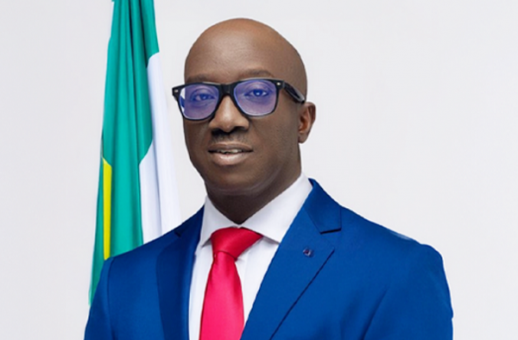
Governor Monday Okpebholo of Edo State has urged Muslims and all Nigerians to continue to pray for peace, unity and progress in the country even as they celebrate the annual Eid-al-Adha
The governor, who was represented by his deputy, Dennis Idahosa, stated this during the annual Eid-al-Adha celebration with Muslim faithfuls held at Government House in Benin City.
He reiterated his administration’s commitment to fairness, inclusivity and equal opportunities for all citizens irrespective of religion and tribe.
READ ALSO:ADC Penetrates Okpebholo’s District As Defections Strengthen Party in Edo Central
According to him, the present administration remains determined to building a government that reflects the diversity of Edo State, noting that competent and qualified Muslims have continued to play vital roles in his government because of their capacity, integrity and commitment to service.
“As a government, we remain committed to fairness, inclusivity and equal opportunity for every Edo citizen, irrespective of religion, ethnicity or political affiliation. This is why quality and competent Muslims are serving in key positions in our administration.”
Okpebholo appreciated the Muslim community in Edo State for their unwavering support and continuous prayers for his administration, noting that such prayers and support have contributed immensely to the peace and steady development being witnessed across the state.
READ ALSO:Okpebholo Felicitates Muslims On Eid-el-Fitr Celebration
He then called on all Nigerians to use the occasion of Eid-al-Adha to pray for the administration of President Bola Ahmed Tinubu, stressing that the country needs collective prayers, unity and cooperation to overcome its present economic and security challenges.
“I urge all Muslims and indeed all Nigerians to use this occasion to pray for our dear nation and for the administration of President Bola Ahmed Tinubu. Nigeria needs our collective prayers, unity and support as we strive to overcome our challenges and build a more prosperous future for all.”
In his remarks, the Chief Imam of Edo State, Abdulfatai Enabulele, applauded the governor for what he described as remarkable developmental strides recorded in less than two years in office.
The cleric commended the administration for ongoing infrastructural development and efforts geared towards improving governance in the state, but appealed to the government to revisit and complete some abandoned projects inherited from the previous administration for the benefit of the people.
-

 Metro5 days ago
My Husband Abandoned Me On Our Wedding Night To Attend Political Meeting, I Want Our Marriage Dissolved
-

 Headline4 days ago
Woman Passes Out After Receiving 100 Strokes Of Cane
-

 Politics5 days ago
Warri Ijaw Hail INEC Delineation Report, Call For Additional Electoral Wards, Others
-

 Headline4 days ago
JUST IN: White House Locked Down Briefly As Gunman Opens Fire At Security Checkpoint
-

 Politics3 days ago
Two Masked Men Gun Down Politician In His Rivers State Hotel
-

 Metro5 days ago
My Wife Stop Cooking My Food, Beats Me Black And Blue All the Time, Man Tells Court
-

 News5 days ago
Alleged Terrorism: Court Rejects Defendant’s Bid To Travel Abroad
-

 News3 days ago
More Pain For Nigerians As Cooking Gas Price Increases Nationwide
-

 Politics5 days ago
What I’ll Do As President Of Nigeria — Amaechi
-

 News3 days ago
FG Declares Two Days Public Holiday For Eid-el Kabir Celebration