
News
OPINION: Fela’s Wizkid

By Lasisi Olagunju
The Cambridge English dictionary defines ‘Wizkid’ as “a young person who is very clever and successful.” Collins Dictionary defines it as “a person who is outstandingly successful for his or her age.” Wisdom Library says “’Wiz’ is a shortened form of ‘wizard,’ connoting skill, talent, and expertise, while ‘kid’ implies youthfulness or being junior. When combined, ‘Wizkid’ suggests a young, talented, and skilled individual, particularly in a specific field.”
Fela and Wizkid? The space between the nose and the forehead is not as short as it appears. A noisy digital skirmish: a torrent of online exchanges; an endless war of words. All between Seun Kuti and Afrobeat super star, Wizkid, with his fans, over a reported off-hand tweet that super-rich Wizkid had surpassed Fela Anikulapo Kuti in music and social stature.
Seun Kuti is reported to have remarked that “it’s an insult to Fela to call Wizkid the new Fela.” Apparently in frustration with the back and forth over the inanity on the Internet, the living star is reported to have retorted: “Ok. I big pass your Papa!!! Wetin u wan do? Fool at 40.” That “igán” was the spark that caused the conflagration.
It is a needless quarrel. Wizkid is not Fela. He is Fela’s wizkid. The fight is stupid because the truth is self-evident. A child may own as many garments as an elder, but he cannot possess the same number of rags. Time, not tailoring, produces experience. But, there is nothing that the Internet and its warriors cannot weaponise. And, the undiscerning is easily conscripted into the raucous army. Wizkid himself understands the distance involved. So, let no one summon tension where harmony is the musical key.
MORE FROM THE AUTHOR:OPINION: Trump And The Ruin Of Kurunmi
The younger wizard knows the source of his tumultuous river; he has never denied where it flows from. In a May 3, 2017 interview with English DJ and author, Semtex, Wizkid traced the arc of his musical influences with disarming candour. “So I was influenced by rap, reggae, Bob Marley, Fela… like good music, some big names,” he said. Yet he admitted that Fela’s music did not immediately appeal to him. His parents played Fela and King Sunny Ade at home, but the young Wizkid, by his own account, was “not old enough to understand or enjoy the music.” He wasn’t alone with that judgment. Even Fela’s mother, at the experimental beginning of his career, told him: “Start playing music your people understand, not jazz.”
Time, however, has a way of teaching the tentative how to stand firm and take their share of what life offers. Wizkid, the young man who once declared that he did not want to be “just an African star” grew into a global figure by climbing the ladder of destiny mounted on the shoulders of global giants. He mentions them in that Semtex interview: Bob Marley of Reggae, and unmistakably, Fela Anikulapo Kuti of Afrobeat.
Another old interview is unearthed by the present noise. In it, Wizkid speaks to the Fela matter with humility and clarity: “We can’t compare, let’s not use that word because it is like disrespect when you’re mentioning Wizkid and Fela in the same sentence. You can’t compare. Fela is someone that inspires me. I have him tattooed on me. Fela’s face is all over my body. Everything he did with his music, his legacy, inspires me to be great and to want to do more.”
Wizkid is big because he is wise. Reading him, hearing him, tells that the young man enjoys the benefit of good upbringing. There is his ‘Ojuelegba’ line:
“Ti isu eni ba dele
A f’owo bo je…”
And he remembers to tell his interviewer that underneath that line is the timeless advice he got from his mother: “When I was like younger my Mama told me, you when God blesses you, you should be smart enough to know that you should be more cautious. That’s when you should get more cautious of what you say, what you do and how you move.” To be cautious is to act with care, with prudence. The synonym is wisdom. What Wizkid says his mother told him is the same as what Kahlil Gibran tells us: “Travel and tell no one, live a true love story and tell no one, live happily and tell no one, people ruin beautiful things.”
MORE FROM THE AUTHOR:OPINION: Saraki’s Persona In Bolaji’s Book
The young wizard is wise. Wizkid is lucky he has a mother who prays. He sings:
“See eh, e kira fun mummy mi o,
Ojojumo lo n s’adura…”
He is as lucky as Abraham Lincoln who said the same: “I remember my mother’s prayers and they have always followed me. They have clung to me all my life.”
Now, if there is a positive gain for me in the ‘childish’ fight over which is bigger and deeper between the Atlantic and the Lagos Lagoon, it is the opportunity to read and know more about the music of the youth, and the chance to throw long-owed libation at the king of waters. In celebrating Fela, therefore, we celebrate a king of songs whose insistence is that art must not be for art’s sake; that music must matter, that it must speak when politics lies, and that it must disturb the comfort of the powerful.
The difference between fire and light is in what is done with them. Some music is not meant to entertain alone, but to awaken. The music of Fela is fire and light combined; it is a force that moves more than bodies; it moves minds. He created Afrobeat; he made music, and with it, made life and living into sound and resistance. His everything is a fine blend, whether of assonance or of alliteration; he made sense out of nonsense. His ‘Zombie’, for instance, has not stopped teaching us that when power stops thinking, rhythm must do the thinking for it.
Fela sang the outrage of today and the rage of tomorrow yesterday. Like NASA’s Perseverance Rover on Mars, the Afrobeat king orbited power with defiance. He was at once coarse and smooth, abrasive and balmy in the same breath.
The Yoruba know that when you sing wahala softly, you can get an entire city dancing. Call it iboosi if you like, trouble turned into tune. Fela sang “Palaver” and made it sound sweet; even his “Yeepa” sounds so sweet that it pirouetted the sonics of chaos into pleasure. Where there is “Sorrow, Tears and Blood”, Fela trained his voice and drum not to keep quiet; and they never did; they still are not quiet. In the moral urgency of African chant, Fela’s music sings and dances; and as it dances, it indicts. When he winks his wings make meaning. His clenched fist circles the earth; his art is an eraser that continually cleans off the boundary between stage and street, between rhythm and revolt. You listen to his ‘Alagbon Close’ lyrics, you hear his sax speak the language of condemnation, while his drum sings defiance to state captors.
MORE FROM THE AUTHOR:OPINION: Gov Makinde, His Sons And His ‘Friends’
The Gen Z fighting on X over which star is the biggest in the cosmos should know this: Fela was one spirit who stretched tradition until it screamed. He was the potter who scooped mounds of Yoruba earth and, from it, moulded an impossible steed for the battlefield of the world. In his sax, step and sup, music became the language of war and peace. His truth is dense, his anger repetitive, his chant hypnotic. In his dance steps are disclaimers that deprecate the chaos of Nigeria’s politics. In 1975, he flung defiantly rebellious “Expensive Shit” at power and its police; the steel-hearted swooned in pain. Fela’s truth is eternally too heavy for weak stomachs.
He acted alone in his rebellion. “Solitude sometimes is best society,” says John Milton. Fela’s choice of road to tread almost obeys that Milton poetry. He was not a gentleman, and he sang it into our skulls: “A no be gentleman at all o.” His songs, like his life, wear no borrowed manners. Every Fela song is a sermon rudely delivered; every performance a trial of societal evils; every arrest a verse added to an unfinished composition on power and freedom. His eclecticism, with his synthesis, and his defiance, give his music oxygen. They are what make Fela endure.
In Fela’s biological musical children, “heirs of fame,” and in the wizard kids who sing his legacy, he lives. The Abami Eda spirit pulses through Femi and Seun Kuti; their blazing saxophones and militant energy carry forward the torch of political Afrobeat. This paragraph is a product of reading and asking. In reading and exploring, I got to know so much about this subject: Fela’s legendary drummer, Tony Allen, was right here, modifying the rhythms, making the music irresistible. Beyond his fecund loins, Fela’s immortality is heard in the sounds of contemporary stars: Burna Boy, Wizkid, Davido, Tiwa Savage, Yemi Alade, Rema, Joeboy, and Olamide. In these stars, Afrobeat’s pulse blends seamlessly with the aplomb of Afropop, hip-hop, and global pop. Singly or in pairs, they speak to new audiences, while across the world, fans feel Fela in the music of Benin’s Angélique Kidjo, UK-based Afro B, and even Major Lazer. And, writing and reading this paragraph again, I realize I have convinced myself that decades after death yanked Fela’s fingers from the pot of world music, his creation, Afrobeat, still walks the streets loud, stubborn, and unbowed
A thoroughly studied phenomenon; in one text, Academy Award winner, Joseph Patel, says “Fela Kuti is the truth.” In another line, American writer, Knox Robinson, describes him as “the original Afronaut.” Music scholar and historian, Peter Guralnick and Douglas Wolk, published a survey of turn-of-the-millennium music in 2002. In it, they make the bio of “irreducible” Fela read like a political chant. Now, read them and chant along:
“Fela Kuti: 77 albums, 27 wives, over 200 court appearances. Harassed, beaten, tortured, jailed. Twice-born father of Afrobeat. spiritualist, pan-Africanist. Commune King. Composer, saxophonist, keyboardist, dancer… There will never be another like him.”



News
Children’s Day: Chaos At Ogbe Stadium As Dozens Faint

Chaos erupted on Wednesday during the Children’s Day celebration as dozens of students reportedly collapsed following a stampede triggered by the use of pepper spray.
The event,
organised by the Edo State Ministry of Education at the Samuel Ogbemudia Stadium was disrupted after some male students of Ihogbe College allegedly made uncompromising advances towards female students at the venue.
A parent who identified himself as Oboh Emmanuel said, “the behaviour of those uncultured students attracted the attention of bouncers stationed at the stadium as they rebuked the male students.”
Oboh said the affected students later regrouped and attacked the bouncers, leading to a confrontation within the crowded arena.
READ ALSO:Children’s Day: Edo Commits To Child Protection
It was gathered that in the ensuing confusion, the bouncers were reported to have deployed pepper spray in an area occupied by a large number of students.
Several students, particularly female students, reportedly fainted after inhaling the substance, while others sustained injuries after being stepped on during the ensuing melee.
The panic was said to have spread across the stadium as students, teachers and parents scampered for safety.
Many of the affected students were reportedly rushed to the Edo Specialist Hospital for medical attention.
READ ALSO: Egor LG Chair, Ogbemudia, Vice, Osawe Impeached
Reacting to the incident, Chief Press Secretary to Governor Monday Okpebholo, Dr Patrick Ebojele, said the security personnel that fired the tear gas had been detained.
He said all the students, except two, that were rushed to the hospital have been discharged.
Ebojele stated that doctors wanted to observe the students till tomorrow before allowing them to go home.
“The two students are not seriously injured. Doctors want to observe them overnight. Permanent Secretary, Ministry of Education is still at the hospital. The man who used pepper spray has been detained.
“The incident did not happen the way it is being exaggerated. All modalities were put in place to ensure the children enjoyed their day.”
News
Okpebholo Salutes Edo Muslims, Seeks Continued Support, Prayers
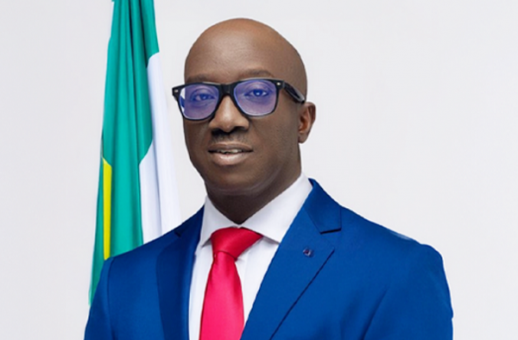
Governor Monday Okpebholo of Edo State has urged Muslims and all Nigerians to continue to pray for peace, unity and progress in the country even as they celebrate the annual Eid-al-Adha
The governor, who was represented by his deputy, Dennis Idahosa, stated this during the annual Eid-al-Adha celebration with Muslim faithfuls held at Government House in Benin City.
He reiterated his administration’s commitment to fairness, inclusivity and equal opportunities for all citizens irrespective of religion and tribe.
READ ALSO:ADC Penetrates Okpebholo’s District As Defections Strengthen Party in Edo Central
According to him, the present administration remains determined to building a government that reflects the diversity of Edo State, noting that competent and qualified Muslims have continued to play vital roles in his government because of their capacity, integrity and commitment to service.
“As a government, we remain committed to fairness, inclusivity and equal opportunity for every Edo citizen, irrespective of religion, ethnicity or political affiliation. This is why quality and competent Muslims are serving in key positions in our administration.”
Okpebholo appreciated the Muslim community in Edo State for their unwavering support and continuous prayers for his administration, noting that such prayers and support have contributed immensely to the peace and steady development being witnessed across the state.
READ ALSO:Okpebholo Felicitates Muslims On Eid-el-Fitr Celebration
He then called on all Nigerians to use the occasion of Eid-al-Adha to pray for the administration of President Bola Ahmed Tinubu, stressing that the country needs collective prayers, unity and cooperation to overcome its present economic and security challenges.
“I urge all Muslims and indeed all Nigerians to use this occasion to pray for our dear nation and for the administration of President Bola Ahmed Tinubu. Nigeria needs our collective prayers, unity and support as we strive to overcome our challenges and build a more prosperous future for all.”
In his remarks, the Chief Imam of Edo State, Abdulfatai Enabulele, applauded the governor for what he described as remarkable developmental strides recorded in less than two years in office.
The cleric commended the administration for ongoing infrastructural development and efforts geared towards improving governance in the state, but appealed to the government to revisit and complete some abandoned projects inherited from the previous administration for the benefit of the people.
News
Children’s Day: Edo Commits To Child Protection
The Edo State Government has reaffirmed its commitment to protecting the rights of children, promoting quality education, and strengthening sports development across the state.
This assurance was given by the governor of Edo State, Monday Okpebholo, during the 2026 Children’s Day Celebration and Governor’s Cup Finale held on Wednesday at the Samuel Ogbemudia Stadium, Benin City.
Addressing pupils, students and teachers,
the governor described children as the pride of Edo State and the future of the nation.
The governor, represented by his deputy, Dennis Idahosa,
noted that the annual celebration provides an opportunity to honour their dreams, talents, and limitless potential.
READ ALSO:Eid-el-Kabir: Edo Deputy Gov Solicits prayers For Okpebholo
Speaking on this year’s Children’s Day theme, “Choose Kindness, Reject Bullying,” the governor said the message was timely and significant, as it emphasizes the need to create safe, supportive, and inclusive environments for children both in schools and communities.
He stated that bullying in all forms — physical, verbal, emotional, or online — has no place in society, adding that the Edo State Government remains fully committed to protecting the rights and dignity of every child.
According to him, the administration will continue to strengthen policies and programmes that promote child protection, discipline, mutual respect, and positive learning environments across schools in the State.
The governor urged children to embrace kindness, compassion, teamwork, and respect for one another, stressing that true strength lies not in intimidation but in empathy, good character, and mutual understanding.

 Metro5 days ago
My Husband Abandoned Me On Our Wedding Night To Attend Political Meeting, I Want Our Marriage Dissolved
- Headline4 days ago
Woman Passes Out After Receiving 100 Strokes Of Cane
- Headline4 days ago
JUST IN: White House Locked Down Briefly As Gunman Opens Fire At Security Checkpoint
- Politics3 days ago
Two Masked Men Gun Down Politician In His Rivers State Hotel
- Politics5 days ago
Warri Ijaw Hail INEC Delineation Report, Call For Additional Electoral Wards, Others
- News3 days ago
More Pain For Nigerians As Cooking Gas Price Increases Nationwide
- News5 days ago
Alleged Terrorism: Court Rejects Defendant’s Bid To Travel Abroad
- Metro5 days ago
My Wife Stop Cooking My Food, Beats Me Black And Blue All the Time, Man Tells Court
- Politics3 days ago
‘Tinubu’s Borrowing In 24 Months Surpasses 55 Years’ Debt Record’
- News3 days ago
FG Declares Two Days Public Holiday For Eid-el Kabir Celebration


