

News
[OPINION] Game Of Thrones: Ooni, Alaafin And The Ridiculing oF Yoruba Heritage




By Israel Adebiyi
I recently visited my family in Lagos, and as always, my aged father took time to tutor me on the significance of my name — Adeniran (the crown has lineage). He reminded me of our heritage and where our royalty stems from. His weak voice, now distorted by the frequent grinding of his teeth, carried a burden of weight and seriousness.
“You are royal,” he declared firmly, “and you cannot afford to mess around, nor allow anyone to mess with you. Omo Aláwó ni ẹ́, Aláwó yàdé, Aláwó jọbí etí Ẹ̀dẹ.”
The lesson was clear: royalty is serious business and cannot be trivialised. Yet, barely two weeks after, some royal fathers seemed not to have received this same memo from the source where they ought to have. Instead, they are on national tabloids, dragging themselves before the public.
As you read this piece, kindly note this disclaimer: as the young ones would say when they attempt a proverb in the midst of elders, t’otó̀ ń ṣe bí owe, òun kì í ṣe owe. I am but a child before the custodians of wisdom. I dare not assume the place of counsel before monarchs who are living reservoirs of knowledge. My words are but whispers in the presence of gods—unworthy to instruct those who hold the staff of tradition and the heritage of our people.
MORE FROM THE AUTHOR:OPINION: Protesting Police Pensioners And Fela’s Double Wahala Melody
In Yoruba history, the crown has never been a mere ornament. It is a living symbol, an emblem of continuity, and a spiritual covenant between a people and their deities. When a Yoruba monarch steps out in full regalia, he does not walk as an individual but as the custodian of centuries-old heritage, the voice of the ancestors, and the embodiment of the divine on earth. That is why kingship in Yorubaland is not just political; it is metaphysical, transcending ordinary governance to embody the very soul of the people. As the Yoruba say, “Oba kii ku, oba wà bí o ti wà” (a king never dies, he only transforms in existence).
Take the story of the late Obafemi Awolowo’s collaboration with Yoruba monarchs in the Western Region. While Awolowo carried the vision of modern governance, it was the blessings, counsel, and mobilization of traditional rulers that anchored his reforms in education, health, and infrastructure. The people followed Awolowo not just because he was brilliant, but because their kings gave legitimacy to his vision. This sacred synergy between traditional authority and modern governance remains one of the strongest demonstrations of how monarchs elevate their people.
Similarly, the Alaafin of Oyo has historically stood as the political rallying point of the Yoruba, the custodian of the Oyo Empire’s legacy, and the symbol of unity in times of turmoil. The Ooni of Ife, on the other hand, carries the spiritual weight of being the custodian of Ile-Ife, the cradle of the Yoruba race. Both stools are not just thrones — they are altars upon which the destiny of the Yoruba people rests. To sit upon them is to step into a covenant of restraint, wisdom, and eternal dignity.
MORE FROM THE AUTHOR:[OPINION] BUHARI: The Man Who Missed Redemption
This is why the current supremacy clash between the Alaafin of Oyo and the Ooni of Ife is deeply unsettling. It is not about whether one monarch is right or the other is wrong. It is about what these revered stools represent. The Yoruba say “Kabiyesi, Alase Igbakeji Orisa” — unquestionable ruler, second only to the gods. When such figures are seen washing their royal linens in the market square of public opinion, it is not they alone who are diminished; the collective pride of the Yoruba nation is bruised. When elephants fight, the grass suffers; when royal fathers lock horns in public, the moral fibre of the society they lead trembles.
History teaches us that when monarchs elevate their stools, their people rise with them. When they descend into the mud of ego battles, the people’s heritage suffers ridicule. The crown does not belong to a man; it belongs to the race he represents. The Ooni’s beaded crown and the Alaafin’s royal stool are not private property but sacred trusts passed from generation to generation. To trivialize them in the public square is to weaken the very foundation of Yoruba identity. To watch monarchs wash their royal linens in public is to cheapen the value of the stools their forebears protected with blood and sacrifice. As the proverb says, “Bi omode ba subu, a wo iwaju; bi agbalagba ba subu, a wo ehin” (when a child falls, he looks forward; when an elder falls, people look back to trace the cause).
The contention over titles may be legitimate within royal circles, but the manner in which such disagreements are ventilated should never erode the dignity of the thrones. The Yoruba society thrives on the belief that the king is the rallying point of cohesion. When kings disagree privately and resolve silently, the society moves on in harmony. But when kings take disputes to the marketplace or national dailies, they expose themselves to ridicule and diminish the respect the people instinctively owe them. “Oba tí kò lè so ilé rẹ̀ di mímọ́, báwo ló ṣe máa so ìlú di mímọ́?” (A king who cannot keep his household in order, how will he put his community in order?).
MORE FROM THE AUTHOR:OPINION: Saro Wiwa, Eight Ogoni Posthumous Pardon, And The New Drill Dream
The point, therefore, is not to judge. It is to remind. The Yoruba monarch is not an ordinary mortal. He is the bridge between the seen and the unseen, the living and the ancestors, the deities and their people. If he falters in dignity, the people’s reverence falters too. This is why Yoruba monarchs must rise above mortal pettiness. They must embody the restraint of Orunmila, the wisdom of Oduduwa, and the dignity of their forebears who understood that true power is exercised in silence and majesty, not in public altercation. And as another Yoruba proverb warns, “Àgùntàn tó bá dá ilé olúwa rẹ̀ rú, kí lón jẹ́ pé ó máa fi ara ẹ̀ jẹun” (a sheep that destroys its master’s house will eventually feed on its own flesh).
The Yoruba nation watches. The world watches. And as history has always shown, the monarch who elevates his stool elevates his people.




News
Transfer: Premier League Clubs Scramble For Dele-Bashiru

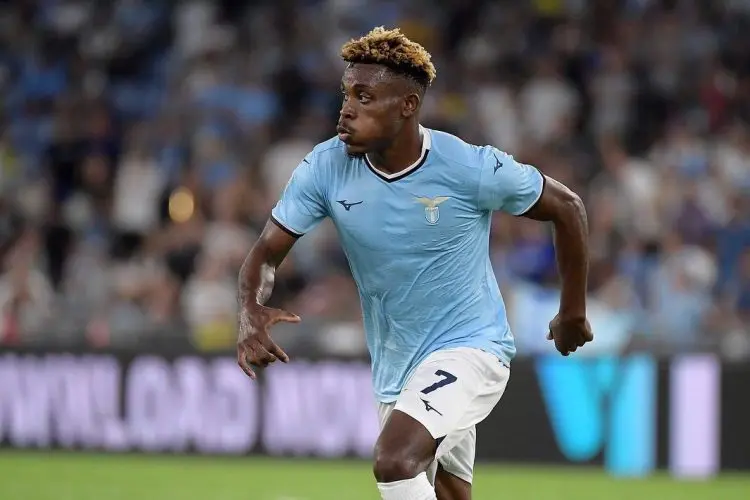
Lazio midfielder, Fisayo Dele-Bashiru is a subject of interest from three Premier League clubs, according to Sky Sports.
Lazio reportedly rejected offers from Nottingham Forest and Bournemouth for the Nigeria international in January.
READ ALSO:Film Premiere: Edo In Talks With Embassies To Promote Safe Migration —Agazuma
La Biancolesti are bracing for more interest in Dele-Bashiru ahead of the summer transfer window, according to Sky Sports.
The 24-year-old has two years left on his contract with the Serie A club.
The attacking midfielder joined the Rome-based club from Turkish Super Lig outfit Hatayspor in 2024.
He has been a regular feature for Lazio this season.
News
Xenophobic Attacks: Nigerian Students To Picket MTN, MultiChoice, Other Businesses


The leadership of the National Association of Nigerian Students, NANS South-West Zone D, has announced plans to picket South African companies in Nigeria following the ongoing xenophobic attacks in the country.
DAILY POST reports that some Nigerians were recently killed in South Africa over the violent attacks.
A statement issued to newsmen by Comrade Adeyemo Josiah Kayode, Coordinator, NANS South-West, Zone D, said that the association is mobilizing to take decisive and lawful action by organizing peaceful picketing and mass advocacy against South African business interests operating in Nigeria.
READ ALSO:Xenophobic Attacks: Oshiomhole Tells FG To Retaliate Against South African Companies In Nigeria
“We categorically state that the continued targeting of Nigerians under any guise is unacceptable and must come to an immediate end.
“This will include major corporations such as MTN Group and MultiChoice Group. It is morally indefensible for businesses to thrive in an environment where the lives of Nigerians are protected, while Nigerians are subjected to fear and violence elsewhere.
“This contradiction will no longer be tolerated,” the statement said.
News
N5m, N10m Zero-interest Loans: SheVentures Opens Applications For Women Entrepreneurs


First City Monument Bank (FCMB) has opened a new round of applications for its SheVentures proposition, offering zero-interest loans of up to ₦10 million to women entrepreneurs to ease access to working capital and support business growth.
The facility provides loans ranging from ₦500,000 to ₦5 million under a general category, and ₦5 million to ₦10 million for sector-specific businesses, with funding capped at up to 50% of an applicant’s average monthly turnover.
At the centre of the offering is a 0% interest rate, with all charges embedded in a transparent structure.
Repayment is structured over four or six months, allowing businesses to match obligations with their cash flow cycles.
READ ALSO:I’ve Been Blacklisted In Music Industry For 13 Years – Seun Kuti
Yemisi Edun, Managing Director and Chief Executive of First City Monument Bank (FCMB), said the initiative reflects a deliberate approach to inclusive growth.
“Inclusive growth requires access to capital and the right conditions for businesses to deploy that capital effectively.
“Women-led enterprises are critical to economic activity, yet they face structural barriers.
This intervention aims to help close that gap by providing financing that supports job creation, business expansion, and long-term sustainability for women entrepreneurs.”
“Access to affordable finance remains a major constraint for women entrepreneurs,” said Nnenna Jacob-Ogogo, Group Head, SheVentures and Impact Segments at First City Monument Bank (FCMB).
READ ALSO:My Beef With Wizkid Is For Life – Seun Kuti
“By removing the cost barrier and offering quick, flexible funding, this zero-interest loan is designed to safeguard existing jobs, enable businesses to invest in growth initiatives, and foster resilience in challenging economic conditions.”
Women-owned businesses account for a significant share of Nigeria’s small and medium-sized enterprises but continue to face high borrowing costs and limited access to credit.
Through these efforts, SheVentures tackles persistent financing gaps facing women-led businesses, combining targeted funding with broader support to empower women entrepreneurs, encourage business innovation, and enhance their ability to compete on a national scale.
Applications for the zero-interest loan are now open.Apply now.
-

 Politics4 days ago
2027: Tinubu’s Re-election May Put An End To Nigeria — Baba Ahmed Warns
-

 Business4 days ago
JUST IN: Nigerian Filling Stations Reduce Fuel Price After Hike
-

 Politics5 days ago
BREAKING: 2027: Former Adamawa APC Guber Candidate, Aishatu Binani Defects To NDC
-

 Entertainment5 days ago
Actress Eniola Badmus Gets New Federal Appointment
-

 News4 days ago
2027: Pastor Adeboye Speaks On Nigeria’s Next President
-

 News2 days ago
BREAKING: Wike Picks Alabo George For Rivers Governorship
-

 Politics4 days ago
NDC Speaks On Peter Obi, Kwankwaso Joining Party
-

 News3 days ago
OPINION: Why South Africans Murder Nigerians In Cold Blood
-

 Politics5 days ago
2027: Pondi, Otuaro, Other Delta South Stakeholders, Endorse Senator Joel-Onowakpo For Second Term
-

 Politics2 days ago
JUST IN: Why I left ADC For NDC With Kwankwaso – Peter Obi Opens Up
