

News
OPINION Generals, Marabouts And Boko Haram




By Lasisi Olagunju
General Lucky Irabor wrote a book that attracted a gathering of Generals in Abuja last Friday. Irabor, in the book, describes the January 1966 coup as “a shield that became a sword;” a solution that became a problem. He may be right. Bishop Matthew Kukah, who reviewed the book, described the January 1966 coup as the nation’s primary crime scene. I disagree. Nigeria’s real crime scene is located far before 1966. We still have not learnt any lesson.
General Irabor is the immediate past Chief of the Defence Staff. Born 5 October, 1965, he was a baby – three months, ten days old – when January 1966 happened to Nigeria. General Olusegun Obasanjo wrote the Foreword to the book and chaired the Abuja gathering. I have not seen what he wrote in the Foreword but I heard what he said at the book launch. He said Boko Haram was not about politics and not really about religion. So what is it about? He suggested that frustration and lack of “better life” perverted the pervert. He then wondered why terror and terrorism have become Nigeria’s way of life.
There were other Generals there. One of them is the Sultan of Sokoto; he belonged in the Armoured Corps. Another is the Etsu Nupe. Both of them left the army as Brigadier-General. The Sultan said Generals don’t retire. And because they do not retire or get tired, we keep seeing them in our lives beyond the barracks. Irabor’s book launch turned out to be a confab of Generals in search of what eludes them on the battlefield – victory over the collective enemy.
They were there looking for a solution to Nigeria’s interminable terrorism. I watched them and reached for 16th century English statesman, scholar and saint, Sir Thomas More. In his ‘A Dialogue Concerning Heresies’, More wrote a line which became the idiom: “looking for a needle in a haystack.” Our Generals need to interrogate that English clause locked in seven words of frustration. It speaks to their gathering. What they seek they won’t find except they really want to see it.
Irabor’s book carries the title: ‘Scars’ in bold, capital letters of blood. Beyond quotes from the review, I have not seen the book to get what his ‘SCARS’ really talks about. But ‘scars’ as book or as sabre cuts on the face cannot be anyone’s sweet story.
MORE FROM THE AUTHOR:OPINION: Dangote’s Oily Wars
Bishop Kukah, the book reviewer, said Irabor’s story is about Nigeria’s scars of insecurity; the ugly, unhealed, unhealable wound gashed on our collective face by Boko Haram. President Goodluck Jonathan was there with the Generals; and he got the metaphor right. He said the abduction of Chibok Girls is an everlasting scar on the face of his presidency; he hinted that it was a monument to leadership failure. But is Jonathan the only one with that scar?
Nineteenth century Scottish novelist and essayist, Robert Louis Stevenson (R. L. Stevenson) wrote ‘Treasure Island’, an excellent novel of pirates and blood, hidden treasure chests, death and disappointments. It was published in 1883. If you read more of Stevenson beyond his popular fiction, you would likely come across where he wrote the truth that our “wealth took their value from our neighbour’s poverty.” You would read how this someone who lived and died 131 years ago saw that despite the “free man’s” pretence to kindness, “the slaves are still ill-fed, ill-clad, ill-taught, ill-housed, insolently entreated, and driven to their mines and workshops by the lash of famine.” The passage reads like it is about 2025 Nigeria and its unfed, unclaimed, unclad, untaught children.
I watched the cream of Nigerian Generals, serving and retired, on Friday at that book launch of one of them. I watched them pontificating, one by one, on TV about Nigeria and its scars and I remembered Major-General Sir Thomas Vandeleur in R. L. Stevenson’s ‘The Rajah’s Diamond’, a story in his ‘New Arabian Nights’ published in 1881. Thomas Vandeleur is a General in blind, desperate but fruitless search for his family’s lost jewel. Nigeria’s Generals, like Vandeleur, old adventurers in uniform who once held the diamond of power, have ruled and been ruined by it. The nation’s story, like Vandeleur’s, is one of obsession with that fatal jewel called authority, which brings suffering to all who covet it.
Our Generals are helpless. That is what I saw at that event on Friday. Power has cast Nigeria’s fortunes into the river of defeat; it has left generations searching the muddy depths for the nation’s lost promise. Dethroned by coups and transitions, Nigeria’s power elite always come back as “handsome tobacconists” of democracy, reinvented messiahs and born-again democrats. They trade in influence and illusion; their scars, like Stevenson’s Vandeleur’s, are the marks of past violence disguised as experience, and their continued grip on Nigeria’s destiny shows that, though the diamond of nationhood is lost, its curse endures.
When I get General Irabor’s book to read, I will search for words that define wounds inflicted by bad and absent leadership, by aborted dreams and betrayed hopes. I will look for phrases, for sentences and paragraphs on heists that cut deeper into the nation’s face. I will love to read through its jagged pages of dreams deferred.
I scanned the Generals’ faces and read their lips. The gashes of insecurity, from Boko Haram’s bombs in Borno to herders’ bullets in Kwara, are the handiwork of decades of neglect and decay. The scar of insecurity has become our national birthmark, neither healed nor hidden; its permanence mocks every promise of reform. Obasanjo said at the book event that “Boko Haram is now virtually becoming part of our life. Should we accept that? If we should not accept it, what should we do? How much do we know? Even from the other side, and from this side, have we been active enough? Have we been proactive enough?” If a General and former president asked us those questions, to whom should we then turn for answers? Like Vandeleur’s scar, Nigeria’s wounds carry an ambiguity; they are signs of survival, yet also of complicity, for we are all, in one way or another, marked by a bad story we refuse to rewrite. General Irabor has done very well by writing a book that has provoked a discourse. We wait for others.
MORE FROM THE AUTHOR:OPINION: Hobbes, Nigeria, And Sarkozy
The Generals who spoke were very eloquent on the scars of Boko Haram. Did I not hear excuses for what the terrorists do and why they do them? One of the Generals even said “they (Boko Haram) never said book is haram.” Valuable minutes were spent doing definition of terms. Is that also a solution to the problem? They said so much but I didn’t hear a word from the Generals on the millions of out-of-school children who feed the machinery of terrorism and banditry. Today, Nigeria has an estimated 20 million out-of-school children, the highest number in the world. Read United Nations’ records: More than 60 percent of these children are in the northern states; they are the almajiri; the system is there till tomorrow; entrenched.
Was it not General Obasanjo who wrote in one of his books that “our fingers will not be dry of blood” as long as lice abound in our clothes? I agree with him.
Because we are a dirty, contaminated nation, lice keep laying their nits in the seams of our garments. The line of Boko Haram lice is lengthened daily by mass child illiteracy and adult disillusionment. Our Generals would not acknowledge that the poverty of our streets is both symptom and scar: proof of the violence of neglect and the betrayal of the future. They, and we, still do not see that in every Almajiri begging for miserable morsels of leftovers, the nation’s unhealed wounds find new violence and new weapons.
Then, there is Bishop Kukah’s jarring charge that marabouts have become a substitute for government and governing. He hinted that we’ve outsourced the leadership of the nation to some “blind clerics” somewhere. That statement should strike a chord with all who heard him. But because it is true, all who heard it pretended it was not said.
The Bishop was on solid ground when he uttered what he said. The proofs are everywhere: In August 2015, the Adamawa State government announced that it had earmarked N200 million to engage prayer warriors against Boko Haram. In March 2016, a certain Aminu Baba-Kusa, once a powerful executive director of the NNPC, appeared before the High Court in Abuja with a witness statement and disclosed in it that a total of ₦2.2 billion was expended, not for arms or intelligence, but for prayers, solemnly commissioned to hasten the fall of Boko Haram. The money went out in two waves: ₦1.45 billion first, then another ₦750 million. It was a contract sanctified by faith and sealed by silence.
Nothing that has happened in the last ten years suggests a change of strategy. Marabouts still cash out from a mugu nation and a leadership that worships in unworthy shrines. Kukah stepped on toes; he said the manipulation of religion for politics, using religion to enforce power, has become destructive to religion in northern Nigeria. It took remarkable episcopal courage for Kukah to say publicly that northern politicians use Islam for political cash-out. I watched the Sultan, calm and angry at Bishop Kukah for daring to stray away from the book he was asked to review into a realm angels fear to tread. As the Sultan spoke, the TV man’s camera panned to a defiant Kukah fiddling with a piece of pamphlet.
Speaker after speaker spoke on what they thought caused insecurity in northern Nigeria. I waited in vain to hear the Generals acknowledge that northern children, denied books and purpose, are the soldiers of chaos in Zamfara, Sokoto, Niger and, now in Kwara. In vain I listened to hear the truth from our Generals that today’s violent elements, products of a past of negligence, are proof that unattended scars can erupt again in new forms of pain.
MORE FROM THE AUTHOR:OPINION: On El-Rufai, Aláròká And Terrorists
Our Generals are searching for what is not lost. The spring head of terror and terrorism in northern Nigeria is the wrong religious philosophy which atrophies millions of children. Every child anywhere, including in northern Nigeria, wants and deserves what General Obasanjo called “better life.” A child who has opportunities for self-discovery and development won’t be readily available for employment by merchants of terror. Terrorism will dry out the moment its recruitment market winds up. Educating the street children of the North, and equipping them with the right skills will sound the death knell of Boko Haram and banditry, its brethren. But this is where even the Generals feared to tread last Friday. They were afraid of the clerics in whose hands lie the yam and the knife of power and privileges.
The people who spoke at that event were not up to ten. Several scores of other big men and women were there, silent and quiet, sometimes clapping. They either did not have the chance to be called to speak or they did not want to speak and be quoted into trouble. But, really, what is trouble? Trouble can sneak into the hole of silence. Jeff T. Johnson writes in his ‘Trouble Songs’ that “Trouble may appear in a title and disappear in a song,” and “’Trouble’ may sneak up in a song without warning.”
Trouble is Nigeria, the sick, denying its illness. Real trouble is homicidal or suicidal silence; it is treating eczema when leprosy is the ailment.
So, at the risk of courting abuse and insults and threats, I join Bishop Kukah in urging Nigeria to stop keeping quiet in the face of evil. Enough of saying that you do not want to ruffle feathers or open old wounds. Wounds that refuse to heal should be opened and given the right medicine. That is what heals.
A broken nation, sworn to silence, or to denial of truth, hurtles down a roller coaster of failure. Silence scars with ugly gashes. Screaming within, yet saying nothing out is sickness. The Yoruba say silence is the foundation of misfortune. Speaking out does not mean you will die young, broke and broken. Not speaking out when you have a voice is no guarantee for safety and comfort. Bishop Kukah’s Hausa proverb is the ultimate counsel here: “Not going to the toilet does not mean you won’t be hungry.”




News
Xenophobic Attacks: Oshiomhole Tells FG To Retaliate Against South African Companies In Nigeria

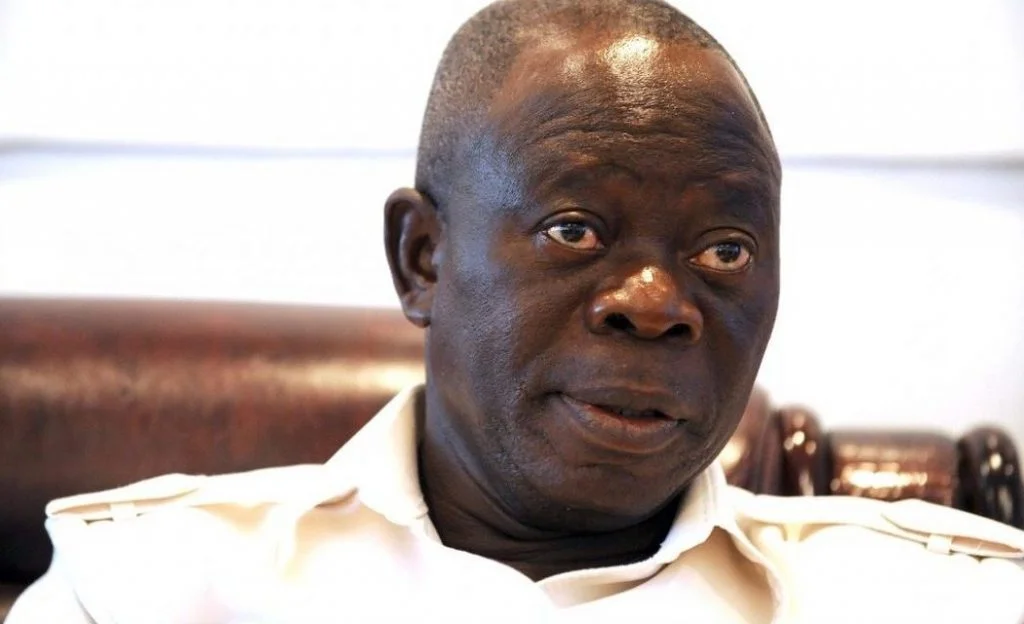
Senator Adams Oshiomhole has called on the Federal Government to retaliate against South African businesses operating in Nigeria following the recent attacks on Nigerians in South Africa.
Speaking during plenary on Tuesday, Oshiomhole said the Federal Government should consider revoking the working license of South African owned companies such as MTN and DSTV.
He argued that Nigeria must respond firmly to what he described as persistent hostility against its citizens.
READ ALSO:South Africa To Investigate ‘Mystery’ Of Planeload Of Palestinians
“I am not going to shed tears. If you hit me, I hit you. I think it is appropriate in diplomacy. It is an economic struggle,” Oshiomhole said.
He argued that while some South Africans accuse Nigerians of taking their jobs, Nigerians should return home and take over employment opportunities created by major South African companies operating in the country, including MTN and DSTV.
“When we hit back, the President of South Africa will not only talk but will also go on his knees to recognise that Nigeria cannot be intimidated.
READ ALSO:South African Ambassador Found Dead Outside Paris Hotel
“We will not condone any life being lost. If a crime has been committed under the South African law they have the right to bring any such person to justice, but to kill our people as if we are helpless, we will not allow that,” Oshiomhole added.
DAILY POST reports that several Nigerians in South Africa have reportedly been attacked, and their businesses destroyed, in ongoing xenophobic attacks in the country.
News
IGP Orders Officers Display Name Tag On Uniform, Gives Update On State Police

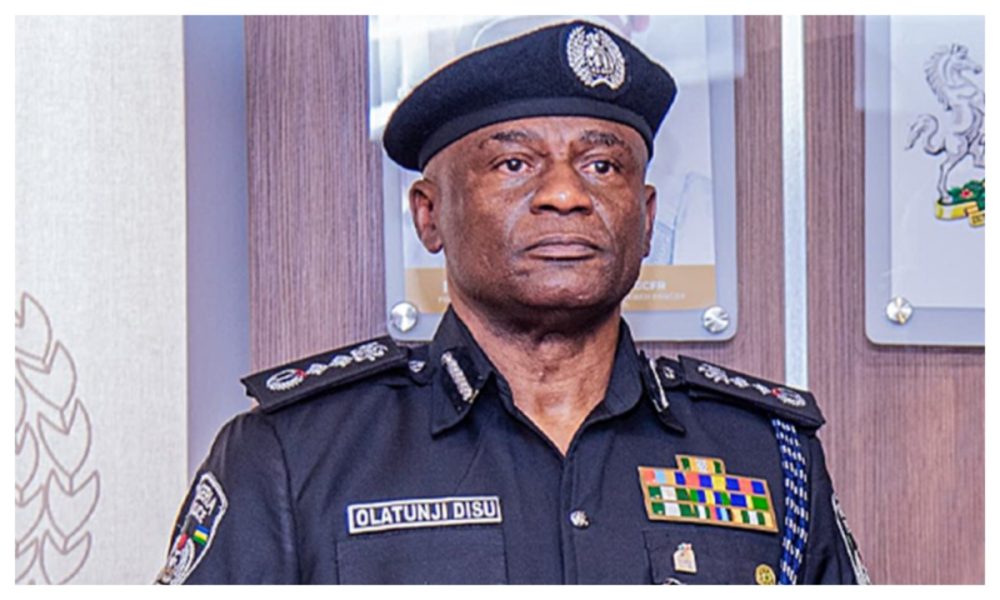
The Inspector General of Police, IGP, Tunji Disu, has ordered all police personnel to always have their name tags on their uniforms for easy identification.
Disu disclosed that only police personnel who are undercover are exempted from displaying their name tags.
Speaking on Tuesday, Disu said: “All police officers should have their name tags. All of us on the high table have our names apart from the undercover among us so if you look at all the Commissioners of Police we have our name tags, so it’s not our standard.
READ ALSO:
“All the Commissioners of Police are here and that is why we called this meeting, we have list of things like this that we will want to discuss with the Commissioners of Police, we have told them earlier and we will still let them know that every that happens within their area of jurisdiction falls under their control.”
On the issue of state police, the IGP said: “Since we got the signal that the Federal Government of Nigeria intend to establish State Police and since we are the federal police, we decided to take the bull by the horn and put down our own side of what we believe on how the state police should be run.
“A lot of things were taken into consideration, a lot of comparative analysis was done and it has been transmitted to the National Assembly.”
News
Court Orders SERAP To Pay DSS Operatives N100m For Defamation
The High Court of the Federal Capital Territory has ordered a non-governmental organization, the Socio-Economic Rights and Accountability Project, SERAP, to pay N100 million as damaged to two operatives of the Department of the State Services, DSS, for unjustly defaming them in some publications.
The court also ordered SERAP to tender public apologies to the defamed officers,
Sarah John and Gabriel Ogundele, in two national newspapers, two television stations and its website.
Besides, the organization was also ordered to pay the two operatives N1 million as cost of litigation and 10 percent post-judgment interest annually on the judgment sum until it’s fully liquidated.
Justice Yusuf Halilu of the High Court of the Federal Capital Territory gave the order on Tuesday while delivering judgment in a N5.5 billion defamation suit instituted against SERAP by the DSS operatives.
The judge found SERAP liable for unjustly defaming the two DSS operatives with allegations that they unlawfully invaded its Abuja office, harassed and intimidated its staff, in September 2024.
READ ALSO:How We Arrested Terror Suspect Who Threatened To Kill Students, Teachers In Abuja — DSS
In the offending publication on its website and Twitter handle, SERAP alleged that the two operatives unlawfully invaded and occupied its office with sinister motives.
The judge held that the publication was in bad taste especially from an organization established to promote transparency and accountability, as nothing in the publication was found to be truthful.
The DSS staff had listed SERAP as 1st defendant in the suit marked CV/4547/2024. SERAP’s Deputy Director, Kolawole Oluwadare, was listed as the 2nd defendant.
In the suit, the claimants – Sarah John and Gabriel Ogundele – accused the two defendants of making false claims that they invaded SERAP’s Abuja office on September 9, 2024..
Counsel to the DSS, Oluwagbemileke Samuel Kehinde, had while adopting his final address in the mater urged the judge to grant all the reliefs sought by his client in the interest of justice.
READ ALSO:DSS Arrests Suspected Gunrunner, Recovers 832 Rounds Of Ammunition
He admitted that although the names of the two claimants were not mentioned in the defamation materials, they had however established substantial circumstances that they are the ones referred to in the published defamation article by SERAP on its website.
The counsel submitted that all ingredients of defamation have been clearly established and the offending publication referred to the two officials of the secret police.
However, SERAP, through its counsel, Victoria Bassey from Tayo Oyetibo, SAN, law firm, asked the court to dismiss the suit on the ground that the two claimants did not establish that they were the ones referred to in the alleged defamation materials.
She said that SERAP used “DSS officials” in the alleged offending publication, adding that the two claimants must establish that they are the ones referred to before their case can succeed.
Similar arguments were canvassed by Oluwatosin Adefioye who stood for the second defendant, adding that there was no dispute in the September 9, 2024 operation of DSS in SERAP’s office.
READ ALSO:Alleged Cyberstalking: DSS Plays Video Evidence In Sowore’s Trial
He said that since SERAP in the publication did not name any particular person, the claimants must plead special circumstances that they were the ones referred to as the DSS officials.
Besides, he said that there is no organization by name Department of State Services in law, hence, DSS cannot claim being defamed adding that the only entity known to law is National Security Agency.
The claimants had in the suit stated that the alleged false claim by SERAP has negatively impacted on their reputation.
The DSS also stated, in the statement of claim, that, in line with the agency’s practice of engaging with officials of non-governmental organisations operating in the FCT to establish a relationship with their new leadership, it directed the two officials – John and Ogunleye – to visit SERAP’s office and invite them for a familiarization meeting.
The claimants added that in carrying out the directive, John and Ogunleye paid a friendly visit to SERAP’s office at 18 Bamako Street, Wuse Zone 1, Abuja on September 9 and met with one Ruth, who upon being informed about the purpose of the visit, claimed that none of SERAP’s management staff was in the country and advised that a formal letter of invitation be written by the DSS.
READ ALSO:DSS, Police Partner NCCSALW To End Terrorism, Mop Up Illegal Arms
John and Ogundele, who claimed that their interactions with Ruth were recorded, said before they immediately exited SERAP’s office, Ruth promised to inform her organisation’s management about the visit and volunteered a phone number – 08160537202.
They said it was surprising that, shortly after their visit, SERAP posted on its X (Twitter) handle – @SERAPNigeria – that officers of the DSS are presently unlawfully occupying its office.
The claimant added, “On the same day, the defendants also published a statement on SERAP’s website, which was widely reported by several media outfits, falsely alleging that some officers from the DSS, described as “a tall, large, dark-skinned woman” and “a slim, dark skinned man,” invaded their Abuja office and interrogated the staff of the first defendant (SERAP).
John and Ogundele stated that “due to the false statements published by the defendants, the DSS has been ridiculed and criticised by international agencies such as the Amnesty International and prominent members of the Nigerian society, such as Femi Falana (SAN)”.
“Due to the false statements published by the defendants, members of the public and the international community formed the opinion that the Federal Government is using the DSS to harass the defendants.”
READ ALSO:SERAP To Court: Stop CBN From ‘Implementing ‘Unlawful, Unjust ATM Fee Hike’
They added that the defendants’ statements caused harm to their reputation because the staff and management of the DSS have formed the opinion that the claimants did not follow orders and carried out an unsanctioned operation and are therefore, incompetent and unprofessional.
The claimants therefore prayed the court for the following reliefs: “An order directing the defendants to tender an apology to the claimants via the first defendant’s (SERAP’s) website, X (twitter) handle, two national daily newspapers (Punch and Vanguard) and two national news television stations (Arise Television and Channels Television) for falsely accusing the claimants of unlawfully invading the first defendant’s office and interrogating the first defendant’s staff.
“An order directing the defendants to pay the claimants the sum of N5 billion as damages for the libellous statements published about the claimants.
“Interest on the sum of N5b at the rate of 10 percent per annum from the date of judgment until the judgment sum is realised or liquidated.
“An order directing the defendants to pay the claimants the sum of N50 million as costs of this action.”
-

 Politics4 days ago
2027: Tinubu’s Re-election May Put An End To Nigeria — Baba Ahmed Warns
-

 Metro5 days ago
I’m A Street Girl’ – Bimbo Ademoye Clashes With Area Boys [VIDEO]
-

 Politics5 days ago
BREAKING: 2027: Former Adamawa APC Guber Candidate, Aishatu Binani Defects To NDC
-

 Politics5 days ago
Senatorial Seat: Ogbakha-Edo Warns Against Imposition Of Candidates In Edo South
-

 Business3 days ago
JUST IN: Nigerian Filling Stations Reduce Fuel Price After Hike
-

 Entertainment4 days ago
Actress Eniola Badmus Gets New Federal Appointment
-

 News5 days ago
10 African Countries With Highest Petrol Prices In Prices In April 2026
-

 News2 days ago
BREAKING: Wike Picks Alabo George For Rivers Governorship
-

 Politics3 days ago
NDC Speaks On Peter Obi, Kwankwaso Joining Party
-

 News3 days ago
OPINION: Why South Africans Murder Nigerians In Cold Blood
