

News
OPINION: Gumi And His Terrorists




During the Kiriji War of the nineteenth century, a grim parable of war came and became a subject of racial slur and morbid joke. An Oyo-Ibadan warrior, disarmed and cornered by an Ijesa fighter, collapsed to the earth and begged for his life. The Ijesa man, scornful of pleas, mocked him with a cruel logic: he threw his machete at the captive and ordered him to beg the blade, not the man. “Ada lo a bè; èmi kó a bè.”
The unarmed warrior rose, took the weapon, and killed his captor. The war taught its lesson: in the theatre of enemies, negotiation, just as begging, is surrendering the weapon that will undo you.
Sheikh Ahmad Abubakar Mahmud Gumi is a trained soldier and a medical doctor. He left the Nigerian army as a captain. Two days ago, Gumi was on Facebook calling on Nigeria to arm the enemy with begging and surrender. He wrote: “They say: negotiation doesn’t work. It’s a lie. It worked with militants in Niger Delta creeks. Rather, it is war that doesn’t work, 16 years we’re still fighting BH (Boko Haram) and 11 years fighting bandits. It’s stupidity doing the same thing and expect different results.”
Imagine if Gumi had remained in the army, and had risen to become a General and Chief of Army Staff, and was asked by his Commander-in-Chief to fight and defeat Boko Haram in the North East, bandits in the North West and kidnappers in Niger, Kogi and Kwara States. What would have become of that Commander-in-Chief and the order he gave?
If you think Gumi would have carried out that order and spare his lord, the president, it means you haven’t been following his consistent advocacy on how to treat terrorists. He wants negotiation with the enemy as the sure way to peace.
He didn’t start today. In a February 2021 interview with the AIT, Gumi came out with a weird suggestion that bandits destroying his North were taught kidnapping by Niger Delta militants: “They learnt kidnapping from MEND (Movement for the Emancipation of the Niger Delta). I do not see any difference. They were the first victims of rustling, their cattle is their oil,” he said.
MORE FROM THE AUTHOR:OPINION: The Terrorists Are Winning
In a May 2021 BBC report, Gumi was quoted comparing terrorist bandits with coup plotters: “If the country could pardon coup plotters who committed treasonable offences in the era of military administration, the bandits can as well enjoy similar forgiveness even better under democratic rule,” he said.
In that same report of more than four years ago, he said what he has been saying repeatedly recently: “Kidnapping children from school is a lesser evil because in the end, you can negotiate and now bandits are very careful about human lives.”
Nigeria dodged a bullet in Gumi exiting the army before his Iroko became problematic, exacting tributes. How many more Gumis do we have in the officer corps of the Nigerian Army? Imagine him rising to the very top, becoming a General, and making a case for the enemy.
Born in 1960, Ahmad Gumi arrived as son of the late Sheikh Abubakar Mahmud Gumi, one of Northern Nigeria’s most influential and outspoken Islamic scholars, who also served as Grand Khadi of the Shariah Court of Appeal. From anyone from such a lineage you would expect moral clarity, intellectual rigour, and principled leadership. Those are expectations that make today’s Gumi’s public interventions impossible to treat lightly.
Anyone who chose an early formation as Gumi did clearly chose a path that combined science, discipline, and service. The sheikh studied medicine, then enlisted in the Nigeria Defence Academy, and served as a medical officer in the Nigerian Army Medical Corps. Rising to the rank of captain, it is given that his training was to heal and also to understand the brutal arithmetic of conflict. At the NDA, people who know say every cadet was taught that violence against the violent is neither abstract nor negotiable. The soldier-doctor is schooled in a hard truth: forces that threaten life must be subdued decisively, they are not candidates for indulgence and accommodative rhetoric.
Gumi’s academic journey and his present politics are diametrically irreconcilable. After retiring from military service, Gumi relocated to Saudi Arabia where he immersed himself in Islamic scholarship. In Mecca, he earned a PhD in Usul al-Fiqh, the principles that govern Islamic jurisprudence. I do not think people of knowledge would dismiss this credential as casual. My findings tell me that his specialisation, Usul al-Fiqh, “concerns itself with moral reasoning, justice, public interest (maslahah), and the limits of tolerance in the face of disorder.” People of knowledge say his area of Islamic scholarship prioritises justice for the victim, and guiding societies away from chaos. They say his background makes his advocacy for negotiating with terrorists troubling, troublous and self-deconstructing.
MORE FROM THE AUTHOR:OPINION] General Christopher Musa: Lessons And Warnings
It is hard to hear or read Gumi and not see contradiction hardening into failure of his callings: he was trained to protect life and confront mortal threats without illusion. He was also schooled to appreciate the value of justice. He failed spectacularly in all three.
The more we read some people’s lives, the more we see contradiction in starker hues. Where in his religious books, including jurisprudence, did Gumi read sanctifying terror and asking society to wear “soft gloves” when faced with those who murder the innocent and destabilise the society? Should we not tell Gumi that to blur the line between justice and appeasement is to betray both the uniform he once wore and the faith he now invokes? Someone who saw me write this said that in matters of terror it is neither courage nor wisdom to preach accommodation.
How do we tell a soldier, doctor and a PhD that it is suicidal to confuse mercy with surrender? Yet we have to tell him that what he advocates is suicide. We saw it in the Kiriji War story above. The enemy appeased today is the death of tomorrow.
Why is it difficult for Gumi and his supporters to see that Boko Haram, banditry and other criminal gangs in Northern Nigeria are not pursuing the same objectives as the militants of the Niger Delta? Terror organisations destroying the very basis of the existence of Gumi’s society are not misunderstood political movements waiting for a conference table; they are a machinery of horrendous violence who kill and abduct without borders. They are forever dangerous to freedom and to, even religion.
Governments across continents have long understood this danger. Britain’s Margaret Thatcher vowed to never negotiate with the IRA terrorists: “We do not negotiate with terrorists,” she declared. US’s George W. Bush bluntly insisted that: “You’ve got to be strong, not weak. The only way to deal with these people is to bring them to justice. You can’t talk to them. You can’t negotiate with them.” His position echoed the same logic as Thatcher’s. Scholars such as Paul Wilkinson and Walter Laqueur argue that talks with terrorists confer recognition, and recognition, like sunlight to mold, allows terror to spread. As some others observed, terrorism seeks legitimacy more than victory; it longs to be seen as a political equal rather than a criminal aberration. To grant Gumi’s wish is to reward criminals and criminality; defeat and destroy society.
History and scholarship teach that there is a moral grammar to politics, and terrorists deliberately violate it.
Paul Gilbert is a British moral and political philosopher who has been very stellar for his work on terrorism, political violence, war ethics, and the moral limits of negotiation. My reading of his works shows that he has written extensively to draw a very thick line between terrorism and legitimate political struggle. He argues that because terrorism targets civilians, it collapses the moral conditions that make dialogue, compromise, or negotiation intelligible. More directly, it is his position in a 1994 article that by engaging in violence against civilians, terror groups had breached the “conventions of debate required for negotiations”. Another scholar, Jan Narveson, also hold that ‘terrorists’ put themselves in “Hobbes’ state of nature with respect to us” and thus do not deserve a roundtable treatment. “Engaging with terrorists would translate their violence into a legitimate means to be heard and thus lead other groups to engage in similar activities.” That quote, if you don’t mind, you find with other viewpoints in Harmonie Toros’ ‘We Don’t Negotiate with Terrorists!: Legitimacy and Complexity in Terrorist Conflicts’.
MORE FROM THE AUTHOR:OPINION: Why My English Speaks Yoruba
In plainer terms, what Gumi professes is equal in criminal foolishness as one bargaining with the arsonist while the house is still burning.
Gumi, soldier, physician and religious scholar, wants Nigeria to turn crime into curriculum. He must stop what he is saying or be asked to stop. In his prescription is quiet injustice to those who choose peaceful paths. The state should stop pretending that it does not know how to tell him that what he preaches is that violence pays.
Some would say that his call is a camouflage for politics. Gumi wants to negotiate with criminal bandits. Negotiate with whom among the disparate leaders of the terrorists? Does this explain why previous peace agreements entered into with bandits by the north failed? In the North, communities organise colourful engagements with those destroying them today; tomorrow they receive death from those who visited yesterday. Yet, one of their leaders say they must keep negotiating. The enemy is right inside their bedroom.
Why would a religious leader seek to make a political class of kidnappers, and elevate terrorists to statesmen? In a normal society, it won’t be difficult to accept that negotiation with terror undermines citizens who pursue change without violence, telling them, after the fact, that bombs speak louder than ballots. Rejecting Gumi and his doctrine of negotiation with terrorists will not be a rejection of peace, it will be a defensive wall against assaults on peace and justice. Anyone who is not a lover of terrorism would know that criminalization, not conversation, is the language the rule of law understands.
People who wage war against society deserve war. To approach the enemy with votaries of appeasement is to strengthen them to do more harm. We must never be forced to misunderstand who the enemy is. Peace, like poetry, has rules; when those rules are shattered by criminal bloodshed, the answer is justice and protection, not glass-clinking at the negotiating table.
In the savannah lived a hyena who seized the riverbank and called himself its lord. When drought came and society was starved of the river’s nourish, other animals sent the tortoise to negotiate access, carrying calabashes of honey and promises of peace. The hyena laughed, took the gifts, and demanded more; each concession tightening his grin. “Talk is cheaper than teeth,” he said, and the river remained closed.
At last the terrorised animals learned what the tortoise had not: the hyena fed on bargaining itself. Each plea taught him the shape of their fear. So the herds moved together, guarded the springs, and starved the hyena of leverage. Access to the river opened again, not because words softened the hyena, but because unity denied him profit. And the forest remembered: when a predator thrives on terror, negotiation becomes its meal.




News
N5m, N10m Zero-interest Loans: SheVentures Opens Applications For Women Entrepreneurs


First City Monument Bank (FCMB) has opened a new round of applications for its SheVentures proposition, offering zero-interest loans of up to ₦10 million to women entrepreneurs to ease access to working capital and support business growth.
The facility provides loans ranging from ₦500,000 to ₦5 million under a general category, and ₦5 million to ₦10 million for sector-specific businesses, with funding capped at up to 50% of an applicant’s average monthly turnover.
At the centre of the offering is a 0% interest rate, with all charges embedded in a transparent structure.
Repayment is structured over four or six months, allowing businesses to match obligations with their cash flow cycles.
READ ALSO:I’ve Been Blacklisted In Music Industry For 13 Years – Seun Kuti
Yemisi Edun, Managing Director and Chief Executive of First City Monument Bank (FCMB), said the initiative reflects a deliberate approach to inclusive growth.
“Inclusive growth requires access to capital and the right conditions for businesses to deploy that capital effectively.
“Women-led enterprises are critical to economic activity, yet they face structural barriers.
This intervention aims to help close that gap by providing financing that supports job creation, business expansion, and long-term sustainability for women entrepreneurs.”
“Access to affordable finance remains a major constraint for women entrepreneurs,” said Nnenna Jacob-Ogogo, Group Head, SheVentures and Impact Segments at First City Monument Bank (FCMB).
READ ALSO:My Beef With Wizkid Is For Life – Seun Kuti
“By removing the cost barrier and offering quick, flexible funding, this zero-interest loan is designed to safeguard existing jobs, enable businesses to invest in growth initiatives, and foster resilience in challenging economic conditions.”
Women-owned businesses account for a significant share of Nigeria’s small and medium-sized enterprises but continue to face high borrowing costs and limited access to credit.
Through these efforts, SheVentures tackles persistent financing gaps facing women-led businesses, combining targeted funding with broader support to empower women entrepreneurs, encourage business innovation, and enhance their ability to compete on a national scale.
Applications for the zero-interest loan are now open.Apply now.
News
Xenophobic Attacks: Oshiomhole Tells FG To Retaliate Against South African Companies In Nigeria

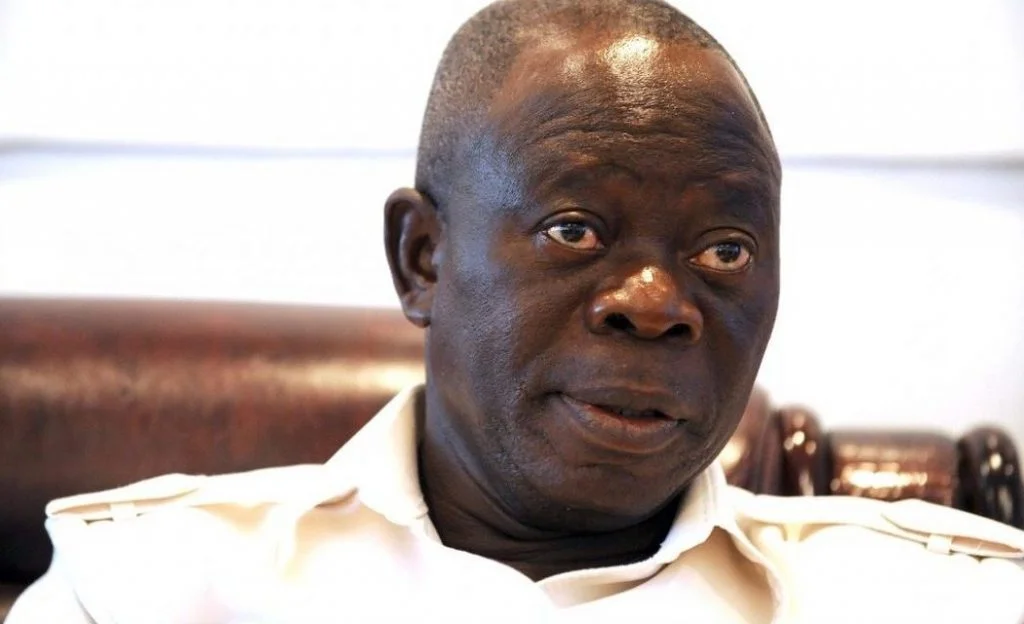
Senator Adams Oshiomhole has called on the Federal Government to retaliate against South African businesses operating in Nigeria following the recent attacks on Nigerians in South Africa.
Speaking during plenary on Tuesday, Oshiomhole said the Federal Government should consider revoking the working license of South African owned companies such as MTN and DSTV.
He argued that Nigeria must respond firmly to what he described as persistent hostility against its citizens.
READ ALSO:South Africa To Investigate ‘Mystery’ Of Planeload Of Palestinians
“I am not going to shed tears. If you hit me, I hit you. I think it is appropriate in diplomacy. It is an economic struggle,” Oshiomhole said.
He argued that while some South Africans accuse Nigerians of taking their jobs, Nigerians should return home and take over employment opportunities created by major South African companies operating in the country, including MTN and DSTV.
“When we hit back, the President of South Africa will not only talk but will also go on his knees to recognise that Nigeria cannot be intimidated.
READ ALSO:South African Ambassador Found Dead Outside Paris Hotel
“We will not condone any life being lost. If a crime has been committed under the South African law they have the right to bring any such person to justice, but to kill our people as if we are helpless, we will not allow that,” Oshiomhole added.
DAILY POST reports that several Nigerians in South Africa have reportedly been attacked, and their businesses destroyed, in ongoing xenophobic attacks in the country.
News
IGP Orders Officers Display Name Tag On Uniform, Gives Update On State Police

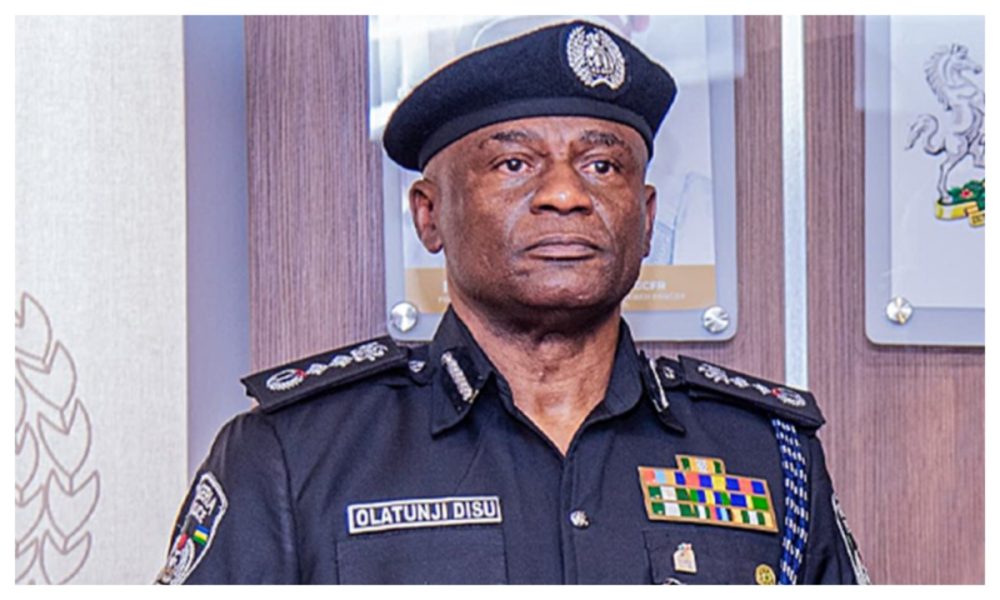
The Inspector General of Police, IGP, Tunji Disu, has ordered all police personnel to always have their name tags on their uniforms for easy identification.
Disu disclosed that only police personnel who are undercover are exempted from displaying their name tags.
Speaking on Tuesday, Disu said: “All police officers should have their name tags. All of us on the high table have our names apart from the undercover among us so if you look at all the Commissioners of Police we have our name tags, so it’s not our standard.
READ ALSO:
“All the Commissioners of Police are here and that is why we called this meeting, we have list of things like this that we will want to discuss with the Commissioners of Police, we have told them earlier and we will still let them know that every that happens within their area of jurisdiction falls under their control.”
On the issue of state police, the IGP said: “Since we got the signal that the Federal Government of Nigeria intend to establish State Police and since we are the federal police, we decided to take the bull by the horn and put down our own side of what we believe on how the state police should be run.
“A lot of things were taken into consideration, a lot of comparative analysis was done and it has been transmitted to the National Assembly.”
-

 Politics4 days ago
2027: Tinubu’s Re-election May Put An End To Nigeria — Baba Ahmed Warns
-

 Politics5 days ago
BREAKING: 2027: Former Adamawa APC Guber Candidate, Aishatu Binani Defects To NDC
-

 Politics5 days ago
Senatorial Seat: Ogbakha-Edo Warns Against Imposition Of Candidates In Edo South
-

 Business4 days ago
JUST IN: Nigerian Filling Stations Reduce Fuel Price After Hike
-

 Entertainment5 days ago
Actress Eniola Badmus Gets New Federal Appointment
-

 News2 days ago
BREAKING: Wike Picks Alabo George For Rivers Governorship
-

 Politics4 days ago
NDC Speaks On Peter Obi, Kwankwaso Joining Party
-

 News3 days ago
OPINION: Why South Africans Murder Nigerians In Cold Blood
-

 News4 days ago
2027: Pastor Adeboye Speaks On Nigeria’s Next President
-

 Politics5 days ago
2027: Pondi, Otuaro, Other Delta South Stakeholders, Endorse Senator Joel-Onowakpo For Second Term
